 ワークシート
 ぬりえ
 迷路
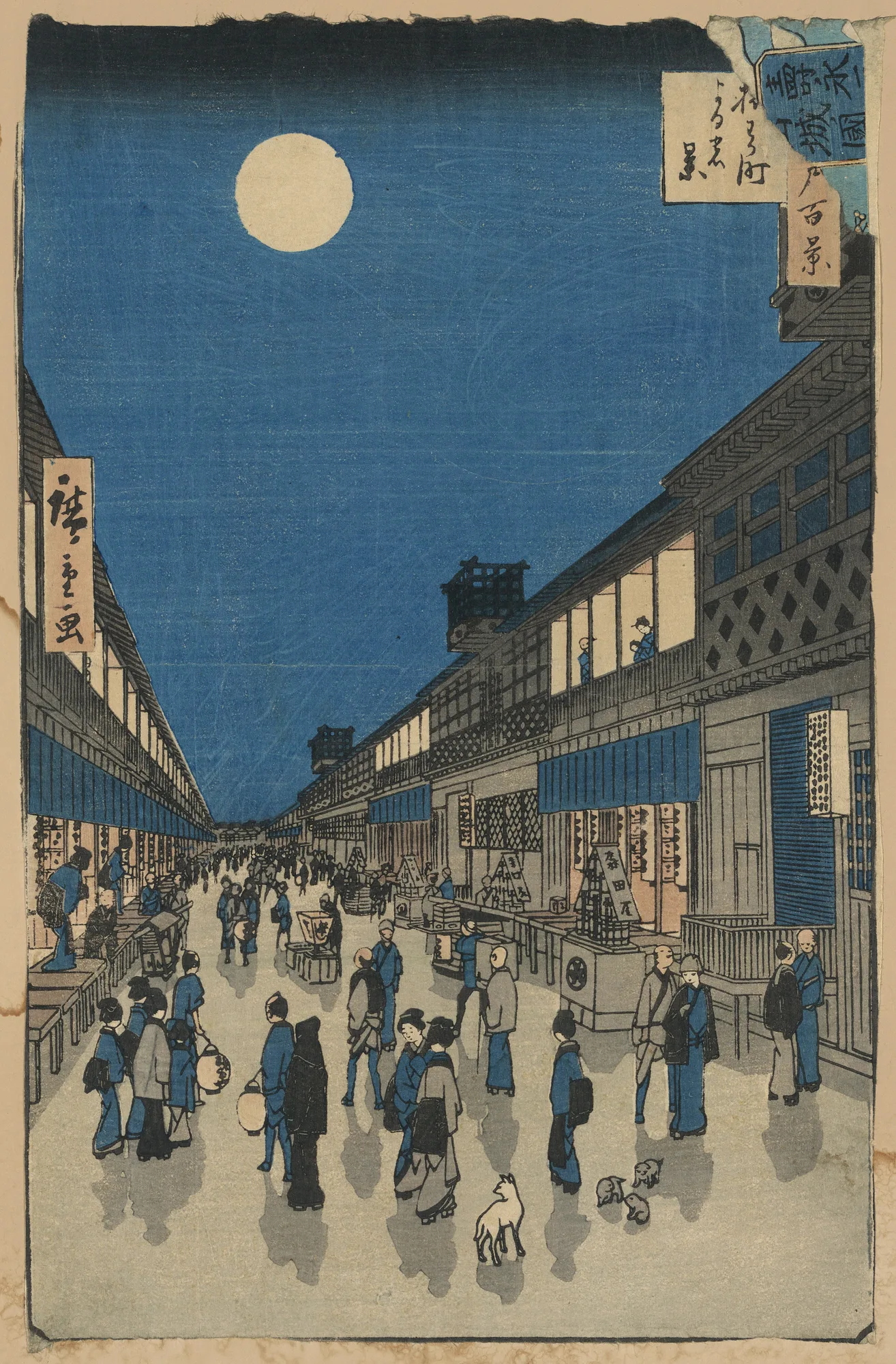
満月の夜、人々の足もとに「影」が!浮世絵ではめずらしい月明かりの芝居町。Under the full moon, people cast shadows! A rare moonlit street of theaters in ukiyo-e.
 美術館アンテナ:歌川広重の作品に会える展覧会
この作品のお話
Storyまんまるの月が照らす夜の通り。両側に大きな建物がならび、たくさんの人が行き来しています。ここは江戸の芝居町、猿若町(さるわかまち)。右側の屋根の上の四角いやぐらは、幕府に認められた芝居小屋のしるしです。歌川広重の「名所江戸百景」の一枚で、1856年に出版されました。
A full moon lights up a street at night. Large buildings line both sides, and many people walk back and forth. This is Saruwaka-machi, the theater district of Edo. The square towers on the roofs on the right show that these were official kabuki theaters. This print is from Hiroshige's One Hundred Famous Views of Edo and was published in 1856.
1841年に火事が起き、さらに幕府の「天保の改革」で芝居がぜいたくだとされたため、江戸の中心にあった歌舞伎の芝居小屋は、浅草の北のはずれに移されました。それがこの猿若町です。名前は、江戸歌舞伎を始めた猿若勘三郎にちなんでいます。広重は、西洋風の遠近法で、通りが奥へまっすぐのびる様子を描いています。
In 1841, a fire broke out. Then, under the government's Tenpō Reforms, kabuki was seen as too fancy. So the theaters in central Edo were moved to the northern edge of Asakusa. That place became Saruwaka-machi. It was named after Saruwaka Kanzaburō, who started kabuki in Edo. Hiroshige used Western-style perspective to show the street running straight into the distance.
いちばんの見どころは、人々の足もとにのびる影です。浮世絵では、人の影を描くことはほとんどありませんでした。月明かりの明るさと夜の静けさが、影一つで伝わってきます。浮世絵は同じ版木から何枚も摺られたので、この図柄も世界中の美術館にあります。ここで見ているのは、アメリカ議会図書館の一枚です。
The best part is the shadows stretching from people's feet. Ukiyo-e prints almost never showed shadows of people. These shadows alone tell us how bright the moon is and how quiet the night feels. Many copies were printed from the same blocks, so museums around the world own this design. The one you see belongs to the Library of Congress in the United States.
町の夜です。空に大きな満月があります。たくさんの人が通りを歩いています。地面を見てください。人に影があります!昔の日本の版画では、影はとてもめずらしいのです。
It is night in a town. A big full moon is in the sky. Many people walk on the street. Look at the ground. People have shadows! Shadows are very rare in old Japanese prints.
英語のレベルは上の「やさしい/ふつう」で切りかえられます。
えっ!?な裏ネタ
Secrets浮世絵は、輪郭線と平らな色で描くのが基本で、人の影はほとんど描かれません。この絵では、月明かりで人々の影が地面にくっきりのびています。広重が西洋の絵から学んだ表現だとも考えられています。
Ukiyo-e usually uses outlines and flat colors, and cast shadows behind figures are rarely shown. In this print, the moonlight creates clear shadows on the ground. Some think Hiroshige learned this from Western pictures.
猿若町には歌舞伎だけでなく、あやつり人形の芝居小屋もありました。地面にのびる人々の影は、舞台の上の人形を思わせる、という見方もあります。町全体が一つの舞台のようですね。
Saruwaka-machi had not only kabuki theaters but also puppet theaters. Some say the people's shadows remind us of puppets on a stage. The whole street looks like one big stage.
芝居小屋の屋根にある四角いやぐらは、幕府から興行を許された芝居小屋だけが立てられる、特別な目じるしでした。やぐらには幕が張られ、太鼓を打って開演を知らせたと言われます。
Only theaters with government permission could put these square towers on their roofs. Curtains hung on the towers, and drums are said to have been beaten there to announce the shows.
通りの手前をよく見ると、白い犬と小さな子犬たちが歩いています。にぎやかな芝居町の夜に、ほっとするような小さな登場人物。広重はこういう遊び心をよくかくしています。
Look at the front of the street. A white dog and some puppies are walking there. They are small, sweet characters in the busy theater town. Hiroshige often hid little touches like this.
ここを見て!
Look Closer1満月The full moon
夜空に浮かぶまんまるの月。この月明かりが、人々の影を作っています。
A round full moon floats in the night sky. Its light makes the people's shadows.
2芝居小屋のやぐらTheater tower
屋根の上の四角いやぐら。幕府に許された芝居小屋のしるしです。
A square tower on the roof. It shows that this was an approved theater.
3人々の影People's shadows
足もとから黒い影がのびています。浮世絵ではとてもめずらしい表現です。
Dark shadows stretch from people's feet. This is very unusual in ukiyo-e.
4犬の親子Dogs
白い犬と子犬たちが、月夜の通りを歩いています。
A white dog and puppies walk along the moonlit street.
英語で名画を語ろう
Talk about Art in EnglishIn the moonlight, the people cast long shadows on the street.
月明かりの中で、人々は通りに長い影を落としています。
💡 cast は「投げる」。影を「投げかける」と考えると覚えやすい表現です。
英語で説明すると… Describe it
これは町の夜の景色です。上のほうに大きな満月があります。通りの両側には高い建物があります。たくさんの人が歩いていて、黒っぽい影があります。下のほうには犬が何匹かいます。
This is a night scene in a town. At the top, there is a big full moon. There are tall buildings on both sides of the street. Many people are walking, and they have dark shadows. At the bottom, there are some dogs.
考えてみよう Think & Talk
- 影があることで、絵の感じはどう変わるでしょう?How do the shadows change the feeling of the picture?
- この人たちは、今夜どこへ行くのだと思いますか?Where do you think these people are going tonight?
この作品の英単語
WordsEach person has a long shadow.
一人一人に長い影があります。
There are kabuki theaters on the right.
右側に歌舞伎の芝居小屋があります。
The moon is bright tonight.
今夜は月が明るいです。
The street stretches into the distance.
通りは遠くまでのびています。
ミニクイズ
QuizQ. この絵が浮世絵としてめずらしいのは、何が描かれているから?What makes this print unusual for ukiyo-e?
浮世絵では人の影はほとんど描かれません。月明かりの影がこの絵の見どころです。
Cast shadows are rarely shown in ukiyo-e. The moonlit shadows are the highlight here.
ウソ?ホント? 猿若町は、江戸の歌舞伎の芝居小屋が集められた町だった。Saruwaka-machi was where Edo's kabuki theaters were gathered.
天保の改革のころ、江戸の中心から浅草の北へ移されました。
They were moved there from central Edo during the Tenpō Reforms.
ウソ?ホント? この絵は、お昼の景色を描いている。This print shows a daytime scene.
満月の照らす夜の景色です。
It is a night scene under a full moon.
 画像の出典とライセンス / Image credit
- PDSaruwaka-machi yoru no kei LCCN2008660961.jpg(Wikimedia Commons)
ライセンス:Public domain(パブリックドメイン)/作者・撮影者の表記:Andō, Hiroshige, 1797-1858, artist/提供元:Library of Congress Catalog: Image download: Original url:
この作品は、作者の死後長い年月がたち著作権の保護期間が終わった「パブリックドメイン」の作品です。画像は平面の作品を忠実に写したもので、新しい著作権は生じません(Wikimedia Commons の PD-Art の考え方)。 所蔵:アメリカ議会図書館(画像の摺り)(Library of Congress (this impression))。画像は表示のために縮小・WebP 形式に変換しています。
歌川広重のほかの作品