 ワークシート
 ぬりえ
 迷路
花しょうぶが人より大きい!?虫の目で見た、江戸の花見スポット。Irises bigger than people!? A bug's-eye view of a famous Edo flower garden.
 美術館アンテナ:歌川広重の作品に会える展覧会
この作品のお話
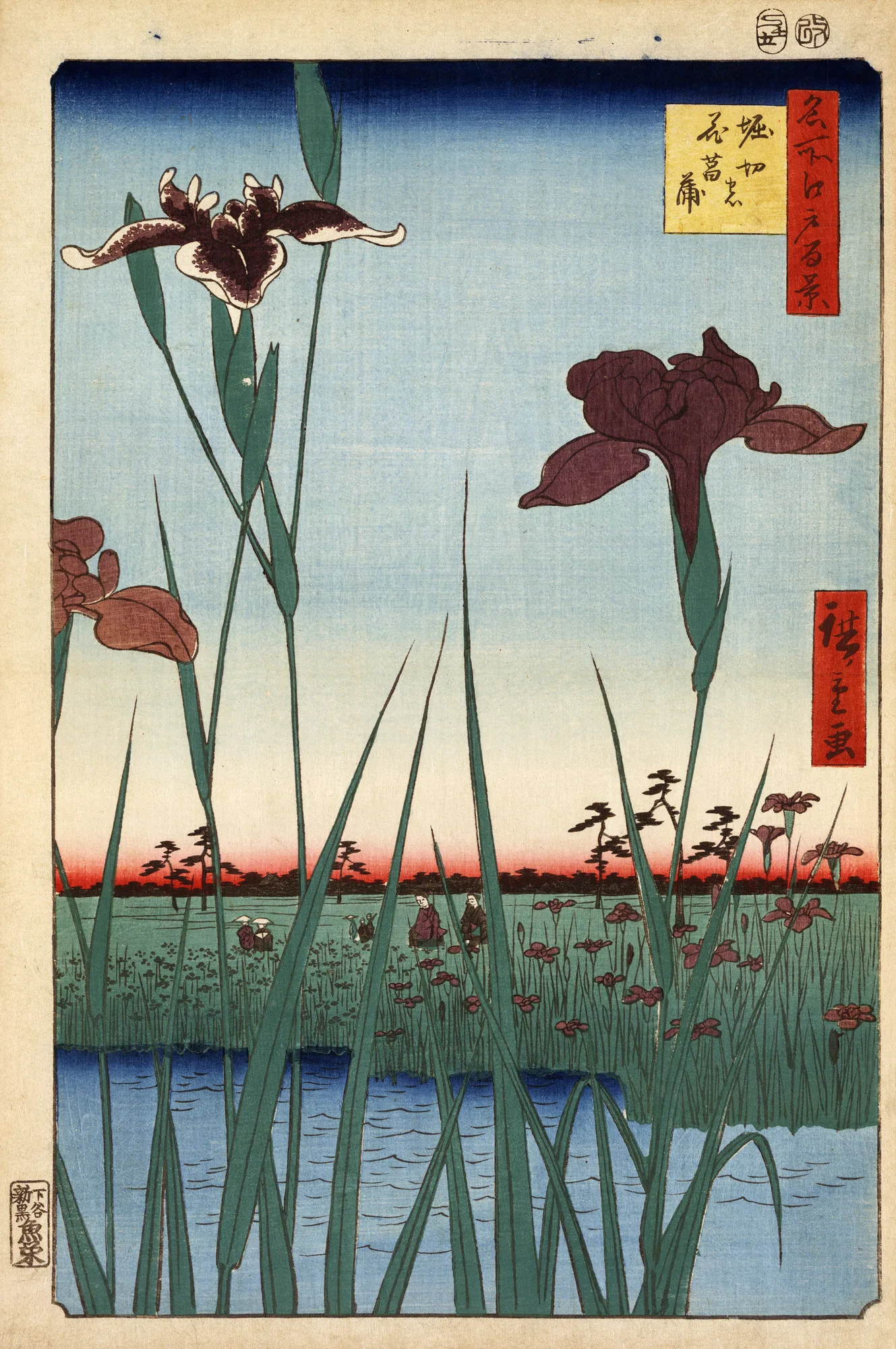
Story画面いっぱいに、すっと伸びた葉と大きな花しょうぶ。そのあいだから、奥に広がる花しょうぶの畑と、花を見に来た人々が小さく見えています。歌川広重の「名所江戸百景」の一枚で、1857年に出版されました。場所は江戸の東、堀切村(今の東京都葛飾区)。江戸時代の終わりごろから、花しょうぶの名所として知られました。
Tall leaves and big iris flowers fill the picture. Between them, we can see a wide iris field in the back and tiny people who came to see the flowers. This is from Utagawa Hiroshige's One Hundred Famous Views of Edo, published in 1857. The place is Horikiri village, east of Edo, in today's Katsushika, Tokyo. It became famous for irises in the late Edo period.
初夏になると、江戸の人々は堀切に出かけ、色とりどりの花しょうぶを楽しみました。広重は、地面すれすれの低い目線から花を見上げるように描き、手前の花を人よりもずっと大きくしました。白に紫のしぼりが入った花、深い紫の花など、品種のちがいも描き分けられています。この絵はシリーズの夏の部に入っています。
In early summer, people from Edo traveled to Horikiri to enjoy irises of many colors. Hiroshige drew the flowers from a very low point, as if looking up from the ground, and made the front flowers much bigger than the people. He also showed different kinds, such as a white flower with purple marks and a deep purple one. This print is in the summer section of the series.
堀切の花しょうぶ園は今も「堀切菖蒲園」として公開され、毎年6月ごろに見ごろをむかえます。江戸で生まれた花しょうぶの品種は「江戸系」と呼ばれ、今も育てられています。浮世絵は同じ版木から何枚も摺られたので、この図柄も世界中にあります。画像の摺りはアメリカ議会図書館の所蔵です。
The Horikiri iris garden is still open today as Horikiri Shōbuen, and the flowers are at their best around June each year. Iris types created in Edo are called 'Edo-kei' and are still grown today. Many prints were made from the same blocks, so this design is in museums worldwide. This impression is in the Library of Congress.
これは大きな紫の花です。花しょうぶです。奥の人たちよりも大きいですね!人々は花を見にここへ来ました。今も見に行くことができます。
These are big purple flowers. They are irises. They are bigger than the people in the back! People came here to see the flowers. You can still see them today.
英語のレベルは上の「やさしい/ふつう」で切りかえられます。
えっ!?な裏ネタ
Secretsよく似た三つの花ですが、あやめはかわいた土、かきつばたは水の中、花しょうぶはしめった田んぼのような土地で育ちます。どれも美しくて区別しにくいことから「いずれあやめかかきつばた」という言葉も生まれました。
These three flowers look alike. Ayame grows in dry soil, kakitsubata grows in water, and hanashōbu grows in wet, rice-field-like ground. Because they are all beautiful and hard to tell apart, Japanese has a saying meaning 'both are lovely, it's hard to choose.'
江戸時代の旗本・松平定朝(菖翁)は、何十年もかけて花しょうぶの新しい品種を数多く生み出しました。堀切の花しょうぶ園も、その品種を取り入れて人気を集めたと言われます。武士の趣味が、江戸の花見の名所を育てたのです。
Matsudaira Sadatomo, a samurai of the Edo period, spent decades creating many new types of irises. The Horikiri gardens are said to have become popular partly by growing his varieties. A samurai's hobby helped make a famous flower spot in Edo.
5月5日の端午の節句に入る「菖蒲湯」のショウブは、細長い葉に香りがある植物で、花しょうぶとは名前が似ていても、まったく別の仲間です。花しょうぶの花をお風呂に入れても、あの香りはしません。
The shōbu leaves put in the bath on May 5th come from a plant with long, sweet-smelling leaves. It has a similar name, but it is a completely different plant from the hanashōbu iris. Iris flowers in the bath would not give that smell.
江戸で育てられた品種は「江戸系」と呼ばれ、肥後系・伊勢系とならぶ花しょうぶの代表的なグループです。江戸時代に生まれた品種は、今も堀切菖蒲園などで大切に育てられ、毎年花を咲かせています。
The irises developed in Edo are called Edo-kei. Along with the Higo and Ise types, they are one of the main groups of Japanese irises. Varieties developed in the Edo period are still carefully grown and bloom every year at Horikiri Shōbuen and other gardens.
ここを見て!
Look Closer1白と紫の花しょうぶWhite and purple iris
白い花びらに紫のもようが入った花しょうぶ。品種のちがいまで描き分けています。
A white iris with purple markings. Hiroshige even showed different varieties.
2紫の花しょうぶPurple iris
深い紫の大きな花。手前の花は、人よりずっと大きく描かれています。
A big, deep purple flower. The front flowers are drawn much bigger than the people.
3花見の人々Flower viewers
花しょうぶの畑を歩く人々。豆つぶのように小さく見えます。
People walk through the iris field. They look as small as beans.
4水辺Waterside
手前の水。花しょうぶがしめった土地を好むことがわかります。
The water in front shows that irises like wet ground.
英語で名画を語ろう
Talk about Art in EnglishThe irises at Horikiri are in full bloom.
堀切の花しょうぶは満開です。
💡 花が「満開」の状態を表す定番表現。桜なら The cherry blossoms are in full bloom. です。
英語で説明すると… Describe it
これは夏の花しょうぶの畑です。手前には、長い葉をもつ紫や白の大きな花があります。奥では、小さな人々が花畑を歩いています。下には水があります。
This is a field of irises in summer. In the foreground, there are big purple and white flowers with long leaves. In the background, small people are walking in the flower field. At the bottom, there is some water.
考えてみよう Think & Talk
- 広重はなぜ、花を人よりも大きく描いたと思いますか?Why do you think Hiroshige drew the flowers bigger than the people?
- もしあなたがこの絵の中の虫だったら、何が見えると思いますか?If you were a bug in this picture, what would you see?
この作品の英単語
WordsPurple irises bloom in early summer.
紫の花しょうぶは初夏に咲きます。
The flowers bloom in June.
その花は6月に咲きます。
There are many varieties of irises.
花しょうぶにはたくさんの品種があります。
The people in the back look tiny.
奥の人々はとても小さく見えます。
ミニクイズ
QuizQ. 花しょうぶがよく育つのは、どんな場所?Where do hanashōbu irises grow well?
花しょうぶはしめった土地を好みます。絵の手前にも水があります。
Hanashōbu likes wet ground. You can see water in the front of the print, too.
ウソ?ホント? 堀切の花しょうぶ園は、今も公開されている。The Horikiri iris garden is still open today.
東京都葛飾区の「堀切菖蒲園」として、毎年6月ごろに見ごろをむかえます。
It is Horikiri Shōbuen in Katsushika, Tokyo, and blooms around June.
ウソ?ホント? 菖蒲湯に入れるショウブは、花しょうぶの葉だ。The leaves used in the May 5th bath come from hanashōbu irises.
菖蒲湯のショウブは、花しょうぶとは別の植物です。
The bath plant is a completely different plant.
 画像の出典とライセンス / Image credit
- PDHiroshige, Horikiri iris garden, 1857.jpg(Wikimedia Commons)
ライセンス:Public domain(パブリックドメイン)/作者・撮影者の表記:Utagawa Hiroshige
この作品は、作者の死後長い年月がたち著作権の保護期間が終わった「パブリックドメイン」の作品です。画像は平面の作品を忠実に写したもので、新しい著作権は生じません(Wikimedia Commons の PD-Art の考え方)。 所蔵:アメリカ議会図書館(画像の摺り)(Library of Congress (this impression))。画像は表示のために縮小・WebP 形式に変換しています。
歌川広重のほかの作品