

 PDF をダウンロード
Let's Look at Art!
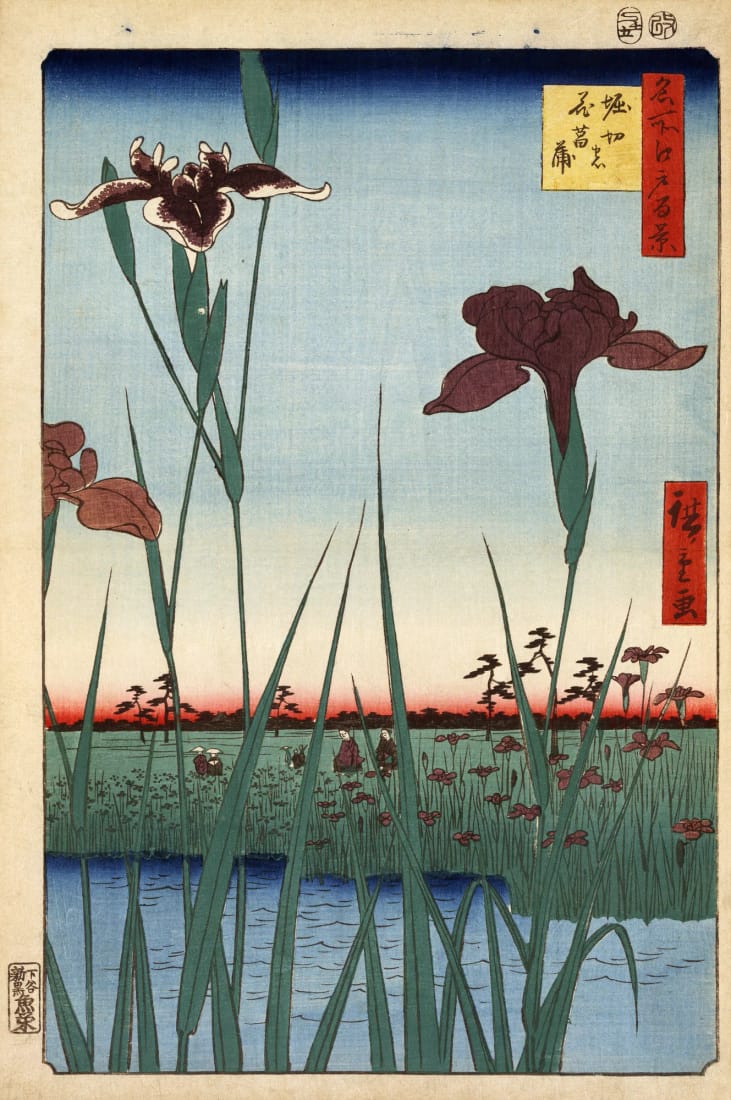
Title: Horikiri Iris Garden (One Hundred Famous Views of Edo)
Artist: Utagawa Hiroshige (1797–1858)
Year: 1857
Medium: Woodblock print; ink and color on paper
Museum: Library of Congress (this impression), Washington, D.C.
1 Find it! 絵の中から見つけて、○でかこもう。
- ☐ White and purple iris
- ☐ Purple iris
- ☐ Flower viewers
- ☐ Waterside
2 First look 最初に見たときの感想を書こう。
When I first saw this painting, I felt ______________ because ______________________.
Three colors I can see: ①__________ ②__________ ③__________
3 Words — Match them. 英語と日本語を線で結ぼう。
- iris ●
- bloom ●
- variety ●
- tiny ●
- ● アヤメの仲間(花しょうぶなど)
- ● 品種、種類
- ● 咲く
- ● とても小さい
Horikiri Iris Garden (One Hundred Famous Views of Edo)
4 Fill in the blanks. 下の箱から選んで、( )に入れよう。形を変えるものもあります。
- Purple bloom in early summer.
- The flowers in June.
- There are many of irises.
- The people in the back look .
5 Read and answer — True or False? 英文を読んで、正しければ T、ちがえば F。
These are big purple flowers. They are irises. They are bigger than the people in the back! People came here to see the flowers. You can still see them today.
Tall leaves and big iris flowers fill the picture. Between them, we can see a wide iris field in the back and tiny people who came to see the flowers. This is from Utagawa Hiroshige's One Hundred Famous Views of Edo, published in 1857. The place is Horikiri village, east of Edo, in today's Katsushika, Tokyo. It became famous for irises in the late Edo period.
- The Horikiri iris garden is still open today. T / F
- The leaves used in the May 5th bath come from hanashōbu irises. T / F
6 Quiz — Choose the best answer. 正しいものを選ぼう。
Where do hanashōbu irises grow well?
- In the desert
- On snowy mountains
- In wet, rice-field-like ground
- On house roofs
Horikiri Iris Garden (One Hundred Famous Views of Edo)
7 Put the words in order. 語を正しく並べかえて、文を書こう。
- The / are / in / irises / bloom / full / Horikiri / at .
- of / is / field / irises / This / in / a / summer .
8 Complete the description. 箱の語を(1)〜(4)に入れて、絵の説明を完成させよう。
This is a field of irises in summer. In the foreground, there are big purple and (1) flowers with long (2). In the (3), small people are walking in the flower field. At the bottom, there is some (4).
9 Describe the painting in English. この絵を英語で説明しよう(3文以上)。
10 Think & Talk 考えて、ペアやグループで話し合おう。
Why do you think Hiroshige drew the flowers bigger than the people?
If you were a bug in this picture, what would you see?
11 My favorite part いちばん好きなところを英語で。
I like the ____________ because ____________________________.
Answers & Notes
1 Find it!
White and purple iris=白と紫の花しょうぶ/Purple iris=紫の花しょうぶ/Flower viewers=花見の人々/Waterside=水辺
2 First look
自由に書けたら正解。I felt calm / surprised / happy … などの形容詞を使おう。
3 Words
1–a(iris=アヤメの仲間(花しょうぶなど)) 2–c(bloom=咲く) 3–b(variety=品種、種類) 4–d(tiny=とても小さい)
4 Fill in the blanks
- irises Purple irises bloom in early summer.
紫の花しょうぶは初夏に咲きます。 - bloom The flowers bloom in June.
その花は6月に咲きます。 - varieties There are many varieties of irises.
花しょうぶにはたくさんの品種があります。 - tiny The people in the back look tiny.
奥の人々はとても小さく見えます。
5 Read — T / F
【本文の訳】これは大きな紫の花です。花しょうぶです。奥の人たちよりも大きいですね!人々は花を見にここへ来ました。今も見に行くことができます。
【本文の訳】画面いっぱいに、すっと伸びた葉と大きな花しょうぶ。そのあいだから、奥に広がる花しょうぶの畑と、花を見に来た人々が小さく見えています。歌川広重の「名所江戸百景」の一枚で、1857年に出版されました。場所は江戸の東、堀切村(今の東京都葛飾区)。江戸時代の終わりごろから、花しょうぶの名所として知られました。
- T 堀切の花しょうぶ園は、今も公開されている。
解説:東京都葛飾区の「堀切菖蒲園」として、毎年6月ごろに見ごろをむかえます。 - F 菖蒲湯に入れるショウブは、花しょうぶの葉だ。
解説:菖蒲湯のショウブは、花しょうぶとは別の植物です。
6 Quiz
C 問:花しょうぶがよく育つのは、どんな場所?
選択肢:A 砂ばく/B 雪山の上/C しめった田んぼのような土地/D 家の屋根の上
解説:花しょうぶはしめった土地を好みます。絵の手前にも水があります。
7 Put the words in order
- The irises at Horikiri are in full bloom.
堀切の花しょうぶは満開です。 - This is a field of irises in summer.
これは夏の花しょうぶの畑です。
💡 in full bloom(満開で):花が「満開」の状態を表す定番表現。桜なら The cherry blossoms are in full bloom. です。
8 Complete the description
(1) white (2) leaves (3) background (4) water
9 Describe(模範解答)
This is a field of irises in summer. In the foreground, there are big purple and white flowers with long leaves. In the background, small people are walking in the flower field. At the bottom, there is some water.
これは夏の花しょうぶの畑です。手前には、長い葉をもつ紫や白の大きな花があります。奥では、小さな人々が花畑を歩いています。下には水があります。
10 Think & Talk(問いの訳)
- Why do you think Hiroshige drew the flowers bigger than the people?
広重はなぜ、花を人よりも大きく描いたと思いますか? - If you were a bug in this picture, what would you see?
もしあなたがこの絵の中の虫だったら、何が見えると思いますか?
正解のない問いです。理由をつけて話せたら◎。
Fun Fact(訳)
あやめ・かきつばた・花しょうぶ よく似た三つの花ですが、あやめはかわいた土、かきつばたは水の中、花しょうぶはしめった田んぼのような土地で育ちます。どれも美しくて区別しにくいことから「いずれあやめかかきつばた」という言葉も生まれました。
