 ワークシート
 ぬりえ
 迷路
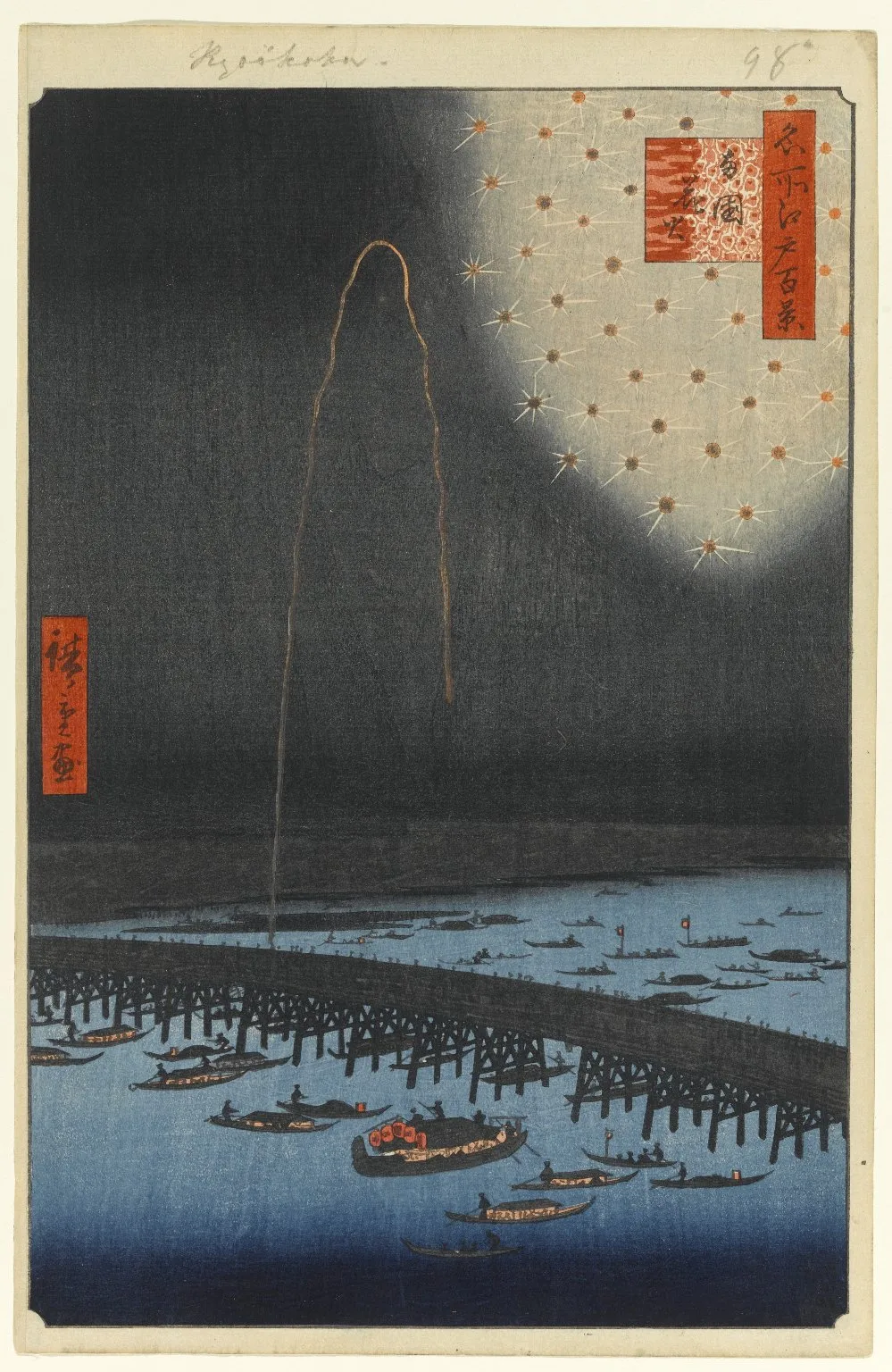
ドーン!江戸の夏の夜空に、パッと開いた花火。屋形船も大にぎわい。Boom! Fireworks burst over Edo on a summer night, and the river is full of boats.
 美術館アンテナ:歌川広重の作品に会える展覧会
この作品のお話
Story夏の夜、江戸の隅田川にかかる両国橋のあたりで花火が上がっています。歌川広重の「名所江戸百景」の一枚で、広重が亡くなる年の1858年に出版されました。まっ暗な空に、大きな弧をえがく光の線と、パッと開いた花火の火花。下の川には、花火見物の舟がたくさん浮かんでいます。
On a summer night, fireworks rise over Ryōgoku Bridge on the Sumida River in Edo. This print is from Hiroshige's One Hundred Famous Views of Edo. It came out in 1858, the year he died. In the dark sky, a thin line of light draws a large arc, and a firework bursts into sparks. Below, the river is crowded with boats full of people watching.
両国の花火は、夏の「川開き」のころから、涼みに来る人々のために打ち上げられていました。1733年に始まったと言われ、ききんや病気で亡くなった人々をとむらう意味もあったと伝えられます。舟で見物するのはぜいたくな楽しみで、提灯をともした屋形船が川にあふれました。今の「隅田川花火大会」のルーツです。
At Ryōgoku, fireworks were set off for people who came to the river to cool down in summer. They are said to have started in 1733. People say they were also meant to honor those who died from famine and sickness. Watching from a boat was a luxury, and boats with lanterns filled the river. This is the root of today's Sumida River Fireworks Festival.
暗い夜空は、墨色をぼかして摺ることで深さを出し、花火の明るさをいっそう引き立てています。浮世絵は同じ版木から何枚も摺られたので、この図柄も世界中の美術館にあります。ここで見ているのは、名所江戸百景をまとめて持つニューヨークのブルックリン美術館の一枚です。
The deep night sky was made by printing dark ink with soft shading, which makes the fireworks look even brighter. Many sheets were printed from the same woodblocks, so this design is in museums all over the world. The one you see belongs to the Brooklyn Museum in New York, which owns a full set of the series.
江戸の夏の夜です。暗い空に花火が上がります。川にはたくさんの舟が浮かんでいます。人々は舟や橋の上から花火を見ています。今でも花火のときに「たまや〜!」とさけびますね。玉屋は江戸の花火屋さんだったのです。
It is a summer night in Edo. Fireworks go up into the dark sky. Many boats are on the river. People watch the fireworks from the boats and the bridge. Today, people still shout 'Tamaya!' at fireworks. Tamaya was a firework shop in Edo.
英語のレベルは上の「やさしい/ふつう」で切りかえられます。
えっ!?な裏ネタ
Secrets花火のかけ声「たまや〜」「かぎや〜」は、江戸の二大花火屋の名前です。ところが玉屋は1843年、店から火事を出してしまい、江戸から追放されました。かけ声だけが今も残っているのです。
People shout 'Tamaya!' and 'Kagiya!' at fireworks. These were the names of two big firework makers in Edo. But in 1843, a fire started at Tamaya's shop, and the owner was banished from Edo. Only the shout lives on.
もう一方の鍵屋は江戸時代の初めごろから続く老舗で、今も花火を作る会社として残っています。玉屋は、もともと鍵屋の店から独立した店でした。この版画が出た1858年には玉屋はすでになくなっていたので、広重の絵の夜空の花火は、鍵屋のものだったのかもしれません。
The other maker, Kagiya, started in the early Edo period. It still makes fireworks today. Tamaya was first a branch that split off from Kagiya. Tamaya was already gone when this print came out in 1858, so the fireworks in Hiroshige's sky may have been Kagiya's.
アメリカ出身の画家ホイッスラーは、浮世絵に強くひかれた一人です。夜空に花火が散る油絵「黒と金のノクターン」(1875年)は、この広重の版画とよく並べて語られます。暗い画面に光の点だけが浮かぶところが似ています。
The American-born painter Whistler loved Japanese prints. His oil painting 'Nocturne in Black and Gold' (1875) shows fireworks in a night sky. It is often compared with this print. Both show small dots of light in a dark picture.
この絵が出た1858年の秋、広重は亡くなりました。名所江戸百景はまだ完成しておらず、残りは弟子が仕上げました。夜空にぱっと開いて消える花火は、広重の最後の夏の景色だったことになります。
Hiroshige died in the autumn of 1858. The series was not finished, so his pupil completed it. These bright fireworks were one of the last summer scenes he made.
ここを見て!
Look Closer1開いた花火The bursting firework
夜空にパッと散った火花。星のような点を一つずつ摺り分けています。
Sparks spread across the night sky. Each star-like dot was printed carefully.
2光の線The trail of light
細い金色の線が、夜空の中央に大きな弧をえがいています。打ち上げられた花火が残した光の軌跡です。
A thin golden line makes a large arc through the night sky. It traces the path of a firework.
3両国橋Ryōgoku Bridge
隅田川にかかる大きな木の橋。橋の上にも、花火を見る人々が小さく並んでいます。
A big wooden bridge over the Sumida River. Tiny people stand on it to watch the fireworks.
4提灯の屋形船Boat with lanterns
赤い提灯をつるした屋形船。お金持ちは舟の上で、ごちそうを食べながら花火を楽しみました。
A pleasure boat with red lanterns. Rich people enjoyed food and fireworks on boats like this.
英語で名画を語ろう
Talk about Art in EnglishFireworks light up the night sky over the Sumida River.
花火が隅田川の夜空を彩っています。
💡 light up は「明るくする」。顔がぱっと明るくなる時にも使えます。
英語で説明すると… Describe it
これは江戸の夏の夜です。右上で、花火がたくさんの火花になって開いています。下には長い木の橋があります。川にはたくさんの小舟が浮かんでいます。赤い提灯をつけた舟もあります。
This is a summer night in Edo. At the top right, a firework is bursting into many sparks. At the bottom, there is a long wooden bridge. Many small boats are on the river. Some boats have red lanterns.
考えてみよう Think & Talk
- 江戸の花火見物と、今の花火大会はどこがちがうと思いますか?How is watching fireworks in Edo different from watching them today?
- 広重はなぜ画面のほとんどを暗くしたのだと思いますか?Why do you think Hiroshige made most of the picture dark?
この作品の英単語
WordsFireworks light up the summer sky.
花火が夏の空を明るくします。
The firework bursts into tiny sparks.
花火が小さな火花になってパッと開きます。
The river is crowded with boats.
川は舟で混み合っています。
Red lanterns hang on the boat.
舟に赤い提灯がつるされています。
ミニクイズ
QuizQ. 花火のかけ声「たまや〜」の「玉屋」とは?What was 'Tamaya', as in the shout 'Tamaya!'?
玉屋と鍵屋は、江戸の二大花火屋でした。
Tamaya and Kagiya were the two big firework makers in Edo.
ウソ?ホント? この版画が出た年に、広重は亡くなった。Hiroshige died in the year this print came out.
1858年に出版され、広重はその年の秋に亡くなりました。
It was published in 1858, and he died that autumn.
ウソ?ホント? 江戸時代の花火は、冬の行事だった。In the Edo period, fireworks were a winter event.
夏、川へ涼みに来る人々のために打ち上げられました。
They were set off in summer for people cooling down by the river.
 画像の出典とライセンス / Image credit
- PDFireworks at Ryogoku (Ryogoku Hanabi), No. 98 from One Hundred Famous Views of Edo.jpg(Wikimedia Commons)
ライセンス:Public domain(パブリックドメイン)/作者・撮影者の表記:Utagawa Hiroshige (Ando), Japanese, 1797-1858
この作品は、作者の死後長い年月がたち著作権の保護期間が終わった「パブリックドメイン」の作品です。画像は平面の作品を忠実に写したもので、新しい著作権は生じません(Wikimedia Commons の PD-Art の考え方)。 所蔵:ブルックリン美術館(画像の摺り)(Brooklyn Museum (this impression))。画像は表示のために縮小・WebP 形式に変換しています。
歌川広重のほかの作品