 ワークシート
 ぬりえ
 迷路
眠りに落ちていくような姿。教皇の墓のために彫られ、パリへ旅した像。He seems to be falling asleep. Made for a pope's tomb, it ended up in Paris.
この作品のお話
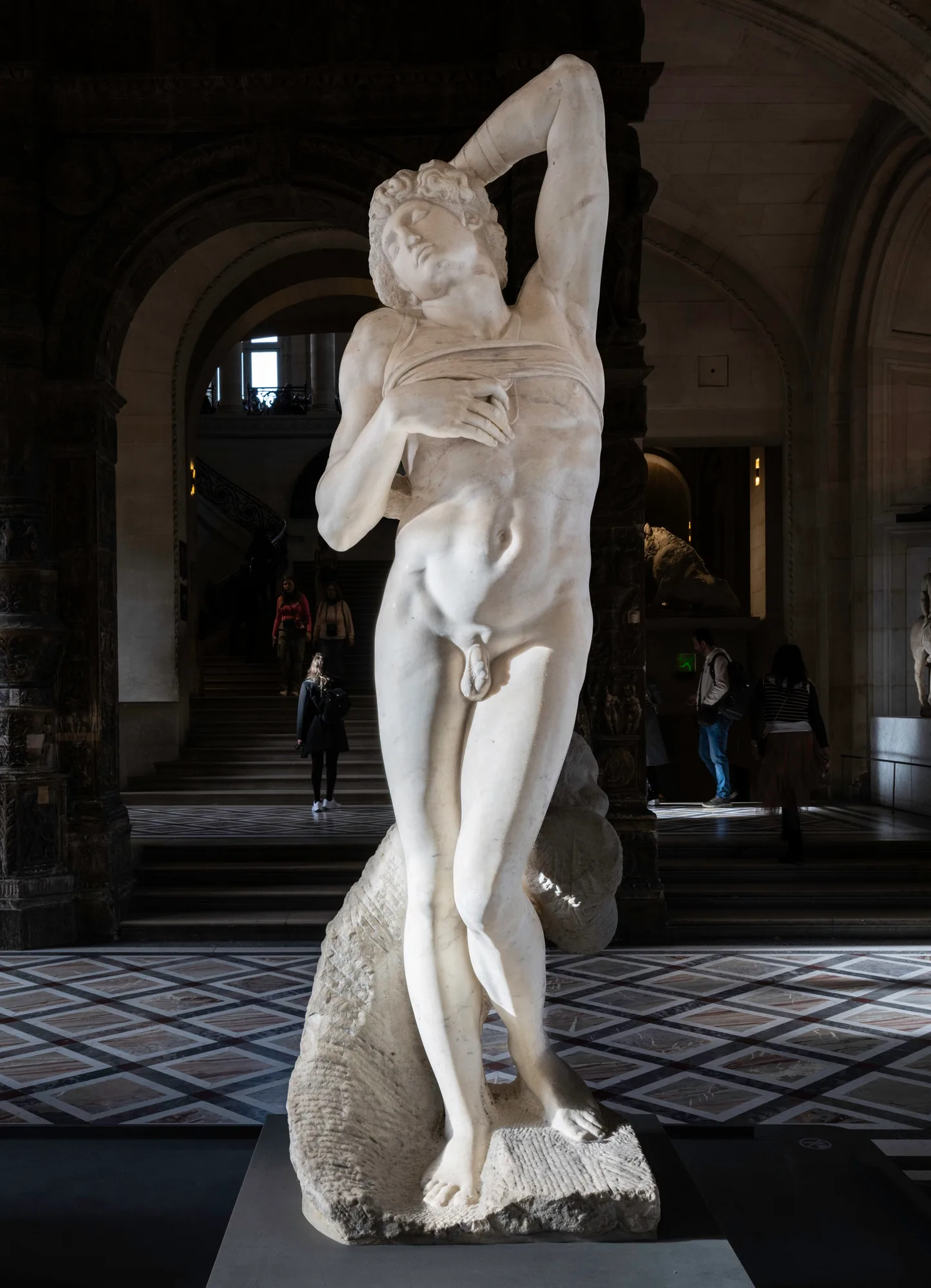
Story片うでを頭の上にのせ、目を閉じて体をよじる若者の像。ミケランジェロの『瀕死の奴隷』とよばれる大理石像です。1513〜15年の作品で、今はパリのルーヴル美術館にあります。題名は「死にかけた奴隷」ですが、苦しんでいるというより、深い眠りに落ちていくように見えます。この画像は展示室で撮られた写真です。
This marble statue shows a young man with one arm over his head. His eyes are closed and his body is twisting. It is called the Dying Slave, by Michelangelo, and was made between 1513 and 1515. It is now in the Louvre in Paris. Despite its title, he seems to be falling into a deep sleep rather than suffering. This image is a photo taken in the gallery.
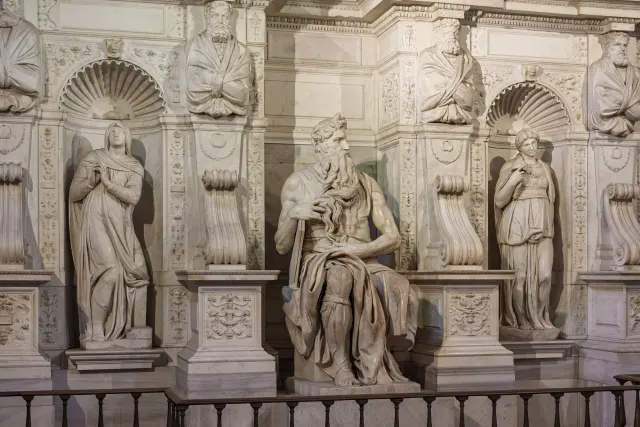
この像は、ローマ教皇ユリウス2世の巨大な墓のために彫られました。最初の計画では40体以上の像がならぶはずでしたが、教皇の死や資金の問題で、計画は何度も小さくなりました。結局この像は墓には使われず、ローマの教会に完成した墓の中心には『モーセ』がすえられました。
The statue was made for the huge tomb of Pope Julius II. The first plan had more than 40 statues. But after the pope died, and because of money problems, the plan became smaller again and again. In the end, this statue was not used. When the tomb was finished in a church in Rome, the statue of Moses was placed at its center.
1546年ごろ、ミケランジェロは病気のときに世話になった友人ロベルト・ストロッツィに、この像と『反抗する奴隷』を贈りました。2体はその後フランス王に献上され、いくつかの城をへて、フランス革命中の1794年にルーヴルへ移されました。今もルーヴルの彫刻の展示室に、2体そろって展示されています。
Around 1546, Michelangelo gave this statue and the Rebellious Slave to his friend Roberto Strozzi, who had cared for him when he was ill. The two statues were later given to the King of France and passed through several castles. In 1794, during the French Revolution, they were moved to the Louvre. Today they are shown together in the Louvre's sculpture galleries.
これは白い石の像です。若い男の人が目を閉じています。片うでを頭の上にのせています。ミケランジェロは教皇のお墓のためにこれを作りました。でも、像はパリへ行きました。
This is a white stone statue. A young man closes his eyes. He puts one arm over his head. Michelangelo made it for a pope's tomb. But it went to Paris instead.
英語のレベルは上の「やさしい/ふつう」で切りかえられます。
えっ!?な裏ネタ
Secrets像の後ろ、足のそばの石には、ざっくり彫られたサルの姿があります。その意味ははっきりしません。「芸術は自然をまねるサル」という言い方から、教皇の死を悲しむ絵画などの芸術を表すという説や、人をしばる物の世界を表すという説があります。
Behind his legs, a monkey is roughly carved in the stone. Its meaning is unclear. People once said that 'art is the ape of nature,' so some think the monkey stands for the arts, such as painting, mourning the pope. Others think it stands for the material world that holds people captive.
台座やサルのまわりには、のみ(彫刻刀)のギザギザのあとが残っています。なめらかにみがかれた肌とくらべると、ミケランジェロが石の中から人の姿を少しずつ取り出していく途中が見えるようです。
On the base and around the monkey, you can see rough lines left by the chisel. Compare them with the smooth, polished skin. It is as if we can see Michelangelo slowly freeing a body from inside the stone.
胸の上に、細い帯がかかっています。これが彼をしばるものを表しているとされます。くさりも鉄格子もないのに、たった1本の帯で「とらわれの身」を表している、ふしぎな像です。
A thin band lies across his chest. It is thought to show what holds him captive. There are no chains and no bars, yet one thin band is enough to show that he is a prisoner.
同じ墓のための「とらわれ人」の像は、ほかにもあります。フィレンツェのアカデミア美術館には、石から体が半分出てきたような未完成の4体が並び、あの『ダヴィデ』へ向かう通路をかざっています。
There are other 'prisoner' statues for the same tomb. In the Accademia Gallery in Florence, four unfinished figures seem to be half coming out of the stone. They line the hall that leads to the famous David.
ここを見て!
Look Closer1目を閉じた顔Closed eyes
頭を後ろにかたむけ、目を閉じた顔。苦しみより、やすらぎを感じさせます。
His head tilts back and his eyes are closed. He looks peaceful rather than in pain.
2頭の上のうでArm over his head
左うでを頭の上へ。体全体が、ゆるやかなS字をえがいています。
His left arm is raised over his head. His whole body makes a gentle S shape.
3胸の帯The band on his chest
胸にかかる細い帯。彼がとらわれていることを表すとされます。
A thin band across his chest. It is thought to show that he is a prisoner.
4彫刻刀のあとChisel marks
台座の石に残る、のみのギザギザのあと。仕上げていない部分です。
Rough chisel lines on the stone base. This part was left unfinished.
英語で名画を語ろう
Talk about Art in EnglishThe young man stands with his eyes closed.
若者は目を閉じて立っています。
💡 with +名詞+状態で「〜を…にして」。with his arms crossed なども同じ形。
英語で説明すると… Describe it
これは若い男性の大理石の像です。片うでを頭の上にのせています。目を閉じて、体をねじっています。足もとには、ごつごつした未完成の石があります。
This is a marble statue of a young man. He is resting one arm on top of his head. His eyes are closed and his body is twisting. At his feet, there is a rough, unfinished stone.
考えてみよう Think & Talk
- 彼は死にかけている?眠っている?夢を見ている?それはなぜ?Do you think he is dying, sleeping or dreaming? Why?
- ミケランジェロはなぜ一部を仕上げずに残したのだと思いますか?Why do you think Michelangelo left some parts unfinished?
この作品の英単語
WordsThe statue is carved from white marble.
その像は白い大理石から彫られています。
It was made for the tomb of a pope.
それは教皇の墓のために作られました。
He twists his body to one side.
彼は体を片側にねじっています。
His face looks peaceful.
彼の顔は安らかに見えます。
ミニクイズ
QuizQ. この像は、もともと何のために作られた?What was this statue first made for?
教皇ユリウス2世の墓のためでしたが、計画が小さくなり使われませんでした。
It was for the tomb of Pope Julius II, but the plan got smaller and it was not used.
ウソ?ホント? 像の後ろには、彫りかけのサルがいる。There is a half-carved monkey behind the statue.
足のそばの石に、ざっくり彫られたサルがいます。
A roughly carved monkey is in the stone near his legs.
ウソ?ホント? この像は今、ユリウス2世の墓にある。This statue is now at the tomb of Julius II.
墓には使われず、今はパリのルーヴル美術館にあります。
It was not used for the tomb. It is now in the Louvre in Paris.
 画像の出典とライセンス / Image credit
- CC0Dying slave Louvre MR 1590, Louvre.jpg(Wikimedia Commons)
ライセンス:CC0(パブリックドメイン提供)/作者・撮影者の表記:Michelangelo Buenarroti (1475-1564)
この作品は、作者の死後長い年月がたち著作権の保護期間が終わっています。写真は撮影者がパブリックドメインとして公開したもの、または著作権の保護期間が終わった古い写真です。 所蔵:ルーヴル美術館(Musée du Louvre)。画像は表示のために縮小・WebP 形式に変換しています。
ミケランジェロ・ブオナローティのほかの作品