 ワークシート
 ぬりえ
 迷路
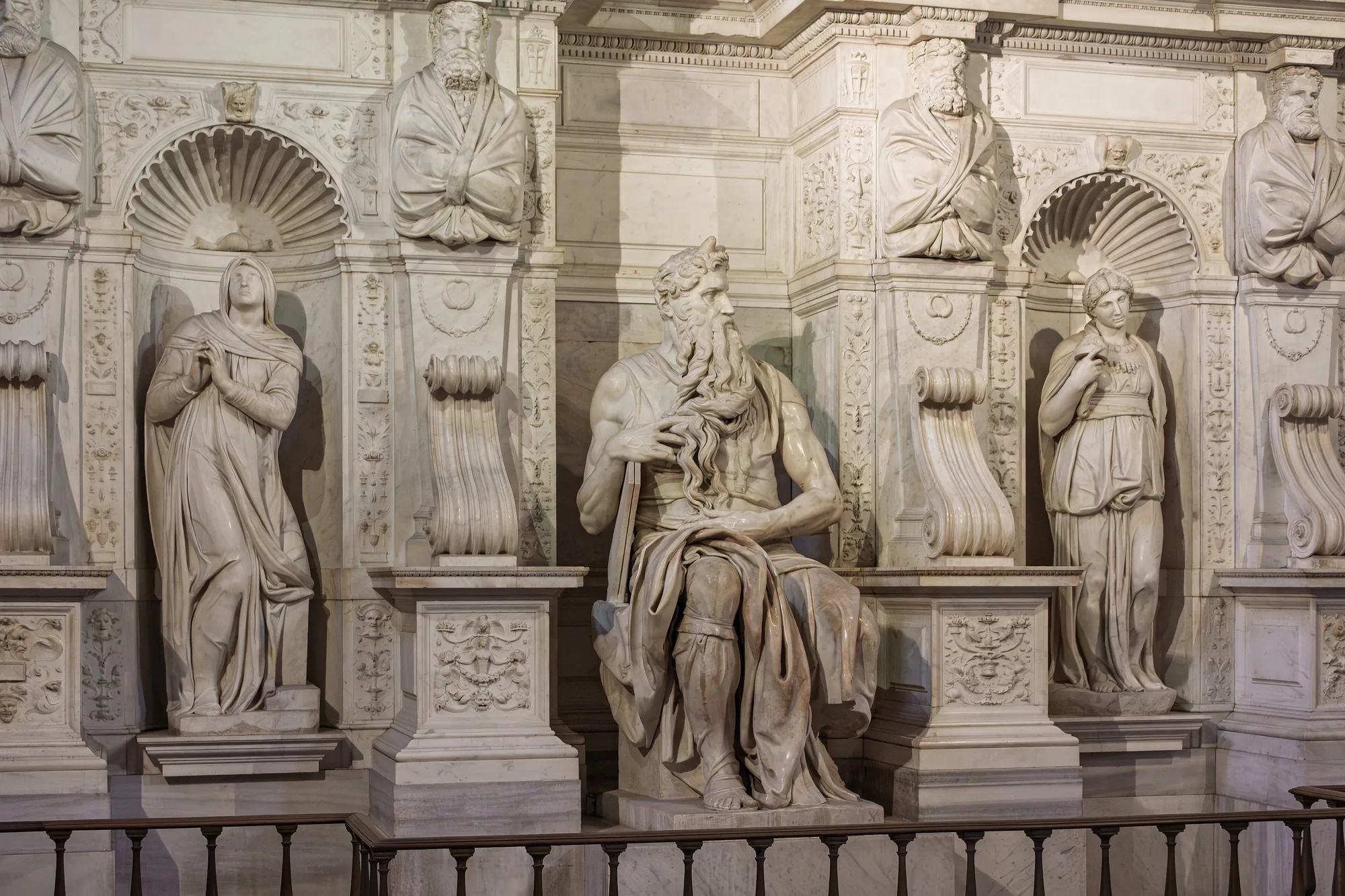
頭に角!?教皇のお墓を守る、ミケランジェロの迫力のモーセ。Horns on his head!? Michelangelo's powerful Moses guards a pope's tomb.
この作品のお話
Story旧約聖書の英雄モーセが、神から授かった十戒の石板をわきにかかえて座っています。長いひげに指をからめ、横をにらむ鋭いまなざし。今にも立ち上がりそうな力強い像です。ローマ教皇ユリウス2世のお墓のために、ミケランジェロが彫りました。左右に立つ女性の像ラケルとレアも、ミケランジェロの作品です。
Moses, a hero of the Old Testament, sits holding the stone tablets of the Ten Commandments under his arm. His fingers run through his long beard, and he glares to one side. He looks as if he could stand up at any moment. Michelangelo carved him for the tomb of Pope Julius II. The two women on either side, Rachel and Leah, are also by Michelangelo.
ユリウス2世は1505年、40体以上の像で飾る巨大なお墓をミケランジェロに注文しました。ところが、教皇がシスティーナ礼拝堂の天井画を命じたり、教皇自身が亡くなったりして、計画は何度も小さくなります。完成したのは注文から40年後の1545年。ミケランジェロはこの仕事を「墓の悲劇」と呼んだと伝えられます。
In 1505, Julius II ordered a huge tomb with more than 40 statues from Michelangelo. But the pope then asked him to paint the Sistine Chapel ceiling, and later the pope died, so the plan became smaller again and again. The tomb was finished in 1545, 40 years after the order. Michelangelo is said to have called it “the tragedy of the tomb.”
お墓はサン・ピエトロ大聖堂ではなく、ローマのサン・ピエトロ・イン・ヴィンコリ聖堂に置かれました。それでもモーセ像は、ミケランジェロの最高傑作の一つとして多くの人をひきつけてきました。精神分析を始めたフロイトもこの像に夢中になり、何度も通いつめて論文を書いています。
The tomb was not placed in St. Peter's Basilica but in the church of San Pietro in Vincoli in Rome. Even so, Moses has attracted countless visitors as one of Michelangelo's greatest works. Sigmund Freud, the founder of psychoanalysis, was fascinated by it, visited it many times and wrote an essay about it.
これは聖書に出てくるモーセです。長いひげと、2本の小さな角があります。神さまのきまりが書かれた石の板を持っています。ミケランジェロは、教皇のお墓のためにこの像を作りました。像が生きているみたいだと言われています!
This is Moses from the Bible. He has a long beard and two small horns. He holds stone tablets with God's rules. Michelangelo made him for a pope's tomb. People say the statue looks alive!
英語のレベルは上の「やさしい/ふつう」で切りかえられます。
えっ!?な裏ネタ
Secrets聖書には、神と話したあとのモーセの顔が「光を放っていた」と書かれています。ところが、昔のラテン語訳聖書ではこれが「角があった」と読める言葉で訳され、ヨーロッパではモーセに角をつけて表すことがならわしになりました。
The Bible says that after Moses spoke with God, his face shone with light. But an old Latin translation used a word that can mean “horned.” So in Europe, it became a tradition to show Moses with horns.
あまりに生きているようなできばえに、ミケランジェロがハンマーで像のひざをたたき「なぜ話さないのだ!」とさけんだ、という有名な言い伝えがあります。おもしろい話ですが、本当にあったかどうかはわかっていません。
A famous legend says the statue looked so alive that Michelangelo hit its knee with a hammer and shouted, “Why don't you speak?” It is a fun story, but no one knows if it really happened.
精神分析を始めたフロイトは、ローマでこの像に何度も通い、論文「ミケランジェロのモーセ」を書きました。民が金の牛の像を拝んでいるのを見たモーセが、怒りをぐっとこらえる瞬間だと読み解いています。
Sigmund Freud, the founder of psychoanalysis, visited this statue again and again in Rome and wrote an essay called “The Moses of Michelangelo.” He thought it showed Moses holding back his anger after seeing his people worship a golden calf.
最初の計画では、モーセ像は地上から約3.7メートルの高さに置かれ、下から見上げる予定でした。ところが計画が縮小され、今は低い位置の真ん中に座っています。上半身が長めに作られているのは、見上げたときのための工夫だとも言われます。
In the first plan, Moses was to sit about 3.7 meters above the ground, so people would look up at him. When the plan became smaller, he ended up in the center of the lowest level. Some say his upper body is long because it was designed to be seen from below.
ここを見て!
Look Closer1頭の角The horns
頭の上に、小さな2本の角があります。聖書の言葉の訳し方から生まれた、ヨーロッパの伝統的な表し方です。
Two small horns rise from his head. This is a European tradition that came from how a Bible passage was translated.
2長いひげThe long beard
右手の指を、波打つ長いひげにからめています。石とは思えない、やわらかな流れです。
He runs the fingers of his right hand through his long, wavy beard. It flows so softly that it is hard to believe it is stone.
3十戒の石板The stone tablets
右腕の下にかかえた石板。神から授かった10のおきてが書かれています。
Under his right arm, he holds the stone tablets with the Ten Commandments from God.
4祈るラケルRachel praying
左の女性はラケル、右はレア。どちらも晩年のミケランジェロが彫りました。ラケルは天を見上げて祈っています。
The woman on the left is Rachel, and the one on the right is Leah. Michelangelo carved both late in his life. Rachel looks up and prays.
英語で名画を語ろう
Talk about Art in EnglishThe statue of Moses is part of a pope's tomb.
モーセ像は教皇のお墓の一部です。
💡 大きな作品の中にある像や絵を説明するときに使えます。a part of とも言います。
英語で説明すると… Describe it
これはおじいさんの大理石の像です。真ん中に座っていて、とても長いひげがあります。右腕の下に石の板をかかえています。左右には、2人の女性の像があります。
This is a marble statue of an old man. He is sitting in the center and has a very long beard. He holds stone tablets under his right arm. On the left and right, there are statues of two women.
考えてみよう Think & Talk
- モーセは横を見ています。彼は何を見ていると思いますか?Moses is looking to the side. What do you think he is looking at?
- ミケランジェロの大きな計画は、ずっと小さくなりました。あなたも大きな計画を変えたことがありますか?どうなりましたか?Michelangelo's big plan became much smaller. Have you ever had to change a big plan? What happened?
この作品の英単語
WordsMoses has two small horns on his head.
モーセの頭には2本の小さな角がある。
The statue is part of a pope's tomb.
その像は教皇の墓の一部だ。
Moses glares to the side.
モーセは横をにらんでいる。
The statue looks almost alive.
その像はまるで生きているように見える。
ミニクイズ
QuizQ. モーセの頭に角があるのはなぜ?Why does Moses have horns?
「光を放つ」という意味の言葉が、ラテン語訳で「角がある」と読める言葉になったためです。
A word meaning “shining” was translated into Latin with a word that can mean “horned.”
ウソ?ホント? このモーセ像は、教皇のお墓の一部として作られた。This statue of Moses was made as part of a pope's tomb.
ホント。教皇ユリウス2世のお墓のための像です。
True. It was made for the tomb of Pope Julius II.
ウソ?ホント? 教皇のお墓は、最初の計画どおり40体以上の像で完成した。The pope's tomb was finished with more than 40 statues, as first planned.
ウソ。計画は何度も小さくなり、40年かけてずっと小さなお墓になりました。
False. The plan became smaller many times, and after 40 years, the tomb was much smaller.
 画像の出典とライセンス / Image credit
- CC0Moses Michelangelo 2014 01.jpg(Wikimedia Commons)
ライセンス:CC0(パブリックドメイン提供)/作者・撮影者の表記:Perituss/提供元:Own work
この作品は、作者の死後長い年月がたち著作権の保護期間が終わっています。写真は撮影者がパブリックドメインとして公開したもの、または著作権の保護期間が終わった古い写真です。 所蔵:サン・ピエトロ・イン・ヴィンコリ聖堂(San Pietro in Vincoli)。画像は表示のために縮小・WebP 形式に変換しています。
ミケランジェロ・ブオナローティのほかの作品