

 心理学ビミョー
嘘をつくと鼻の温度が変わる「ピノキオ効果」。でも"上がるか下がるか"は研究でバラバラ
 2026.10.02
 English Corner(A2〜B2・4択クイズ)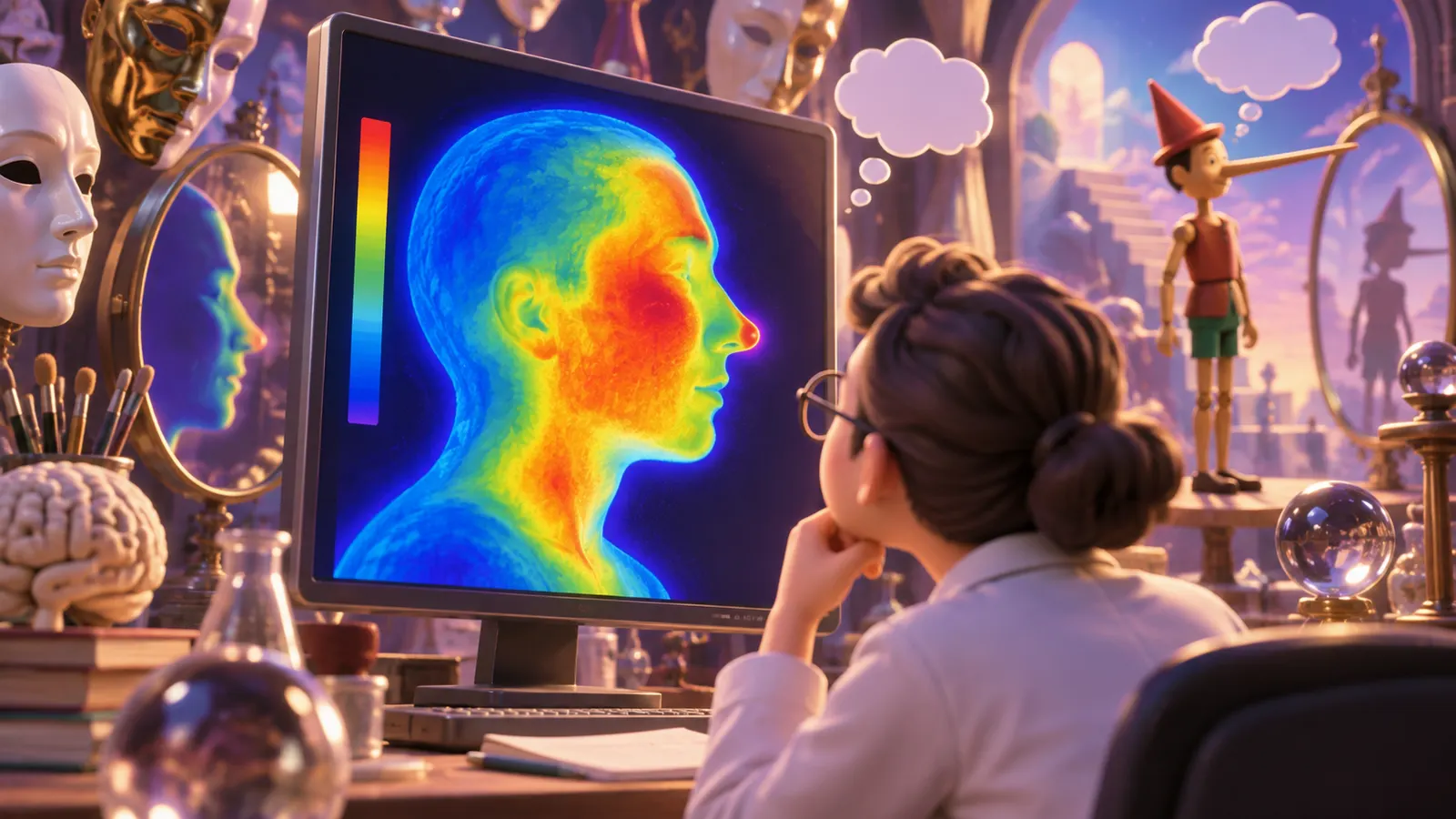
 読む前に予想してみよう!
サーモグラフィで鼻の温度を測れば、嘘はほぼ確実に見抜ける
嘘で顔の温度が変わるという報告はあるが、方向も結果もばらつき、確実な嘘発見器とは言えない。
 研究カード(どんな研究?)
- 対象
- スペインなどの成人
- 規模
- 数十人規模の実験を複数
- 研究の種類
- 実験(サーモグラフィ測定)
- 確かさ
- ★★☆☆☆
嘘をつくと鼻のまわりの温度が変わるという研究がある。ただし「下がる」「上がる」と結果は割れ、空港の実験では人間の面接官のほうが見抜けた。万能ではない。
ひとことで言うと嘘で鼻の温度は変わる…かも。でもカメラだけで嘘は見抜けない!
嘘をつくと鼻が伸びる——ピノキオのお話です。もちろん現実の鼻は伸びません。
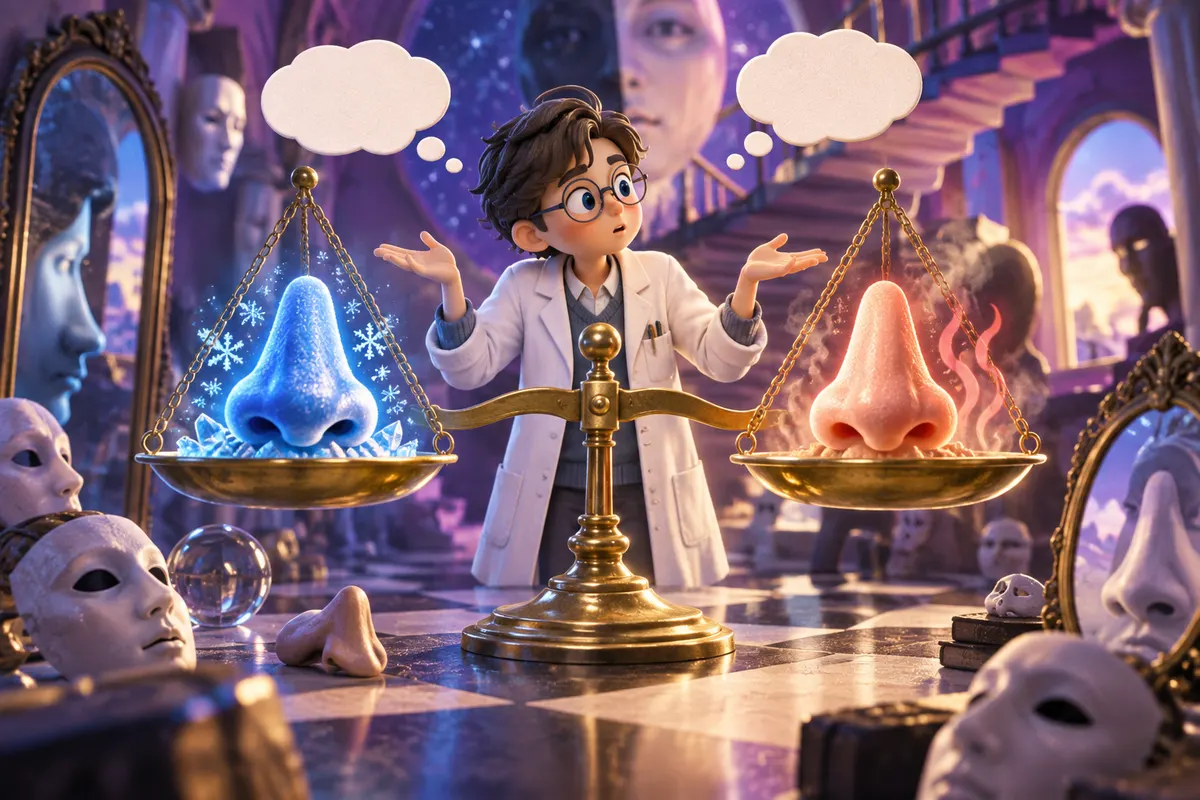
でも、もしかしたら「鼻の温度」なら変わるかもしれない。スペインのグラナダ大学の研究チームは、熱を色で映し出すサーモグラフィを使ってこの疑問を調べ、「ピノキオ効果」と呼びました。
結論から言うと、この話は「ちょっとホント、でも過信は禁物」です。
01嘘をつくと、鼻の温度が下がった
嘘をつくときの緊張やストレスで自律神経が反応し、鼻先の血流が変わる——研究チームはそう考えています。
02ところが「上がった」研究もある
話はここからややこしくなります。
2016年、イタリアの研究チームは、自分の得になる嘘をつくかどうかを、参加者に自由に選ばせる実験をしました。すると、自分の評判がかかった場面で嘘をついたときは、逆に鼻の温度が上がっていたのです。
グラナダ大学のチーム自身も、2018年の論文で次のように述べています。鼻の温度は、感情が動く課題では下がり、頭を使う課題では上がる傾向がある。嘘をつく場面では、ストレス、頭を使う負担、相手への共感などが混ざるので、上がるか下がるかは状況しだいだ、というのです。
03空港で試したら、人間の勝ち
では、実際の場面で使えるのでしょうか。
2011年、イギリスの研究者が国際空港の出発ロビーで実験を行いました。乗客51人に、これからの旅行について本当のことか嘘を話してもらい、顔の温度をサーモカメラで記録したのです。
嘘をついた人の皮膚温度は面接中に上がる傾向があり、カメラの判定で約3分の2を正しく分類できました。ところが、同じ面接をした人間の面接官のほうが、正答率が高かったのです。しかも、カメラの判定と面接官の判断を組み合わせても、面接官だけで判断したときより正答率は上がりませんでした。
ちなみに、人が道具を使わずに、相手の話が嘘か本当かを正しく当てられる確率は、たくさんの研究をまとめると平均約54%。コイン投げよりわずかに上、という程度です。
04いちばん怖いのは「正直者が疑われる」こと
嘘発見の技術で忘れてはいけないのが、誤検出の問題です。
空港や取り調べのように緊張する場面では、嘘をついていない人もドキドキして顔の温度が変わります。もしサーモカメラの判定をうのみにすれば、正直に話している人が「怪しい」と疑われてしまうかもしれません。
嘘を見抜く精度が少し上がっても、無実の人を疑う割合が高ければ、その技術は社会で安心して使えません。サーモグラフィを嘘発見に使うことに、多くの研究者が慎重なのはこのためです。
05まとめ
嘘をつくと体が反応する。それ自体は本当かもしれません。でも、その反応は緊張しているだけの正直者にも起こります。
鼻の温度で嘘を見抜く時代は、まだ来ていません。人を疑うときこそ、機械より事実と対話を大事にしたいですね。
この研究を英語で読もう原田英語の English CornerResearchers at the University of Granada in Spain used thermal cameras, which show heat as colors, to study… 音声
音声 4択クイズ9問A2・B1・B2タップして開く
原田英語の English Corner
この研究を英語で読もう
In the story of Pinocchio, his nose grows when he lies. Real noses do not grow. But scientists in Spain used special cameras to see heat. They found that the nose often got colder when people told a lie.
Other studies found that the nose got warmer. So the results are mixed. At an airport, human interviewers found lies better than the cameras did.
64 words ・ CEFR A2
和訳を見る
ピノキオの物語では、彼が嘘をつくと鼻が伸びます。本物の鼻は伸びません。しかしスペインの科学者たちは、熱を見ることができる特別なカメラを使いました。彼らは、人が嘘をつくと鼻が冷たくなることが多いと発見しました。
別の研究では、鼻が温かくなりました。つまり、結果はばらばらなのです。ある空港では、人間の面接官のほうがカメラよりうまく嘘を見つけました。
4択リーディングクイズ
Q1. What is the passage mainly about?
嘘をつくと鼻の温度が変わるか、という研究がテーマなので D。
Q2. What did scientists in Spain find?
the nose often got colder when people told a lie とあるので B。
Q3. In this passage, "mixed" means the results ...
冷たくなった研究と温かくなった研究があるので、mixed は「一致しない・ばらばら」の意味。A。
Researchers at the University of Granada in Spain used thermal cameras, which show heat as colors, to study what they called the "Pinocchio effect." In a 2017 study, people told an important lie to someone close to them on the phone, and the temperature of their nose tip and hands tended to drop.
However, in a 2016 Italian study, the nose became warmer in some situations. The Granada team later explained that stress, mental effort and other factors can push the temperature in different directions. In a 2011 airport study, thermal cameras correctly classified about two-thirds of travelers, but human interviewers did even better. Another problem is that honest people may also feel nervous and show the same changes.
119 words ・ CEFR B1
和訳を見る
スペインのグラナダ大学の研究者たちは、熱を色で映し出すサーモカメラを使って、彼らが「ピノキオ効果」と呼ぶものを研究しました。2017年の研究では、人々が電話で親しい人に大事な嘘をつくと、鼻先と手の温度が下がる傾向がありました。
しかし2016年のイタリアの研究では、ある状況で鼻がより温かくなりました。グラナダのチームは後に、ストレス、頭を使う負荷、その他の要因が、温度を異なる方向に動かしうると説明しました。2011年の空港での研究では、サーモカメラは旅行者の約3分の2を正しく分類しましたが、人間の面接官はさらにうまくやりました。もう1つの問題は、正直な人も緊張して同じ変化を示すかもしれないことです。
4択リーディングクイズ
Q1. What happened in the 2017 study when people lied?
the temperature of their nose tip and hands tended to drop とあるので A。
Q2. In the airport study, who detected lies best?
human interviewers did even better とあるので C。
Q3. Why might thermal cameras be unfair to honest people?
honest people may also feel nervous and show the same changes とあり、正直者が疑われる恐れがあるので B。
Can a thermal camera catch a liar? Researchers at the University of Granada used the term "Pinocchio effect" after observing temperature changes around the nose during deception. In their 2017 study, participants phoned someone close to them and told a significant lie. The tip of the nose and the hands tended to cool, which the team attributed to stress-related changes in blood flow.
Other results pointed the other way. A 2016 Italian experiment, in which participants freely chose whether to lie for personal gain, found that the nose warmed in some conditions. In 2018 the Granada group itself concluded that emotional tasks tend to cool the nose while cognitively demanding tasks warm it, so the direction depends on the situation.
The Granada experiments were laboratory tasks, so real-world accuracy is uncertain. Anxious but honest people may also show similar responses, which makes false alarms a serious concern. Field tests have not been encouraging either. In a 2011 study at an international airport, thermal imaging correctly classified roughly two-thirds of 51 passengers. Human interviewers did better, and combining the thermal scores with the interviewers' judgments did not improve accuracy.
188 words ・ CEFR B2
和訳を見る
赤外線カメラでうそつきを見破れるでしょうか。グラナダ大学の研究者たちは、うそをついている間に鼻のまわりの温度が変わるのを観察し、「ピノキオ効果」という言葉を使いました。2017年の研究では、参加者が親しい人に電話をかけ、重大なうそをつきました。すると鼻の先と手の温度が下がる傾向があり、研究チームはこれをストレスによる血流の変化のためだと考えました。
逆の方向を示す結果もありました。参加者が自分の得のためにうそをつくかどうかを自由に選んだ2016年のイタリアの実験では、条件によっては鼻が温かくなりました。2018年には、グラナダのグループ自身が、感情的な課題では鼻が冷え、頭を使う課題では温まる傾向があり、どちらに変わるかは状況しだいだと結論づけました。
グラナダの実験は実験室での課題で行われたため、現実の場面での精度ははっきりしません。また、不安を感じているだけの正直な人も似た反応を示す可能性があり、誤った警報が深刻な問題になります。現場でのテストも期待はずれでした。2011年に国際空港で行われた研究では、熱画像は51人の乗客のおよそ3分の2を正しく判定しました。人間の面接官のほうが正確で、熱画像の判定と面接官の判断を組み合わせても、正確さは上がりませんでした。
4択リーディングクイズ
Q1. What is the author's overall conclusion?
鼻の温度の変化は状況によって逆になり、グラナダの実験は実験室での課題が中心で、正直な人の誤判定も心配され、空港のテストでも人間の面接官に及ばなかった。全体として C。
Q2. According to the 2018 Granada paper, what tends to warm the nose?
emotional tasks tend to cool the nose while cognitively demanding tasks warm it とあるので D。
Q3. Why are "false alarms" a serious concern?
Anxious but honest people may also show similar responses とあり、正直者が嘘つきと判定される誤検出の問題なので B。
重要単語
- thermographyC1名詞熱画像撮影、サーモグラフィThermography shows heat as colors.
 thermo-(熱)+-graphy(記録)。thermometer(温度計)、thermal(熱の)も同語源。
 - deceptionC1名詞ごまかし、嘘Detecting deception is harder than people think. 動詞 deceive。deceive 人 into doing(人をだまして~させる)の語法も頻出。
- lie detectorB2名詞(句)嘘発見器No lie detector is perfect. detect(見つけ出す)+-or。正式には polygraph(ポリグラフ)とも。
- blood flowB2名詞(句)血流Stress changes blood flow in the face. flow は「流れ」。cash flow(資金の流れ)、go with the flow(流れに身を任せる)。
- false alarmB2名詞(句)誤検出、誤報False alarms can hurt innocent people. 火災報知器の「誤報」から。研究では false positive(偽陽性)とほぼ同じ意味で使われる。
- attributeC1動詞(原因を)~に帰するThey attributed the change to stress. attribute A to B(AをBのせいにする・Bに帰する)の形が入試頻出。名詞では「属性」。
- soberingC1形容詞冷静にさせる、浮かれた気分をさますThe results were sobering. sober(しらふの・冷静な)から。期待に冷や水をかけるような事実に使う。
 入試に出る順の単語帳を印刷する →
 全5903語の「科学英単語カード」で復習する →
 動画でもっと知る
動画は各チャンネルの公式埋め込みで表示しています(YouTube)。
この話題を TED で聞く
同じテーマの TED・TED-Ed を、 TED HACK で。英語の見どころ・使える表現・学習ミッションつきの日本語ガイドです。(運営:原田英語)

このネタ、誰かに教えたくなった?
嘘をつくと鼻の温度が変わる「ピノキオ効果」をサーモカメラで調べた研究がある。でも"下がった"研究も"上がった"研究もあって方向はバラバラ。空港の実験では、カメラより面接官のほうが嘘を見抜けたらしい。
押すと「マジかリスト」に保存されます
 出典・参考文献(5件)タップで表示
- Moliné et al. (2017) The Pinocchio effect and the Cold Stress Test: Lies and thermography, Psychophysiologydoi.org
- Moliné et al. (2018) The mental nose and the Pinocchio effect: Thermography, planning, anxiety, and lies, Journal of Investigative Psychology and Offender Profilingdoi.org
- Panasiti et al. (2016) Thermal signatures of voluntary deception in ecological conditions, Scientific Reportsdoi.org
- Warmelink et al. (2011) Thermal imaging as a lie detection tool at airports, Law and Human Behaviordoi.org
- Bond & DePaulo (2006) Accuracy of deception judgments, Personality and Social Psychology Reviewdoi.org

※本記事は上記の研究・公開資料をもとに、原田英語が独自の言葉で解説したものです。引用は著作権法第32条の範囲で行い、出典を明記しています。画像はすべてオリジナルのイメージです。研究結果には限界や個人差があります。誤りのご指摘は原田英語のお問い合わせフォームから。
 これも「マジか!?」


 心理学
心理学
【悲報】人が嘘を見抜ける確率は54%。コイン投げとほぼ同じだった

 心理学
心理学
囲碁の達人は、知能テストの点がアマチュアより低かった。でも学歴の違いを差し引くと、はっきりした差ではなくなった

 心理学
心理学
全員に"同じ性格診断"を配ったら「当たってる」と高評価。占いが当たる気がする「バーナム効果」

 心理学
心理学
「頭の良さは遺伝で決まる」は誤解? 双子研究の「遺伝率5割」の正しい読み方

 心理学
心理学
10代は「人気者」より「親友」? 15歳で深い友情があった人ほど、25歳までに不安や落ち込みが減っていた


 心理学
心理学