

 心理学ホント

「1日何時間スマホ?」の自己申告は記録とズレる 心との関係も強めに見えていた
 2026.10.02
 English Corner(A2〜B2・4択クイズ)
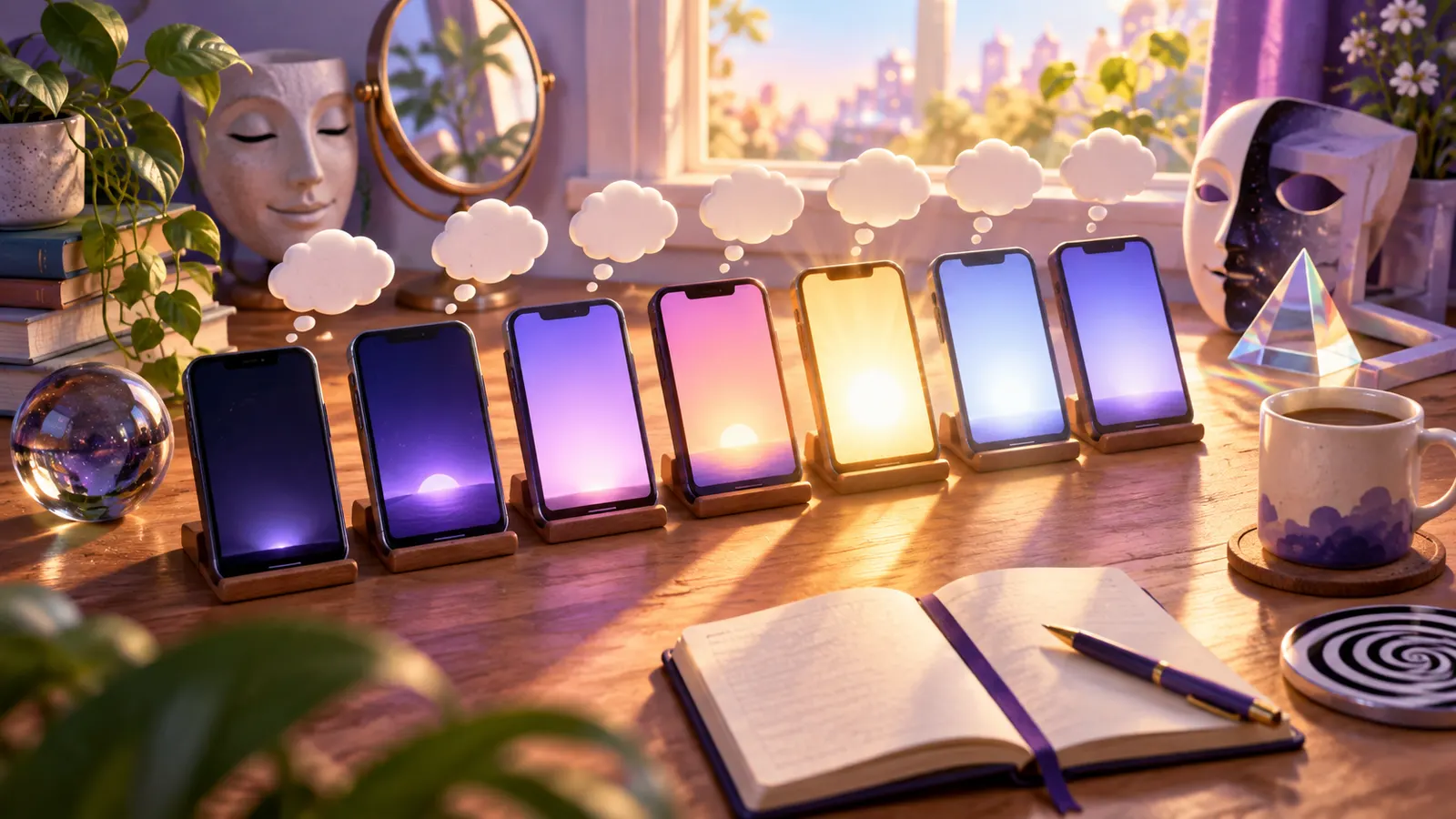
 読む前に予想してみよう!
スマホやSNSの使用時間は、自分で答えてもらっても実際の記録とほぼ同じになる
106の結果をまとめたメタ分析で、自己申告は記録と中くらいにしか一致せず、正確なことはまれだった。
 研究カード(どんな研究?)
- 対象
- スマホ・SNSの利用者(各研究)
- 規模
- 106の結果のメタ分析+iPhone利用者325人
- 研究の種類
- 事前登録メタ分析・観察研究
- 確かさ
- ★★★★☆
スマホの使用時間を自分で答えてもらうと、実際の記録とかなりズレる。iPhoneの記録と比べた研究では、心の状態との関係が「自己申告」のほうで強く出ていた。
ひとことで言うとスマホを何時間使ったか、自分の感覚はあてにならないみたい。
「1日何時間スマホを使ってる?」と聞かれて、自信をもって答えられますか?
スマホと心の健康の関係を調べる研究の多くは、こうした自己申告の答えを使ってきました。ところが、スマホに残る実際の利用記録と比べてみると、人の見積もりはかなりズレていることが分かってきました。しかもそのズレが、研究の結論まで変えてしまうかもしれないのです。
01自分の見積もりは「記録」とかなりズレる
結果、自己申告の使用時間は記録と中くらいにしか一致せず、記録を正確に言い当てている例はまれでした。
「スマホ依存っぽさ」をアンケートで測る尺度は、さらに一致が弱いことも分かりました。依存の尺度で点数が高い人が、記録の上でも長く使っているとは限らないのです。
イギリスの研究チームが2019年に発表した研究でも、スマホの使い方や「依存」を測るいろいろなアンケートを、iPhoneの「スクリーンタイム」の記録と比べました。アンケートと記録の一致は全体に弱いものでした。
02心の状態によって、見積もりのズレ方が変わる
この「ズレ」は、ただの誤差では済まないかもしれません。
アメリカのピッツバーグ大学などの研究チームは、iPhoneを使う325人に、1週間の使用時間を思い出して答えてもらい、スクリーンタイムの記録と比べました(2020年)。
- 見積もりと記録の差は、iPhone全体で週に約19時間、SNSで週に約12時間
- うつ・孤独感・生活の満足度との関係は、記録より自己申告の使用時間のほうが、いつも強く出ていた
- 見積もりのズレの大きさは、その人の心の状態や使う量と関係していた
つまり、自己申告だけを使う研究では、「スマホと落ち込みの関係」が実際より強く見えてしまうおそれがあります。研究チームは、自己申告で測れているのは「実際に使った時間」というより、「使ったと感じている時間」なのかもしれないと述べています。

03大規模な調査でも、関係は「あるが小さい」
では、スマホやデジタル機器を使う時間は、心の健康とどのくらい関係しているのでしょうか。
イギリスのオックスフォード大学の研究者2人は2019年、アメリカとイギリスの3つの大規模調査(合わせて35万5358人の10代)を分析しました。デジタル機器の使用と幸福感の関係はマイナスだが小さく、幸福感の違いのうち説明できるのは最大でも0.4%でした。
なお、この分析で使った使用時間も自己申告です。記録を使った研究を増やすことが、この分野の大きな課題になっています。
04まとめ
「スマホを何時間使ったか」は、自分の感覚だとかなりズレます。そしてそのズレは心の状態とも関係していて、研究の結論を強めに見せてしまうことがあります。スマホと心の関係を考えるときは、まず記録を見るところから始めてみませんか?
この研究を英語で読もう原田英語の English CornerMany studies about phones and mental health ask people how much time they spend on their phones. 音声
 4択クイズ9問A2・B1・B2タップして開く
原田英語の English Corner
この研究を英語で読もう
How many hours do you use your phone each day? Most people cannot answer this question well. Researchers compared people's answers with the records kept by their phones. The answers and the records were often very different.
In one study of iPhone users, the difference was about 19 hours a week. This matters for research, because many studies about phones and mood only ask people to guess their screen time.
70 words ・ CEFR A2
和訳を見る
あなたは毎日何時間スマホを使っていますか?ほとんどの人は、この質問にうまく答えられません。研究者たちは、人々の答えとスマホに残る記録を比べました。答えと記録は、しばしば大きく違っていました。iPhone利用者を対象にしたある研究では、その差は週に約19時間でした。
これは研究にとって大事なことです。スマホと気分についての多くの研究は、使用時間を本人に推測してもらうだけだからです。
4択リーディングクイズ
Q1. What did the researchers compare?
Researchers compared people's answers with the records kept by their phones. とあるので B。
Q2. In one study, how big was the difference?
the difference was about 19 hours a week とあるので A。
Q3. Why does this matter for research?
many studies about phones and mood only ask people to guess their screen time とあるので B。
Many studies about phones and mental health ask people how much time they spend on their phones. But are these answers correct? A team of researchers collected 106 results from studies that measured phone and media use in two ways, with questionnaires and with digital records. The two measures matched only moderately, and people's answers were rarely accurate.
In another study, 325 iPhone users guessed their weekly use, and the researchers checked the phones' Screen Time records. The gap was about 19 hours a week for overall use. Links between phone use and depression or loneliness were stronger when the researchers used people's guesses. With the real records, the links looked weaker.
112 words ・ CEFR B1
和訳を見る
スマホと心の健康についての多くの研究は、人々にスマホにどれくらいの時間を使っているかをたずねます。でも、その答えは正しいのでしょうか。ある研究チームは、スマホやメディアの使用をアンケートとデジタルの記録という2つの方法で測った研究から、106の結果を集めました。2つの測り方は中くらいにしか一致せず、人々の答えが正確なことはまれでした。
別の研究では、325人のiPhone利用者が1週間の使用時間を推測し、研究者たちはスマホのスクリーンタイムの記録を確かめました。差は、全体の使用で週に約19時間でした。スマホ使用とうつや孤独感の関係は、研究者が人々の推測を使ったときのほうが強くなりました。実際の記録を使うと、関係は弱く見えました。
4択リーディングクイズ
Q1. What did the team with 106 results find?
people's answers were rarely accurate とあるので B。
Q2. What did the 325 iPhone users do?
325 iPhone users guessed their weekly use とあるので C。
Q3. When were the links with depression or loneliness stronger?
Links ... were stronger when the researchers used people's guesses. とあるので A。
Debates about whether smartphones harm mental health often rest on a weak foundation. Most studies simply ask people how long they spend on their devices, and those estimates can be far from the truth. A pre-registered meta-analysis published in Nature Human Behaviour in 2021 pooled 106 effect sizes from studies that recorded both self-reported and logged media use.
Self-reports agreed with the logs only moderately and were rarely accurate. Questionnaires designed to measure problematic or addictive use matched the logs even less well. The size of these errors may also depend on how people feel. In a 2020 study of 325 iPhone users, researchers compared weekly estimates with the phones' Screen Time data.
Estimates of overall use were off by about 19 hours a week. Depression, loneliness and life satisfaction were consistently more strongly linked to estimated use than to recorded use, and the degree of error was related to well-being. The authors argue that self-reports may capture how much people feel they use their phones, which is not the same as how much they actually do.
177 words ・ CEFR B2
和訳を見る
スマホが心の健康を害するかどうかという議論は、しばしば弱い土台の上に立っています。ほとんどの研究は、機器にどれくらいの時間を使っているかを人々にたずねるだけで、その見積もりは事実とかけ離れていることがあります。2021年に『Nature Human Behaviour』に載った事前登録のメタ分析は、自己申告と記録の両方でメディア使用を測った研究から、106の効果量をまとめました。
自己申告は記録と中くらいにしか一致せず、正確なことはまれでした。問題のある使い方や依存的な使い方を測るためのアンケートは、記録との一致がさらに弱いものでした。こうした誤差の大きさは、その人の気分によっても変わるかもしれません。2020年の研究では、325人のiPhone利用者について、1週間の使用時間の見積もりとスマホのスクリーンタイムのデータを比べました。
全体の使用の見積もりは、週に約19時間ずれていました。うつ、孤独感、生活の満足度は、記録された使用より見積もられた使用とのほうが一貫して強く結びついており、誤差の大きさは心の健康と関係していました。著者たちは、自己申告が測っているのは、人がどれだけスマホを使っていると感じているかであり、実際にどれだけ使っているかとは同じではないのかもしれないと論じています。
4択リーディングクイズ
Q1. Why does the author say the debate rests on a weak foundation?
Most studies simply ask people how long they spend on their devices, and those estimates can be far from the truth. とあるので B。
Q2. Which type of questionnaire matched the logs least well?
Questionnaires designed to measure problematic or addictive use matched the logs even less well. とあるので C。
Q3. What do the authors of the 2020 study suggest that self-reports measure?
self-reports may capture how much people feel they use their phones とあるので A。
重要単語
- self-reportC1名詞自己申告Self-reports of screen time are often inaccurate.
 self-reported data(自己申告のデータ)の形でよく使う。反対は logged data(記録されたデータ)。
- logB2名詞(機械が残す)記録The phone keeps a log of every app you open. もとは船の航海日誌。動詞 log in(ログインする)の log と同じ語。
- estimateB2動詞見積もるMost people cannot estimate their screen time well. 名詞も estimate(見積もり)。動詞は「エスティメイト」、名詞は「エスティメット」と読み分ける。
- well-beingB2名詞心身の健康・幸福感Sleep is important for your well-being. well(よく)+being(あること)。WHO の健康の定義にも出てくる語。
- objectiveB2形容詞客観的なObjective data come from the phone, not from memory. 反意語は subjective(主観的な)。名詞 objective は「目標」。
- meta-analysisC1名詞メタ分析A meta-analysis combines the results of many studies. meta-(より高い次元の)+analysis(分析)。研究の研究。
 入試に出る順の単語帳を印刷する →
 全5903語の「科学英単語カード」で復習する →
 この話題を TED で聞く
同じテーマの TED・TED-Ed を、 TED HACK で。英語の見どころ・使える表現・学習ミッションつきの日本語ガイドです。(運営:原田英語)

このネタ、誰かに教えたくなった?
「1日何時間スマホを使ってる?」の答えは、実際の記録とかなりズレるらしい。iPhone利用者325人の研究では、見積もりと記録の差が週に約19時間。落ち込みとの関係も、自己申告のほうが強く出ていた。
押すと「マジかリスト」に保存されます
 出典・参考文献(4件)タップで表示
- Parry et al. (2021) A systematic review and meta-analysis of discrepancies between logged and self-reported digital media use, Nature Human Behaviourdoi.org
- Sewall et al. (2020) How psychosocial well-being and usage amount predict inaccuracies in retrospective estimates of digital technology use, Mobile Media & Communicationdoi.org
- Ellis et al. (2019) Do smartphone usage scales predict behavior?, International Journal of Human-Computer Studiesdoi.org
- Orben & Przybylski (2019) The association between adolescent well-being and digital technology use, Nature Human Behaviourdoi.org

※本記事は上記の研究・公開資料をもとに、原田英語が独自の言葉で解説したものです。引用は著作権法第32条の範囲で行い、出典を明記しています。画像はすべてオリジナルのイメージです。研究結果には限界や個人差があります。誤りのご指摘は原田英語のお問い合わせフォームから。
 これも「マジか!?」

 心理学
スマホのネットを2週間止めたら、集中力が「10歳若返った」レベルで回復した

 心理学
人生で一番つらいのは「中年」じゃなくなった? 今は若い人ほど心の不調が多い

 心理学
冬に気分が沈むのはなぜ?「冬季うつ」の発見と、3万4千人の調査が突きつけた意外な反論
 心理学
さみしく、人づきあいも少ない人は「うつや不安のない年数」が短かった 男性で5.8年、英国27万人の分析
 心理学
優しい人ほど疲れてしまう「共感疲労」。脳科学者が提案した解決策は"共感"より"思いやり"だった
 心理学