
 心理学ビミョー
冬に気分が沈むのはなぜ?「冬季うつ」の発見と、3万4千人の調査が突きつけた意外な反論
 2026.10.02
 English Corner(A2〜B2・4択クイズ)
 読む前に予想してみよう!
冬季うつ(季節性感情障害)には、強い光を浴びる「光療法」が使われることがある
参加者をくじ引きで分けて比べた複数の試験をまとめた分析で、症状を軽くする効果が報告されている。
 研究カード(どんな研究?)
- 対象
- うつ病患者・一般成人
- 規模
- 29人(初報告)〜約3万4千人(調査)
- 研究の種類
- 症例報告・RCT・メタ分析・横断調査
- 確かさ
- ★★★☆☆
日が短い季節に毎年うつになる「季節性感情障害」は1984年に報告され、光療法が効くとされる。一方、約3万4千人の調査では季節との関係が見えず論争に。
ひとことで言うと冬に元気が出ないのは、朝の光が少なくて体内時計がずれるからかも。
秋が深まり、夕方5時にはもう真っ暗。なんとなくやる気が出ない、朝起きられない、甘いものばかり食べたくなる――。
答えを先に言うと、日が短くなる季節に毎年くり返すうつ状態は、1984年に「季節性感情障害(冬季うつ)」として報告されました。朝などに強い光を浴びる光療法が効くことも確かめられてきました。ただし最近は、「季節でうつが増える」こと自体を疑う大規模調査も出ていて、話は思ったより複雑です。
011984年、アメリカで「冬だけのうつ」が報告された
冬になると「眠い・食べたい」が強くなるのは、まるで動物の冬ごもりのよう。研究者たちは、日照が減ると、いくつかの体の仕組みに影響が出るのではないかと考えてきました。体内時計(概日リズム)のズレ、眠りを促すホルモンメラトニンの出方、気分に関わるセロトニンの働きなどです(どれが主な原因かは、まだ決着していません)。
02光療法は、薬と同じくらい効いた
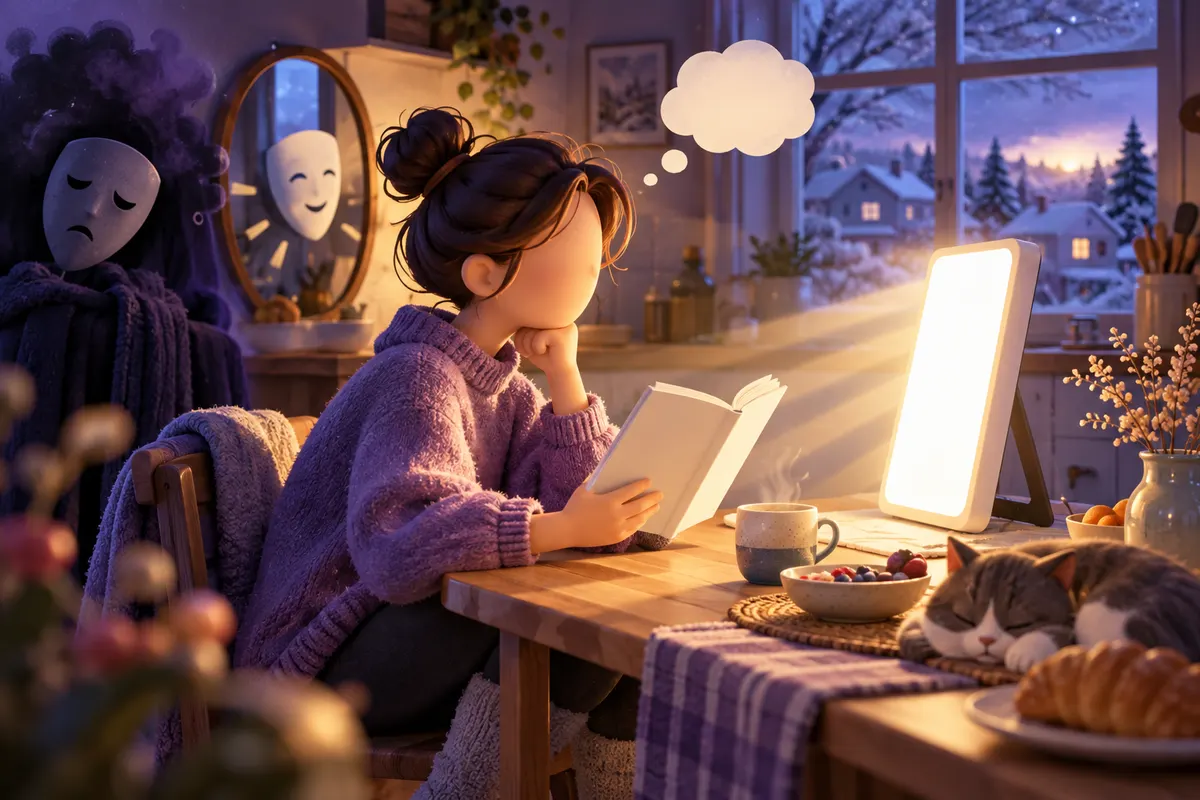
光療法では、ふつうの部屋の明かりよりずっと明るい専用のライトを、主に朝に一定時間浴びます。
03どんでん返し:3万4千人の調査では「季節の影響が見えない」
ところが2016年、この常識に真っ向から反論する研究が出ました。
アメリカのトラファンステット(Traffanstedt)さんらは、全米の成人約3万4千人の健康調査データを使いました。そして、うつの症状と、住んでいる場所の緯度・季節・日照量との関係を調べました。冬季うつの考え方が正しければ、日照の少ない北の地域ほど、また冬の時期ほど、うつの人が多くなるはずです。ところが結果は、どれとも関係が見られなかったのです。研究チームは「季節性のうつは、民間の思い込みに根ざしているのでは」とまで書きました。
これには反論も出ました。冬季うつを長年研究してきたヤング(Young)さんの指摘はこうです。この研究は、季節性感情障害を「冬の憂うつ(冬はなんとなく気分が沈むこと)」と同じものとして扱っている。そこが間違いだ、というのです。季節性感情障害は、同じ人に、毎年同じ季節にうつ病がくり返すものです。ところがこの調査は、1人に1回、「直近2週間」の症状を聞いただけでした。同じ人が毎年くり返しているかどうかまでは分かりません。
つまり、「冬は誰でも少し落ち込む」は言いすぎかもしれない。でも、一部の人に毎年くり返す冬のうつがあることまでは否定されていない、というのが現在の落ち着きどころです。
04まとめ
冬に気分が沈むことについて、科学は「一部の人には、毎年くり返す冬のうつがあり、光療法が効く」と言います。一方で、「冬は誰でもうつになる」とまでは言えないことも、大規模調査が示しました。
冬の朝、カーテンを開けて光を浴びる。それは体内時計のためにも、気分のためにも、損のない習慣です。
この研究を英語で読もう原田英語の English CornerSome people become depressed at the same time every year, usually when the days get shorter. 音声
音声 4択クイズ9問A2・B1・B2タップして開く
原田英語の English Corner
この研究を英語で読もう
Some people feel sad every winter when the days get short. They sleep and eat more than usual. In 1984, American doctors called this seasonal affective disorder. Sitting in front of a very bright lamp in the morning can help. This is called light therapy.
But a large study of about 34,000 Americans found no link between low mood and the season. So scientists are still talking about it.
69 words ・ CEFR A2
和訳を見る
日が短くなると、毎年冬に悲しい気持ちになる人がいます。いつもより多く眠ったり食べたりします。1984年、アメリカの医師たちはこれを「季節性感情障害」と呼びました。朝、とても明るいランプの前に座ると効果があることがあります。これは光療法と呼ばれます。
しかし、約3万4千人のアメリカ人を対象にした大規模な研究では、気分の落ち込みと季節の間に関係は見つかりませんでした。そのため、科学者たちは今もこのことについて議論しています。
4択リーディングクイズ
Q1. What is the passage mainly about?
冬に気分が沈む病気、その治療(光療法)、それを疑う研究と議論について述べているので C。
Q2. What can help people with this problem?
Sitting in front of a very bright lamp in the morning can help. とあるので A。
Q3. In this passage, "link" means ...
no link between low mood and the season は「気分と季節の間に関係がない」という意味。link=つながり・関係なので B。
Some people become depressed at the same time every year, usually when the days get shorter. In 1984, researchers at a US government institute described 29 such patients and named the condition seasonal affective disorder, or SAD. Unlike typical depression, it often involved sleeping too much, eating too much and craving carbohydrates. In 2016, however, a survey of about 34,000 American adults found no link between depression and latitude, season or sunlight. Critics replied that SAD returns every year, which a two-week survey cannot show.
Meanwhile, bright light therapy, in which patients sit near a special lamp, usually in the morning, has been shown to reduce symptoms. A 2006 Canadian trial even found that it worked about as well as an antidepressant.
122 words ・ CEFR B1
和訳を見る
毎年同じ時期、たいていは日が短くなるころにうつ状態になる人がいます。1984年、アメリカの政府機関の研究者たちはそのような患者29人を報告し、この状態を「季節性感情障害(SAD)」と名づけました。一般的なうつ病と違って、寝すぎ、食べすぎ、炭水化物を強く欲することが多く見られました。しかし2016年、約3万4千人のアメリカの成人を対象にした調査では、うつと緯度・季節・日照の間に関連は見つかりませんでした。これに対して批判者たちは、SADは毎年くり返すものであり、2週間分の調査ではそれを示せないと反論しました。
一方、患者が専用のランプのそばに、主に朝座る「強い光の療法」は、症状を軽くすることが示されてきました。2006年のカナダの試験では、光療法が抗うつ薬とほぼ同じくらい効くことさえわかりました。
4択リーディングクイズ
Q1. What is the passage mainly about?
SADの発見、光療法の効果、それに疑問を投げかけた2016年の調査を紹介しているので D。
Q2. What did the 2006 Canadian trial find?
it worked about as well as an antidepressant とあるので B。
Q3. What was the critics' main point about the 2016 survey?
Critics replied that SAD returns every year, which a two-week survey cannot show. とあり、毎年くり返すかどうかは2週間分の調査では確かめられない、という批判なので C。
Seasonal affective disorder (SAD) was first described in 1984, when researchers at the US National Institute of Mental Health reported 29 patients whose depression returned at the same time each year. Their winter episodes featured oversleeping, overeating and carbohydrate craving, and a preliminary trial in which 11 patients were exposed to bright artificial light suggested benefits. Researchers have linked reduced daylight to disrupted circadian rhythms, melatonin and serotonin, though the main mechanism remains unresolved. A 2005 meta-analysis of randomized controlled trials reported a substantial effect of bright light therapy, and a 2006 Canadian trial found it roughly as effective as an antidepressant, with a tendency to work faster.
Blinding is hard in such trials, though, and only a small share of studies met the meta-analysis criteria. In 2016, however, an analysis of health survey data from about 34,000 US adults found no relationship between depressive symptoms and latitude, season or sunlight, leading the authors to suggest that seasonal depression may reflect folk beliefs. The survey covered only two weeks, so it could not show yearly recurrence. A leading SAD researcher also argued that SAD means depression that returns each year, which is different from ordinary winter blues.
197 words ・ CEFR B2
和訳を見る
季節性感情障害(SAD)が初めて報告されたのは1984年で、アメリカ国立精神衛生研究所の研究者たちが、毎年同じ時期にうつ状態がくり返される患者29人を報告しました。冬のうつ状態の特徴は、寝すぎ、食べすぎ、炭水化物への強い欲求で、11人の患者に強い人工の光を浴びてもらった予備的な試みでは、効果がうかがわれました。研究者たちは、日照の減少を、体内時計(概日リズム)の乱れ、メラトニン、セロトニンと結びつけてきましたが、主な仕組みはまだ解明されていません。2005年のランダム化比較試験のメタ分析は強い光の療法にかなりの効果があると報告し、2006年のカナダの試験では、光療法は抗うつ薬とほぼ同じくらい有効で、効き始めが早い傾向もありました。
ただし、こうした試験では盲検化が難しく、メタ分析の基準を満たした研究はごく一部にすぎませんでした。しかし2016年、約3万4千人のアメリカの成人の健康調査データを分析したところ、うつ症状と緯度・季節・日照の間に関係は見られず、著者たちは季節性のうつは民間の思い込みを反映しているのかもしれないと示唆しました。とはいえ、この調査は2週間分しか調べていないので、毎年くり返すかどうかは示せませんでした。SADの代表的な研究者も、SADとは毎年くり返すうつ病のことで、ありふれた「冬の憂うつ」とは違うと反論しました。
4択リーディングクイズ
Q1. Which best summarizes the passage?
光療法の効果を示す研究がある一方、2016年の調査とその反論、試験の限界も述べられ、決着していないので A。
Q2. What did the 1984 report describe as features of winter episodes?
Their winter episodes featured oversleeping, overeating and carbohydrate craving とあるので D。A は逆の症状。
Q3. What weakness of the 2016 survey does the passage point out?
The survey covered only two weeks, so it could not show yearly recurrence とあり、2週間分の調査では毎年くり返すかどうかが分からないので B。recurrence=再発・くり返し。
重要単語
- seasonalB1形容詞季節の、季節的なSome people have seasonal changes in mood.
 season+-al。seasonal workers「季節労働者」、seasonal flu「季節性インフルエンザ」。
 - daylightA2名詞日光、日中の明るさDaylight is short in December. daylight saving time は「夏時間(サマータイム)」。in broad daylight「白昼堂々と」。
- depressionB2名詞うつ病、気分の落ち込みDepression is a common illness that can be treated. 「不況(the Great Depression=世界恐慌)」「くぼみ」の意味もある。形容詞 depressed / depressing の使い分けに注意。
- circadian rhythmC1名詞(句)概日リズム(体内時計)Morning light helps set your circadian rhythm. circa(約)+dies(日)=「約1日」の周期。body clock とも言う。
- light therapyB2名詞(句)光療法Light therapy uses a very bright lamp. therapy は「治療・療法」。therapist は「療法士」。
- recurrenceC1名詞再発、くり返し起こることSAD is defined by its yearly recurrence. 動詞 recur(再発する)、形容詞 recurrent。occur(起こる)に re-(再び)がついた形。
 入試に出る順の単語帳を印刷する →
 全5903語の「科学英単語カード」で復習する →
 この話題を TED で聞く
同じテーマの TED・TED-Ed を、 TED HACK で。英語の見どころ・使える表現・学習ミッションつきの日本語ガイドです。(運営:原田英語)


 公式・一次情報をチェック
- Seasonal Affective Disorder(NIMH, 米国立精神衛生研究所)nimh.nih.gov
このネタ、誰かに教えたくなった?
冬になると毎年気分が沈む「冬季うつ」は1984年にアメリカで報告され、朝に強い光を浴びる光療法が効くとされてきた。ところが約3万4千人の調査では、うつと日照・季節の関係が見えなかったらしい。冬の憂うつはどこまで本物?
押すと「マジかリスト」に保存されます
 出典・参考文献(5件)タップで表示
- Rosenthal et al. (1984) Seasonal affective disorder: A description of the syndrome and preliminary findings with light therapy, Archives of General Psychiatrydoi.org
- Golden et al. (2005) The Efficacy of Light Therapy in the Treatment of Mood Disorders: A Review and Meta-Analysis of the Evidence, American Journal of Psychiatrydoi.org
- Lam et al. (2006) The Can-SAD Study: A Randomized Controlled Trial of the Effectiveness of Light Therapy and Fluoxetine in Patients With Winter Seasonal Affective Disorder, American Journal of Psychiatrydoi.org
- Traffanstedt, Mehta & LoBello (2016) Major Depression With Seasonal Variation: Is It a Valid Construct?, Clinical Psychological Sciencedoi.org
- Young (2017) Does Seasonal Affective Disorder Exist? A Commentary on Traffanstedt, Mehta, and LoBello (2016), Clinical Psychological Sciencedoi.org

※本記事は上記の研究・公開資料をもとに、原田英語が独自の言葉で解説したものです。引用は著作権法第32条の範囲で行い、出典を明記しています。画像はすべてオリジナルのイメージです。研究結果には限界や個人差があります。誤りのご指摘は原田英語のお問い合わせフォームから。