


 動物・植物ビミョー
弱ると「赤ちゃん」に戻ってやり直す。「不老不死クラゲ」ベニクラゲの正体
 2026.10.02
 English Corner(A2〜B2・4択クイズ)
 読む前に予想してみよう!
ベニクラゲは、絶対に死なないクラゲである
若返りはできるが、食べられたり病気になったりすれば死ぬ。自然界ではほとんどが若返る前に死ぬと考えられている。
 研究カード(どんな研究?)
- 対象
- ベニクラゲ(Turritopsis 属)
- 規模
- 飼育個体の観察+ゲノム比較
- 研究の種類
- 実験室観察・比較ゲノム解析
- 確かさ
- ★★★☆☆
ベニクラゲは弱ったり傷ついたりすると、ポリプという幼い姿に戻って成長をやり直せる。ただし食べられたら終わり。
ひとことで言うとベニクラゲは、ピンチになると赤ちゃんの姿に戻れるクラゲ!
もし、年をとって体が弱ってきたとき、赤ちゃんに戻って人生をやり直せたら?
人間には夢のような話ですが、海の中にはそれを本当にやってのける生き物がいます。
体の大きさはわずか数ミリ。透明な傘の真ん中が赤く見えることから名づけられた、ベニクラゲです。
01クラゲの一生は「二つの姿」でできている
ベニクラゲのすごさを知るには、まずクラゲの一生を知る必要があります。
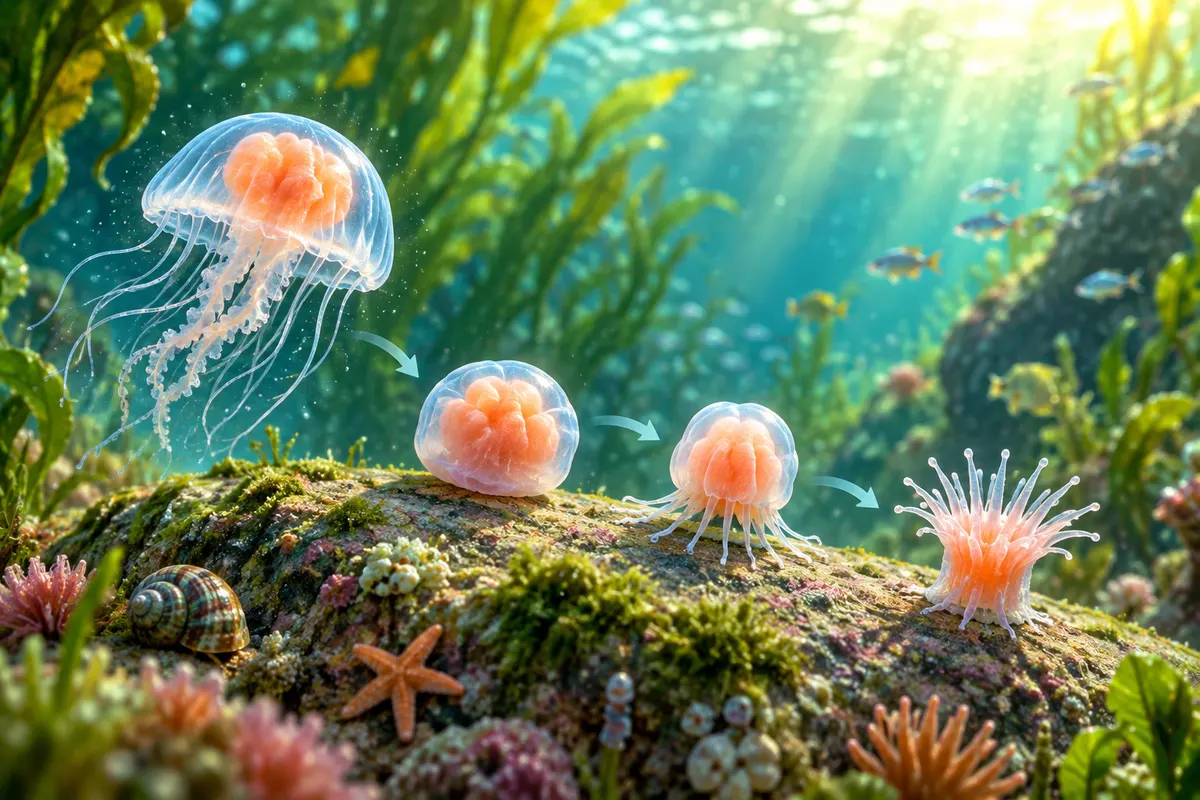
多くのクラゲは、一生のあいだに二つの姿を持ちます。
- ポリプ:岩などにくっついて暮らす、イソギンチャクのような小さな姿(子ども時代)
- クラゲ:ポリプから生まれ、ふわふわ泳ぐおなじみの姿(大人時代)
ふつうのクラゲは、大人になって卵を産んだら、そのまま死んでいきます。ところがベニクラゲは、ここで一生を逆再生できるのです。
02弱ったクラゲが、海底にくっつく幼い姿に戻る
分化転換(ぶんかてんかん)を身近にたとえると、「料理人が、ある日いきなり大工に転職する」ようなもの。いったん役割が決まった細胞が、まったく別の役割の細胞に生まれ変わるのです。
ポリプに戻ったベニクラゲは、そこからまた新しいクラゲを生み出します。つまり「大人 → 子ども → 大人」をくり返せる。理屈の上では、これを何度でも続けられるかもしれない、というわけです。
日本でも、京都大学瀬戸臨海実験所にいた久保田信さんが、ベニクラゲを長年飼育し、何度も若返らせることに成功したと報告しています。
03遺伝子から見た「若返り」の秘密
2022年には、スペイン・オビエド大学のチームが『PNAS』で、ベニクラゲの仲間(Turritopsis dohrnii)の全遺伝情報を読み、近い仲間のクラゲ(Turritopsis rubra)と比べた研究を発表しました(Pascual-Torner ら)。研究チームによると、T. rubra では、卵を産める大人になってから若返ったという報告がありません。
その結果、DNAの修復や、染色体の端を守る仕組みにかかわる遺伝子が、ベニクラゲではより多くコピーされていたり、違った形をしていたりしました。若返りの最中には、細胞を「大人モード」から「若いモード」に切り替えるような遺伝子の働きの変化も見られたといいます。
ただし、これで秘密が全部分かったわけではありません。たくさんの仕組みが組み合わさって若返りが成り立っている、というのが今の見方です。
この比べ方には、別の研究者から異論も出ています。日本のベニクラゲには T. rubra とみられるものがいて、割合は低いものの、大人になる前にも後にも若返るという報告がある、という指摘です。研究チームは「その報告は大人になりきる前のクラゲのもので、卵を産める大人の若返りは報告されていない」と反論しています。議論はまだ続いています。
04「不老不死」はどこまでホント?
05まとめ
ベニクラゲは、弱ったり傷ついたりすると子ども時代のポリプに戻り、成長をやり直せる不思議なクラゲです。「不老」には近いけれど、「不死」ではありません。
それでも、たった数ミリの体が「老いとは何か」という大きな問いを投げかけてくる。海は、まだまだ謎だらけです。
この研究を英語で読もう原田英語の English CornerMost jellyfish live in two forms. 音声
音声 4択クイズ9問A2・B1・B2タップして開く
原田英語の English Corner
この研究を英語で読もう
Most jellyfish die after they grow up and lay eggs. But one tiny jellyfish, only a few millimeters long, can do something amazing. When it is weak or hurt, it changes back into a polyp, its baby form.
Then it grows into an adult again. It may do this many times. But it is not really immortal, or unable to die. If a fish eats it, it dies.
68 words ・ CEFR A2
和訳を見る
ほとんどのクラゲは、大人になって卵を産んだあとに死にます。でも、体長わずか数ミリのある小さなクラゲは、すごいことができます。弱ったり傷ついたりすると、赤ちゃん時代の姿であるポリプに戻るのです。
そして、もう一度大人に成長します。これを何度もくり返せるかもしれません。でも、本当に不死、つまり死なないわけではありません。魚に食べられたら死んでしまいます。
4択リーディングクイズ
Q1. What is the passage mainly about?
弱るとポリプ(赤ちゃんの姿)に戻って大人になり直すクラゲの話なので D。
Q2. When does the jellyfish change back into a polyp?
When it is weak or hurt, it changes back into a polyp とあるので C。
Q3. In this passage, "immortal" means ...
本文で immortal, or unable to die と言い換えられているので A。mortal(死すべき)に否定の im- がついた形。
Most jellyfish live in two forms. First there is a polyp, which sticks to rocks like a small sea anemone. Then there is a swimming adult. Usually, the adult dies after producing eggs. In 1996, European researchers reported that a tiny jellyfish called Turritopsis could run this cycle backward.
When stressed, the adult shrank into a ball, attached itself to the sea floor and turned back into a polyp. Its cells seemed to change from one type into another. The polyp could then produce new jellyfish, so in theory the cycle could repeat again and again. That is why people call it the "immortal jellyfish."
But it does not really live forever. In the wild, most are probably eaten or die of disease before they can become young again.
129 words ・ CEFR B1
和訳を見る
ほとんどのクラゲは、2つの姿で生きています。まずポリプがあり、小さなイソギンチャクのように岩にくっついています。次に泳ぐ大人の姿があります。ふつう、大人は卵を産んだあとに死にます。1996年、ヨーロッパの研究者たちは、ベニクラゲの仲間の小さなクラゲがこのサイクルを逆にたどれると報告しました。
ストレスを受けると、大人のクラゲは丸く縮み、海底にくっついて、ポリプに戻ったのです。その細胞は、ある種類から別の種類へと変わっているようでした。ポリプはその後、新しいクラゲを生み出せるので、理屈の上ではこのサイクルを何度もくり返せます。そのため、このクラゲは「不老不死のクラゲ」と呼ばれています。
しかし、本当に永遠に生きるわけではありません。自然界では、ほとんどが若返る前に食べられたり病気で死んだりしていると考えられます。
4択リーディングクイズ
Q1. What is the passage mainly about?
大人のクラゲがポリプに戻ってサイクルをやり直せる、という内容なので B。
Q2. What did the stressed adult jellyfish do first?
When stressed, the adult shrank into a ball, attached itself to the sea floor and turned back into a polyp. の順序から D。
Q3. Why does the author say the jellyfish "does not really live forever"?
最終文に most are probably eaten or die of disease before they can become young again とあるので C。
A jellyfish a few millimeters across has earned the nickname "immortal jellyfish." Turritopsis, like many related animals, normally alternates between two forms. A polyp stays attached to the sea floor, and a free-swimming medusa, which typically dies after reproducing, buds off from it. In 1996, Stefano Piraino and colleagues reported something unexpected.
When stressed, the medusa could shrink its bell and tentacles into a ball, settle, and develop back into a polyp, which could later produce new medusae. The team proposed that transdifferentiation, the conversion of specialized cells into different cell types, made this reversal possible.
Not everyone accepts that explanation. Undifferentiated cells might be doing the work instead, and the question has not been settled. In 2022, a Spanish team compared the genome of Turritopsis dohrnii with that of a close relative not known to rejuvenate after reproducing.
Genes involved in DNA repair and in protecting chromosome ends were duplicated or altered, and gene activity shifted during rejuvenation. These are correlations, though, and they do not show that any particular gene is necessary. The nickname also overstates things. Predators and disease kill these jellyfish, and most individuals in the wild probably die before they reverse their life cycle.
199 words ・ CEFR B2
和訳を見る
体の大きさがわずか数ミリのクラゲが、「不老不死のクラゲ」というあだ名を得ています。ベニクラゲの仲間は、近縁の多くの動物と同じく、ふつうは2つの姿を交互にとります。海底にくっついたままのポリプと、そこから生まれて自由に泳ぐクラゲ(メデューサ)で、クラゲはたいてい繁殖後に死にます。1996年、ステファノ・ピライノらは思いがけないことを報告しました。
ストレスを受けたクラゲが傘と触手を縮めて丸くなり、海底に落ち着いてポリプへと戻り、そのポリプが後に新しいクラゲを生み出せるというのです。チームは、役割の決まった細胞が別の種類の細胞に変わる「分化転換」が、この逆戻りを可能にしていると考えました。
この説明をだれもが受け入れているわけではありません。実際には未分化な細胞が働いているのかもしれず、この問題には決着がついていません。2022年、スペインのチームは、Turritopsis dohrnii のゲノムを、繁殖後の若返りが知られていない近縁種のものと比べました。
DNAの修復や染色体の末端の保護にかかわる遺伝子が重複したり変化したりしており、若返りの最中には遺伝子の働きも変わっていました。ただし、これらは相関であり、特定の遺伝子が必要だと示すものではありません。あだ名も大げさです。このクラゲも捕食者や病気で死にますし、自然界の個体の多くは、一度も生活環を逆転させないうちに死んでいると考えられます。
4択リーディングクイズ
Q1. What is the passage mainly about?
生活環の逆転の発見、分化転換をめぐる未決着の問題、遺伝子研究の限界、「不死」というあだ名の誇張を述べているので A。
Q2. What did the 2022 study compare?
compared the genome of Turritopsis dohrnii with that of a close relative not known to rejuvenate after reproducing とあるので B。
Q3. Why does the author say the genomic findings are only "correlations"?
These are correlations, though, and they do not show that any particular gene is necessary. とあり、関連があるだけで必須かどうかは証明されていないので D。
重要単語
- polypC1名詞ポリプ(岩に付着する小さな姿)A polyp attaches itself to a rock.
 ギリシャ語「多くの足」から。医学では「(腸などの)ポリープ」の意味でも使う。
 - transdifferentiationC1名詞分化転換Transdifferentiation turns one cell type into another. trans-(変わって)+differentiation(分化)。differentiate(区別する・分化する)を知っていれば分解できる。
- rejuvenationC1名詞若返りScientists study the jellyfish's rejuvenation. re-(再び)+juven(若い)。juvenile(少年の)と同語源。動詞は rejuvenate。
- life cycleB2名詞(句)生活環、一生のサイクルThis jellyfish can reverse its life cycle. 生物だけでなく product life cycle「製品のライフサイクル」のように経済でも使う。
- immortalB2形容詞不死のThe so-called immortal jellyfish can still be eaten by fish. im-(否定)+mortal(死ぬ運命の)。mortality「死亡率」もセットで覚える。
- reverseB2動詞逆にする、逆転させるThe jellyfish can reverse its development. in reverse「逆に」、reverse order「逆の順序」。形容詞 reversible(元に戻せる)。
- predatorB2名詞捕食者Predators can still kill the jellyfish. prey(獲物)と対で覚える。predatory pricing「略奪的価格設定」のように比喩でも使う。
 入試に出る順の単語帳を印刷する →
 全5903語の「科学英単語カード」で復習する →
 動画でもっと知る
動画は各チャンネルの公式埋め込みで表示しています(YouTube)。
この話題を TED で聞く
同じテーマの TED・TED-Ed を、 TED HACK で。英語の見どころ・使える表現・学習ミッションつきの日本語ガイドです。(運営:原田英語)

 実物を見に行こう
この話につながる展示がある、全国のミュージアムです。
- 東北エプソンアクアリウムかもすい(鶴岡市立加茂水族館)山形県鶴岡市
約100種類のクラゲを展示しています。「マイクロアクアリウム」では、数ミリ以下のクラゲが生まれる瞬間などを、顕微鏡やモニターで観察できます。
館の情報は 全国ミュージアムマップ(Culture+Commons)より。開館日や料金は各館の公式サイトでご確認ください。
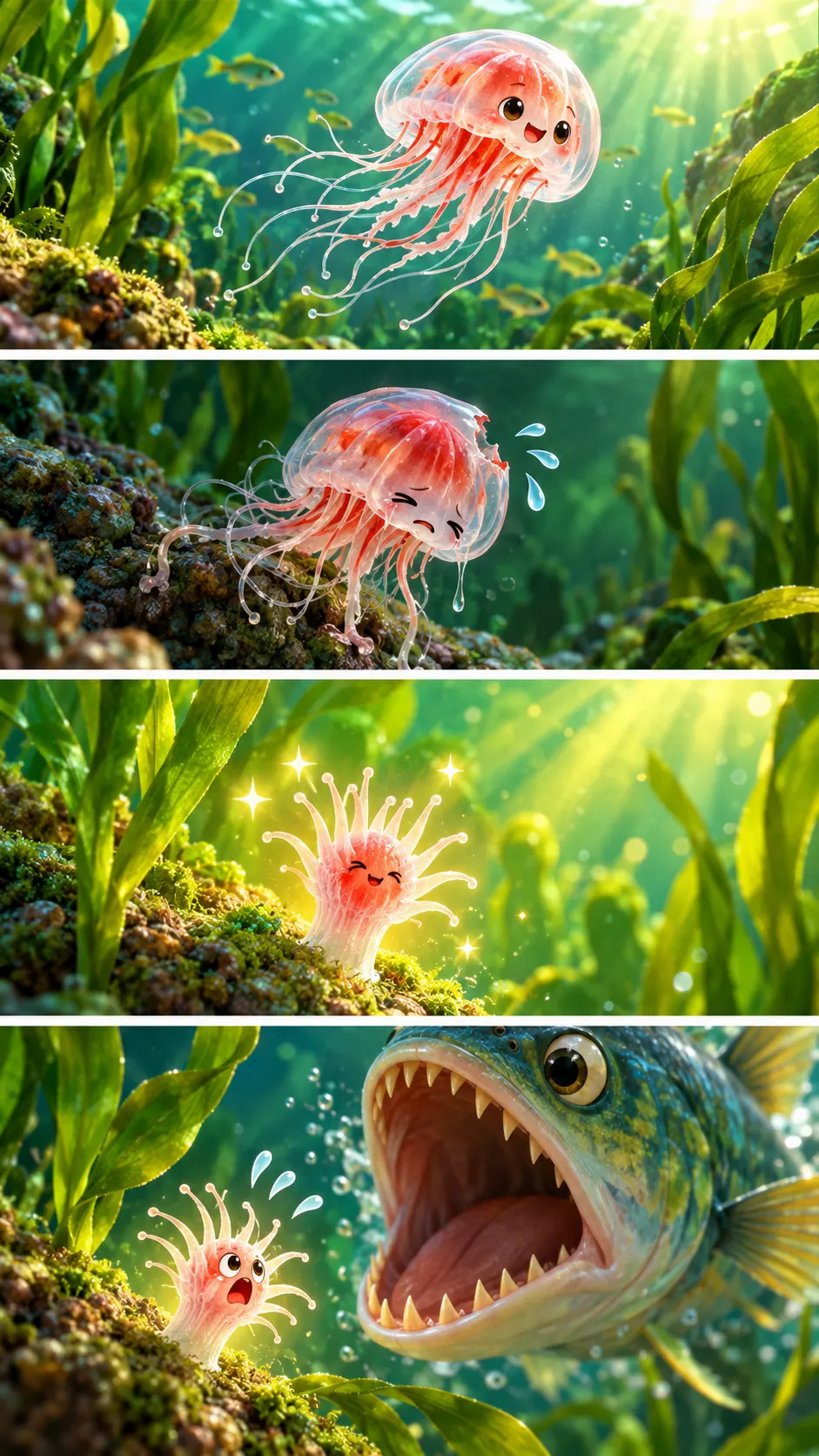
 4コマでわかる
このネタ、誰かに教えたくなった?
体長数ミリのクラゲが、弱ると「赤ちゃん時代」の姿に戻って、また大人になり直すらしい。何度もくり返せるから「不老不死のクラゲ」。ただし魚に食べられたら普通に終わる。
押すと「マジかリスト」に保存されます
 出典・参考文献(3件)タップで表示
- Piraino et al. (1996) Reversing the life cycle: medusae transforming into polyps and cell transdifferentiation in Turritopsis nutricula (Cnidaria, Hydrozoa), The Biological Bulletindoi.org
- Carlà et al. (2003) Morphological and ultrastructural analysis of Turritopsis nutricula during life cycle reversal, Tissue and Celldoi.org
- Pascual-Torner et al. (2022) Comparative genomics of mortal and immortal cnidarians unveils novel keys behind rejuvenation, PNASdoi.org

※本記事は上記の研究・公開資料をもとに、原田英語が独自の言葉で解説したものです。引用は著作権法第32条の範囲で行い、出典を明記しています。画像はすべてオリジナルのイメージです。研究結果には限界や個人差があります。誤りのご指摘は原田英語のお問い合わせフォームから。
 これも「マジか!?」
 動物・植物
動物・植物
海の中を漂い泳ぐ生き物の4分の3は「光る」。海面から深海まで、35万回の観察でわかった
 動物・植物
動物・植物
イカの体じゅうに「毛」のセンサー。人の耳の奥と同じく、毛で水のゆれを感じるらしい
 動物・植物
動物・植物
大海原を旅するイメージのウミガメ。ガラパゴスで9匹を追跡したら、1匹も諸島の外へ出なかった
 動物・植物
動物・植物
カレイにも毒魚にもウミヘビにも化けるタコがいた。でも「13種類をモノマネ」は盛りすぎ?
 動物・植物
動物・植物
人の脳は年をとると軽くなるのに、チンパンジーやゴリラの脳は目立って軽くならなかった
 動物・植物
動物・植物