


 動物・植物ホント
海の中を漂い泳ぐ生き物の4分の3は「光る」。海面から深海まで、35万回の観察でわかった
 2026.10.02
 English Corner(A2〜B2・4択クイズ)
 読む前に予想してみよう!
生き物の発光は、ある1種類の祖先から一度だけ進化した能力である
細菌から魚まで、さまざまな生き物で何十回も別々に進化したと考えられている。
 研究カード(どんな研究?)
- 対象
- カリフォルニア沖の海の生き物(表層〜水深3900m)
- 規模
- 35万件以上の観察・553分類群
- 研究の種類
- 遠隔操作の無人探査機(ROV)による17年分の映像の分析
- 確かさ
- ★★★★☆
カリフォルニア沖の海面から水深3900mまで、17年間・35万回以上の観察を分析したら、見つかった生き物の76%が光る能力を持つ種類だった。割合は浅い所も深い所もほぼ同じ。発光は生命の歴史で何十回も別々に進化している。
ひとことで言うと深い海の生き物の多くは自分で光る。光は、エサ集め・敵よけ・仲間さがしに使われる!
太陽の光は、海の中では深くなるほど弱まり、水深1000mあたりから下はほぼ真っ暗になります。
そんな暗闇の世界は、静かで真っ黒…と思うかもしれません。でも実際の深海は、あちこちで生き物が光る、イルミネーションのような世界でした。
「どれくらいの生き物が光るのか」。この素朴な問いに、17年分の映像で答えた研究があります。
01出会った生き物の76%が「光れる」
アメリカ・モントレー湾水族館研究所(MBARI)のセヴリーヌ・マルティーニさんとスティーヴン・ハドックさんは、無人の探査機で撮りためた膨大な映像を分析しました。
「光るのは一部の珍しい深海魚だけ」というイメージとは正反対。海の中では、光ることのほうが多数派だったのです。
ただし、この数字は「海の中を漂う・泳ぐ生き物」についてのもので、海底の生き物や、カリフォルニア沖以外の海では割合が変わる可能性があります。
02光は何に使われている?
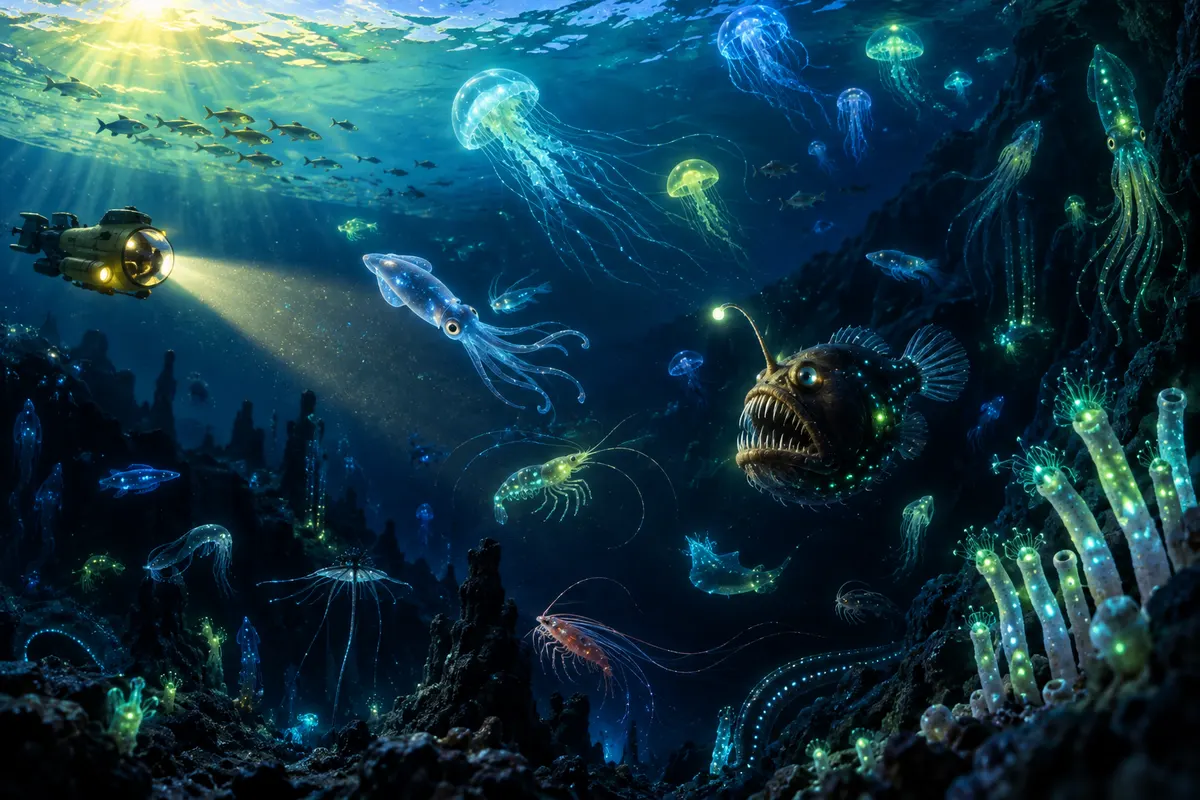
深海の光の使い道は、大きく分けて3つあります。2010年に『Science』で総説を書いた深海生物学者のエディス・ウィダーさんは、次のように整理しています。
- エサを見つける・おびき寄せる:チョウチンアンコウの「ちょうちん」のように、光でエサを呼び寄せる
- 相手を見つける:種ごとに違う光り方で、仲間や結婚相手に合図する
- 敵から逃れる:光をパッと出して相手を驚かせる、光る液を吐いて目くらましをする、など
中にはカウンターイルミネーションという作戦もあります。水深200〜1000mくらいの所には、上からかすかに日光が届きます。そのため、下から見上げると、生き物の体が黒い影になってしまいます。そこで、お腹側をちょうど同じ明るさで光らせて、影を消すのです。光ることで「見えなくなる」という、逆転の発想です。
03発光は何十回も「発明」された
生き物が光るしくみは、多くの場合、ルシフェリンという物質が酵素の働きで光を出す化学反応です。でも、そのしくみは生き物によってかなり違います。
2010年の総説(Haddock ら)は、発光が生き物の歴史の中で何十回も別々に進化したことをまとめています。さらに2021年の総説(Lau & Oakley)では、これまでの推定をまとめ直し、少なくとも94回、独立に進化したと見積もっています。
光ることは、それだけ「役に立つ発明」だったのでしょう。暗い海では、光は見る・見られる・隠れるのすべてにかかわる、とても大事な道具なのです。
04まとめ
深い海は、暗闇の中で生き物たちが光で語り合い、だまし合い、隠れ合う世界でした。しかも、その光は何十回も別々に「発明」されてきたのです。
夜空の星のように光る深海。海の中を漂ったり泳いだりしている生き物の多くは、実は光を使って暮らしているのかもしれません。
この研究を英語で読もう原田英語の English CornerBelow about 1,000 meters, the ocean is almost completely dark, yet it is full of living lights. 音声
音声 4択クイズ9問A2・B1・B2タップして開く
原田英語の English Corner
この研究を英語で読もう
The deep sea is very dark because sunlight cannot reach it. But many animals there can make their own light.
Scientists studied 17 years of videos from the sea near California, from the surface to the deep sea. They found that 76 percent of the animals in the videos could make light. Animals use light to find food, to find partners, and to escape from enemies. Light-making has appeared many different times in the history of life.
77 words ・ CEFR A2
和訳を見る
深海は日光が届かないので、とても暗いところです。しかし、そこにいる多くの動物は自分で光を作ることができます。
科学者たちは、カリフォルニア近くの海の、海面から深海までの17年分の映像を調べました。その結果、映像に映った動物の76パーセントが光を作れることがわかりました。動物たちは光を、エサを見つけるため、相手を見つけるため、そして敵から逃げるために使います。光を作る能力は、生命の歴史の中で何度も別々に現れてきました。
4択リーディングクイズ
Q1. What is the passage mainly about?
深海で自分で光る動物が多いことがテーマなので A。
Q2. What percent of the animals could make light?
76 percent of the animals could make light とあるので B。17は観察した年数。
Q3. In this passage, "escape from enemies" means ...
escape from ~ は「~から逃げる」、enemies は「敵」。自分を食べようとする相手から逃げることなので C。
Below about 1,000 meters, the ocean is almost completely dark, yet it is full of living lights. In 2017, Séverine Martini and Steven Haddock analyzed videos recorded by a remotely operated vehicle off California over 17 years. Out of more than 350,000 observations, 76 percent of the animals swimming or drifting in the water belonged to types that can produce light.
Among jellyfish and their relatives, the figure was over 97 percent. Animals use this light to attract prey, to signal to mates, and to confuse predators. Some even make their bellies glow to hide their shadow from animals below. Scientists also believe that the ability to glow has evolved separately at least 94 times.
115 words ・ CEFR B1
和訳を見る
水深約1000メートルより下では、海はほとんど真っ暗ですが、生き物の光であふれています。2017年、セヴリーヌ・マルティーニさんとスティーヴン・ハドックさんは、カリフォルニア沖で17年間にわたり遠隔操作の無人探査機が記録した映像を分析しました。35万件以上の観察のうち、水中を泳いだり漂ったりしていた動物の76パーセントが、光を出せる種類に属していました。
クラゲとその仲間では、その数字は97パーセントを超えていました。動物たちはこの光を、獲物をおびき寄せたり、相手に合図したり、捕食者を混乱させたりするのに使います。お腹を光らせて、下にいる動物から自分の影を隠すものまでいます。科学者たちはまた、光る能力が少なくとも94回、別々に進化したと考えています。
4択リーディングクイズ
Q1. What did Martini and Haddock analyze?
analyzed videos recorded by a remotely operated vehicle off California over 17 years とあるので B。
Q2. Among jellyfish and their relatives, what percent were types that can produce light?
Among jellyfish and their relatives, the figure was over 97 percent. とあるので A。
Q3. Why do some animals make their bellies glow?
make their bellies glow to hide their shadow from animals below とあるので D。光ることで見えなくなる作戦。
Sunlight fades rapidly with depth, and below roughly 1,000 meters the ocean is effectively dark. The deep sea, though, is far from lifeless or unlit. In 2017, Séverine Martini and Steven Haddock of the Monterey Bay Aquarium Research Institute analyzed more than 350,000 observations from 17 years of video recorded by remotely operated vehicles off California, from the surface down to 3,900 meters. By matching each identified animal with published records of light production, they estimated that 76 percent of the animals drifting or swimming in the water column were bioluminescent, and the proportion stayed surprisingly constant with depth.
Light serves to lure prey, communicate with mates, and startle or blind predators; some animals use counterillumination, glowing on their undersides to erase their silhouettes against faint light from above. Reviews have concluded that bioluminescence evolved independently dozens of times, at least 94 by one recent count. Some caution is needed, though. The 76 percent figure was inferred from the literature rather than from directly observed glowing, it applies only to animals in open water off one coastline, and the number of independent origins depends on how they are counted.
189 words ・ CEFR B2
和訳を見る
日光は深さとともに急速に弱まり、水深約1000メートルより下の海は事実上真っ暗です。それでも深海は、生命も光もない場所とはほど遠いのです。2017年、モントレー湾水族館研究所のセヴリーヌ・マルティーニさんとスティーヴン・ハドックさんは、カリフォルニア沖で海面から水深3900メートルまで、遠隔操作の無人探査機が17年間に記録した映像から35万件以上の観察を分析しました。特定された動物それぞれを、発光についての既存の記録と照らし合わせることで、水中を漂ったり泳いだりしている動物の76パーセントが発光生物だと推定し、その割合は深さによらず驚くほど一定でした。光は、獲物をおびき寄せる、相手と交信する、捕食者をおどろかせたり目くらましをしたりする、といった役割を果たします。
カウンターイルミネーションを使う動物もいて、体の下側を光らせることで、上からのかすかな光を背にした自分の輪郭を消します。総説では、生物発光は何十回も独立に進化したと結論づけられており、最近のある集計では少なくとも94回とされています。ただし、注意も必要です。76パーセントという数字は、実際に光るのを観察したのではなく文献から推定されたものであり、ある1つの海岸沖の、水中を漂い泳ぐ動物にしか当てはまらず、独立した起源の数は数え方によって変わるのです。
4択リーディングクイズ
Q1. What was surprising about the proportion of bioluminescent animals?
the proportion stayed surprisingly constant with depth とあるので A。
Q2. How does counterillumination help an animal?
glowing on their undersides to erase their silhouettes against faint light from above とあるので C。
Q3. Which is a limitation of the 76 percent figure, according to the writer?
inferred from the literature rather than from directly observed glowing とあるので B。対象は海底ではなく水中(open water)の動物。
重要単語
- bioluminescenceC1名詞生物発光Bioluminescence is common in the deep sea.
 bio(生命)+lumin(光)+-escence(~の状態)。形容詞 bioluminescent「生物発光する」。
 - predatorB2名詞捕食者The flash may scare away a predator. 反対は prey(獲物)。predator and prey「捕食者と被食者」はセットで頻出。
- counterilluminationC1名詞カウンターイルミネーション(腹側を光らせて影を消す)Some squid hide their shadow by counterillumination. counter(反対の)+illumination(照明)。counterattack「反撃」と同じ counter-。
- evolve independentlyC1動詞句独立に進化するLight production evolved independently many times. 別々の系統で似た特徴が生まれることを convergent evolution(収斂進化)と言う。
- remotely operated vehicleC1名詞(句)遠隔操作の無人探査機(ROV)Scientists used a remotely operated vehicle to film deep-sea animals. remotely「遠くから」。remote control「リモコン」の remote と同じ。
- lureC1動詞・名詞おびき寄せる、誘いのエサAnglerfish use light to lure prey. 釣りの「ルアー」と同じ語。lure A into ~「Aを~へ誘い込む」。
 入試に出る順の単語帳を印刷する →
 全5903語の「科学英単語カード」で復習する →
 動画でもっと知る
動画は各チャンネルの公式埋め込みで表示しています(YouTube)。
この話題を TED で聞く
同じテーマの TED・TED-Ed を、 TED HACK で。英語の見どころ・使える表現・学習ミッションつきの日本語ガイドです。(運営:原田英語)

 実物を見に行こう
この話につながる展示がある、全国のミュージアムです。
- 沼津港深海水族館静岡県沼津市
フィリピンの深海にすむ、光る力をもつ魚「ヒカリキンメダイ」が星空のように泳ぐ水槽があります。2階では、凍らせたままのシーラカンス2体と、はく製3体を展示しています。
- 駿河湾深海生物館静岡県沼津市(戸田)
戸田(へだ)の漁船が水揚げした深海生物を中心に展示しています。新種として発表されたときに調べられた深海ザメ「オロシザメ」のはく製や、タカアシガニのコーナーがあります。
館の情報は 全国ミュージアムマップ(Culture+Commons)より。開館日や料金は各館の公式サイトでご確認ください。
 4コマでわかる
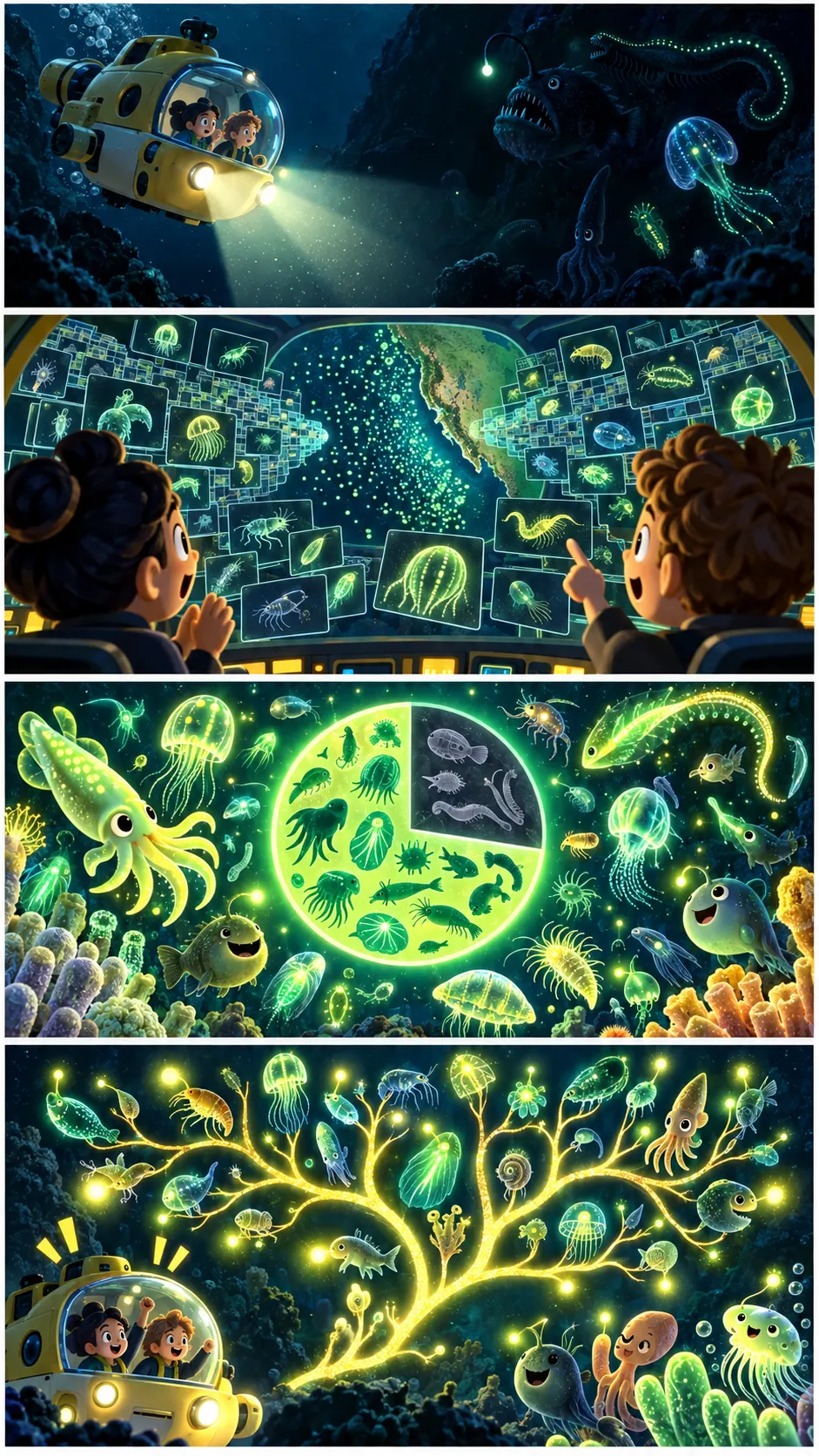
このネタ、誰かに教えたくなった?
海の中は暗い…と思いきや、カリフォルニア沖の海面から深海まで17年分・35万回以上の観察を分析したら、出会った生き物の76%が「光れる」種類だったらしい。しかも発光は、生き物の歴史で少なくとも94回、別々に進化してきた。
押すと「マジかリスト」に保存されます
 出典・参考文献(4件)タップで表示
- Haddock, Moline & Case (2010) Bioluminescence in the Sea, Annual Review of Marine Sciencedoi.org
- Widder (2010) Bioluminescence in the Ocean: Origins of Biological, Chemical, and Ecological Diversity, Sciencedoi.org
- Martini & Haddock (2017) Quantification of bioluminescence from the surface to the deep sea demonstrates its predominance as an ecological trait, Scientific Reportsdoi.org
- Lau & Oakley (2021) Multi-level convergence of complex traits and the evolution of bioluminescence, Biological Reviewsdoi.org

※本記事は上記の研究・公開資料をもとに、原田英語が独自の言葉で解説したものです。引用は著作権法第32条の範囲で行い、出典を明記しています。画像はすべてオリジナルのイメージです。研究結果には限界や個人差があります。誤りのご指摘は原田英語のお問い合わせフォームから。
 これも「マジか!?」
 動物・植物
動物・植物
人の脳は年をとると軽くなるのに、チンパンジーやゴリラの脳は目立って軽くならなかった
 動物・植物
動物・植物
鳥123種の声の大きさを測ったら、「世界一うるさい鳥」の候補が新たに2種見つかった


 動物・植物
動物・植物
「観葉植物で空気がキレイに」は幻想? 換気と同じ効果には床1㎡に10〜1000鉢が必要という計算
 動物・植物
動物・植物
渡り鳥は目で地球の磁場を感じているかもしれない。カギは「量子」のふしぎな現象
 動物・植物
動物・植物
【立命館の入試に出た】口と口を合わせて交尾するタコがいた。30年以上うわさだけだったパナマのタコ
 動物・植物
動物・植物