


 動物・植物ビミョー
ゾウは仲間の死を悼むのか? 骨にそっと触れる姿を、科学はこう見ている
 2026.10.02
 English Corner(A2〜B2・4択クイズ)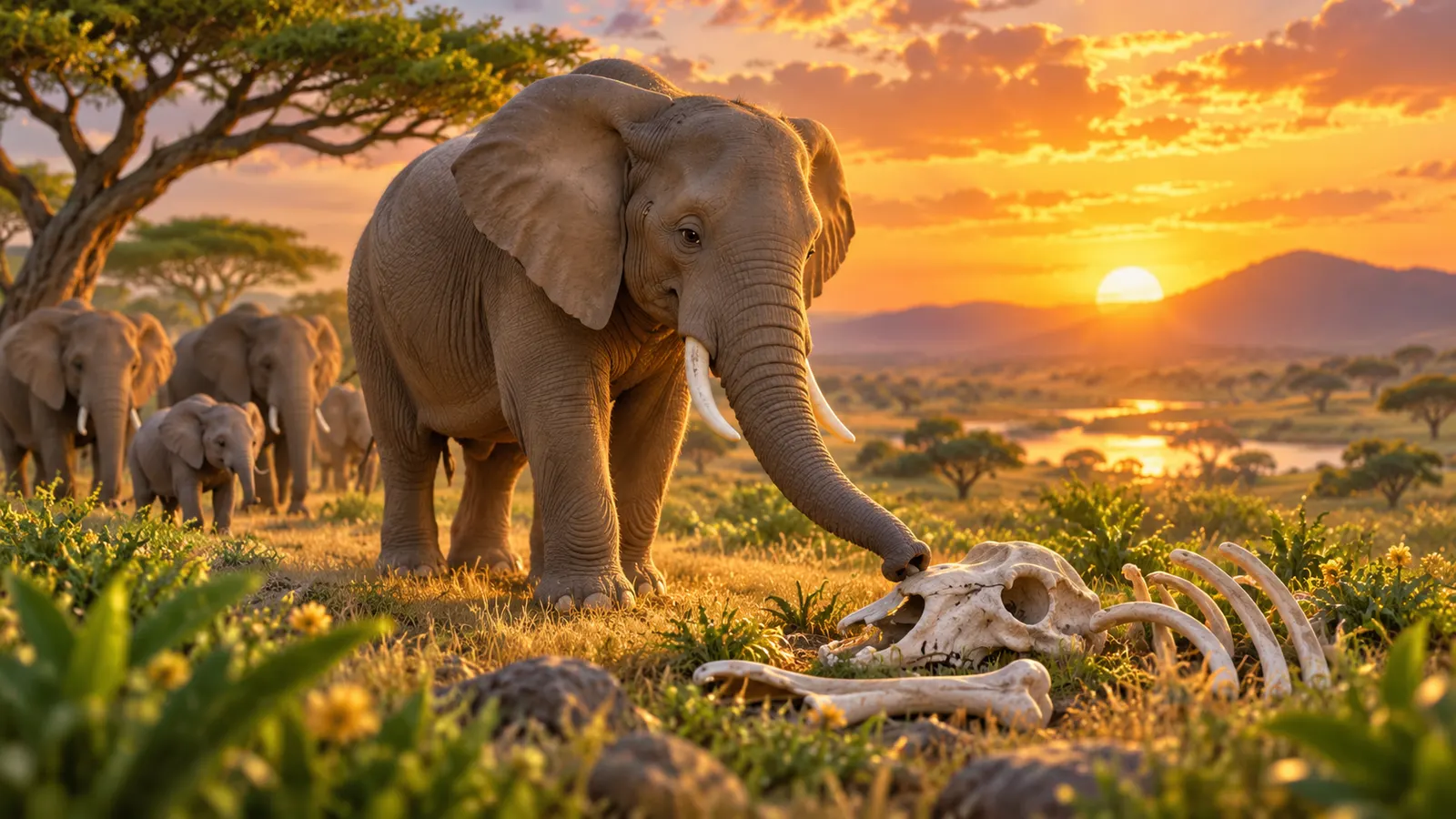
 読む前に予想してみよう!
ゾウは、ほかの動物の骨よりも、ゾウの骨に強い関心を示す
ケニアでの実験で、ゾウはスイギュウやサイの頭骨より、ゾウの頭骨を長く調べた。
 研究カード(どんな研究?)
- 対象
- 野生のアフリカゾウ・アジアゾウ
- 規模
- 頭骨提示実験(1実験あたり17〜19家族)+事例観察
- 研究の種類
- 野外実験・観察記録・総説
- 確かさ
- ★★☆☆☆
ゾウは仲間の骨や遺体に強い関心を示し、触れたり寄りそったりする。ただ「悲しんでいる」かは証明しきれていない。
ひとことで言うとゾウは仲間の骨を鼻でそっとさわる。悲しいのかは、まだ謎!
サバンナに転がる白い骨。そこを通りかかったゾウの群れが、ふと足を止める。
一頭が鼻を伸ばし、骨をそっとなでる。持ち上げ、ひっくり返し、また置く。ほかのゾウも順番に近づいてくる——。
こんな光景が、アフリカでは何度も目撃されてきました。ゾウは仲間の死を悼んでいるのでしょうか?
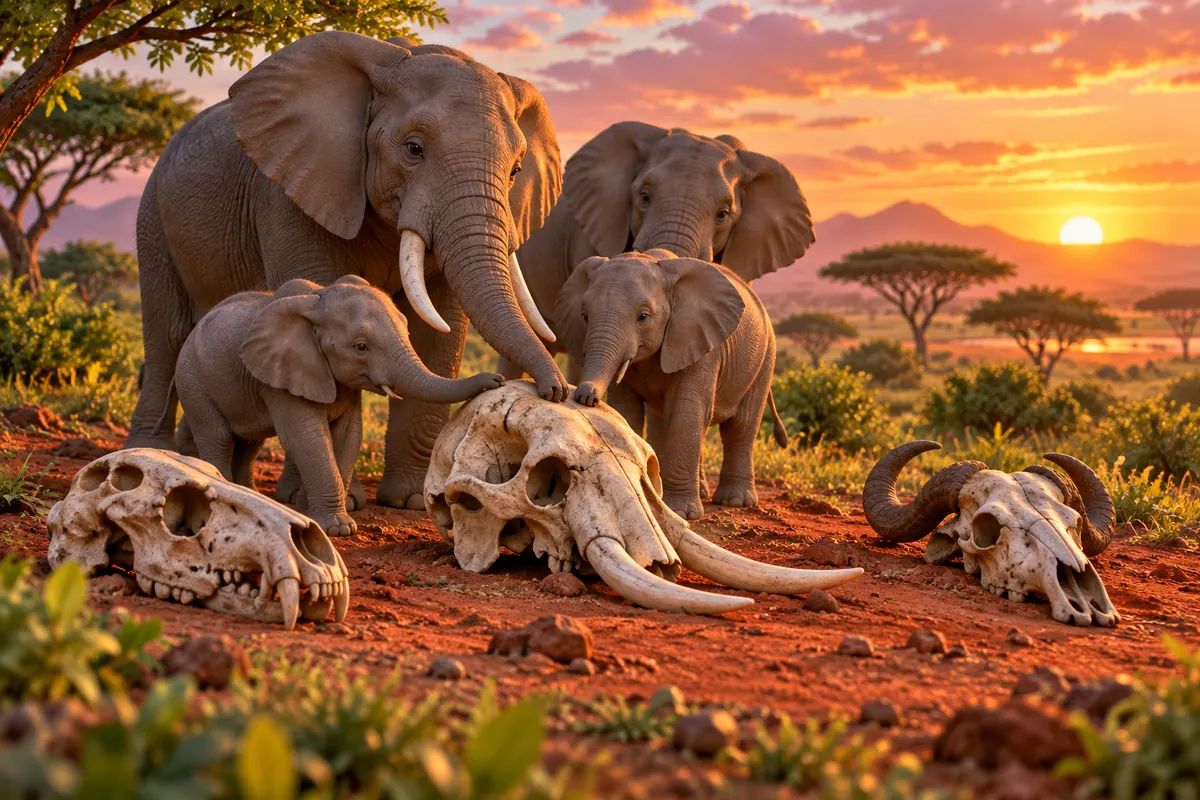
01ゾウは「ゾウの骨」を特別あつかいする
まず確かめられたのは、「ゾウは本当にゾウの骨に特別な関心を持つのか?」という点です。
ただし、同じ研究にはもう一つの結果があります。リーダー(家族を率いるおばあさんゾウ)を亡くした3つの家族に、自分たちのリーダーの頭骨と、ほかの家族のリーダーの頭骨を並べて見せました。すると、自分の家族の骨を特に選ぶ傾向は見られなかったのです(ただし試せたのは3家族だけです)。
ゾウは「ゾウの骨」はわかる。でも「これはおばあちゃんの骨だ」とまでわかっているかは、はっきりしませんでした。
02倒れたリーダーを、起こそうとしたゾウ
もっと胸を打つ記録もあります。
2003年、ケニアのサンブル国立保護区で、ある家族のリーダーのメスが倒れました。研究者たちは、彼女が亡くなるまでとその後の様子を観察し、2006年に報告しました(Douglas-Hamilton ら、『Applied Animal Behaviour Science』)。
別の家族のメスが近づき、牙で倒れたゾウを持ち上げて立たせようとしたのです。亡くなったあとも、さまざまな家族のゾウが数日にわたって遺体を訪れ、においをかいだり、触れたりしました。
2020年には、霊長類学の学術誌『Primates』に総説が載りました(Goldenberg と Wittemyer)。過去の報告とサンブルでの新しい観察をまとめたもので、ゾウが死んだ仲間に近づき、触れ、長くとどまる行動はくり返し記録されていると結論づけています。
03アジアゾウは「赤ちゃんを運ぶ」
アジアゾウでも、死んだ子どもを鼻でかかえて運び続ける母ゾウの姿が報告されています。2022年には、インドの研究者がYouTubeに投稿された動画を集めて分析し、子ゾウの遺体を運ぶ例をまとめました。2024年には別のインドの研究者が、死んだ子ゾウが茶畑の溝に埋められていた5例を報告しました。ゾウ自身が埋めた可能性があると論じています。ただし観察例はまだ少なく、どう解釈すべきかは議論が続いています。
04「悼む」と言っていいの?
動物の心を研究するとき、科学者は二つの落とし穴に気をつけます。何でも人間と同じに考える「擬人化(ぎじんか)」と、逆に動物の心を最初から否定してしまうことです。
ゾウは大きな脳を持ち、何十年も家族と暮らし、仲間を個体ごとに見分けます。そんな動物が仲間の死にまったく無関心だと考えるほうが、むしろ不自然かもしれません。でも、その内側で何を感じているかは、まだ誰にもわからないのです。
05まとめ
ゾウは仲間の骨に触れ、倒れた仲間を起こそうとし、遺体のそばにとどまります。それを「悼む」と呼ぶかどうかは、科学がまだ答えを出せていない問いです。
でも、その答えを探すことは、「悲しみとは何か」を私たち自身に問いかけることでもあります。
この研究を英語で読もう原田英語の English CornerElephants seem to show special interest in dead members of their own species. 音声
音声 4択クイズ9問A2・B1・B2タップして開く
原田英語の English Corner
この研究を英語で読もう
When elephants find the bones of another elephant, they often stop. They touch the bones gently with their trunks. In a study in Kenya, scientists showed wild elephants the skulls of an elephant, a buffalo and a rhino.
The elephants touched the elephant skull for the longest time. Some elephants also visit dead friends for days. But do they feel sad like people? Scientists still do not know.
68 words ・ CEFR A2
和訳を見る
ゾウはほかのゾウの骨を見つけると、よく立ち止まります。そして鼻でそっと骨に触れます。ケニアでの研究で、科学者たちは野生のゾウに、ゾウ、スイギュウ、サイの頭骨を見せました。
ゾウはゾウの頭骨にいちばん長く触れていました。死んだ仲間のもとを何日も訪れるゾウもいます。でも、ゾウは人のように悲しんでいるのでしょうか。科学者たちにもまだわかっていません。
4択リーディングクイズ
Q1. What is the passage mainly about?
ゾウが仲間の骨や遺体にどう反応するかの話なので A。
Q2. Which skull did the elephants touch for the longest time?
The elephants touched the elephant skull for the longest time. とあるので C。
Q3. In this passage, "gently" means ...
touch the bones gently は「骨にそっと触れる」。gently は「やさしく、そっと」なので B。
Elephants seem to show special interest in dead members of their own species. In a study published in 2006, researchers placed the skulls of elephants, buffaloes and rhinos in front of wild elephant families in Kenya. The elephants spent the most time smelling and touching the elephant skulls with their trunks.
However, they did not choose the skull of their own family's leader over others. In another case, when a female leader fell and died, an elephant from a different family tried to lift her up with its tusks. Many elephants visited her body for several days. Even so, scientists say it has not been proven that elephants feel grief as humans do.
113 words ・ CEFR B1
和訳を見る
ゾウは、死んだ同じ種の仲間に特別な関心を示すようです。2006年に発表された研究で、研究者たちはケニアの野生のゾウの家族の前に、ゾウ、スイギュウ、サイの頭骨を置きました。ゾウは、ゾウの頭骨を鼻でかいだり触れたりすることに最も長い時間を費やしました。
しかし、自分の家族のリーダーの頭骨をほかの頭骨より選ぶことはありませんでした。別の事例では、メスのリーダーが倒れて死んだとき、別の家族のゾウが牙で彼女を持ち上げようとしました。多くのゾウが数日にわたって彼女の遺体を訪れました。それでも科学者たちは、ゾウが人間のように悲しみを感じていることは証明されていないと言います。
4択リーディングクイズ
Q1. What is the passage mainly about?
第1文 special interest in dead members of their own species がテーマ。頭骨実験や死んだリーダーへの反応を紹介しているので C。
Q2. What did the elephant from a different family try to do?
an elephant from a different family tried to lift her up with its tusks とあるので B。
Q3. Which statement would the author most likely agree with?
関心を示す行動は確認されているが、最終文で悲しみは証明されていないとしているので D。家族の頭骨を選ばなかったので C は誤り。
In Samburu, an elephant once tried to lift a dying matriarch with her tusks. The helper was an unrelated female. Over the following days, elephants from several families came to visit the body. Field studies confirm that elephants really do linger over their dead.
In a 2006 study in Amboseli National Park, Kenya, Karen McComb and colleagues showed wild elephant families the skulls of elephants, buffaloes and rhinos. The elephants spent more time examining the elephant skulls, and they also preferred ivory to pieces of wood.
But they showed no preference for the skull of their own dead matriarch over those of other matriarchs. Recognizing an elephant is one thing. Recognizing a particular relative is another. A 2020 review found that approaching, touching and staying near the dead has been recorded again and again. Whether any of this amounts to grief is much harder to say.
Many of the accounts are anecdotes, and dramatic scenes are the ones most likely to be written up. Smell or simple curiosity could also explain the interest. So scientists who study elephants try to avoid two opposite errors. One is reading human feelings into animal behavior. The other is dismissing animal emotions altogether.
199 words ・ CEFR B2
和訳を見る
サンブルで、1頭のゾウが死にかけている女家長を牙で持ち上げようとしたことがあります。助けようとしたのは血縁のないメスでした。その後何日にもわたって、いくつもの家族のゾウがその亡きがらを訪れました。野外研究は、ゾウが本当に死んだ仲間のそばにとどまることを確かめています。
2006年に発表された、ケニアのアンボセリ国立公園での実験で、カレン・マコームらは、野生のゾウの家族にゾウ、スイギュウ、サイの頭骨を見せました。ゾウたちはゾウの頭骨をより長く調べ、また木片より象牙を好みました。
しかし、自分たちの死んだ女家長の頭骨を、ほかの女家長の頭骨より好むことはありませんでした。ゾウだとわかることと、特定の身内だとわかることは別の話です。2020年の総説では、死んだ仲間に近づき、触れ、そばにとどまる行動が何度も記録されていることがわかりました。それが悲しみと呼べるものかどうかは、はるかに判断が難しい問題です。
記録の多くは逸話であり、劇的な場面ほど書き残されやすいのです。においや単純な好奇心でも、その関心は説明できるかもしれません。そのためゾウを研究する科学者たちは、正反対の2つの誤りを避けようとしています。1つは動物の行動に人間の感情を読み込んでしまうこと。もう1つは動物の感情をまったく認めないことです。
4択リーディングクイズ
Q1. What is the passage mainly about?
ゾウが死んだ仲間に示す行動について、確かめられていることと、悲しみかどうかはわからないことを述べているので D。
Q2. What did McComb's study find about the skulls of matriarchs?
they showed no preference for the skull of their own dead matriarch over those of other matriarchs とあるので A。
Q3. Why does the author mention that "dramatic scenes are the ones most likely to be written up"?
劇的な場面ほど記録されやすいので、悲しみの証拠が偏っている可能性を説明している。よって C。
重要単語
- carcassC1名詞(動物の)死体The herd visited the carcass for several days.
 主に動物の死体に使う。人の遺体は body や remains が一般的。
 - skullB2名詞頭骨、頭蓋骨The elephants touched the skull with their trunks. bone(骨)の中でも頭の骨。skeleton(骨格)とセットで覚える。
- griefB2名詞深い悲しみIt is hard to prove that animals feel grief. 動詞は grieve(深く悲しむ)。sorrow より「死別による悲しみ」のニュアンスが強い。
- anthropomorphismC1名詞擬人化Scientists try to avoid anthropomorphism. anthropo(人間)+morph(形)。anthropology(人類学)と同語源。動物の心を扱う長文の必須語。
- matriarchC1名詞(群れを率いる)女家長The matriarch leads the elephant family. matri(母)+arch(支配者)。反対は patriarch(家長・族長)。
- anecdotalC1形容詞逸話的な、個別の事例にもとづくMany reports of grief are anecdotal. anecdote(逸話)の形容詞形。anecdotal evidence「逸話的証拠」は科学的根拠の弱さを指摘するときの定番。
- lingerC1動詞(立ち去らずに)とどまる、なかなか消えないThe elephants lingered near the bones. linger on「(においや記憶が)残る」。lingering doubt「消えない疑い」も入試に出る。
 入試に出る順の単語帳を印刷する →
 全5903語の「科学英単語カード」で復習する →
 動画でもっと知る
動画は各チャンネルの公式埋め込みで表示しています(YouTube)。
この話題を TED で聞く
同じテーマの TED・TED-Ed を、 TED HACK で。英語の見どころ・使える表現・学習ミッションつきの日本語ガイドです。(運営:原田英語)

このネタ、誰かに教えたくなった?
ゾウは、ほかの動物の骨よりも、ゾウの骨のほうを長い時間かけて鼻で調べるらしい。倒れて死にかけた仲間を起こそうとする姿も記録されている。「悼む」かどうか、科学者も真剣に悩んでいる。
押すと「マジかリスト」に保存されます
 出典・参考文献(5件)タップで表示
- McComb, Baker & Moss (2006) African elephants show high levels of interest in the skulls and ivory of their own species, Biology Lettersdoi.org
- Douglas-Hamilton et al. (2006) Behavioural reactions of elephants towards a dying and deceased matriarch, Applied Animal Behaviour Sciencedoi.org
- Goldenberg & Wittemyer (2020) Elephant behavior toward the dead: A review and insights from field observations, Primatesdoi.org
- Pokharel, Sharma & Sukumar (2022) Viewing the rare through public lenses: insights into dead calf carrying and other thanatological responses in Asian elephants using YouTube videos, Royal Society Open Sciencedoi.org
- Kaswan & Roy (2024) Unearthing calf burials among Asian Elephants Elephas maximus in northern Bengal, India, Journal of Threatened Taxadoi.org

※本記事は上記の研究・公開資料をもとに、原田英語が独自の言葉で解説したものです。引用は著作権法第32条の範囲で行い、出典を明記しています。画像はすべてオリジナルのイメージです。研究結果には限界や個人差があります。誤りのご指摘は原田英語のお問い合わせフォームから。
 これも「マジか!?」
 動物・植物
動物・植物
コアラは約20時間、野生のゾウは約2時間。動物の睡眠時間がバラバラすぎる理由

 動物・植物
動物・植物
「観葉植物で空気がキレイに」は幻想? 換気と同じ効果には床1㎡に10〜1000鉢が必要という計算

 動物・植物
動物・植物
渡り鳥は目で地球の磁場を感じているかもしれない。カギは「量子」のふしぎな現象


 動物・植物
動物・植物
【立命館の入試に出た】口と口を合わせて交尾するタコがいた。30年以上うわさだけだったパナマのタコ
 動物・植物
動物・植物
「鳥がラーテルをハチの巣へ案内する」話は証拠が薄かった。本当に鳥と組んでいたのは人間だった

 動物・植物
動物・植物