

 ウソ?ホント?検証ウソ
満月の夜は出産が増える? 数千万件の出生データで確かめたら、差はほぼなかった
 2026.10.02
 English Corner(A2〜B2・4択クイズ)
 読む前に予想してみよう!
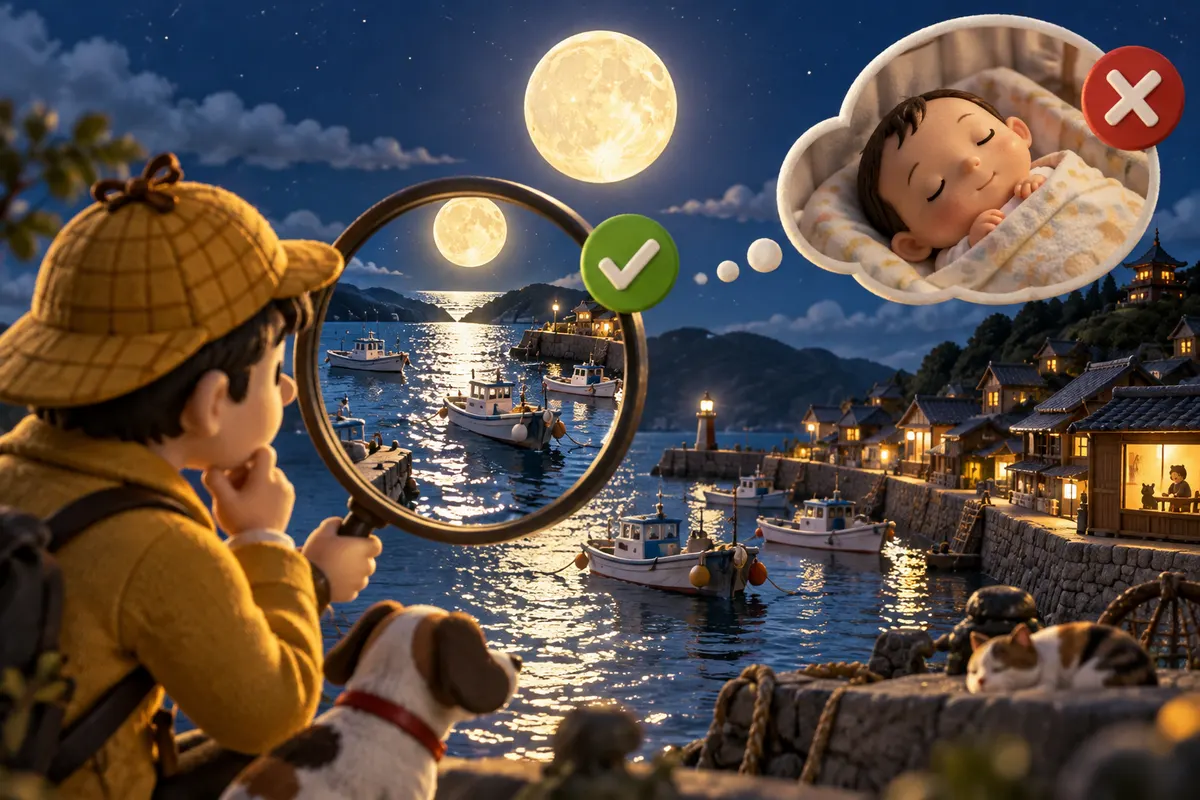
満月の日には、ほかの日より明らかに出産が多い
数十万〜数百万件の出生データを使った研究で、満月に出産が増える傾向はほぼ見られなかった。
 研究カード(どんな研究?)
- 対象
- 出生記録(米国・ドイツ・フランス)
- 規模
- 56万件〜3,870万件
- 研究の種類
- 大規模記録データの解析(観察研究)
- 確かさ
- ★★★★☆
米国56万件・ドイツ400万件の出生データでは、満月に出産が増える傾向は見られなかった。仏3,870万件では、ごくわずかな増加だけ。
ひとことで言うと赤ちゃんは月を見て生まれる日を決めてない。満月でも新月でも同じ!
「今夜は満月だから、お産が多くなるよ」
産婦人科の病院では、昔からこんな話がささやかれてきたと言われます。月は潮の満ち引きを起こすほどの力を持っているのだから、人間の体にも影響があるはず――そう考えると、なんだか説得力がありますよね。
では、実際のデータで確かめると、どうなるのでしょう? 答えは、何十万件、何百万件という出生記録が教えてくれました。
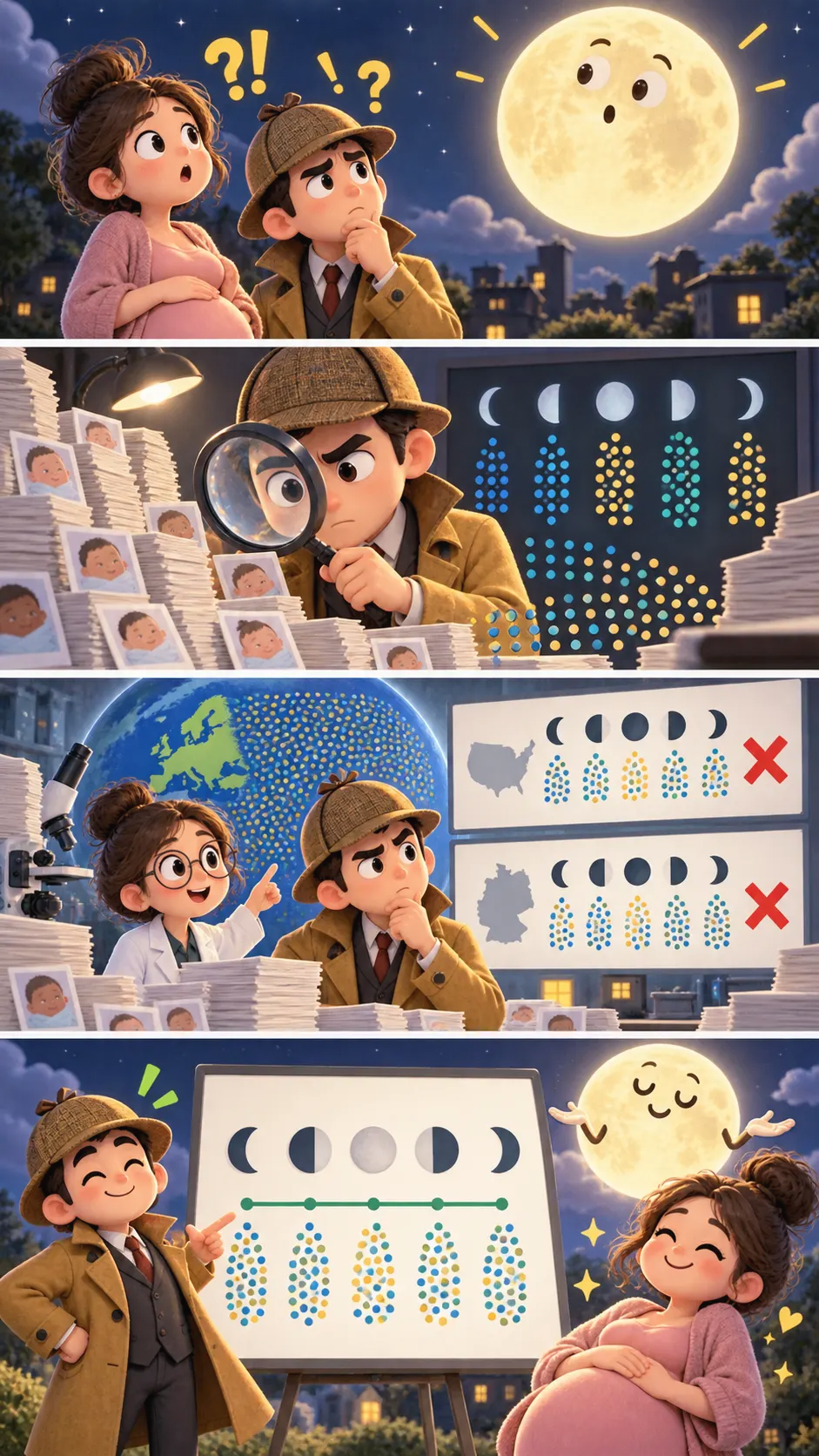
0156万件の出生を、月の満ち欠けで仕分けた
研究チームは論文の中で、この言い伝えは「根拠にもとづいていない」と結論づけています。
02ドイツでは400万件、さらに精密に
もっと大規模な研究もあります。
2008年、ドイツの研究者たちは、南西部の州で1966年から2003年までに生まれた400万件以上の出生データを分析しました。使ったのはスペクトル解析(=データの中に、どんな周期のくり返しが隠れているかを探す方法。音を高い音・低い音に分けるのに似ている)という手法です。
すると、はっきり見つかった周期は2つだけでした。
- 1週間の周期:週末は出産が少ない(計画的な出産が平日に多いため)
- 1年の周期:季節によって出産数が変わる
そして、月の満ち欠けにあたる約29.5日の周期は、見つかりませんでした。
03「月の引力」は人間には小さすぎる
潮の満ち引きが起きるのは、地球がとてつもなく大きいからです。月の引力の強さは、地球の月に近い側と遠い側で、ほんの少しだけ違います。この「ほんの少しの差」が、直径約1万3,000キロの地球をおおう海全体では、大きな動きになるのです。
ところが人間の体は、せいぜい1〜2メートル。この大きさでは、月の引力の「差」はほとんどゼロに等しく、体の中の水を動かすような力にはなりません。
04なぜ「満月はお産が多い」と感じるの?
データではほとんど差がないのに、なぜこの言い伝えは根強いのでしょう?
- 印象に残る:満月の夜に忙しかったことは「やっぱり!」と記憶に残り、新月の夜に忙しかったことは忘れられる(確証バイアス)
- 話のネタになる:「今日は満月だから」という言葉自体が、忙しさを説明する便利なフレーズになる
ちなみに、フランスで50年分・3,870万件の出生を調べた2021年の研究では、満月とその翌日にごくわずかな増加が見られたと報告されています。ただしその差は本当にわずかです。生のデータのままでは偶然の範囲と区別できず、曜日や季節、祝日による変動を細かく取り除いて、はじめて検出できたほどでした。
研究者たちは、その原因として“自己成就的予言”(=信じたことが、信じたせいで本当になる現象)の可能性を挙げています。たとえば「満月の日は忙しい」と考えて、その日のスタッフを増やす病院があれば、それだけで満月の日の出産が少し増えることもありうる、という考えです。
05まとめ
- 56万件、400万件という大規模データで、満月に出産が増える傾向は見られなかった
- 3,870万件を調べたフランスの研究では、満月とその翌日にごくわずかな増加。ただし病院で実感できるような差ではない
- 月の引力は、海のように巨大なものには効くが、人の体の大きさでは小さすぎる
- 「満月は忙しい」は、記憶に残りやすい夜が生んだ思い込みかもしれない
赤ちゃんは、月を見て生まれる日を決めているわけではなさそうです。でも、満月の夜に生まれた子の誕生日には、ちょっと素敵な物語を添えてあげてもいいですよね。
この研究を英語で読もう原田英語の English CornerMany people, including some hospital staff, believe that more babies are born at full moon. 音声
音声 4択クイズ9問A2・B1・B2タップして開く
原田英語の English Corner
この研究を英語で読もう
Some hospital workers say that more babies are born on full-moon nights. Is it true? In the United States, researchers looked at more than 564,000 births. They put the births into groups by the shape of the moon.
The number of births was almost the same in every group. A study in Germany with over four million births found the same thing. The moon moves the sea, but it does not choose a baby's birthday.
75 words ・ CEFR A2
和訳を見る
病院で働く人の中には、満月の夜にはもっと多くの赤ちゃんが生まれると言う人がいます。それは本当でしょうか。アメリカで、研究者たちは56万4,000件以上の出生を調べました。彼らは出生を月の形ごとのグループに分けました。
出生の数はどのグループでもほとんど同じでした。400万件以上の出生を調べたドイツの研究でも、同じ結果が出ました。月は海を動かしますが、赤ちゃんの誕生日を選んでいるわけではありません。
4択リーディングクイズ
Q1. What is the passage mainly about?
満月の夜に出産が増えるかどうかを大規模データで確かめた話なので B。
Q2. How many births did the study in Germany look at?
A study in Germany with over four million births とあるので C。56万件はアメリカの研究。
Q3. In this passage, "the same" means the number of births ...
almost the same は「ほとんど同じ」=あまり変わらなかった、という意味なので A。
Many people, including some hospital staff, believe that more babies are born at full moon. Researchers tested this idea with birth records. A 2005 study analyzed 564,039 births in North Carolina and sorted them into eight phases of the lunar cycle. It found no meaningful difference in the number of births or in birth complications.
A German team later examined more than four million births using a method that searches data for repeating cycles. They found a weekly pattern and a yearly pattern, but no cycle of about 29.5 days, the length of the lunar cycle. Although the moon's gravity causes ocean tides, its effect on something as small as a human body is tiny. The belief probably survives because busy full-moon nights are easier to remember.
127 words ・ CEFR B1
和訳を見る
一部の病院スタッフを含め、多くの人が、満月のときにはより多くの赤ちゃんが生まれると信じています。研究者たちは出生記録を使ってこの考えを検証しました。2005年の研究は、ノースカロライナ州の56万4,039件の出生を分析し、月の満ち欠けの8つの段階に分類しました。その結果、出生数にもお産のトラブルにも意味のある差は見つかりませんでした。
その後、ドイツのチームが、データの中のくり返す周期を探す手法を使って400万件以上の出生を調べました。彼らは1週間の周期と1年の周期は見つけましたが、月の満ち欠けの長さである約29.5日の周期は見つかりませんでした。月の引力は海の潮の満ち引きを起こしますが、人間の体のように小さなものへの影響はごくわずかです。この思い込みが残っているのは、おそらく忙しかった満月の夜のほうが記憶に残りやすいからでしょう。
4択リーディングクイズ
Q1. How did the 2005 study test the belief?
sorted them into eight phases of the lunar cycle とあるので D。
Q2. What patterns did the German team find?
They found a weekly pattern and a yearly pattern, but no cycle of about 29.5 days とあるので B。
Q3. Why does the writer think the belief survives?
最終文 busy full-moon nights are easier to remember から C。
On some maternity wards, staff will tell you that the full moon brings a rush of births. The belief sounds reasonable enough. If the moon can lift the oceans, why not affect a pregnant body? Large datasets say otherwise. Arliss and colleagues sorted 564,039 births in North Carolina into eight lunar phases and found no meaningful difference in either the number of births or the rate of complications.
A German team went further. They applied spectral analysis, a technique for detecting hidden repeating patterns, to more than four million births recorded over nearly four decades. It picked up a weekly cycle, linked to planned deliveries, and a seasonal cycle.
Nothing matched the 29.5-day lunar month. Physics explains why. Tides happen because the moon's pull differs slightly across the enormous width of the whole Earth. Across a human body less than two meters tall, that difference is negligible. One study did find something.
A French analysis of 38.7 million births detected a slight rise at full moon. With that many births, even a tiny difference can pass a statistical test, and this rise was too faint for anyone on a ward to notice.
192 words ・ CEFR B2
和訳を見る
産科病棟によっては、満月の夜は出産が相次ぐ、とスタッフが言うことがあります。この考えはそれなりにもっともらしく聞こえます。月が海を持ち上げられるのなら、妊婦の体に影響してもおかしくないのでは、というわけです。しかし、大規模なデータはそれを否定しています。アーリスらはノースカロライナ州の56万4,039件の出生を8つの月相に分けましたが、出生数にも合併症の割合にも意味のある差は見つかりませんでした。
ドイツのチームはさらに踏みこみました。隠れたくり返しのパターンを見つける手法であるスペクトル解析を、40年近くにわたって記録された400万件以上の出生に当てはめたのです。見つかったのは、計画出産に関連する1週間の周期と、季節による周期でした。29.5日の月の周期に一致するものは何もありませんでした。
その理由は物理学で説明できます。潮の満ち引きは、月の引力の強さが、巨大な地球の端と端でわずかに異なるために起こります。身長2メートルに満たない人間の体では、その差は無視できるほどです。何かを見つけた研究も一つあります。3,870万件の出生を対象にしたフランスの分析は、満月のときにわずかな増加を検出しました。
これほど出生数が多いと、ごく小さな差でも統計的検定を通ってしまいます。そしてこの増加は、病棟の誰も気づかないほどかすかなものでした。
4択リーディングクイズ
Q1. What is the main purpose of the passage?
大規模データが満月と出産の関係を支持しないことを複数の研究で示しているので D。
Q2. What did the spectral analysis of German births reveal?
It picked up a weekly cycle ... and a seasonal cycle. Nothing matched the 29.5-day lunar month. とあるので C。
Q3. What point does the author make about the French study?
最終文で、出生数が多いとごく小さな差でも統計的検定を通ってしまうが、この増加は病棟の誰も気づかないほどわずかだったと述べているので D。
重要単語
- full moonA2名詞(句)満月Many nurses believe more babies are born at full moon.
 new moon(新月)、half moon(半月)とセットで。at full moon は無冠詞でも使う。
 - birth rateB1名詞(句)出生率、出生数の割合The birth rate did not change with the moon. 少子化の長文で a declining birth rate「低下する出生率」が頻出。
- tideB1名詞潮の満ち引きThe moon's gravity causes ocean tides. high tide(満潮)/low tide(干潮)。比喩で the tide of public opinion「世論の流れ」も。
- cycleB1名詞周期The lunar cycle lasts about 29.5 days. cyc=円・輪(bicycle も同語源)。lunar は「月の」、solar は「太陽の」。
- folkloreC1名詞言い伝え、民間伝承The idea is part of hospital folklore. folk(民衆)+lore(知識)。根拠のない通説というニュアンスで使われる。
- plausibleC1形容詞もっともらしいThe explanation sounds plausible, but the data disagree. 「本当らしく聞こえる(が本当とは限らない)」というニュアンス。難関大の内容一致で頻出。
- negligibleC1形容詞ごくわずかな、無視できるThe moon's effect on the body is negligible. neglect(無視する)+-ible(できる)=無視できるほど小さい。
 入試に出る順の単語帳を印刷する →
 全5903語の「科学英単語カード」で復習する →
 動画でもっと知る
動画は各チャンネルの公式埋め込みで表示しています(YouTube)。
この話題を TED で聞く
同じテーマの TED・TED-Ed を、 TED HACK で。英語の見どころ・使える表現・学習ミッションつきの日本語ガイドです。(運営:原田英語)

 公式・一次情報をチェック
- Tides(NASA Science)science.nasa.gov
 4コマでわかる
このネタ、誰かに教えたくなった?
「満月の夜はお産が増える」って病院でもよく聞くけど、56万件以上の出生データを月の満ち欠けごとに比べても差はなかったらしい。ドイツの400万件以上の分析でも、月の周期は見つからなかった。
押すと「マジかリスト」に保存されます
 出典・参考文献(3件)タップで表示
- Arliss et al. (2005) The effect of the lunar cycle on frequency of births and birth complications, American Journal of Obstetrics and Gynecologydoi.org
- Kuss & Kuehn (2008) Lunar cycle and the number of births: A spectral analysis of 4,071,669 births from South-Western Germany, Acta Obstetricia et Gynecologica Scandinavicadoi.org
- Chambat et al. (2021) Slightly more births at full moon, Comptes Rendus Mathématiquedoi.org
※本記事は上記の研究・公開資料をもとに、原田英語が独自の言葉で解説したものです。引用は著作権法第32条の範囲で行い、出典を明記しています。画像はすべてオリジナルのイメージです。研究結果には限界や個人差があります。誤りのご指摘は原田英語のお問い合わせフォームから。
 これも「マジか!?」

 検証
検証
「左利きは9年早死に」という研究があった。世界を騒がせた数字は"統計のワナ"だった

 検証
検証 ゼミ★★☆
ゼミ★★☆
「男性の合格率が高い=女性差別」は早とちり? バークレー大学院入試とシンプソンのパラドックス
 検証
検証
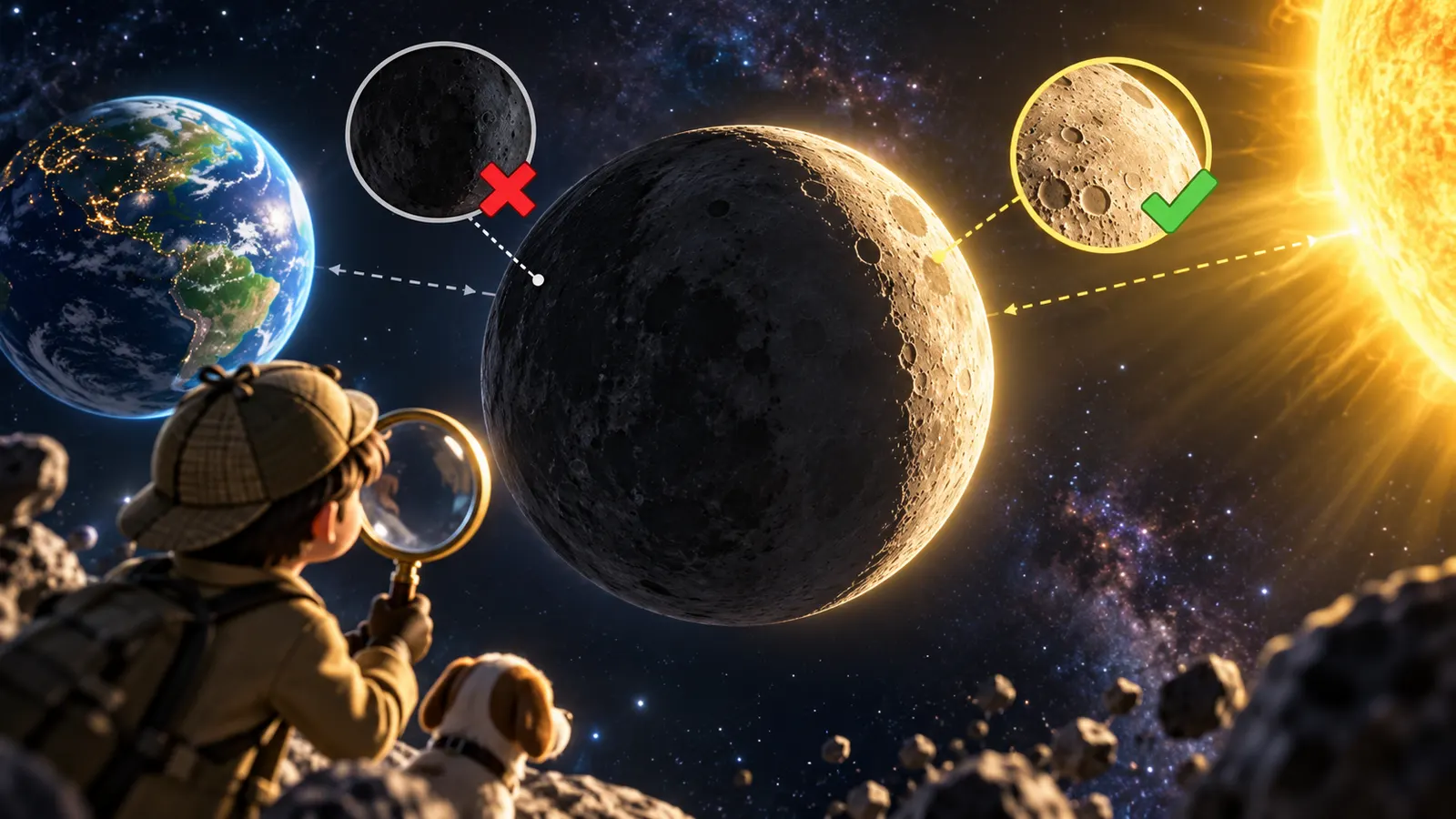
「月の裏側はいつも真っ暗」は誤解。新月の夜、月の裏側は"真昼"だった
 検証
検証
「ネコは高い所から落ちても平気」は危険な誤解。"高いほど無事"説には統計のワナがあった
 検証 ゼミ★★☆
「発表された研究の大半は間違い」は半分ホント。有名論文の“計算”と反論を読み解く
 睡眠
睡眠