

 脳と心理ビミョー
「理想の自分を思い描けば夢が叶う」は逆効果? 空想するだけだとやる気が下がることも
 2026.10.02
 English Corner(A2〜B2・4択クイズ)

 読む前に予想してみよう!
理想の未来を思い描いたあと、血圧などから見た「やる気のエネルギー」が下がったという実験がある
ポジティブな空想のあと、体のエネルギー指標が下がったと報告されている。
 研究カード(どんな研究?)
- 対象
- 学生・患者・一般の成人
- 規模
- 1研究あたり数十〜数百人、メタ分析は約1万6千人分
- 研究の種類
- 実験・縦断研究+メタ分析
- 確かさ
- ★★★☆☆
理想の未来を思い描くだけだと、やる気のエネルギーが下がることがある。夢と一緒に「障害」も考え、対策を決めるWOOPのほうが行動につながりやすい。
ひとことで言うと夢を想像するだけじゃダメ。じゃまものと作戦もセットで考えよう!
「理想の自分を、ありありとイメージしよう」「夢は、叶うと信じた人だけが叶えられる」。
自己啓発の定番フレーズですよね。ところが、ある心理学者が何十年もかけて調べると、逆の結果が出てきました。理想の未来を気持ちよく空想するだけだと、かえって行動しなくなることがあるというのです。
では、どうすればいいのか。その答えとして生まれたのが、WOOP(ウープ)というシンプルな方法です。
01夢を思い描くほど、結果が悪かった?
この研究を続けてきたのは、ドイツ出身の心理学者ガブリエル・エッティンゲンです。ニューヨーク大学などで研究しています。
彼女のチームは、いろいろな立場の人を調べました。就職活動中の卒業生、好きな人がいる学生、試験を控えた学生、人工股関節の手術を受ける患者などです。すると、「すべてうまくいく」とバラ色の未来ばかり空想していた人ほど、その後の結果がよくない傾向が見られました(2002年の論文)。
ただし、これらの多くは「空想の度合い」と「その後の結果」の関係を見た研究です。空想が原因だとまでは言い切れません。
別の研究では、未来を前向きに空想しがちな人ほど、その時点では抑うつ症状が少なめでした。ところが数か月後には、抑うつ症状が強まっていたと報告されています(2016年の論文)。
ここで大事なのは、「期待」と「空想」は別物だということです。過去の経験から「自分ならできそう」と見込むのが期待で、期待はむしろ行動を後押しします。問題になったのは、根拠なく理想の場面を味わう空想のほうでした。
02空想すると、体が「休憩モード」に
なぜ空想が逆効果になるのでしょうか。ヒントになる実験があります。
研究者の考えはこうです。空想すると、脳が「もう達成した」という気分を先に味わってしまう。そのせいで、頑張るためのエネルギーが出にくくなる、というわけです。ゴールの景色を見ただけで、満足してしまうのですね。

03夢と「障害」をセットで考えるWOOP
では、夢を描くのはやめるべきなのでしょうか。そうではありません。エッティンゲンが提案したのは、夢を描いたら、すぐに現実の障害も思い浮かべることでした。これをメンタル・コントラスティング(心の中で理想と現実を比べる方法)と呼びます。
もう一つの方法が実行意図です。障害が出たときの対策を、前もって「もし〜なら、〜する」と決めておきます。ニューヨーク大学のペーター・ゴルヴィツァーが研究してきた方法です。この2つを組み合わせたのが、WOOPです。
効果はどのくらいあるのでしょうか。実行意図については、94の研究をまとめた2006年の分析があります。目標達成を中〜大程度後押しするという結果でした。
WOOP(メンタル・コントラスティング+実行意図)についても、21の研究、約1万6千人分をまとめた2021年の分析があります。こちらは、目標達成に小〜中程度のプラスの効果という結果でした。
ただし、この分析には「出版バイアス」の兆候もありました。効果が出た研究ほど論文として発表されやすい、という偏りのことです。そのため、実際の効果はもう少し小さいかもしれないと、研究者自身が述べています。
04まとめ
夢を見ることは、悪いことではありません。ただ、夢を見たら、すぐに「でも、じゃまになるのは何?」と自分に聞いてみる。このひと手間で、空想が行動に変わりやすくなります。
叶えたいことが一つあるなら、紙に4行だけ書いてみませんか。W・O・O・P。5分あればできます。
この研究を英語で読もう原田英語の English CornerSelf-help books often tell us to imagine our dreams vividly. 音声
音声 4択クイズ9問A2・B1・B2タップして開く
原田英語の English Corner
この研究を英語で読もう
Many books say, "Imagine your dream, and it will come true." But research shows that only dreaming about a perfect future can make people less active. The brain may feel that the goal is already done.
A better way is called WOOP. It means Wish, Outcome, Obstacle, Plan. You think about your dream, the problem in your way, and what you will do about it.
65 words ・ CEFR A2
和訳を見る
多くの本は「夢を思い描けば、それは叶う」と言います。しかし研究によると、完璧な未来を夢見るだけだと、人はかえって行動しなくなることがあります。脳が、目標はもう達成されたと感じてしまうのかもしれません。
より良い方法はWOOPと呼ばれます。願い(Wish)、成果(Outcome)、障害(Obstacle)、計画(Plan)です。自分の夢と、その前にある問題と、それに対して何をするかを考えるのです。
4択リーディングクイズ
Q1. What is the passage mainly about?
夢を思い描くだけでは逆効果になりうること、そしてWOOPという方法を紹介しているので B。
Q2. What does the second "O" in WOOP stand for?
Wish, Outcome, Obstacle, Plan の順なので、2つ目の O は Obstacle。正解は C。
Q3. In this passage, "obstacle" means ...
obstacle は「障害、じゃまもの」。the problem in your way と言い換えられているので A。
Self-help books often tell us to imagine our dreams vividly. However, psychologist Gabriele Oettingen found that people who only fantasized about a perfect future often achieved less. In one experiment, people who imagined an ideal week felt less energetic and later reported achieving less that week.
In another, positive fantasies lowered blood pressure, a sign of low energy. The brain may feel as if the goal has already been reached. Oettingen suggests a different approach called WOOP. First, you choose a wish and imagine the best outcome.
Then you think about your main obstacle and make an "if-then" plan. A 2021 analysis of 21 studies found that this method has a slight to moderate positive effect on reaching goals.
119 words ・ CEFR B1
和訳を見る
自己啓発本は、夢を鮮やかに思い描くようによく勧めます。しかし、心理学者ガブリエル・エッティンゲンは、完璧な未来を空想するだけの人は、達成できることが少ない場合が多いことを見いだしました。ある実験では、理想的な1週間を思い描いた人は、エネルギーが下がったと感じ、後にその週に達成できたことが少なかったと報告しました。
別の実験では、ポジティブな空想によって、エネルギーの低下を示す血圧の低下が見られました。脳は、目標がもう達成されたかのように感じてしまうのかもしれません。エッティンゲンは、WOOPと呼ばれる別の方法を提案しています。まず願いを選び、最高の成果を思い描きます。
次に、主な障害について考え、「もし〜なら、〜する」という計画を立てるのです。21の研究をまとめた2021年の分析では、この方法は目標達成に小〜中程度のプラスの効果があることがわかりました。
4択リーディングクイズ
Q1. What is the main idea of the passage?
空想だけでは逆効果になりうるが、障害と計画を組み合わせるWOOPはプラスの効果がある、という内容なので D。
Q2. What happened to people who imagined an ideal week?
felt less energetic and later reported achieving less that week とあるので A。
Q3. Why might fantasizing reduce action, according to the passage?
The brain may feel as if the goal has already been reached とあるので C。
"Picture your dream vividly and it will come true" is a staple of self-help advice, yet decades of research by psychologist Gabriele Oettingen suggest a twist. Among job seekers, students and surgical patients, those who indulged in rosy fantasies about the future tended to fare worse, although these findings were largely correlational.
Another study linked positive fantasizing with more depressive symptoms months later. Oettingen distinguishes fantasies from expectations: confidence based on past experience supports action, whereas idealized daydreams do not. In 2011 experiments, positive fantasies lowered systolic blood pressure, an indicator of energy mobilization, and in a separate study those who imagined an ideal week later reported accomplishing less, as if the brain had already enjoyed the success.
Her alternative, WOOP, combines mental contrasting, imagining a wish and then the main inner obstacle, with implementation intentions, if-then plans for handling that obstacle. A 2006 meta-analysis of 94 studies found implementation intentions alone had a medium-to-large effect, while a 2021 meta-analysis of WOOP-style interventions reported a small-to-moderate benefit. That analysis, however, showed signs of publication bias, and the number of studies was still small. The message is not that positive thinking is useless, but that dreams need plans.
197 words ・ CEFR B2
和訳を見る
「夢を鮮やかに思い描けば叶う」は自己啓発の定番の助言ですが、心理学者ガブリエル・エッティンゲンの数十年にわたる研究は、意外な展開を示しています。求職者、学生、手術を受けた患者の中で、未来についてのバラ色の空想にふける人ほど結果が振るわない傾向がありましたが、これらの発見は主に相関によるものでした。
別の研究は、ポジティブな空想が数か月後のより強い抑うつ症状と関連することを示しました。エッティンゲンは、空想と期待をはっきり区別しています。過去の経験に基づく自信は行動を後押ししますが、理想化された白昼夢はそうではありません。2011年の一連の実験では、ポジティブな空想がエネルギーの動員の指標である収縮期血圧を下げ、別の実験では、理想的な1週間を空想した参加者が、後に達成したことが少なかったと報告しました。
まるで脳がすでに成功を味わってしまったかのようでした。彼女の代案であるWOOPは、願いを思い描いてから一番の内的な障害を思い浮かべる「メンタル・コントラスティング」と、その障害に対処するための「もし〜なら」の計画である「実行意図」を組み合わせたものです。94の研究をまとめた2006年のメタ分析は、実行意図だけで中〜大程度の効果があることを見いだし、WOOP型の介入を対象とした2021年のメタ分析は、小〜中程度の効果を報告しました。しかし、その分析には出版バイアスの兆候があり、研究の数もまだ多くありません。メッセージは、ポジティブ思考が無意味だということではなく、夢には計画が必要だということなのです。
4択リーディングクイズ
Q1. How does Oettingen distinguish expectations from fantasies?
confidence based on past experience supports action, whereas idealized daydreams do not とあるので B。
Q2. Which is mentioned as a limitation of the 2021 meta-analysis?
That analysis, however, showed signs of publication bias とあるので D。
Q3. What is the author's final message?
最終文 not that positive thinking is useless, but that dreams need plans とあるので A。
重要単語
- fantasyB2名詞空想A positive fantasy can feel good but reduce effort.
 動詞 fantasize(空想する)。fantastic は本来「空想的な」から「すばらしい」に意味が広がった。
 - obstacleB2名詞障害、じゃまものThink about the biggest obstacle to your goal. an obstacle to ~「~への障害」の前置詞 to に注意。overcome an obstacle「障害を乗り越える」。
- implementation intentionC1名詞(句)実行意図(もし〜なら〜するという計画)An implementation intention links a situation to an action. implement は「実行する」。intention は intend(意図する)の名詞形。
- goal attainmentC1名詞(句)目標達成Planning can improve goal attainment. attain は「(努力して)達成する」。achieve, accomplish とほぼ同義。
- mental contrastingC1名詞(句)メンタル・コントラスティング(理想と現実の対比)Mental contrasting helps people see what stands in their way. contrast は「対比する」。in contrast「対照的に」は長文の論理マーカーとして頻出。
- indulgeC1動詞ふける、思う存分楽しむSome people indulge in daydreams instead of acting. indulge in ~「~にふける」。self-indulgent は「わがままな、自分に甘い」。
 入試に出る順の単語帳を印刷する →
 全5903語の「科学英単語カード」で復習する →
 動画でもっと知る
動画は各チャンネルの公式埋め込みで表示しています(YouTube)。
この話題を TED で聞く
同じテーマの TED・TED-Ed を、 TED HACK で。英語の見どころ・使える表現・学習ミッションつきの日本語ガイドです。(運営:原田英語)

 公式・一次情報をチェック
- WOOP(Gabriele Oettingen 公式サイト)woopmylife.org
 4コマでわかる
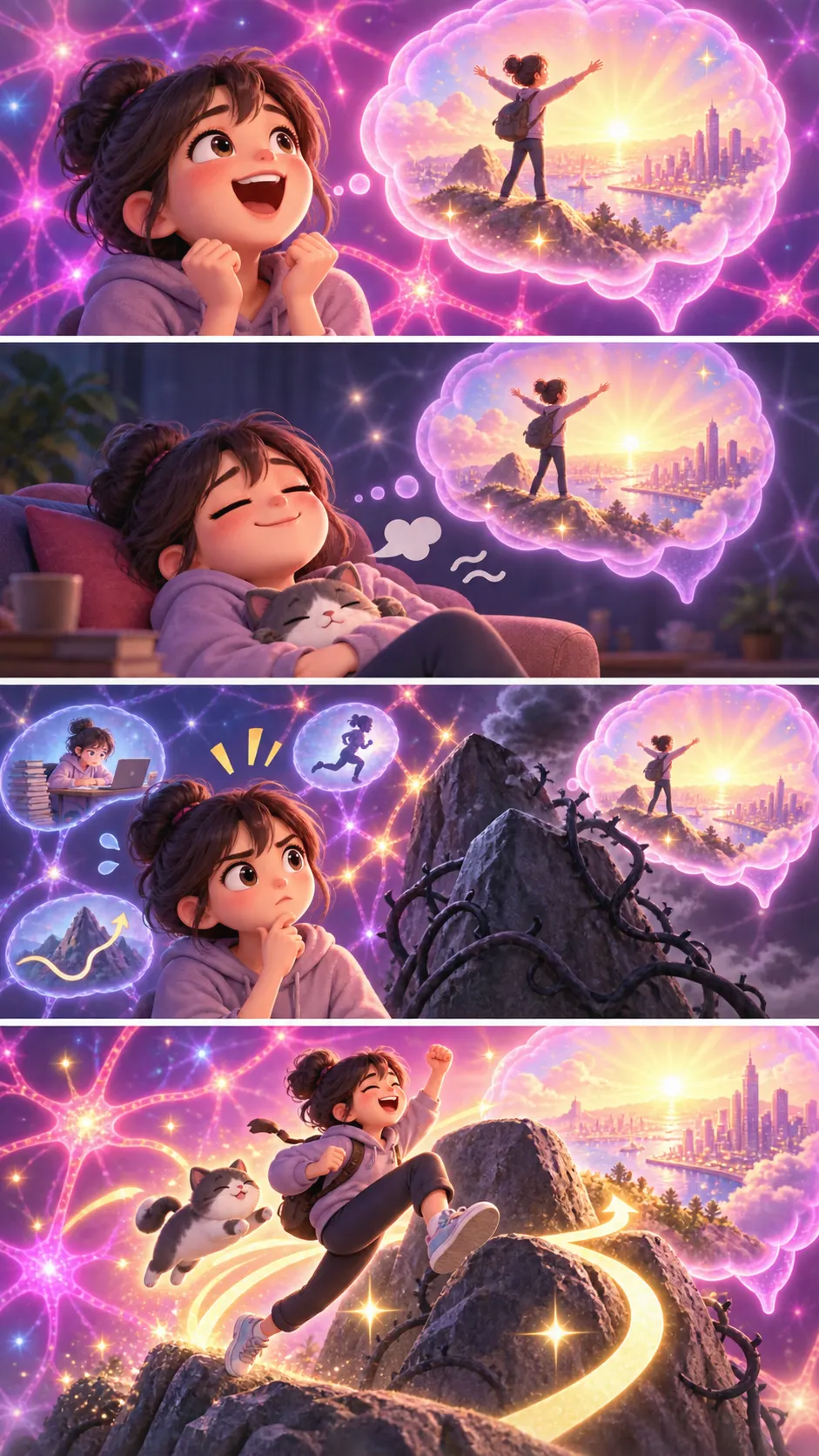
このネタ、誰かに教えたくなった?
「理想の自分を思い描くと夢が叶う」系の話、研究ではむしろ逆効果になることがあるらしい。想像だけで脳が「もう達成した気分」になってやる気が下がるんだとか。おすすめは、夢と一緒に障害も考える「WOOP」。
押すと「マジかリスト」に保存されます
 出典・参考文献(5件)タップで表示
- Kappes & Oettingen (2011) Positive fantasies about idealized futures sap energy, Journal of Experimental Social Psychologydoi.org
- Oettingen & Mayer (2002) The motivating function of thinking about the future: expectations versus fantasies, Journal of Personality and Social Psychologydoi.org
- Gollwitzer & Sheeran (2006) Implementation intentions and goal achievement: a meta-analysis of effects and processes, Advances in Experimental Social Psychologydoi.org
- Wang, Wang & Gai (2021) A meta-analysis of the effects of mental contrasting with implementation intentions on goal attainment, Frontiers in Psychologydoi.org
- Oettingen, Mayer & Portnow (2016) Pleasure now, pain later: positive fantasies about the future predict symptoms of depression, Psychological Sciencedoi.org

※本記事は上記の研究・公開資料をもとに、原田英語が独自の言葉で解説したものです。引用は著作権法第32条の範囲で行い、出典を明記しています。画像はすべてオリジナルのイメージです。研究結果には限界や個人差があります。誤りのご指摘は原田英語のお問い合わせフォームから。
 これも「マジか!?」

 脳・心理
脳・心理
記憶の「分けると残る」は腎臓の細胞にも? 薬を一気より4回に分けると遺伝子が長く働いた

 脳・心理
脳・心理
絶対音感は大人になってからでも身につく? 中国や日本の音大生に多い理由と、大人の訓練実験


 脳・心理
脳・心理
赤ちゃんの頃の記憶がないのは、「記憶を作れない」からではないかもしれない


 脳・心理
脳・心理
【関学の入試に出た】地平線の月が大きく見えるのは脳の錯覚。写真に撮ると大きさはほぼ同じだった

 脳・心理
脳・心理
【どんでん返し】マシュマロを我慢できた子は成功する? 約900人の追試で、関係はずっと小さかった

 脳・心理
脳・心理