

 脳と心理ビミョー
脳は「2つの臓器」だった? 脳の前と後ろは、別々の細胞から生まれていた
 2026.10.02
 English Corner(A2〜B2・4択クイズ)
 読む前に予想してみよう!
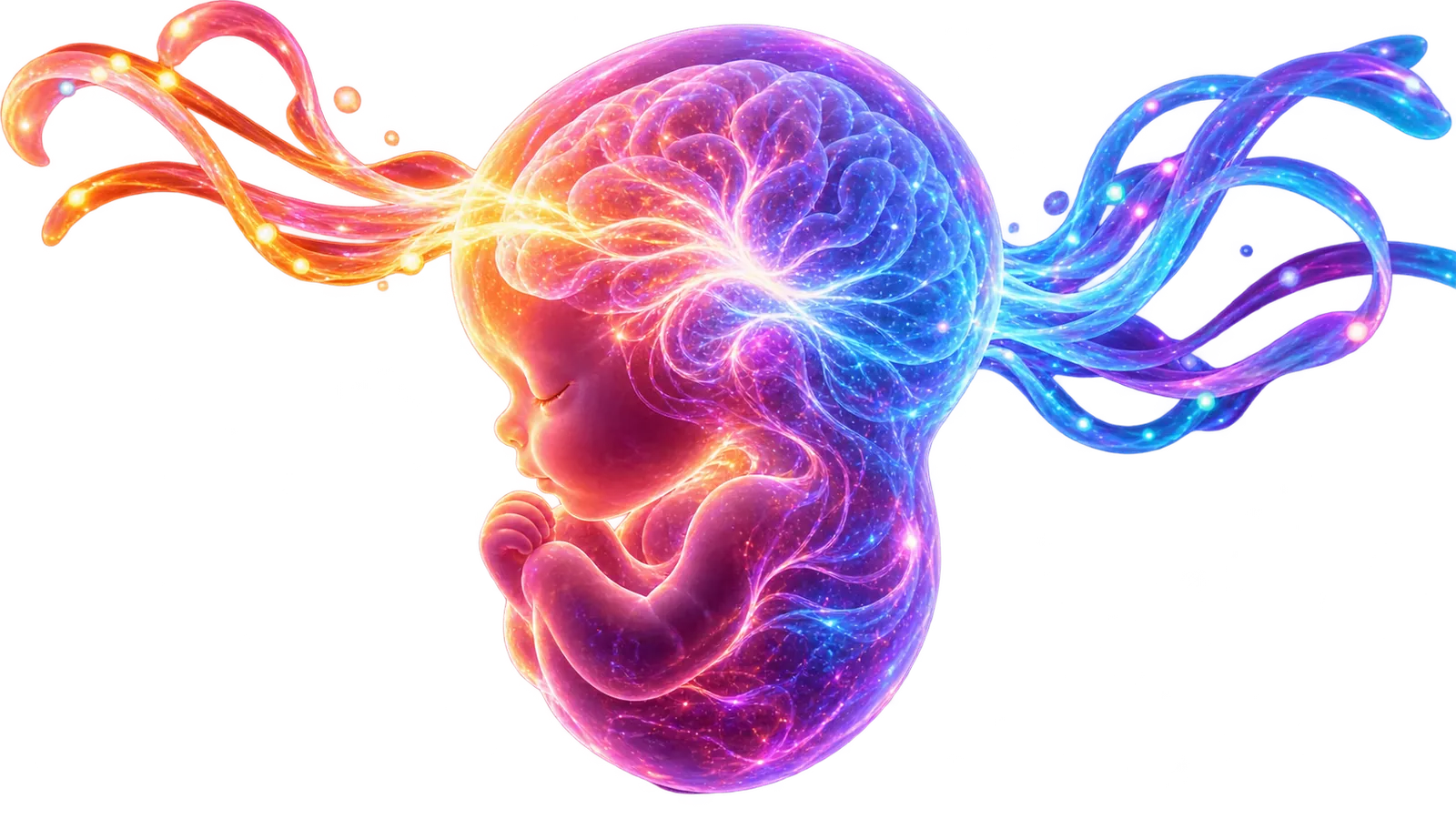
今回の研究で、脳は2つの別々の臓器だと証明された
示されたのは「2種類のもとになる細胞(前駆細胞)から作られる」こと。論文では、脳を「2つの起源をもつ複合的な臓器」と表現している。
 研究カード(どんな研究?)
- 対象
- マウスの胚(ごく初期の胎児)・人のiPS細胞やES細胞など
- 規模
- 細胞の「家系図」をたどる実験+細胞を育てる実験
- 研究の種類
- 体ができる仕組みを調べる基礎研究(動物・細胞)
- 確かさ
- ★★☆☆☆
脳の「前側(大脳など)」と「後ろ側(脳幹など)」は、胎児の初期から別々の細胞グループから作られるらしい。ただし「2つの臓器」は言い過ぎ。
ひとことで言うと脳の前と後ろは、生まれたときから別々のグループの細胞でできていた!
「人の脳は、2つの別々の臓器だった」。2026年9月、アメリカのスタンフォード大学医学部が、そんな見出しで研究を発表しました。
元になったのは、神経科学の専門誌『Nature Neuroscience』に2026年9月18日に載った論文です。研究したのは、同大学のロー(Kyle Loh)さんのチーム。マウスの胎児とヒトの幹細胞を使った実験で、脳のでき方の定説をくつがえしました。
ただし、「2つの臓器」は少し言い過ぎです。この記事では、何が本当に分かったのかを整理します。
01脳は「1つのもと」から作られる……はずだった
脳は大きく、前脳・中脳・後脳の3つに分けられます。
- 前脳:言葉、計算、考えごと、意識など「人間らしさ」に関わる
- 後脳:脳幹の一部など。呼吸・心拍・睡眠・空腹など、生きるために自動で働くしくみを受け持つ
これまでの定説はこうでした。胎児のごく早い時期に、「脳のもと」となる1種類の細胞グループができる。そこから前も後ろも枝分かれしていく。
02最初から「別々のチーム」だった
ヒトの細胞でも確かめました。使ったのは、いろいろな細胞に育つことができる多能性幹細胞です。これを2つのタイプに育て分けると、前脳・中脳にしかなれない細胞と、後脳にしかなれない細胞に分かれました。DNAの「開き方(クロマチンの状態)」も、早い段階から違っていました。将来どちらになるかが、もう決まっているかのようでした。

03脳の前と後ろを別々に作るしくみは、5億年以上前から?
チームは、ほかの動物でも同じような「2本立て」の手がかりを見つけたと報告しています。調べたのは、ニワトリ、ゼブラフィッシュ、そして海底にすむギボシムシです。ギボシムシは、ヒトとはるか昔に共通の祖先を持つ動物です。
研究チームは、このしくみが約5億5千万年も受け継がれてきた可能性があると考えています。もともと別々だった2つの神経のしくみを、進化がくっつけて1つの脳にしたのかもしれない、というわけです。
04作るのが難しかった「脳の後ろの神経細胞」を、実験室で作れた
この発見は、医療の研究にも役立ちそうです。後脳の神経細胞は、これまで実験室で作るのがとても難しいものでした。
チームは「後脳は別のもとから生まれる」という道すじをたどりました。そして、ヒトの後脳の運動ニューロンを作ることに成功しました。顔の筋肉や、ものを飲み込むときの筋肉を動かす神経です。将来は、ALS(筋萎縮性側索硬化症)やSMA(脊髄性筋萎縮症)の研究に使える可能性があります。どちらも、脳幹の一部の神経がだんだん働かなくなる病気です。
05まとめ
私たちの「考える脳」と「生きるための脳」は、胎児のころから別々のルートで作られていた。そして、あとから一つにまとまっていた。そう考えると、脳の前と後ろで役割がまったく違うのも、なんだか納得できます。
ニュースの見出しはちょっと盛りすぎです。でも、「脳は2つの源流から生まれる」という中身は、十分に「マジか!?」な発見です。
この研究を英語で読もう原田英語の English CornerFor a long time, scientists believed that the whole brain developed from a single group of cells in the… 音声
音声 4択クイズ9問A2・B1・B2タップして開く
原田英語の English Corner
この研究を英語で読もう
The brain has a front part and a back part. The front part helps us think and use language. The back part controls breathing, heartbeat, and sleep.
Scientists used to think the whole brain grew from one group of cells. But a new study with young mice before birth and human cells shows something different. The front and back parts start from two different groups of cells.
67 words ・ CEFR A2
和訳を見る
脳には前の部分と後ろの部分があります。前の部分は、考えたり言葉を使ったりするのを助けます。後ろの部分は、呼吸や心拍、睡眠をコントロールしています。
科学者たちは以前、脳全体が1つの細胞のグループから育つと考えていました。しかし、生まれる前の若いマウスとヒトの細胞を使った新しい研究は、違うことを示しています。脳の前と後ろの部分は、2つの別々の細胞のグループから始まるのです。
4択リーディングクイズ
Q1. What is the passage mainly about?
脳の前と後ろがどの細胞グループから始まるか、という話なので A。
Q2. What does the back part of the brain control?
The back part controls breathing, heartbeat, and sleep. とあるので C。
Q3. "Scientists used to think ..." means that scientists ...
used to ~ は「以前は~していた(今は違う)」。直後の But a new study ... shows something different とも合うので B。
For a long time, scientists believed that the whole brain developed from a single group of cells in the early embryo. A team led by Stanford University now suggests a different story. By tracing cell families in mouse embryos, the researchers found two separate groups of brain-building cells that appear at the same time.
One group becomes the forebrain and midbrain. The forebrain is involved in thinking and language. The other becomes the hindbrain, which controls basic functions such as breathing and heart rate. Using this idea, the team produced human hindbrain nerve cells in the lab, which had been very hard to make. These cells may help research on diseases such as ALS.
114 words ・ CEFR B1
和訳を見る
長い間、科学者たちは、脳全体が初期の胚の中の1つの細胞グループから発達すると信じていました。スタンフォード大学が率いるチームは今、違う筋書きを示しています。マウスの胚で細胞の家系をたどることで、研究者たちは、同時に現れる2つの別々の「脳を作る細胞」のグループを見つけました。
1つのグループは前脳と中脳になります。考えることや言葉に関わるのは前脳です。もう1つは、呼吸や心拍数といった基本的な働きをコントロールする後脳になります。この考えを使って、チームはこれまで作るのがとても難しかったヒトの後脳の神経細胞を実験室で作りました。これらの細胞は、ALSなどの病気の研究に役立つかもしれません。
4択リーディングクイズ
Q1. What did scientists believe for a long time?
第1文 scientists believed that the whole brain developed from a single group of cells とあるので D。
Q2. Which part controls breathing and heart rate?
the hindbrain, which controls basic functions such as breathing and heart rate とあるので B。
Q3. Why might the new finding be useful for medicine?
作るのが難しかった後脳の神経細胞を作れ、病気の研究に役立つかもしれない(may help research)と述べているので C。「治る」とは書いていない。
"The brain is actually two organs," announced headlines in September 2026. The study behind them, published in Nature Neuroscience by a Stanford-led team, makes a narrower claim. The classic view holds that the entire brain arises from a single pool of neural progenitor cells.
Using lineage tracing in mouse embryos, the team found two distinct progenitor populations that emerge at the same time during gastrulation. One expresses the gene Otx2 and gives rise to the forebrain and midbrain. The other expresses Gbx2 and forms the hindbrain.
Human stem cells guided toward each type showed the same restriction, and their chromatin states differed from an early stage. The authors call the brain a composite organ with two origins. They do not say it is two separate organs. Their main evidence comes from mouse embryos and cultured cells rather than human fetuses.
The team also reported similar clues in chickens, zebrafish and acorn worms, which hints that the system may be very ancient, although that evolutionary reading has yet to be tested properly. The work has already paid off in one practical way. It let the researchers make human hindbrain motor neurons, which could support research on conditions such as ALS.
199 words ・ CEFR B2
和訳を見る
「脳は実は2つの臓器だった」。2026年9月、こんな見出しが躍りました。その元になった、スタンフォード大学主導のチームが『Nature Neuroscience』に発表した研究の主張は、もっと控えめなものです。
古典的な見方では、脳全体は神経の前駆細胞の1つの集まりから生じるとされています。チームはマウスの胚で系譜追跡を使い、原腸形成の時期に2つの異なる前駆細胞集団が同時に現れることを見つけました。1つはOtx2という遺伝子を働かせ、前脳と中脳を生み出します。
もう1つはGbx2を働かせ、後脳を形づくります。それぞれのタイプへ誘導したヒトの幹細胞も同じ制約を示し、そのクロマチンの状態は早い段階から異なっていました。著者らは脳を、2つの起源をもつ複合的な臓器と呼んでいます。2つの別々の臓器だとは言っていません。主な証拠は、ヒトの胎児ではなく、マウスの胚と培養細胞から得られたものです。
チームはニワトリ、ゼブラフィッシュ、ギボシムシでも似た手がかりを報告しており、この仕組みがとても古い可能性をうかがわせますが、その進化的な解釈はまだきちんと検証されていません。この研究は、実用面ですでに一つの成果を上げています。研究者たちはヒトの後脳の運動ニューロンを作り出すことができ、これはALSのような病気の研究を後押しする可能性があります。
4択リーディングクイズ
Q1. What is the author's attitude toward the headlines?
見出しに対し、研究は makes a narrower claim とし、They do not say it is two separate organs と述べているので、見出しはやや誇張という立場。正解は A。
Q2. According to the passage, which gene is expressed in the cells that form the hindbrain?
The other expresses Gbx2 and forms the hindbrain とあるので D。Otx2 は前脳・中脳側。
Q3. Which of the following is a limitation mentioned in the passage?
Their main evidence comes from mouse embryos and cultured cells rather than human fetuses とあるので B。ヒトの胎児で直接確かめてはいない。
重要単語
- embryoB2名詞胚、胎児(ごく初期)The heart starts to form early in the embryo.
 発音は /ˈembrioʊ/。ヒトでは妊娠初期を embryo、それ以降を fetus と呼び分ける。
 - organB1名詞臓器、器官The skin is the largest organ of the body. 楽器の「オルガン」と同じ語。organ donation「臓器提供」。
- originB1名詞起源、始まりScientists study the origin of life. 形容詞 original、動詞 originate(originate from ~「~に由来する」)もまとめて覚える。
- progenitor cellC1名詞(句)前駆細胞Progenitor cells can turn into specific types of cells. progenitor は「祖先・先駆け」。stem cell「幹細胞」より行き先が絞られた細胞を指す。
- emergeB2動詞現れる、出てくるA new pattern emerged from the data. 名詞 emergence。emergency「緊急事態」も「突然現れるもの」が語源。
- nuancedC1形容詞微妙な違いをふまえた、単純でないThe real story is more nuanced than the headline. nuance(ニュアンス)の形容詞形。複雑さを丁寧に扱う、というほめ言葉としても使う。
- neuronB2名詞神経細胞、ニューロンMotor neurons send signals to muscles. nerve cell と同じ意味。motor neuron「運動ニューロン」、neuroscience「神経科学」。
 入試に出る順の単語帳を印刷する →
 全5903語の「科学英単語カード」で復習する →
 動画でもっと知る
動画は各チャンネルの公式埋め込みで表示しています(YouTube)。
 公式・一次情報をチェック
 4コマでわかる
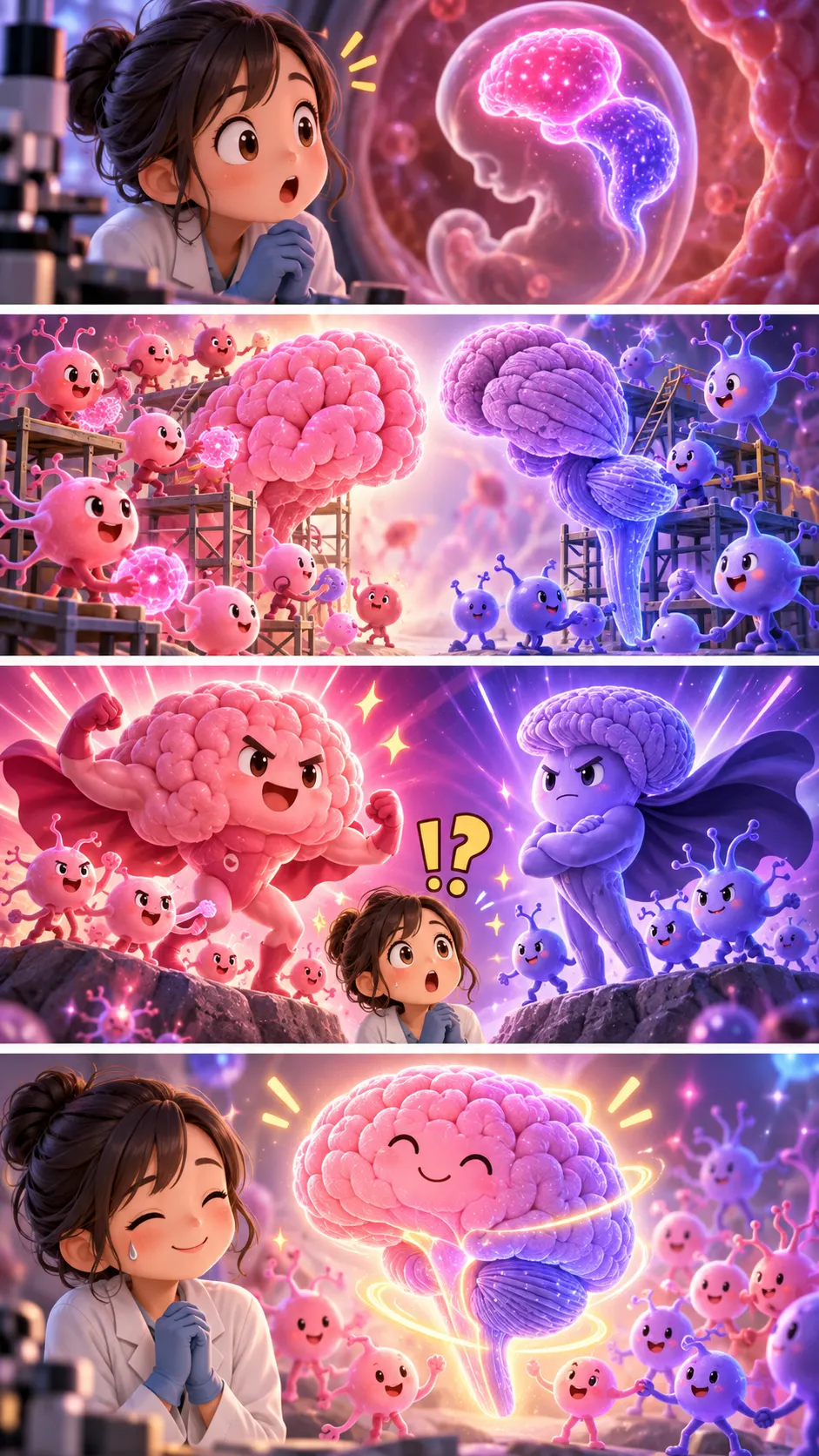
このネタ、誰かに教えたくなった?
脳は1つの細胞グループから作られる、と長く考えられてきた。ところがマウスの胎児を調べたら、脳の前側(考える所)と後ろ側(呼吸や心拍を管理する所)は、最初から別々の細胞グループから生まれていたらしい。
押すと「マジかリスト」に保存されます
 出典・参考文献(3件)タップで表示
- Jokhai, Dundes et al. (2026) Two parallel neural ectoderm progenitors contribute to the developing brain, Nature Neurosciencedoi.org
- Stanford Medicine (2026) Human brain is two separate organs, Stanford Medicine-led research findsmed.stanford.edu
- Lowe et al. (2003) Anteroposterior Patterning in Hemichordates and the Origins of the Chordate Nervous System, Celldoi.org

※本記事は上記の研究・公開資料をもとに、原田英語が独自の言葉で解説したものです。引用は著作権法第32条の範囲で行い、出典を明記しています。画像はすべてオリジナルのイメージです。研究結果には限界や個人差があります。誤りのご指摘は原田英語のお問い合わせフォームから。
 これも「マジか!?」
 脳・心理
脳・心理
麻酔がかかると、ヒトもマウスも魚も線虫も、脳の各部分がバラバラに動くようになった。6種の脳を比べた研究
 脳・心理
脳・心理
口をつけた食べ物を分け合う2人は「親しい仲」。生後4〜6か月の赤ちゃんも、そう見ているらしい
 脳・心理
脳・心理
脳は“場所ごと”に老け方が違った。AIが約1.5万人のMRIで描いた「脳年齢マップ」
 脳・心理
脳・心理
【速報】一度つらい目にあうと次のストレスに弱くなる。その「増幅回路」をマウスで発見
 脳・心理
脳・心理
年をとると記憶は「消える」より「混ざる」? 記憶の中枢・海馬で見えた変化
 脳・心理
脳・心理