


 脳と心理ビミョー
腸には数億個の神経細胞がある。脳から切り離しても動き続ける「第二の脳」の正体
 2026.10.02
 English Corner(A2〜B2・4択クイズ)
 読む前に予想してみよう!
腸で作られたセロトニンが血液にのって脳に届き、気分を直接明るくしている
体のセロトニンの大部分は腸で作られるが、血液から脳へはほとんど入れない(血液脳関門に阻まれる)。脳のセロトニンは脳で作られる。
 研究カード(どんな研究?)
- 対象
- 動物・ヒトの消化管の研究
- 規模
- 多数の研究
- 研究の種類
- 生理学実験・総説
- 確かさ
- ★★★★☆
腸の壁には数億個の神経細胞が網のように広がり、脳の命令なしで消化の動きを操る。ただ「腸が考える」「腸の幸せホルモンが気分を変える」は言い過ぎ。
ひとことで言うとおなかには自分だけで動ける神経のネットワークがあるんだ!
「腸は第二の脳」——健康番組などで、一度は聞いたことがあるかもしれません。
ちょっと大げさなキャッチコピーに聞こえますが、実はちゃんとした根拠があります。腸の壁の中には、数億個もの神経細胞が網の目のように広がっているのです。この数は、脊髄の神経細胞に匹敵するともいわれます。
01腸の壁に張りめぐらされた「神経の網」
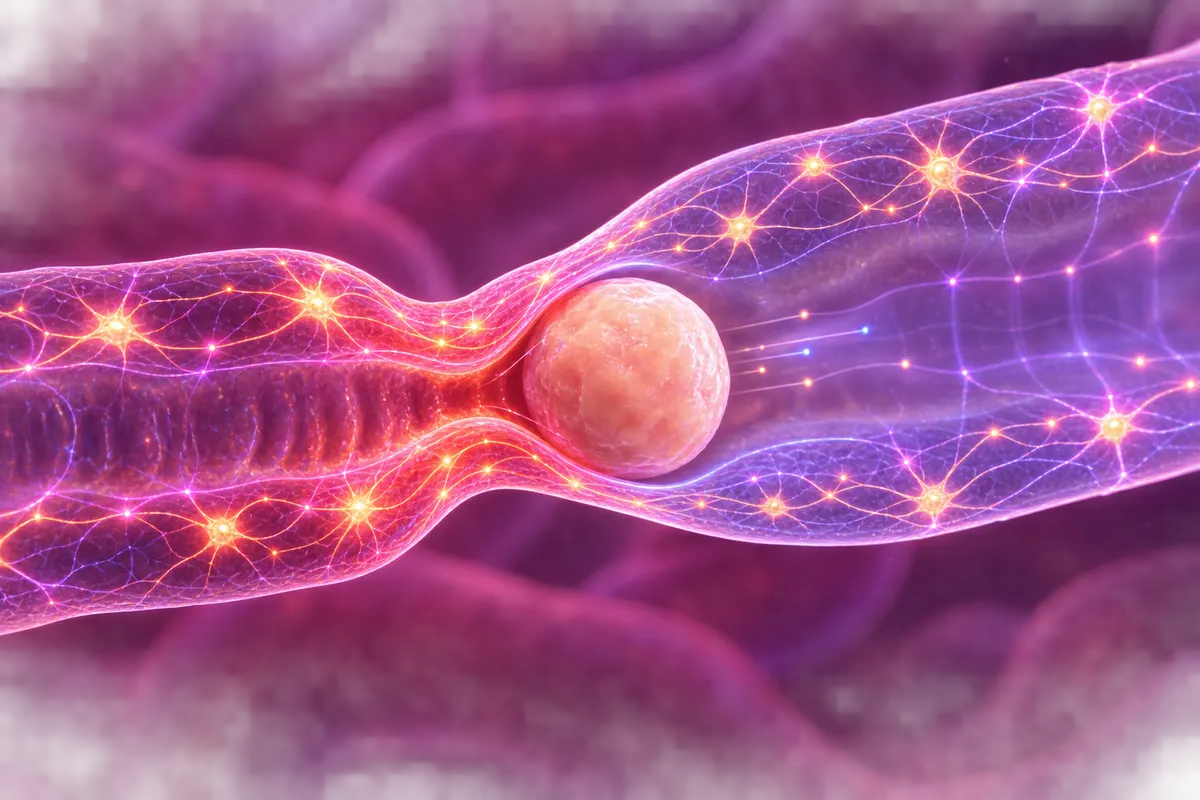
この神経のネットワークを腸管神経系(ちょうかんしんけいけい)と呼びます。食道から肛門まで、消化管の壁の層のあいだに網のように広がっています。そして、次のような働きをその場でコントロールしています。
- 食べ物を先へ送るぜん動運動のリズム
- 消化液や水分の出し入れ
- 腸の血流の調整
2020年に研究をまとめた論文(総説)は、消化管を「進化の中で、自分だけの独立した神経系を持つようになった、ただ一つの内臓」と表現しています。
02脳からの線を切っても、腸は動いた
この反射は「腸の法則」とも呼ばれます。その後、体から取り出した腸の一部でも、中に液体を入れるとぜん動運動が起きることが確かめられました。腸は、脳の命令がなくても自分で動けるのです。
03腸の神経がないと、どうなる?
腸管神経系の大切さがよくわかるのが、ヒルシュスプルング病という生まれつきの病気です。この病気では、大腸の一部に腸の神経細胞がありません。そのため、その部分で中身を送り出せず、重い便秘や腸閉塞(腸が詰まること)を起こします。
脳はちゃんと働いていても、腸の神経がなければ、腸は中身を送り出せないのです。
04でも「腸が考える」は言い過ぎ
① 腸は"考えて"はいない腸管神経系は、消化の動きを自動で調整する、とても賢い反射のネットワークです。でも、計画したり悩んだりする「思考」をしているわけではありません。
② 「腸で作る幸せホルモン」の誤解セロトニンは「幸せホルモン」とも呼ばれる物質です。体の中のセロトニンの大部分が腸で作られる、というのは本当です。でも腸のセロトニンは、脳には直接届きません。血液から脳へ入る物を選ぶ血液脳関門という"関所"を、ほとんど通れないからです。脳のセロトニンは、脳の中で作られています。
③ ただし、腸と脳は連絡を取り合っている腸と脳は迷走神経などでつながり、たくさんの情報をやりとりしています。腸とつながる迷走神経の線維の多くは、腸から脳へ向かう感覚の線です。
05まとめ
腸には数億個の神経細胞があり、脳からの指令がなくても、食べ物を運ぶ動きを自分で作り出しています。その意味で「第二の脳」は、半分ホント。
でも、腸が考えたり、腸のセロトニンが直接気分を変えたりするわけではありません。脳に頼らず黙々と働くおなかの神経に、今日はちょっと感謝してみてください。
この研究を英語で読もう原田英語の English CornerThe phrase "the gut is our second brain" sounds like an exaggeration, but it has a scientific basis. 音声
音声 4択クイズ9問A2・B1・B2タップして開く
原田英語の English Corner
この研究を英語で読もう
People sometimes call the gut our "second brain." Is this true? The wall of the gut has hundreds of millions of nerve cells. They form a net and move food along without orders from the brain.
In 1899, scientists found that a dog's gut still made these pushing movements even after the nerves from the brain were cut. But the gut does not think or plan. It works by reflex, like an automatic machine.
74 words ・ CEFR A2
和訳を見る
腸は「第二の脳」と呼ばれることがあります。これは本当でしょうか。腸の壁には数億個の神経細胞があります。それらは網を作り、脳からの命令なしに食べ物を先へ送ります。
1899年、科学者たちは、脳からの神経を切った後でも、イヌの腸がこの送り出す動きを続けることを発見しました。しかし、腸は考えたり計画したりはしません。自動の機械のように、反射で働いているのです。
4択リーディングクイズ
Q1. What is the passage mainly about?
腸の壁にある神経のネットワークと、その働き・限界が話題なので C。
Q2. What happened in 1899?
a dog's gut still made these pushing movements even after the nerves from the brain were cut とあるので B。
Q3. In this passage, "automatic" means ...
automatic は「自動の」。考えずにひとりでに働く、という意味なので D。
The phrase "the gut is our second brain" sounds like an exaggeration, but it has a scientific basis. The gut wall contains hundreds of millions of neurons, which form the enteric nervous system. This network controls the waves that push food along, the release of digestive fluids, and blood flow. In 1899, two British scientists showed that when part of a dog's intestine was stimulated, the section above it tightened and the section below it relaxed, even after the nerves from the brain were cut.
However, the gut does not think. Also, although most of the body's serotonin is made in the gut, it can hardly pass into the brain. The gut and brain do communicate, for example through the vagus nerve.
122 words ・ CEFR B1
和訳を見る
「腸は第二の脳」という言葉は誇張のように聞こえますが、科学的な根拠があります。腸の壁には数億個の神経細胞があり、それが腸管神経系を作っています。このネットワークは、食べ物を先へ押し出す波のような動きや、消化液の分泌、血流を制御しています。1899年、イギリスの2人の科学者は、イヌの腸の一部を刺激すると、脳からの神経を切った後でも、その上側の部分が縮み、下側の部分がゆるむことを示しました。
しかし、腸は考えるわけではありません。また、体のセロトニンの大部分は腸で作られますが、それが脳に入ることはほとんどできません。腸と脳は、たとえば迷走神経を通じて、実際に情報をやりとりしています。
4択リーディングクイズ
Q1. What does the enteric nervous system control?
the waves that push food along, the release of digestive fluids, and blood flow を制御するとあるので B。
Q2. What is true about serotonin made in the gut?
most of the body's serotonin is made in the gut, it can hardly pass into the brain とあるので C。
Q3. What is the writer's overall view of the phrase "second brain"?
科学的根拠はあるが、腸は考えないし、セロトニンの話も誤解がある、という立場なので A。
Describing the gut as a "second brain" may sound like marketing, but it rests on solid physiology. Embedded in the wall of the digestive tract, from the esophagus to the anus, is the enteric nervous system, a mesh of hundreds of millions of neurons, roughly as many as in the spinal cord, by some estimates. It regulates peristalsis, the secretion of fluids and local blood flow, and a 2020 review described the gut as the only internal organ to have evolved its own independent nervous system.
The classic evidence dates from 1899, when Bayliss and Starling found that stimulating a dog's small intestine caused contraction above the point and relaxation below it, a reflex that persisted after the nerves from the brain and spinal cord were cut. The importance of these neurons is clear in Hirschsprung disease, in which part of the colon lacks them and cannot move its contents.
But popular claims go too far. The network performs sophisticated reflexes, not deliberate thought. And although most of the body's serotonin is produced in the gut, it barely crosses the blood-brain barrier, so it does not directly lift mood. Gut and brain do interact, for example via the vagus nerve.
200 words ・ CEFR B2
和訳を見る
腸を「第二の脳」と表現するのは宣伝文句のように聞こえるかもしれませんが、確かな生理学に基づいています。食道から肛門までの消化管の壁には、腸管神経系が埋め込まれています。これは数億個の神経細胞から成る網で、その数は脊髄の神経細胞に匹敵するともいわれます。腸管神経系はぜん動運動、液体の分泌、局所の血流を調節しており、2020年の総説は、消化管を独立した自前の神経系を進化させた唯一の内臓と表現しました。
古典的な証拠は1899年にさかのぼります。ベイリスとスターリングは、イヌの小腸を刺激すると刺激点の上側が収縮し下側がゆるむことを発見しました。この反射は、脳や脊髄からの神経を切断した後も続いたのです。
これらの神経細胞の重要性は、ヒルシュスプルング病を見ると明らかです。この病気では大腸の一部にこの神経細胞がなく、中身を送り出すことができません。とはいえ、世間で言われている主張は行き過ぎです。このネットワークが行うのは高度な反射であって、意図的な思考ではありません。また、体のセロトニンの大部分は腸で作られますが、それは血液脳関門をほとんど通過しないため、直接気分を明るくするわけではありません。腸と脳は、たとえば迷走神経を介して、実際に相互作用しているのです。
4択リーディングクイズ
Q1. Which statement best summarizes the passage?
腸には独立した神経系が実在するが、「考える」「腸のセロトニンで気分が上がる」は言い過ぎ、という内容なので D。
Q2. What does Hirschsprung disease show?
part of the colon lacks them and cannot move its contents とあり、腸の神経細胞の重要性を示す例なので C。
Q3. Why doesn't serotonin from the gut directly lift mood?
it barely crosses the blood-brain barrier, so it does not directly lift mood とあるので B。
重要単語
- entericC1形容詞腸のThe enteric nervous system lives in the gut wall.
 ギリシャ語 enteron(腸)から。enteric nervous system(腸管神経系)で覚える。
 - peristalsisC1名詞ぜん動運動Peristalsis pushes food through the intestine. peri-(周りを)+stalsis(締めつけ)。腸が輪状に締まって中身を送るイメージ。
- intestineB2名詞腸The small intestine absorbs nutrients. small intestine(小腸)/large intestine(大腸)。口語では gut、bowel。
- reflexB2名詞反射A reflex happens without conscious thought. re-(戻る)+flex(曲げる)。have quick reflexes「反射神経がよい」。
- vagus nerveC1名詞(句)迷走神経The vagus nerve links the brain and the gut. vagus はラテン語で「さまよう」。体内を広く巡るためこの名。vague(あいまいな)と同語源。
- exaggerationB2名詞誇張Calling the gut a thinking organ is an exaggeration. 動詞 exaggerate。It is no exaggeration to say that ~「~と言っても過言ではない」は英作文の定番。
 入試に出る順の単語帳を印刷する →
 全5903語の「科学英単語カード」で復習する →
 公式・一次情報をチェック
 4コマでわかる
このネタ、誰かに教えたくなった?
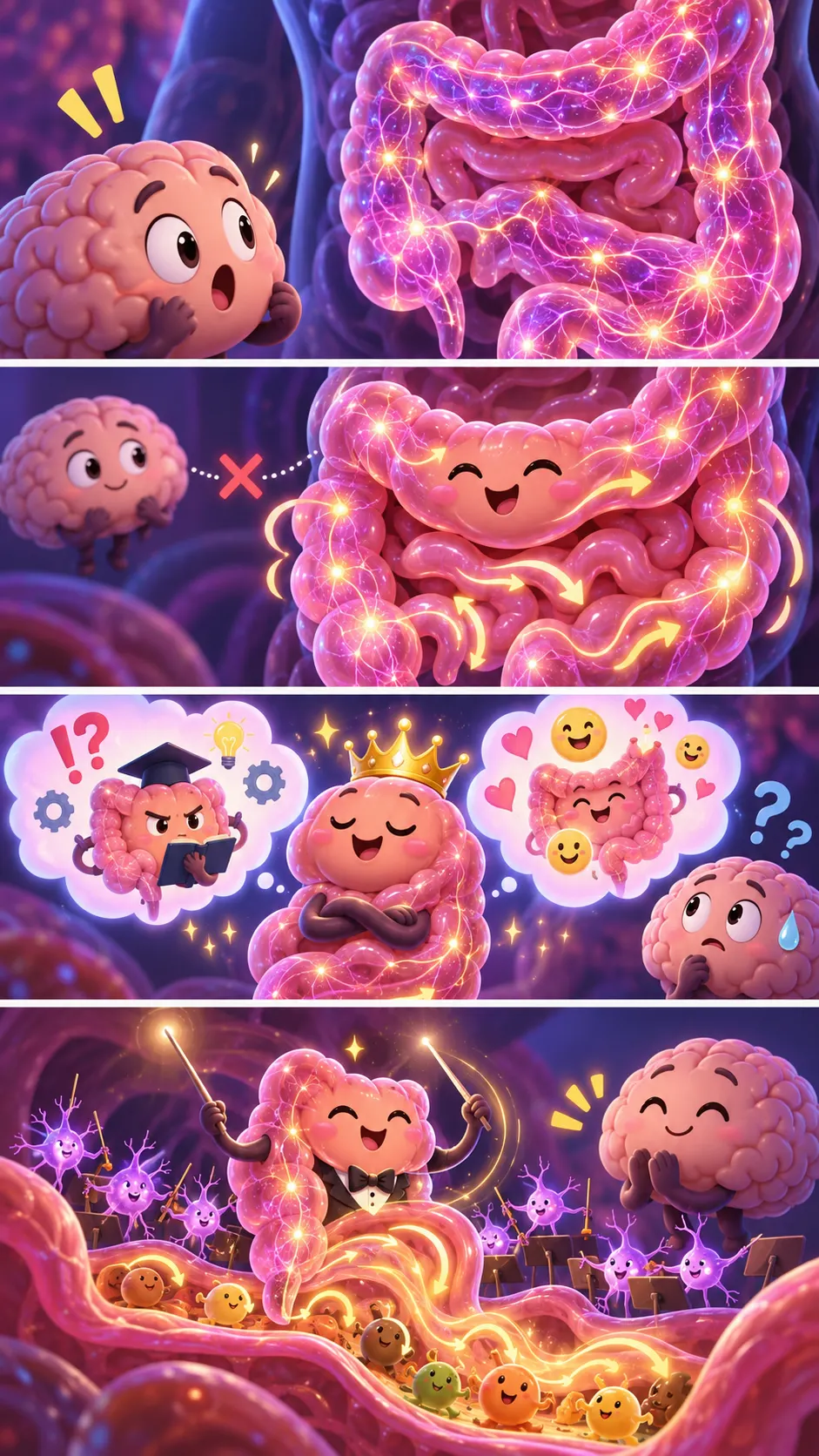
腸の壁には数億個の神経細胞がネットワークを作っていて、脳とつながる神経を切っても、食べ物を先へ送る動きを続けられるらしい。体の中で「自前の神経系」を持つ臓器は腸だけ。ただし「腸が考えている」はさすがに言い過ぎ。
押すと「マジかリスト」に保存されます
 出典・参考文献(4件)タップで表示
- Bayliss & Starling (1899) The movements and innervation of the small intestine, The Journal of Physiologydoi.org
- Furness (2012) The enteric nervous system and neurogastroenterology, Nature Reviews Gastroenterology & Hepatologydoi.org
- Furness et al. (2014) The enteric nervous system and gastrointestinal innervation: integrated local and central control, Advances in Experimental Medicine and Biologydoi.org
- Spencer & Hu (2020) Enteric nervous system: sensory transduction, neural circuits and gastrointestinal motility, Nature Reviews Gastroenterology & Hepatologydoi.org

※本記事は上記の研究・公開資料をもとに、原田英語が独自の言葉で解説したものです。引用は著作権法第32条の範囲で行い、出典を明記しています。画像はすべてオリジナルのイメージです。研究結果には限界や個人差があります。誤りのご指摘は原田英語のお問い合わせフォームから。
 これも「マジか!?」
 脳・心理
脳・心理
記憶の「分けると残る」は腎臓の細胞にも? 薬を一気より4回に分けると遺伝子が長く働いた
 脳・心理
脳・心理
麻酔がかかると、ヒトもマウスも魚も線虫も、脳の各部分がバラバラに動くようになった。6種の脳を比べた研究

 脳・心理
脳・心理
絶対音感は大人になってからでも身につく? 中国や日本の音大生に多い理由と、大人の訓練実験
 脳・心理
脳・心理
脳そのものは痛みを感じない。手術中に患者が"起きたまま"おしゃべりできる理由

 脳・心理
脳・心理
赤ちゃんの頃の記憶がないのは、「記憶を作れない」からではないかもしれない


 脳・心理
脳・心理