yuino
the formal engagement ceremony
結納(ゆいのう)
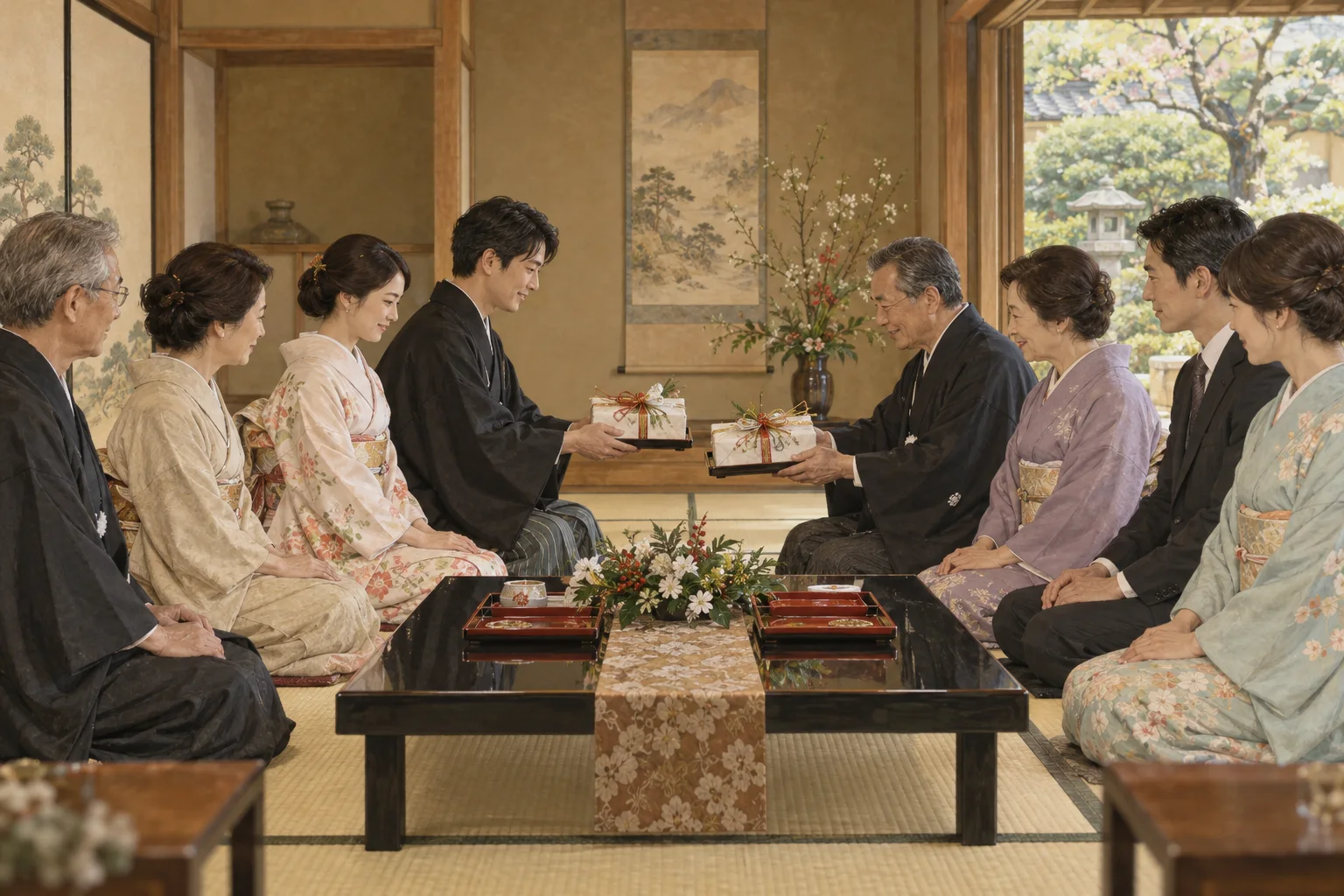
In one line
The shortest answer that works
Yuino is a formal engagement ceremony in which the two families exchange symbolic gifts and, often, money.
結納とは、両家が縁起物の品と、多くの場合お金を取り交わして婚約を正式なものにする儀式です。
In 30 seconds
The standard explanation
Before a traditional Japanese wedding, the two families meet for yuino, an exchange of engagement gifts. The groom's side presents a set of auspicious items, such as dried seafood, sake, folded paper decorations and a sum of money, with a written list, and the bride's side accepts and returns a portion. Everything is arranged on a table in a fixed order. Today most couples replace the ceremony with a simple family lunch, and yuino has become rare.
伝統的な日本の結婚式の前に、両家は結納という婚約の品の取り交わしのために集まります。新郎側は干した海産物、酒、折った紙の飾り、そしてお金といった縁起物の一式を目録とともに贈り、新婦側はそれを受けて一部を返します。すべてが決まった順番で台の上に並べられます。今ではほとんどのカップルがこの儀式を簡単な両家の食事会に置き換えていて、結納は珍しくなっています。
As a short speech
A full paragraph you can read aloud
Yuino is the traditional Japanese engagement ceremony, and it is a good example of how quickly a custom can fade. In its classic form, the groom's family visits the bride's home, or both families meet at a hotel, and the groom's side presents a set of gifts laid out on trays: dried cuttlefish, dried kelp, bonito, a folded fan, a cord of white hemp, sake, and an envelope of money, each with a lucky name that puns on long life, many children or strong ties.
A written list accompanies them, the bride's family reads a formal acceptance, and they return a gift worth a portion of the money. The number of items, five, seven or nine, and the amount of money vary by region, and Kanto and Kansai have different customs.
The whole thing takes about half an hour and is followed by a meal. Today, most couples skip it in favor of a relaxed restaurant lunch where the two families simply meet. I think yuino is beautiful to look at and slightly uncomfortable to think about, since most of the money moves in one direction.
結納は日本の伝統的な婚約の儀式で、習慣がいかに速く廃れうるかのよい例です。古典的な形では、新郎の家族が新婦の実家を訪ねるか、両家がホテルで会い、新郎側が台に載せた品々を贈ります。
するめ、昆布、かつお節、扇、白い麻の糸、酒、そしてお金の包みで、それぞれに長寿や子孫繁栄や固い絆にかけた縁起のよい名前がついています。目録が添えられ、新婦側は正式な受書を読み、お金の一部にあたる返礼をします。品数は五、七、九と地域で異なり、金額も地域差があって、関東と関西では作法が違います。
全体で三十分ほどで、そのあと食事になります。今ではほとんどのカップルがこれを省いて、両家がただ顔を合わせるくつろいだ料理店での昼食に代えています。結納は見た目には美しく、考えると少し落ち着かないものだと私は思います。お金がおもに一方向に動くからです。
Questions people actually ask
And how to answer them.
Is the money a bride price?
Officially it is a contribution toward the bride's preparations for marriage, such as a kimono and furniture, not a price paid for her. It traditionally came from the groom's family, though the bride's side often returned part of it. Many modern couples dislike the implication and drop it.
建前としては、着物や家具など新婦の結婚支度に充てるお金で、花嫁の対価ではありません。伝統的には新郎の家から出し、新婦側が一部を返すことも多くありました。そうした含意を嫌って省く現代のカップルも多いです。
What replaced it?
The kaoawase, a face-to-face meal where both sets of parents and the couple eat together, usually at a restaurant with a private room. The couple often exchanges engagement rings there, and there is no formal script. Some families combine a small gift exchange with the meal.
顔合わせ食事会です。両家の親とカップルが一緒に食事をする会で、たいてい個室のある料理店で行われます。そこで婚約指輪を交わすことも多く、決まった台本はありません。食事にささやかな品の交換を組み合わせる家もあります。
What are all the dried foods for?
They are puns and symbols. Kelp, konbu, echoes a word for joy and a phrase about having children; cuttlefish keeps for a long time, like a marriage; bonito is written with characters that suggest a strong man. Each item comes wrapped in folded paper with red and white cords. They are there for their meaning more than for eating.
語呂合わせと象徴です。昆布は「よろこぶ」や「子生婦」につながり、するめは結婚と同じく長持ちし、かつお節は「勝男武士」と当て字されます。それぞれ紅白の水引をかけた折り紙に包まれます。食べるためというより、意味のために並べられます。
Phrases you can use
- We're skipping the formal engagement ceremony and just having lunch with both families.結納はせずに、両家で食事会だけにします。
- His family brought the traditional gifts on a tray.彼の家族が結納の品を台に載せて持ってきました。
- Each item is a pun on good luck.品はそれぞれ縁起のよい語呂合わせです。
- The customs are different in Osaka and Tokyo.大阪と東京では作法が違います。
- Not many people do this anymore.今はやる人が少なくなりました。
Words you need
- engagement婚約
- betrothal gifts結納の品
- written list目録
- auspicious縁起のよい
- both families両家
Watch
From YouTubeBackground (Japanese)
結納は「結いのもの」に由来するとされ、婚姻を両家の結びつきとして確認する儀式で、武家や公家の婚礼作法が明治以降に庶民に広がったものとされます。品目は「長熨斗」「目録」「金包」「末広」「友志良賀」「子生婦」「寿留女」「勝男武士」「家内喜多留」など当て字の縁起物で、関東では両家が同格に品を交わし、関西では男性側から女性側へ贈る片方だけの形が多いなど地域差があります。結納金は「御帯料」「小袖料」などと呼ばれ、女性側は「御袴料」として一部を返す習わしがありました。1990年代以降は実施率が下がり、婚礼の調査では結納を行うカップルは少数派で、顔合わせ食事会が主流です。結納品を扱う店や仲人の役割も縮小し、略式の結納品セットや、記念品としての小さな飾りが売られています。