koseki
the family register
戸籍(こせき)
In one line
The shortest answer that works
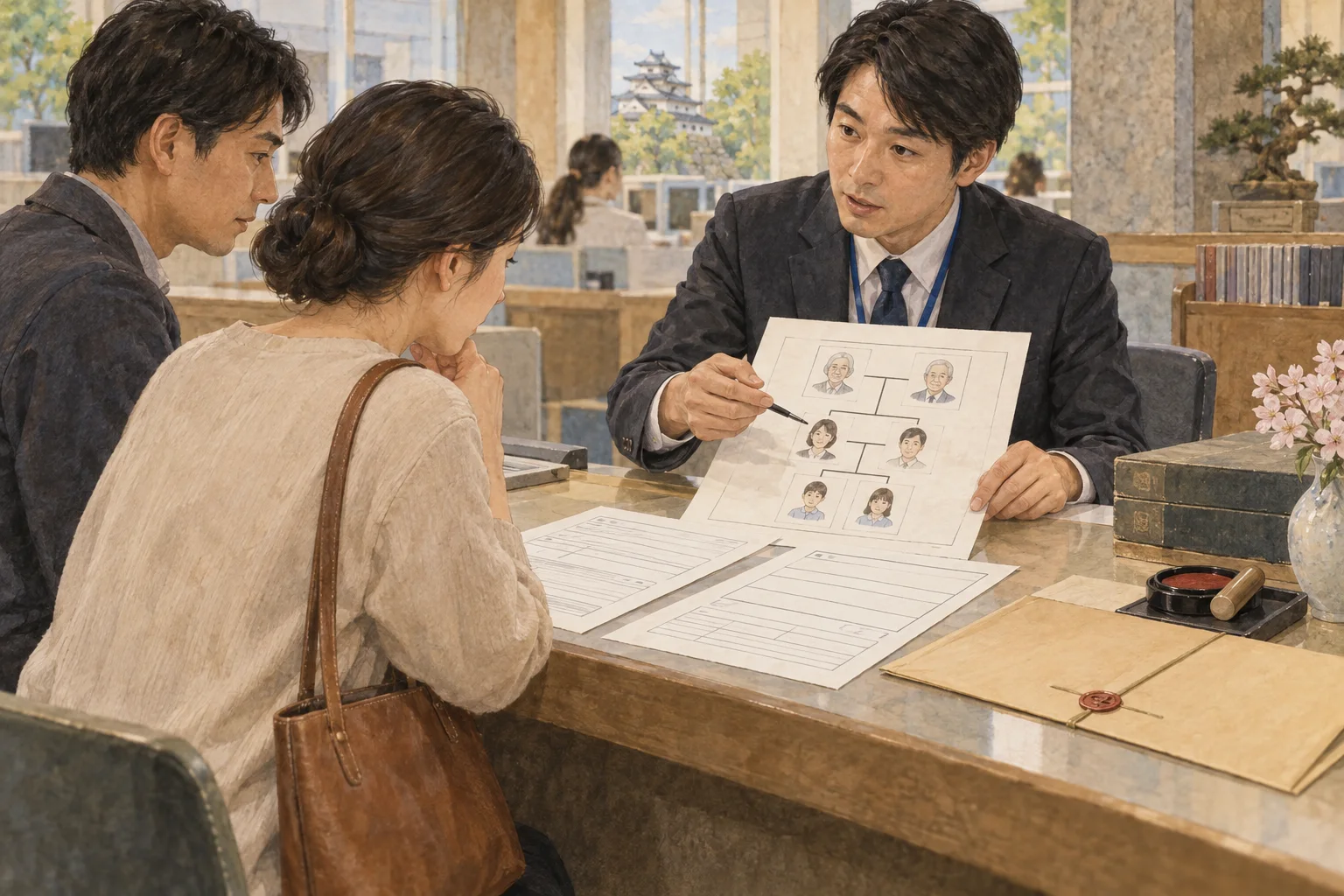
The koseki is Japan's family register, which records people as members of a family unit rather than individually.
戸籍とは日本の家族の登録簿で、人を個人としてではなく家族の一員として記録します。
In 30 seconds
The standard explanation
The koseki records births, marriages, divorces, adoptions and deaths, organized by family rather than by individual. When two people marry, a new register is created for them. Every register is tied to a registered address, which need not be where anyone lives, and copies are needed for passports, inheritance and marriage.
戸籍は出生、婚姻、離婚、養子縁組、死亡を記録するもので、個人ごとではなく家族ごとにまとめられています。二人が結婚すると、その二人のための新しい戸籍が作られます。戸籍には本籍という住所が結びついていますが、そこに誰かが住んでいる必要はありません。旅券、相続、婚姻の手続きには戸籍の写しが要ります。
As a short speech
A full paragraph you can read aloud
The koseki is the Japanese family register, and understanding it explains several things that otherwise look odd. It is organized by family, not by person. A register has a head and lists the spouse and unmarried children, and it records the events that change family status: birth, marriage, divorce, adoption, death.
When two people marry, they leave their parents' registers and a new one is created for them, which is why marriage in Japan is described as entering a register. Each register is attached to a registered address, and this is not where you live; you can set it to anywhere in Japan, and people sometimes choose a famous address for fun.
You will need certified copies for a passport, a marriage, an inheritance or a name change. It has also been criticized, because a register makes family history visible in ways that have been used for discrimination, and because it records only Japanese nationals, so a foreign spouse appears as a note rather than as an entry.
戸籍は日本の家族の登録簿で、これを理解すると、ほかでは不可解に見えることがいくつも説明できます。個人ではなく家族を単位に組まれています。戸籍には筆頭者があり、配偶者と未婚の子が記載され、家族の身分を変える出来事が記録されます。出生、婚姻、離婚、養子縁組、死亡です。
二人が結婚すると、それぞれ親の戸籍を離れ、二人のための新しい戸籍が作られます。日本語で結婚を「籍を入れる」と言うのはそのためです。戸籍には本籍という住所が結びついていますが、これは住んでいる場所ではありません。日本のどこにでも定められるので、面白がって有名な住所を選ぶ人もいます。
旅券、婚姻、相続、改名の手続きには、認証された写しが要ります。批判もあります。戸籍は家族の来歴を可視化するもので、それが差別に使われてきたこと、そして日本国籍の人だけを記録するため、外国籍の配偶者は記載ではなく注記として現れることです。
Questions people actually ask
And how to answer them.
Is it the same as a residence record?
No, and both exist. The residence record shows where you currently live and is used for local services; the family register shows your family relationships and legal status. You often need documents from both, issued by different counters.
違いますし、両方あります。住民票は今どこに住んでいるかを示し、地域の行政の手続きに使います。戸籍は家族の関係と身分を示します。それぞれ別の窓口で発行され、両方が必要になる手続きも多くあります。
Can a foreign spouse be listed?
Not as a member, because the register covers Japanese nationals. A marriage to a foreign national is recorded as a note on the Japanese person's register, giving the spouse's name and nationality, which some people find diminishing.
構成員としては記載されません。戸籍は日本国籍の人を対象とするからです。外国籍の人との婚姻は、日本人の戸籍に、配偶者の氏名と国籍を記す注記として記録されます。これを軽んじられていると感じる人もいます。
A common misunderstanding
MYTHThe registered address is where the family lives.
FACTIt can be set to any address in Japan and often has no connection to where anyone lives. Current residence is recorded separately on the residence record.
Phrases you can use
- Marriage creates a new register.結婚すると新しい戸籍を作ります。
- The registered address isn't where you live.本籍は住んでいる場所ではありません。
- You need a copy for a passport.旅券には戸籍の写しが要ります。
- It's organized by family, not by person.個人ではなく家族の単位です。
Words you need
- family register戸籍
- registered address本籍
- residence record住民票
- certified copy謄本
Watch
From YouTubeBackground (Japanese)
戸籍は明治期に全国的な制度として整えられ、当初は家を単位とする「家制度」と結びついていました。戦後の民法改正で家制度は廃止され、戸籍は夫婦と未婚の子を単位とする形になりました。本籍はどこにでも置けるため、皇居や東京タワーの住所を本籍とする例も知られています。戸籍の記載が出自の特定に使われ差別につながった経緯から、第三者による取得は制限されています。2024年からは本籍地以外の市区町村でも戸籍の証明書を取得できるようになりました。