uchiiwai
the thank-you gift after a celebration
内祝い(うちいわい)
In one line
The shortest answer that works
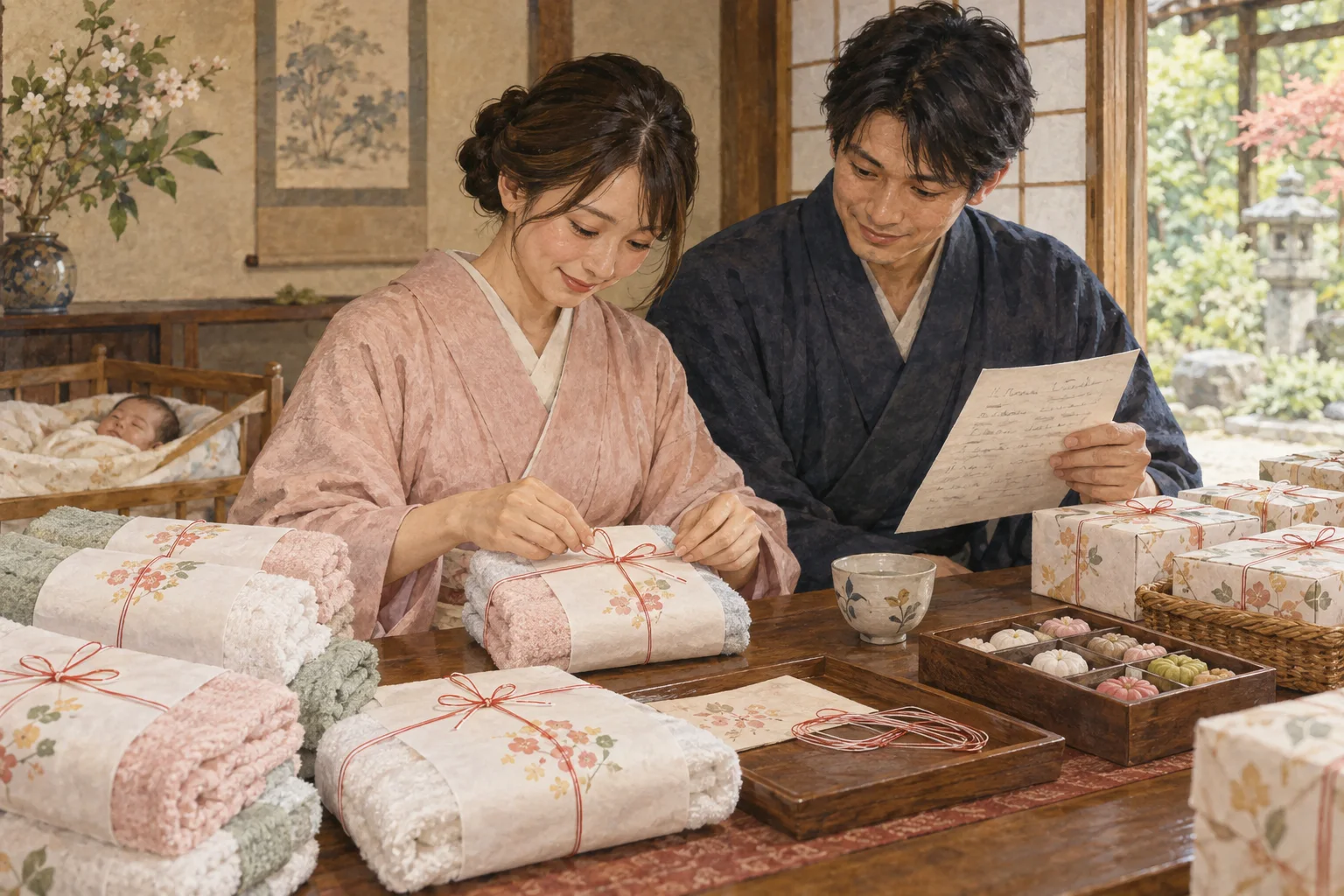
Uchiiwai is the return gift you send to people who gave you a present for a wedding, a birth or a recovery.
内祝いとは、結婚、出産、快気などの祝いをくれた人に贈るお返しの品のことです。
In 30 seconds
The standard explanation
In Japan a gift for a happy event is not the end of the exchange. Within a month or so, the person celebrated sends uchiiwai, a return gift worth about a third to a half of what they received: sweets, towels, tea, or a catalog from which the recipient picks something. The word once meant sharing your joy with the neighborhood; now it mostly works as a thank-you gift. Department stores have entire counters for it.
日本では、めでたい出来事への贈り物でやりとりは終わりません。一か月ほどのうちに、祝われた側は内祝いを送ります。受け取った額の三分の一から半分ほどの返礼で、菓子、タオル、茶、あるいは受け取る側が品を選ぶカタログなどです。この言葉はもともと喜びを近所に分かち合う意味でしたが、今では主にお礼の品として扱われます。百貨店には専用の売り場があります。
As a short speech
A full paragraph you can read aloud
Gift-giving in Japan runs in loops, and uchiiwai is the return leg. When you marry, have a baby, recover from a serious illness or, in some regions, build a house, people give you money or presents. Etiquette then requires you to send each of them a gift in return, usually within a month, worth roughly half of what they gave, with a slip of paper noting the occasion and, for a birth, the baby's name.
The original meaning was different: uchi means inside, and an uchiiwai was a gift you sent out to share your family's good news, whether or not you had received anything. Over time it became the standard thank-you, and now the half-value rule is well known enough that people calculate it.
Popular choices are things that disappear, such as sweets, tea, rice or towels, and catalog gifts that let the recipient choose. Department stores and online shops handle the wrapping, the labels and the shipping. I understand the logic, but I also think the loop makes some people afraid to give anything at all.
日本の贈り物は往復で動き、内祝いはその帰りの便です。結婚、出産、大病からの回復、地域によっては家の新築のとき、人はお金や品物を贈ってくれます。すると礼儀として、その一人ひとりに、ふつう一か月以内に、もらった額のおよそ半分の品を、機会と、出産なら赤ちゃんの名前を記したのし紙をつけて返さなければなりません。
もとの意味は違いました。「内」は家の内側のことで、内祝いは何かをもらったかどうかにかかわらず、家のよい知らせを分かち合うために配る品でした。時とともに定番のお礼になり、今では「半返し」の決まりがよく知られていて、人は計算します。
人気の品は菓子、茶、米、タオルなど消えてなくなるものや、受け取る側が選べるカタログギフトです。百貨店やネットの店が包装、のし、発送を引き受けます。理屈は分かりますが、この往復のせいで何も贈れなくなる人もいると私は思います。
Questions people actually ask
And how to answer them.
Someone gave me a baby gift. Do I really have to send something back?
Usually, yes, unless they explicitly said not to or they are very close family. Send something worth about a third to a half, with a label naming the baby, within about a month of the birth. If coworkers chipped in together, a box of sweets to share in the office is enough.
相手がはっきり要らないと言ったか、ごく近い家族でない限り、ふつうは必要です。生後一か月ほどのうちに、三分の一から半分ほどの品に赤ちゃんの名前ののし紙をつけて送ってください。同僚が皆で出し合ってくれたなら、職場で分けられる菓子の箱で十分です。
Why half? Isn't it strange to give back money you were just given?
The half rule keeps the exchange balanced without canceling it: the giver's kindness is acknowledged, and the celebrated person still comes out ahead. Returning the full amount can seem rude, as if you were refusing the gift. Regions and families vary, and closer relatives often return less.
半返しの決まりは、やりとりを帳消しにせず釣り合わせるものです。贈り主の心づかいは認められ、祝われた側にも得が残ります。全額返すと、贈り物を断ったように受け取られ、失礼にあたるとされます。地域や家庭で異なり、近い親族には少なめに返すことが多いです。
What is a catalog gift?
A bound catalog or a card with a code, priced in tiers, that you send instead of a physical present. The recipient browses and orders one item, from kitchenware to food to experiences. It solves the problem of choosing for many people at once and has become a standard choice for wedding uchiiwai.
品物の代わりに送る、価格帯ごとに分かれた冊子か、コードつきのカードです。受け取った人がめくって台所用品から食品、体験まで一つを注文します。大勢に一度に選ぶ問題を解決するもので、結婚の内祝いの定番の一つになりました。
A common misunderstanding
MYTHA gift in Japan is simply accepted with thanks, like anywhere else.
FACTFor weddings, births and recoveries, a return gift of roughly half the value is expected, and not sending one is noticed.
Phrases you can use
- This is a small return gift for the baby present you gave us.出産祝いのお返しです。ささやかですが。
- The usual rule is to return about half the value.だいたい半返しが相場です。
- We sent everyone a catalog gift after the wedding.結婚式のあと、皆さんにカタログギフトを送りました。
- The label has the baby's name on it.のし紙に赤ちゃんの名前が書いてあります。
- Please don't send anything back; it was just a small thing.お返しは要りませんよ。ほんの気持ちですから。
Words you need
- return giftお返し・内祝い
- half the value半返し
- gift label / wrapping paperのし紙
- catalog giftカタログギフト
- consumable消え物
Watch
From YouTubeBackground (Japanese)
内祝いはもともと「家の内の祝い」を近所や親戚に分かち合うために配る品で、赤飯や紅白の餅を配る習わしがその名残です。現在では結婚内祝い、出産内祝い、快気内祝い、新築内祝いなど、もらった祝いへのお返しの意味で使われ、「半返し」が目安として広く知られていますが、高額の祝いには三分の一、親族にはより少なくなど幅があります。出産内祝いには赤ちゃんの名前と読みを記したのし紙をつけ、名前のお披露目を兼ねます。快気祝いには「残らないように」と消え物を選ぶなど、品の選び方にも意味づけがあります。カタログギフトは1980年代に登場したとされ、結婚式の引き出物や内祝いの定番になりました。贈答のやりとりを負担に感じる人も増え、「お返し不要」と伝えて贈る人や、内祝いを省く家庭も見られます。