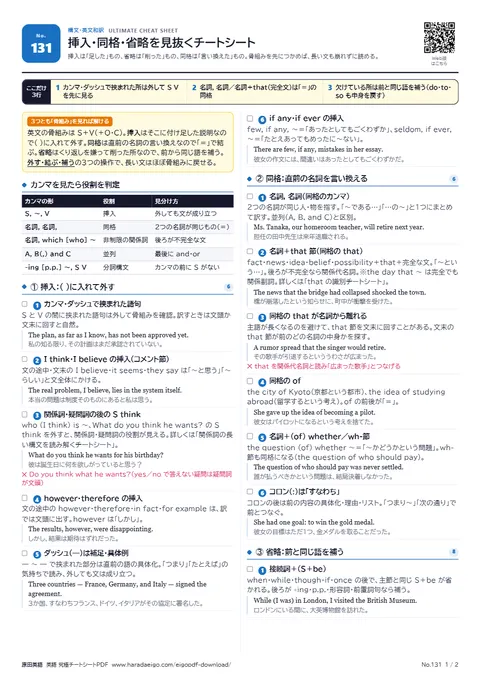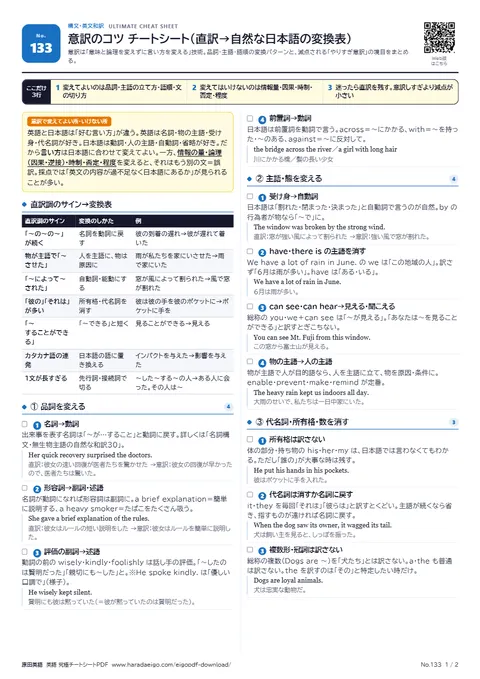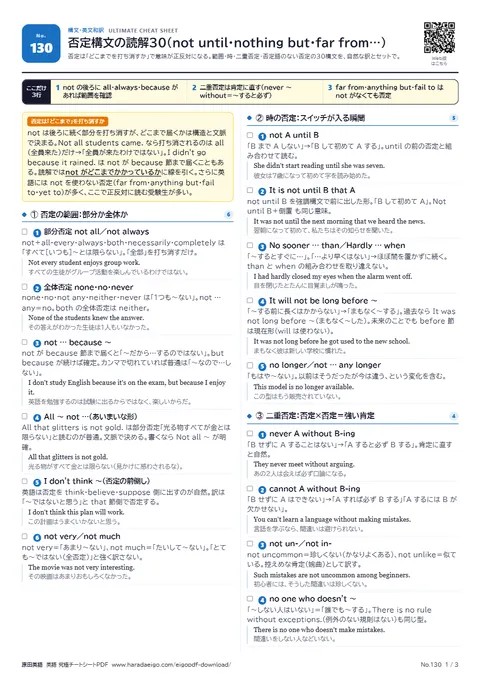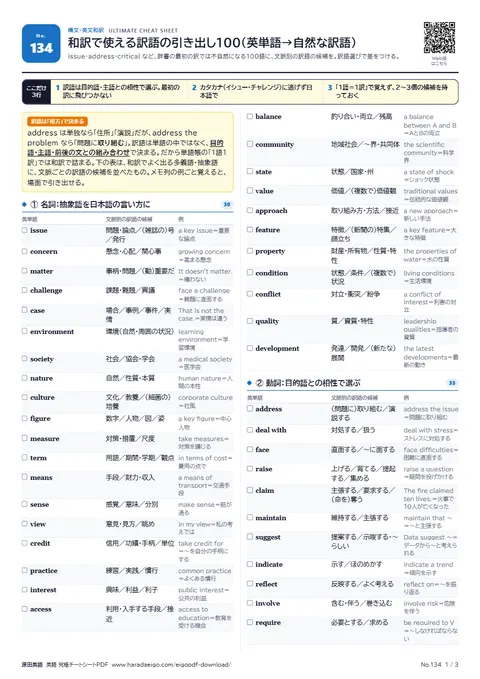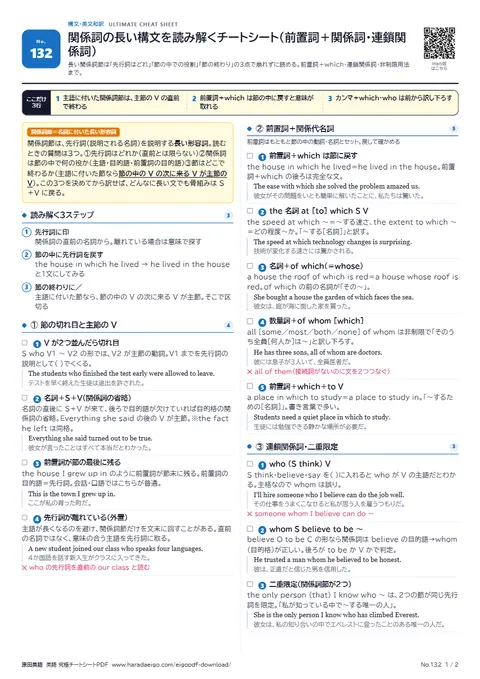
まずはこの3つ
- 主語に付いた関係詞節は、主節の V の直前で終わる
- 前置詞+which は節の中に戻すと意味が取れる
- カンマ+which・who は前から訳し下ろす
関係詞節=名詞に付いた長い形容詞
関係詞節は、先行詞(説明される名詞)を説明する長い形容詞。読むときの質問は3つ。①先行詞はどれか(直前とは限らない)②関係詞は節の中で何の役か(主語・目的語・前置詞の目的語)③節はどこで終わるか(主語に付いた節なら節の中の V の次に来る V が主節の V)。この3つを決めてから訳せば、どんなに長い文でも骨組みは S+V に戻る。
読み解く3ステップ3
- 1先行詞に印関係詞の直前の名詞から。離れている場合は意味で探す
- 2節の中に先行詞を戻すthe house in which he lived → he lived in the house と1文にしてみる
- 3節の終わりに/主語に付いた節なら、節の中の V の次に来る V が主節。そこで区切る
1節の切れ目と主節の V4
- 1V が2つ並んだら切れ目S who V1 〜 V2 の形では、V2 が主節の動詞。V1 までを先行詞の説明として( )でくくる。The students who finished the test early were allowed to leave.テストを早く終えた生徒は退出を許された。
- 2名詞+S+V(関係詞の省略)名詞の直後に S+V が来て、後ろで目的語が欠けていれば目的格の関係詞の省略。Everything she said の後の V が主節。※the fact he left は同格。Everything she said turned out to be true.彼女が言ったことはすべて本当だとわかった。
- 3前置詞が節の最後に残るthe house I grew up in のように前置詞が節末に残る。前置詞の目的語=先行詞。会話・口語ではこちらが普通。This is the town I grew up in.ここが私の育った町だ。
- 4先行詞が離れている(外置)主語が長くなるのを避け、関係詞節だけを文末に回すことがある。直前の名詞ではなく、意味の合う主語を先行詞に取る。A new student joined our class who speaks four languages.4か国語を話す新入生がクラスに入ってきた。✕who の先行詞を直前の our class と読む
2前置詞+関係代名詞5
前置詞はもともと節の中の動詞・名詞とセット。戻して確かめる
- 1前置詞+which は節に戻すthe house in which he lived=he lived in the house。前置詞+which の後ろは完全な文。The ease with which she solved the problem amazed us.彼女がその問題をいとも簡単に解いたことに、私たちは驚いた。
- 2the 名詞 at [to] which S Vthe speed at which 〜=〜する速さ、the extent to which 〜=どの程度〜か。「〜する[名詞]」と訳す。The speed at which technology changes is surprising.技術が変化する速さには驚かされる。
- 3名詞+of which(=whose)a house the roof of which is red=a house whose roof is red。of which の前の名詞が「その〜」。She bought a house the garden of which faces the sea.彼女は、庭が海に面した家を買った。
- 4数量詞+of whom [which]all [some/most/both/none] of whom は非制限で「そのうち全員[何人か]は〜」と訳し下ろす。He has three sons, all of whom are doctors.彼には息子が3人いて、全員医者だ。✕all of them(接続詞がないのに文を2つつなぐ)
- 5前置詞+which+to Va place in which to study=a place to study in。「〜するための[名詞]」。書き言葉で多い。Students need a quiet place in which to study.生徒には勉強できる静かな場所が必要だ。
3連鎖関係詞・二重限定3
- 1who (S think) VS think・believe・say を( )に入れると who が V の主語だとわかる。主格なので whom は誤り。I'll hire someone who I believe can do the job well.その仕事をうまくこなせると私が思う人を雇うつもりだ。✕someone whom I believe can do 〜
- 2whom S believe to be 〜believe O to be C の形なら関係詞は believe の目的語→whom(目的格)が正しい。後ろが to be か V かで判定。He trusted a man whom he believed to be honest.彼は、正直だと信じた男を信用した。
- 3二重限定(関係詞節が2つ)the only person (that) I know who 〜 は、2つの節が同じ先行詞を限定。「私が知っている中で〜する唯一の人」。She is the only person I know who has climbed Everest.彼女は、私の知り合いの中でエベレストに登ったことのある唯一の人だ。
4非制限用法:前から訳し下ろす4
- 1, who/, which は「そして」「だが」カンマの後は補足説明。前の名詞にかけて訳し上げず、「そしてその人は」「〜だが」とつないで訳し下ろす。I called Ken, who didn't answer the phone.ケンに電話したが、彼は出なかった。
- 2制限と非制限で意味が変わるtwo sons who are doctors=医者の息子が2人(他にもいるかも)。two sons, who are doctors=息子は2人で、2人とも医者。He has two daughters, who live in Osaka.彼には娘が2人いて、2人とも大阪に住んでいる。
- 3, which は前の文・句も指すwhich の先行詞は名詞とは限らない。前の文全体・動詞句を「そのこと」と受ける。何を指すかを訳で明示。He said nothing, which made her even angrier.彼が何も言わなかったので、彼女はますます怒った。
- 4, when/, where(非制限)in 2020, when 〜=「2020年、その年に〜」、Kyoto, where 〜=「京都、そこで〜」。時・場所を補って訳し下ろす。We moved to Sendai, where my father found a new job.私たちは仙台に引っ越し、父はそこで新しい仕事を見つけた。
5関係副詞・その他の読み方4
- 1抽象名詞+wheresituation・case・point・stage+where は場所でなく「〜という状況[場合・段階]」。in which と同じ。We are in a situation where we have to make a quick decision.私たちはすぐに決断しなければならない状況にある。
- 2the way S V/This is whythe way S V=〜する方法・様子(the way how は不可)。This is why 〜=だから〜(後ろが結果)。I like the way she speaks to children.私は、彼女の子どもへの話し方が好きだ。
- 3先行詞の省略:This is where 〜where・when・why の先行詞(the place・the time・the reason)はよく省かれる。「〜する所[時・理由]」と補う。This is where the accident happened.ここが事故の起きた場所だ。
- 4what・複合関係詞は名詞節what・whatever・whoever は先行詞を含み、それ自体が主語・目的語になる。whoever comes=来る人は誰でも。Whoever arrives first should turn on the lights.最初に着いた人が電気をつけるべきだ。
読み違えポイント5
- ✕the town I grew up=私が育てた町○the town I grew up in(私が育った町)grow up は自動詞。前置詞 in が先行詞とつながる
- ✕He has three sons, all of them are doctors.○He has three sons, all of whom are doctors.2つの文をつなぐには関係詞が必要
- ✕the man whom I thought was honest○the man who I thought was honestwho は was の主語(I thought は挿入)
- ✕This is the way how I solved it.○This is the way [how] I solved it.the way と how は並べない
- ✕a situation which we must act quickly○a situation where [in which] we must act quickly後ろが完全な文→関係副詞か前置詞+which
和訳のコツ:長い節は切ってよい
制限用法でも、関係詞節が長くて日本語が「〜する〜した〜の…」と重くなるときは、先行詞で一度切って訳し下ろすと読みやすい。ただし非制限と制限の意味の差(全部か一部か)が消えないように注意。the reason why 〜 は「〜する理由」、in which は「その中で」と逐語訳せず、節の中に戻した意味で訳す。
確認テスト
- 1This is the book I told you about.正解は which。about が節末に残っている→which
- 2The hotel we stayed was near the beach.正解は at which。we stayed at the hotel→at which
- 3She has many friends, most of live abroad.正解は whom。数量詞+of whom(非制限)
- 4Choose a person you think is reliable.正解は who。you think は挿入。who は is の主語
- 5He failed the exam, surprised everyone.正解は which。前の文全体を受ける , which
- 6We reached a point we could no longer go on.正解は where。抽象名詞 point+where(後ろが完全)
関係詞の構文の読解を一覧にまとめ、A4 2枚で印刷できる無料PDFにしました。Web版は赤シート・覚えたチェック・カード・4択テストつき。