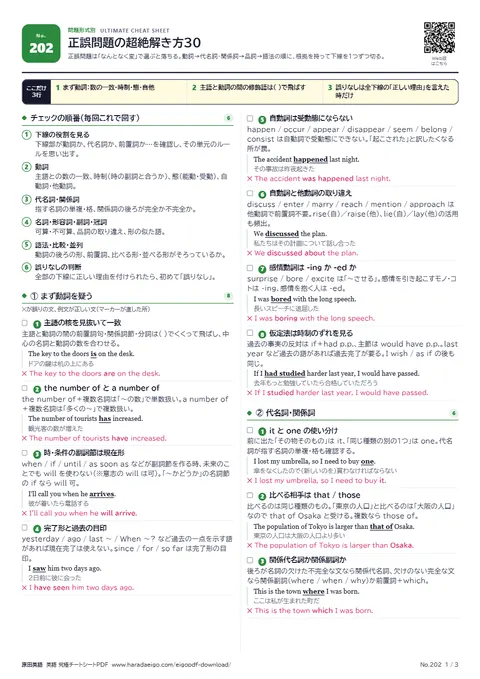
まずはこの3つ
- まず動詞:数の一致・時制・態・自他
- 主語と動詞の間の修飾語は( )で飛ばす
- 誤りなしは全下線の「正しい理由」を言えた時だけ
チェックの順番(毎回これで回す)6
- 1下線の役割を見る下線部が動詞か、代名詞か、前置詞か…を確認し、その単元のルールを思い出す。
- 2動詞主語との数の一致、時制(時の副詞と合うか)、態(能動・受動)、自動詞・他動詞。
- 3代名詞・関係詞指す名詞の単複・格、関係詞の後ろが完全か不完全か。
- 4名詞・形容詞・副詞・冠詞可算・不可算、品詞の取り違え、形の似た語。
- 5語法・比較・並列動詞の後ろの形、前置詞、比べる形・並べる形がそろっているか。
- 6誤りなしの判断全部の下線に正しい理由を付けられたら、初めて「誤りなし」。
1まず動詞を疑う8
✕が誤りの文、例文が正しい文(マーカーが直した所)
- 1主語の核を見抜いて一致主語と動詞の間の前置詞句・関係詞節・分詞は( )でくくって飛ばし、中心の名詞と動詞の数を合わせる。The key to the doors is on the desk.ドアの鍵は机の上にある✕The key to the doors are on the desk.
- 2the number of と a number ofthe number of+複数名詞は「〜の数」で単数扱い。a number of+複数名詞は「多くの〜」で複数扱い。The number of tourists has increased.観光客の数が増えた✕The number of tourists have increased.
- 3時・条件の副詞節は現在形when / if / until / as soon as などが副詞節を作る時、未来のことでも will を使わない(※意志の will は可)。「〜かどうか」の名詞節の if なら will 可。I'll call you when he arrives.彼が着いたら電話する✕I'll call you when he will arrive.
- 4完了形と過去の目印yesterday / ago / last ~ / When ~? など過去の一点を示す語があれば現在完了は使えない。since / for / so far は完了形の目印。I saw him two days ago.2日前に彼に会った✕I have seen him two days ago.
- 5自動詞は受動態にならないhappen / occur / appear / disappear / seem / belong / consist は自動詞で受動態にできない。「起こされた」と訳したくなる所が罠。The accident happened last night.その事故は昨夜起きた✕The accident was happened last night.
- 6自動詞と他動詞の取り違えdiscuss / enter / marry / reach / mention / approach は他動詞で前置詞不要。rise(自)/raise(他)、lie(自)/lay(他)の活用も頻出。We discussed the plan.私たちはその計画について話し合った✕We discussed about the plan.
- 7感情動詞は -ing か -ed かsurprise / bore / excite は「〜させる」。感情を引き起こすモノ・コトは -ing、感情を抱く人は -ed。I was bored with the long speech.長いスピーチに退屈した✕I was boring with the long speech.
- 8仮定法は時制のずれを見る過去の事実の反対は if+had p.p.、主節は would have p.p.。last year など過去の語があれば過去完了が要る。I wish / as if の後も同じ。If I had studied harder last year, I would have passed.去年もっと勉強していたら合格していただろう✕If I studied harder last year, I would have passed.
2代名詞・関係詞6
- 1it と one の使い分け前に出た「その物そのもの」は it、「同じ種類の別の1つ」は one。代名詞が指す名詞の単複・格も確認する。I lost my umbrella, so I need to buy one.傘をなくしたので(新しいのを)買わなければならない✕I lost my umbrella, so I need to buy it.
- 2比べる相手は that / those比べるのは同じ種類のもの。「東京の人口」と比べるのは「大阪の人口」なので that of Osaka と受ける。複数なら those of。The population of Tokyo is larger than that of Osaka.東京の人口は大阪の人口より多い✕The population of Tokyo is larger than Osaka.
- 3関係代名詞か関係副詞か後ろが名詞の欠けた不完全な文なら関係代名詞、欠けのない完全な文なら関係副詞(where / when / why)か前置詞+which。This is the town where I was born.ここは私が生まれた町だ✕This is the town which I was born.
- 4what は先行詞を含むwhat=the thing(s) which。前に名詞(先行詞)があれば what は使えず which / that にする。This is the book that I wanted.これが私の欲しかった本だ✕This is the book what I wanted.
- 5関係詞節で語を重複させない関係代名詞が節の中で主語・目的語の役をしているので、him / it などをもう一度書くと誤り。The man who I met yesterday is a doctor.昨日会った男性は医者だ✕The man who I met him yesterday is a doctor.
- 6コンマ+that は不可非制限用法(, who / , which)に that は使えない。前置詞+that も不可(in which ○/in that ✕)。My father, who lives in Osaka, is a teacher.父は大阪に住んでいて、教師をしている✕My father, that lives in Osaka, is a teacher.
3名詞・冠詞・形容詞・副詞6
- 1不可算名詞に s・a を付けないinformation / advice / furniture / baggage / homework / news / equipment は数えられない。数えるなら a piece of ~。She gave me some useful advice.彼女は役立つ助言をくれた✕She gave me some useful advices.
- 2数と量の形容詞可算名詞には many / few / a number of、不可算名詞には much / little / an amount of。people・police は複数扱い。Many people came to the event.多くの人がそのイベントに来た✕Much people came to the event.
- 3形容詞と副詞の品詞名詞を修飾し補語になるのは形容詞、動詞・形容詞・文を修飾するのは副詞。「〜に見える・聞こえる・感じる」の look / sound / taste / feel / seem の後は補語なので形容詞。This soup tastes wonderful.このスープはとてもおいしい✕This soup tastes wonderfully.
- 4形の似た副詞の意味hard(熱心に)/hardly(ほとんど〜ない)、late(遅く)/lately(最近)、near(近く)/nearly(ほぼ)、high(高く)/highly(大いに)。He studied hard to pass the exam.彼は試験に受かるため一生懸命勉強した✕He studied hardly to pass the exam.
- 5almost は名詞を修飾できないalmost は副詞。「ほとんどの学生」は almost all (the) students か most students/most of the students。Almost all students have smartphones.ほとんどの学生がスマホを持っている✕Almost students have smartphones.
- 6冠詞の有無単数の可算名詞は原則として裸で使えない(a / the / my などが要る)。一方 by+交通手段、go to school(本来の目的)などは無冠詞。I go to school by bus.バスで通学している✕I go to school by a bus.
4語法・比較・並列6
- 1比較級の重複と強調more+-er の二重比較は誤り(more better ✕)。比較級の強調は much / far / even / still で、very 単独は使えない。This book is much more interesting than that one.この本はあの本よりずっと面白い✕This book is very more interesting than that one.
- 2比べる形をそろえるthan / as の前後は同じ形で比べる。動名詞なら動名詞、to do なら to do。Walking is healthier than driving.歩くことは車の運転より健康によい✕Walking is healthier than to drive.
- 3並べる形をそろえるand / or / but の前後、both A and B、not only A but also B、either A or B の A と B は原則同じ品詞・同じ形。He enjoys reading, swimming, and playing tennis.彼は読書と水泳とテニスを楽しむ✕He enjoys reading, swimming, and to play tennis.
- 4動名詞か不定詞かenjoy / finish / avoid / mind / give up は -ing、decide / hope / plan / refuse / manage は to do。remember / forget / stop は形で意味が変わる。I enjoyed talking with her.彼女と話して楽しかった✕I enjoyed to talk with her.
- 5提案・要求の that 節は原形suggest / demand / insist / recommend / It is necessary that の後は(should+)原形。三単現の s や過去形なら誤り。※イギリス英語では should を残すことが多く、口語では goes も見られるが、入試は原形。He suggested that she go to the doctor.彼は彼女に医者に行くよう勧めた✕He suggested that she goes to the doctor.
- 6語と結びつく前置詞different from / depend on / be interested in / be familiar with のように語ごとに前置詞が決まる。時の in / on / at も確認。My opinion is different from yours.私の意見はあなたのとは違う✕My opinion is different with yours.
5誤りなし(NO ERROR)の判断4
- 1全下線を根拠つきで見る誤りなしを選ぶのは、すべての下線部に「正しい理由」を言えた時だけ。確かめていない下線が1つでもあれば、まだ選ばない。
- 2見慣れない=誤りではない倒置・分詞構文・強調構文・仮定法現在の原形など、正しいのに見慣れない形は誤答を誘う罠。ルールに反するかどうかで判断する。Had I known the truth, I would have told you.真実を知っていたら、君に話していただろう(正しい文)
- 3下線の外は正しいと信じる下線の外には誤りがない前提。下線外の主語・時の副詞・前置詞を根拠にして、下線部を判定する。Last year she visited Kyoto.去年、彼女は京都を訪れた✕Last year she has visited Kyoto.(下線外の Last year が根拠)
- 4時間を決めて次へ動詞→代名詞→品詞→語法と見ても決まらなければ、いちばん怪しい所に印を付けて先に進み、最後に戻る。1問で粘りすぎない。
作る側から考える
出題者は「受験生が気づきにくい所」に誤りを仕込む。主語と動詞を離す、自動詞を受動態にする、不可算名詞に s を付ける…はその代表。逆に、内容が意外なだけなら誤りではない。正誤問題は「なんとなく」ではなく、文法・語法のルールを根拠に判定する。
確認テスト:誤りのある箇所を選べ
- 1Each of the students (A) have to submit (B) a report (C) by Friday.正解は (A)。each は単数扱い→has
- 2She (A) has lived in Kyoto (B) since she (C) has been a child.正解は (C)。since の後は過去の一点→was
- 3(A) Hardly had I left home (B) when it (C) began to rain.正解は (D) 誤りなし。Hardly had S p.p. when … の正しい倒置
- 4The furniture in the room (A) look (B) very old, (C) doesn't it?正解は (A)。furniture は不可算で単数扱い→looks
- 5I'm looking forward (A) to hear (B) from you (C) soon.正解は (A)。前置詞の to→to hearing
- 6This is the museum (A) which we (B) visited (C) last summer.正解は (D) 誤りなし。visit は他動詞→which で正しい
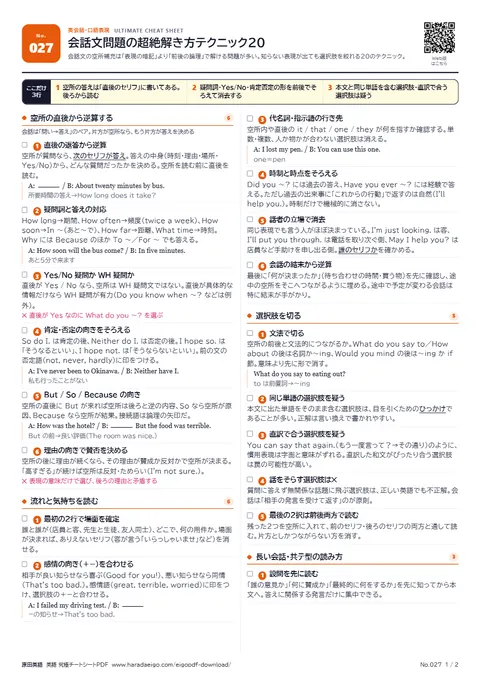
参考にした資料
正誤問題の解き方を一覧にまとめ、A4 3枚で印刷できる無料PDFにしました。Web版は赤シート・覚えたチェック・カード・4択テストつき。