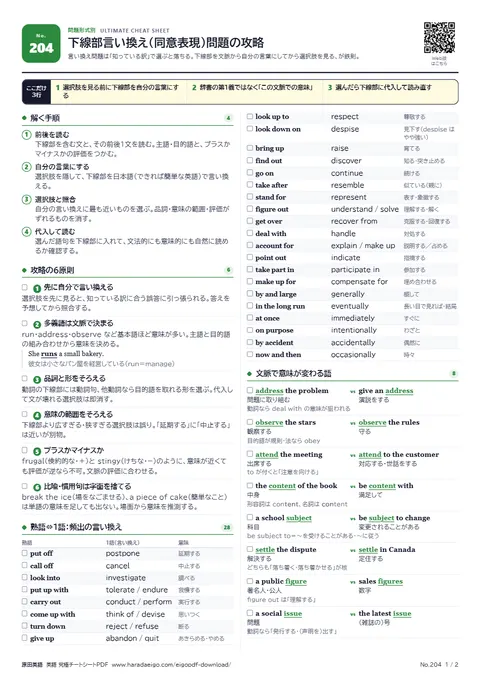
まずはこの3つ
- 選択肢を見る前に下線部を自分の言葉にする
- 辞書の第1義ではなく「この文脈での意味」
- 選んだら下線部に代入して読み直す
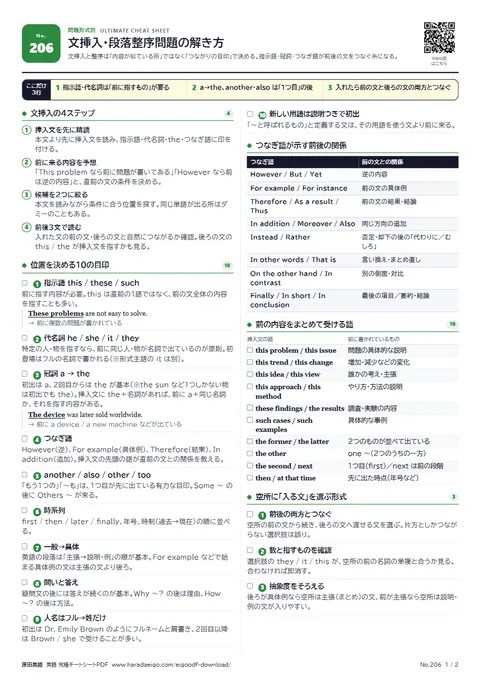
解く手順4
- 1前後を読む下線部を含む文と、その前後1文を読む。主語・目的語と、プラスかマイナスかの評価をつかむ。
- 2自分の言葉にする選択肢を隠して、下線部を日本語(できれば簡単な英語)で言い換える。
- 3選択肢と照合自分の言い換えに最も近いものを選ぶ。品詞・意味の範囲・評価がずれるものを消す。
- 4代入して読む選んだ語句を下線部に入れて、文法的にも意味的にも自然に読めるか確認する。
攻略の6原則6
- 1先に自分で言い換える選択肢を先に見ると、知っている訳に合う誤答に引っ張られる。答えを予想してから照合する。
- 2多義語は文脈で決まるrun・address・observe など基本語ほど意味が多い。主語と目的語の組み合わせから意味を決める。She runs a small bakery.彼女は小さなパン屋を経営している(run=manage)
- 3品詞と形をそろえる動詞の下線部には動詞句、他動詞なら目的語を取れる形を選ぶ。代入して文が壊れる選択肢は即消す。
- 4意味の範囲をそろえる下線部より広すぎる・狭すぎる選択肢は誤り。「延期する」に「中止する」は近いが別物。
- 5プラスかマイナスかfrugal(倹約的な・+)と stingy(けちな・−)のように、意味が近くても評価が逆なら不可。文脈の評価に合わせる。
- 6比喩・慣用句は字面を捨てるbreak the ice(場をなごませる)、a piece of cake(簡単なこと)は単語の意味を足しても出ない。場面から意味を推測する。
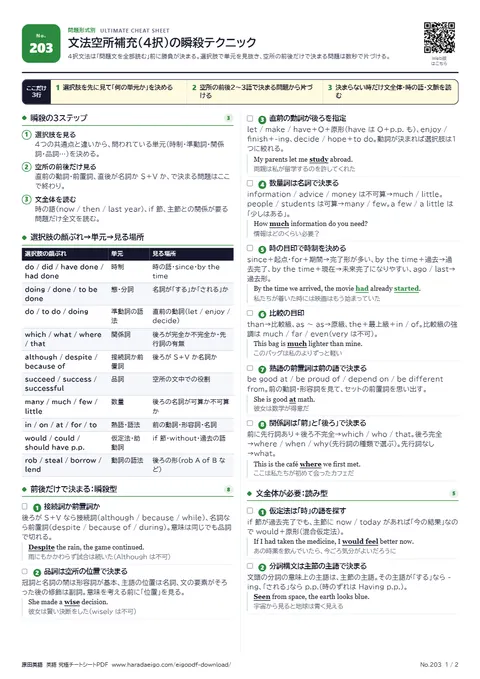
熟語⇔1語:頻出の言い換え28
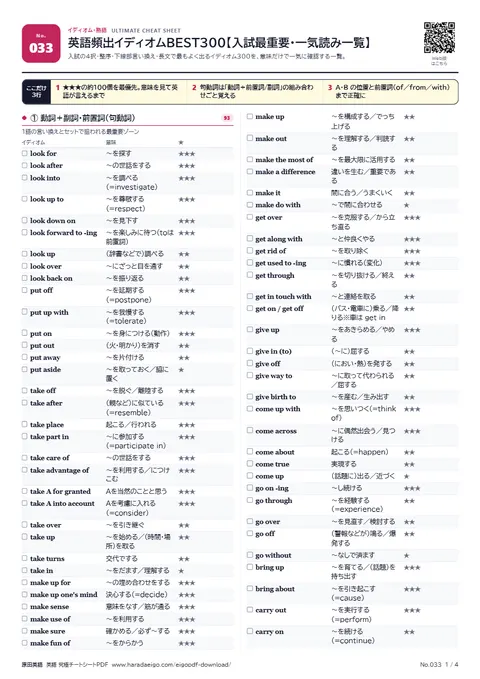
熟語1語(言い換え)意味
put offpostpone延期する
call offcancel中止する
look intoinvestigate調べる
put up withtolerate / endure我慢する
carry outconduct / perform実行する
come up withthink of / devise思いつく
turn downreject / refuse断る
give upabandon / quitあきらめる・やめる
look up torespect尊敬する
look down ondespise見下す(despise はやや強い)
bring upraise育てる
find outdiscover知る・突き止める
go oncontinue続ける
take afterresemble似ている(親に)
stand forrepresent表す・象徴する
figure outunderstand / solve理解する・解く
get overrecover from克服する・回復する
deal withhandle対処する
account forexplain / make up説明する/占める
point outindicate指摘する
take part inparticipate in参加する
make up forcompensate for埋め合わせる
by and largegenerally概して
in the long runeventually長い目で見れば・結局
at onceimmediatelyすぐに
on purposeintentionallyわざと
by accidentaccidentally偶然に
now and thenoccasionally時々
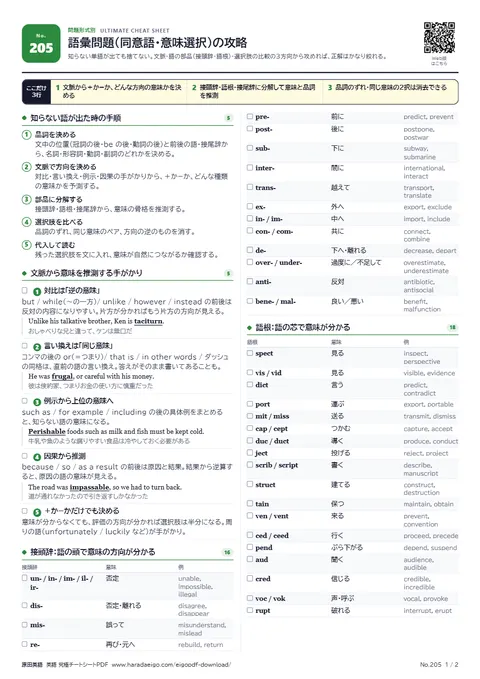
文脈で意味が変わる語8
- address the problem問題に取り組むvsgive an address演説をする動詞なら deal with の意味が狙われる
- observe the stars観察するvsobserve the rules守る目的語が規則・法なら obey
- attend the meeting出席するvsattend to the customer対応する・世話をするto が付くと「注意を向ける」
- the content of the book中身vsbe content with満足して形容詞は content、名詞は content
- a school subject科目vsbe subject to change変更されることがあるbe subject to=〜を受けることがある・〜に従う
- settle the dispute解決するvssettle in Canada定住するどちらも「落ち着く・落ち着かせる」が核
- a public figure著名人・公人vssales figures数字figure out は「理解する」
- a social issue問題vsthe latest issue(雑誌の)号動詞なら「発行する・(声明を)出す」
文の言い換えの型6
- 1否定×否定=肯定never fail to do=always do、not without ~=〜がないわけではない(≒with ~)。否定が2つ重なったら肯定に直して照合する。She never fails to call me on my birthday.=She always calls me on my birthday.
- 2比較の言い換えNothing is more ~ than A=A is the most ~。否定語+比較級は最上級の意味になる。Nothing is more important than health.=Health is the most important thing.
- 3部分否定に注意not all / not always / not necessarily は「全部・いつも・必ずしも〜とは限らない」。「全部〜ない(no / never)」の選択肢は誤り。Not all students agree with the plan.=Some students don't agree with the plan.
- 4It was not until ~ that「〜して初めて…した」。not ~ until … や only when … と言い換えられる。It was not until midnight that he came home.=He didn't come home until midnight.
- 5譲歩の言い換えno matter how=however、no matter what=whatever。even though と though も同じ意味の範囲。No matter how hard he tried, he couldn't open it.=However hard he tried, he couldn't open it.
- 6無生物主語⇔人主語The news made her happy は She was happy to hear the news。主語が入れ替わった選択肢は、因果関係が保たれているかで判断する。The heavy rain kept us from going out.=We couldn't go out because of the heavy rain.
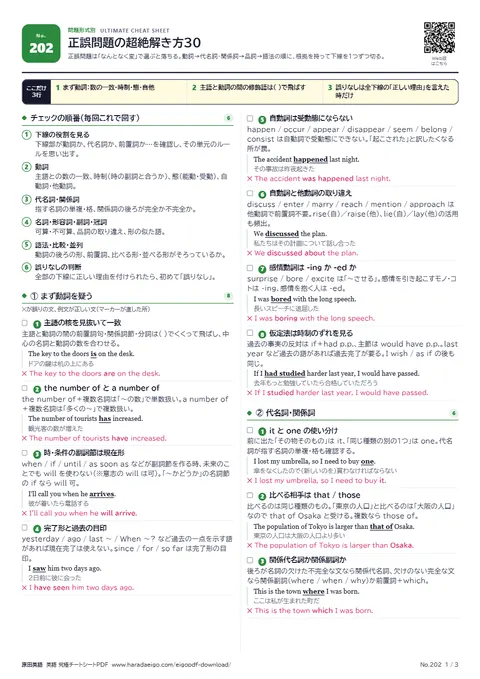
選択肢の罠4
- ✕知っている訳で選ぶ(run=走る)○文脈で決める(run a shop=経営する)基本語の第1義は誤答に使われやすい
- ✕つづりや形が似た選択肢(put off→put on)○意味で照合する見た目の近さは意味の近さではない
- ✕意味は近いが評価が逆(frugal→stingy)○+/−の評価もそろえる文脈の評価とずれたら誤り
- ✕下線部より意味が強い・広い選択肢○意味の強さと範囲が同じものdislike と hate は強さが違う
知らない熟語が出たら
①下線部を空所だと思い、前後から入る意味を予想する ②熟語の前置詞・副詞のイメージ(off=離れる、up=完全に、down=下へ・減る)から推測する ③予想と選択肢を照合する。熟語を知らなくても、文脈問題として解ける場合が多い。
確認テスト:下線部に最も近い意味を選べ
- 1The meeting was called off because of the typhoon.正解は canceled。call off=中止。postpone は put off
- 2I can't put up with this noise any longer.正解は tolerate。put up with=我慢する
- 3She really takes after her mother.正解は resembles。look after は「世話をする」
- 4The government must address the problem of child poverty.正解は deal with。address a problem=取り組む
- 5Students account for most of the visitors to the museum.正解は make up。割合を「占める」の意味
- 6He broke the ice by telling a funny story.正解は helped people relax。場の緊張をほぐした
下線部言い換え問題を一覧にまとめ、A4 2枚で印刷できる無料PDFにしました。Web版は赤シート・覚えたチェック・カード・4択テストつき。