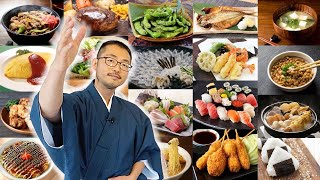
和食紹介は4ステップで組み立てる
料理を英語で紹介するときは、次の順番で話すと迷いません。
- 何の仲間か(定義):It's a kind of soup / noodle / rice dish.
- 何でできているか(材料):It's made from 〜 / It has 〜 in it.
- どんな味か(味・食感):It tastes 〜 / It's 〜 and 〜.
- どう食べるか(食べ方・場面):We usually eat it 〜.
例:Miso soup is a traditional Japanese soup. It's made from miso, a fermented soybean paste, and dashi, a light fish stock. It tastes salty and rich. We usually have it with rice at breakfast or dinner.
この4文がそろえば、ほとんどの料理は説明できます。材料の英語がわからないときは、a kind of fish / a kind of vegetable でOK。完璧を目指さず、まず4文を言い切ることを優先しましょう。
ポイント:「仲間→材料→味→食べ方」。この順番を体に覚えさせましょう。
定番料理の説明例文(自作)
よく聞かれる料理を、4ステップの型で短くまとめました。
- Sushi:Sushi is vinegared rice with toppings, usually raw fish. Not all sushi uses raw fish. For example, some has egg or cucumber.
- Tempura:Tempura is seafood or vegetables fried in a light batter. It's crispy outside and soft inside. We often dip it in a light sauce or salt.
- Onigiri:Onigiri is a rice ball, often wrapped in seaweed. There is something inside, like salted salmon or pickled plum. It's a popular snack for lunch boxes.
- Ramen:Ramen is a noodle soup. The soup can be soy sauce, miso, salt, or pork bone flavor. Each shop has its own style.
- Natto:Natto is fermented soybeans. It's sticky and has a strong smell, so some people love it and some people hate it.
「好き嫌いが分かれる」は some people love it and some people hate it が便利。正直に伝えると、相手も挑戦しやすくなります。
ポイント:「生魚だけじゃない」など、誤解されやすい点をひと言添えると親切です。
味と食感を伝える形容詞リスト
味の説明で delicious だけを繰り返していませんか。和食の特徴を伝えやすい言葉を集めました。
味
- salty(しょっぱい)/ sweet(甘い)/ sour(すっぱい)/ bitter(苦い)
- savory(うま味のある、塩気のある)/ rich(濃厚な)/ light(あっさりした)
- mild(まろやかな)/ spicy(辛い)
食感
- crispy(サクサク)/ chewy(もちもち・かみごたえのある)
- sticky(ねばねば)/ soft(やわらかい)/ smooth(なめらか)/ fluffy(ふわふわ)
うま味とだし
「うま味」は英語でも umami として知られるようになっています。Umami is a savory taste, one of the basic tastes, like sweet or salty. と説明できます。だしは a light soup stock made from things like dried bonito or kelp のように言うと伝わります。
ポイント:「味1つ+食感1つ」をセットで言うと、一気においしそうに聞こえます。例:It's light and crispy.
食べ方・マナーを英語で伝える
料理そのものに加えて、食べ方の文化も外国の人には新鮮です。
- We say "itadakimasu" before eating. It's a way to show thanks for the food.
- It's OK to slurp noodles in Japan. Some people say it makes them taste better.
- Please don't stick your chopsticks straight up in your rice. It's connected to funerals.
- You can eat sushi with your hands. Many people do.
禁止事項を伝えるときは、Don't 〜 より Please try not to 〜 や It's better not to 〜 のほうがやわらかく響きます。そして理由を because 〜 でひと言添えると、ただのルールではなく「文化の話」になります。
旬(しゅん)を伝える
和食の特徴のひとつが季節感です。We have a word, "shun", for the best season of each food. For example, bamboo shoots are best in spring. のように具体例を入れましょう。
ポイント:ルール+理由(because)で、マナーが文化紹介に変わります。
1週間の練習メニューとよくある失敗
1週間メニュー(1日15分)
- 月:好きな和食を5つ選び、定義の1文を作る
- 火:材料の英語を調べて2文目を足す
- 水:形容詞リストから味・食感を選んで3文目
- 木:食べ方・場面の4文目を足す
- 金:食事マナーを3つ、理由つきで書く
- 土:家族の食卓を題材に、英語で実況してみる
- 日:5品を通しで録音して聞き直す
よくある失敗
- 材料名を全部言おうとする:主な材料2つで十分です。
- It's delicious. で終わる:何がおいしいのか、形容詞で具体的に。
- 「日本人は毎日和食」と言い切る:実際にはパンやパスタを食べる家庭も多いです。Many families also eat Western food. と添えるとリアルです。
- 生魚の話ばかりする:苦手な人もいるので、火を通した料理も紹介すると喜ばれます。
ポイント:自分の家の食卓は、世界にひとつの「一次情報」。いちばん説得力があります。
会話で使えるミニダイアログ
最後に、実際の会話の流れを見てみましょう。
A: What's your favorite Japanese food?
B: I love okonomiyaki. It's a kind of savory pancake.
A: A pancake? Is it sweet?
B: No, it's not sweet. It has cabbage and pork in it, and we put a special sauce and mayonnaise on top.
A: Sounds interesting!
B: In my family, we cook it together on a hot plate at the table. It's really fun. Do you have a food like that in your country?
この会話では、定義(savory pancake)→誤解の訂正(not sweet)→材料→家族の具体例→聞き返しの流れになっています。これまで学んだ要素がすべて入っていますね。
savory は「甘くない、塩気やうま味のある」という意味で、料理の紹介でとても便利な単語です。
ポイント:最後の聞き返しで、相手の国の料理の話に広がります。