行事説明の型は「いつ・何を・なぜ」
季節行事を説明するときの基本の型はこれです。
- いつ:〇〇 is on 〜 / in 〜.
- 何をする:People 〜 / We 〜.
- なぜ・意味:It's for 〜 / It's a wish for 〜.
- (自分の場合):In my family, 〜.
例:Tanabata is on July 7th. People write their wishes on small pieces of paper and hang them on bamboo. It comes from an old story about two stars who can meet only once a year. At my school, we did it every year.
由来については諸説ある行事も多いので、It comes from an old story / It's said that 〜 のように幅を持たせた言い方が安全です。
ポイント:「なぜ」がわからなければ、無理に言わなくてOK。「いつ・何を・自分の場合」の3つでも立派な説明です。
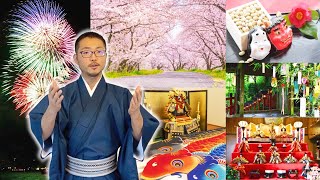
冬〜春:お正月・節分・ひな祭り・花見
お正月(New Year)
Oshogatsu, the New Year holidays, is the most important holiday for many Japanese families. We eat special food called osechi, visit a shrine or temple, and children get money called otoshidama.
節分(Setsubun)
Setsubun is in early February. We throw roasted beans and shout "Demons out! Good luck in!" It's a way to chase away bad luck before spring.
ひな祭り(Hinamatsuri)
Hinamatsuri is on March 3rd. It's a day to wish for girls' health and happiness. Families display special dolls in traditional clothes.
花見(Hanami)
Hanami means "flower viewing." In spring, people have picnics under cherry trees with friends, family, or coworkers. The flowers only last about a week or two, so it feels special.
ポイント:お正月はクリスマスとの比較が便利。It's like Christmas in the West, but quieter and more traditional. と言えます。
初夏〜夏:こどもの日・七夕・お盆・夏祭り
こどもの日(Children's Day)
Children's Day is on May 5th. Families fly carp-shaped streamers called koinobori. Carp are a symbol of strength because they swim up rivers.
七夕(Tanabata)
前のセクションの例文を参考に。短冊は small pieces of colorful paper と言えば伝わります。
お盆(Obon)
Obon is a summer event, usually in mid-August in many areas. People believe the spirits of their ancestors come back home. Many people go back to their hometowns, visit family graves, and join Bon dances.
夏祭り(Summer festivals)
In summer, there are festivals in many towns. People wear yukata, a light cotton kimono, eat food from street stalls, and watch fireworks.
ポイント:お盆は地域によって時期が違います。usually や in many areas を入れると正確さが上がります。
秋〜年末:お月見・七五三・大みそか
お月見(Tsukimi)
Tsukimi means "moon viewing." In autumn, people enjoy the full moon with rice dumplings and pampas grass. It's a quiet event to enjoy the beauty of the season.
七五三(Shichi-Go-San)
Shichi-Go-San means "seven-five-three." Children aged three, five, and seven visit a shrine with their parents to pray for their healthy growth. Many kids wear kimono and get long, thin candy called chitose-ame.
大みそか(Omisoka)
Omisoka is New Year's Eve. Many families eat soba noodles, called toshikoshi soba, as a wish for a long life. At midnight, temple bells ring 108 times.
紅葉狩り(Momiji-gari)
In autumn, people go to the mountains or gardens to see red and yellow leaves. We call it momiji-gari, which literally means "hunting red leaves," but of course we just look at them!
ポイント:literally means 〜 で直訳を紹介すると、言葉の面白さが伝わって会話が弾みます。
月ごとの練習メニュー
行事は1年中あるので、今の季節の行事から練習するのがいちばん続きます。
1週間の基本メニュー(1日10〜15分)
- 月:今月・来月の行事を2つ選ぶ
- 火:「いつ・何を」の2文を書く
- 水:「なぜ・意味」を調べて1文足す(諸説ある場合は It's said that 〜)
- 木:自分の家や学校での過ごし方を1文足す
- 金:声に出して30秒以内で言えるか確認
- 土:写真を1枚選び、見せながら説明する想定で練習
- 日:前月までの行事と合わせて通しで言う
これを毎月続けると、1年で20以上の行事を英語で話せるようになります。実際の行事の日に、家族にも英語で説明してみると記憶に残ります。
ポイント:「今月の行事」をスマホのメモに英語で1つずつ貯めていきましょう。
よくある失敗と自然な言い方
失敗1:すべての日本人が同じことをすると言う
Every Japanese family eats osechi. ではなく、Many families 〜 / Traditionally, 〜 にします。実際、今はおせちを作らない家庭もあります。
失敗2:宗教の説明が重くなりすぎる
お盆や初詣を説明するとき、宗教の深い話に入りすぎる必要はありません。For many people, it's more of a custom than a religious event. と言えば、多くの人の感覚に近い説明になります。
失敗3:日付の言い方
「3月3日」は March 3rd(読み方は March third)。on March 3rd のように on を使います。月だけなら in March です。
失敗4:festival の使いすぎ
お正月やお盆は festival より holiday / event / tradition が自然なことが多いです。festival は屋台や神輿などがある「お祭り」に使いましょう。
ポイント:Traditionally と Many people の2語で、言い切りすぎを防げます。