 ワークシート
 ぬりえ
 迷路
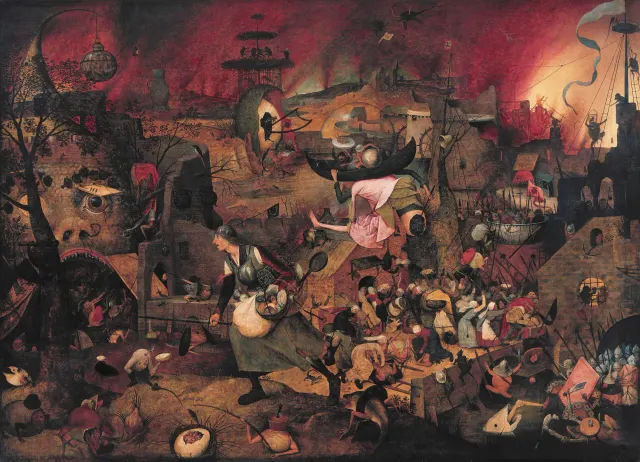
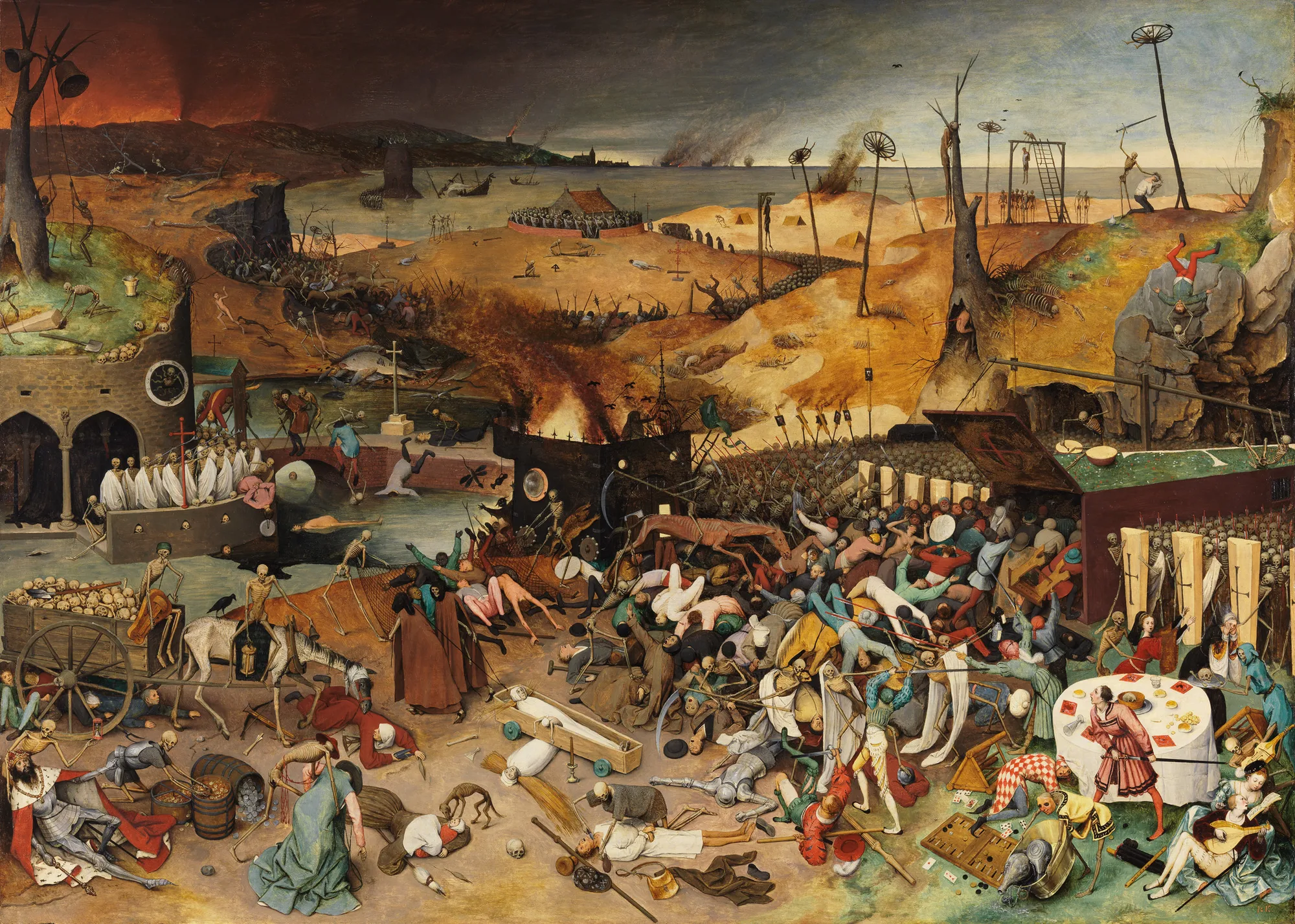
王さまも恋人も逃げられない!ガイコツ軍団が世界をのみこむ。Not even kings or lovers can escape! An army of skeletons takes over.
この作品のお話
Story茶色く焼けた大地を、ガイコツの大軍がおしよせます。ガイコツは人びとを追いたて、大きな棺の形のわなへと追いこんでいきます。遠くでは船がしずみ、火の手が上がっています。ヨーロッパに古くからある、「死はだれにでも平等にやってくる」というテーマを、ブリューゲルがひとつの大画面にまとめた作品です。
A huge army of skeletons sweeps across a burnt, brown land. They chase people into a giant trap shaped like a coffin. In the distance, ships sink and fires burn. Bruegel brought together an old European idea in one big picture: death comes to everyone equally.
北ヨーロッパの「死の舞踏」(ガイコツが人を踊りにさそう版画)と、イタリアの「死の勝利」の壁画の伝統を組み合わせて描かれたと考えられています。ペストや戦争が身近だった時代です。それでも画面には、テーブルの下にかくれる道化師など、ブリューゲルらしいユーモアもまぎれています。
Bruegel probably combined two traditions: the northern 'Dance of Death' prints, where skeletons invite people to dance, and Italian 'Triumph of Death' wall paintings. Plague and war were part of everyday life then. Still, there is some of Bruegel's humor, like a jester hiding under a table.
画家の先輩ヒエロニムス・ボスの影響が強く、怪物のようなガイコツの姿にもそれが見られます。この絵はスペイン王家のコレクションに入り、1827年からプラド美術館に所蔵されています。ボスの「快楽の園」と同じ美術館で見くらべられるのも楽しみのひとつです。
Hieronymus Bosch, an older painter, strongly influenced Bruegel, and you can see it in these monster-like skeletons. The painting entered the Spanish royal collection and has been at the Prado since 1827. You can compare it with Bosch's 'Garden of Earthly Delights' in the same museum.
これはこわい絵です。たくさんのガイコツが人びとをおそっています。お金持ちの王がたおれます。彼の金貨は役に立ちません。でも右下を見てください。2人の恋人が音楽を奏でています。ガイコツが見えていないのです!
This is a scary painting. Many skeletons attack people. A rich king falls down. His gold cannot help him. But look at the lower right. Two lovers play music. They do not see the skeletons!
英語のレベルは上の「やさしい/ふつう」で切りかえられます。
えっ!?な裏ネタ
Secrets若いころのブリューゲルは、版画出版社のために、人気画家ボス風の下絵を描いていました。彼が下絵を描いた版画「大きな魚は小さな魚を食う」は、なんと「ボス作」として出版されたほどです。この絵にもボスゆずりの空想が生きています。
When Bruegel was young, he made drawings in the style of the popular painter Bosch for a print publisher. One print from his drawing, 'Big Fish Eat Little Fish', was even published with Bosch's name on it. Bosch's wild imagination lives on in this painting.
左下では、よろいの上にマントを着た王が倒れかけています。ガイコツが砂時計を見せて「時間切れ」を告げ、別のガイコツは王のたるの金貨をすくっています。お金も地位も、死の前では意味がないというメッセージです。
At the lower left, a king in a red cloak is falling. One skeleton shows him an hourglass to say 'your time is up'. Another skeleton takes coins from his barrels. Money and power mean nothing in front of death.
右下では、恋人たちが歌とリュートに夢中です。そのうしろで、ガイコツがいっしょに楽器を弾いて合わせています。2人だけが、まだ何も気づいていません。楽しい時間のすぐうしろに死がいる、という皮肉な場面です。
At the lower right, two lovers are lost in their song and lute music. Behind them, a skeleton plays along. Only these two have not noticed anything yet. It is an ironic scene: death is right behind a happy moment.
食事の席がおそわれ、トランプやゲーム盤が散らばる中、チェックの服の道化師があわててテーブルの下へもぐりこもうとしています。こわい絵の中の、ちょっと笑える場面です。
A dinner party is attacked, and cards and a game board fall to the ground. A jester in checkered clothes tries to crawl under the table. It is a slightly funny moment in a scary painting.
ここを見て!
Look Closer1たおれる王The dying king
赤いマントの王に、ガイコツが砂時計を見せています。そばでは別のガイコツが金貨をすくっています。
A skeleton shows an hourglass to a king in a red cloak. Nearby, another skeleton scoops up his gold coins.
2恋人たちThe lovers
リュートを弾く若者と、歌う女性。うしろではガイコツが一緒に演奏しています。
A young man plays the lute, and a woman sings. Behind them, a skeleton plays along.
3かくれる道化師The hiding jester
チェックの服の道化師が、テーブルの下へにげこもうとしています。
A jester in checkered clothes tries to hide under the table.
4ドクロを積んだ荷車The cart of skulls
やせた馬が、ドクロでいっぱいの荷車を引いています。
A thin horse pulls a cart full of skulls.
英語で名画を語ろう
Talk about Art in EnglishIn this painting, nobody can escape from death.
この絵の中では、だれも死から逃げられません。
💡 escape from 〜で「〜から逃げ出す」。escape from the city など。
英語で説明すると… Describe it
これは暗くてこわい場面です。あちこちで、たくさんのガイコツが人びとをおそっています。左下には王がいて、ガイコツが砂時計を見せています。右下では、恋人たちが音楽を奏でていて、危険に気づいていません。
This is a dark and scary scene. Many skeletons are attacking people everywhere. In the lower left, there is a king, and a skeleton is showing him an hourglass. In the lower right, two lovers are making music and do not see the danger.
考えてみよう Think & Talk
- ブリューゲルはなぜ、こわい絵におかしな場面も入れたのだと思いますか?Why do you think Bruegel added funny details to a scary painting?
- この絵は、今の私たちにどんなメッセージを伝えていると思いますか?What message do you think this painting gives to people today?
この作品の英単語
WordsAn army of skeletons attacks the people.
ガイコツの軍団が人びとをおそいます。
Nobody can escape from death.
だれも死から逃げることはできません。
A skeleton shows an hourglass to the king.
ガイコツが王に砂時計を見せています。
Death is equal for kings and farmers.
死は王にも農民にも平等です。
ミニクイズ
QuizQ. ガイコツが王に見せているものは?What does a skeleton show to the king?
砂時計で「もう時間切れだ」と知らせています。
The hourglass tells him that his time is up.
ウソ?ホント? この絵は、ボスの「快楽の園」と同じ美術館にある。This painting is in the same museum as Bosch's 'Garden of Earthly Delights'.
どちらもマドリードのプラド美術館にあります。
Both are in the Prado Museum in Madrid.
ウソ?ホント? 絵の中で、お金持ちの王だけはガイコツからにげきっている。In the painting, only the rich king escapes from the skeletons.
王もにげられません。死はだれにでも平等だというテーマです。
Even the king cannot escape. The theme is that death comes to everyone.
 画像の出典とライセンス / Image credit
- PDThe Triumph of Death by Pieter Bruegel the Elder.jpg(Wikimedia Commons)
ライセンス:Public domain(パブリックドメイン)/作者・撮影者の表記:Pieter Brueghel the Elder/提供元:Museo del Prado
この作品は、作者の死後長い年月がたち著作権の保護期間が終わった「パブリックドメイン」の作品です。画像は平面の作品を忠実に写したもので、新しい著作権は生じません(Wikimedia Commons の PD-Art の考え方)。 所蔵:プラド美術館(Museo del Prado)。画像は表示のために縮小・WebP 形式に変換しています。
ピーテル・ブリューゲル(父)のほかの作品