 ワークシート
 ぬりえ
 迷路
1枚の絵に、ことわざが100以上!村じゅうが「さかさま」の世界。Over 100 proverbs in one picture! A whole village turned upside down.
この作品のお話
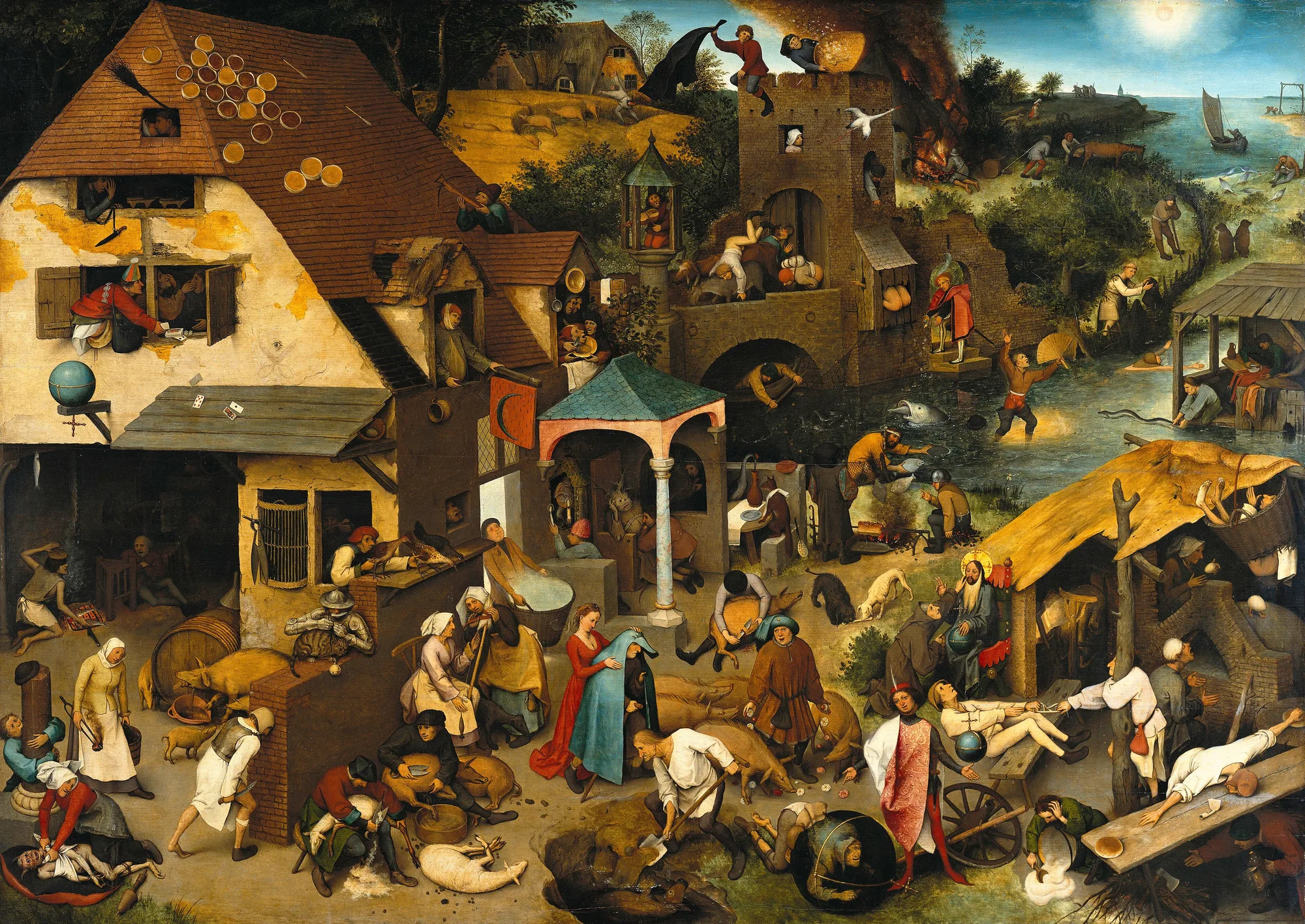
Story村の広場や家、川べりで、人びとがおかしなことばかりしています。屋根をパイでふく人、壁に頭を打ちつける人、ネコに鈴をつけようとする人。じつはその一つひとつが、当時のネーデルラント(今のオランダやベルギー)のことわざを、文字どおり絵にしたものです。見つかっていることわざは100をこえます。
In a village square, in houses and by a river, people are doing silly things. One person covers a roof with pies. Another bangs his head against a wall. Someone tries to tie a bell on a cat. Each of these acts shows a proverb from the Netherlands of that time, taken literally. Experts have found more than 100 proverbs.
多くのことわざは、人間のおろかさやむだな行いを笑うものです。題名は後からつけられたもので、昔は中央の女性が夫に青いマント(だまされた夫のしるし)を着せる場面から「青いマント」、または「世の中のおろかさ」とも呼ばれました。ブリューゲルは人間をきびしく、でもどこか愛情をもって見つめています。
Most of the proverbs laugh at human foolishness and wasted effort. The title was given later. People also called it 'The Blue Cloak', after the woman in the center who puts a blue cloak on her husband, a sign that he is being fooled. It was also called 'The Folly of the World'. Bruegel looks at people sharply, but also with some love.
この絵は大人気で、息子のピーテル・ブリューゲル(子)は十数点もの写しを描きました。今もいくつかのことわざは英語や日本語にも通じます。「壁に頭を打ちつける」「大きな魚が小さな魚を食べる」「ネコの首に鈴をつける」など、500年たっても人間の悩みは変わらないようです。
The picture was very popular. Bruegel's son, Pieter Brueghel the Younger, painted more than a dozen copies. Some of these proverbs still exist in English and Japanese, like 'to bang your head against a brick wall', 'big fish eat little fish' and 'to bell the cat'. After 500 years, people's problems seem much the same.
この村では、みんなが変なことをしています。ある男は屋根をパイでおおっています。別の男はネコに鈴をつけています。変な行動の一つひとつが、ことわざを表しています。この1枚の絵に、100以上のことわざがあるのです!
In this village, everyone does something strange. One man covers a roof with pies. Another man puts a bell on a cat. Each strange act shows a proverb. There are more than 100 proverbs in this one picture!
英語のレベルは上の「やさしい/ふつう」で切りかえられます。
えっ!?な裏ネタ
Secrets左の家の看板には、十字架が下を向いた地球儀がぶら下がっています。「世界がさかさま」、つまり世の中があべこべになっているという意味。この絵全体のテーマを表す看板です。
On the house at the left, a globe hangs as a sign, with its cross pointing down. It means 'the world is upside down', or everything is the wrong way round. This sign shows the theme of the whole painting.
左上の家の屋根には、丸いパイ(タルト)がずらりと並んでいます。「屋根がパイでふいてある」は、何でもありあまっているぜいたくな状態を表すことわざです。おいしそうですが、ほめ言葉ではありません。
On the roof at the top left, round tarts are lined up like tiles. 'The roof is covered with tarts' is a proverb about having too much of everything. It looks tasty, but it is not a compliment.
よろいを着た男がネコに鈴をつけようとしています。日本でもおなじみ「ネコの首に鈴をつける」(だれもやりたがらない危ない役)のこと。中世ヨーロッパの寓話から生まれ、のちにイソップ寓話集にも入れられた話で、英語でも to bell the cat と言います。
A man in armor tries to tie a bell on a cat. This is the same idea as the Japanese saying: a risky job nobody wants to do. It comes from a medieval fable that was later added to Aesop's fables. In English, we also say 'to bell the cat'.
息子のピーテル・ブリューゲル(子)は、父の人気作を工房でたくさん写して売りました。この絵の写しは十数点が知られています。ただし父が死んだとき息子はまだ幼く、父の絵や下絵を見て写したと考えられています。
Bruegel's son, Pieter Brueghel the Younger, made and sold many copies of his father's popular works. More than a dozen copies of this painting are known. The son was very young when his father died, so he probably copied from paintings and drawings.
ここを見て!
Look Closer1青いマントThe blue cloak
赤い服の妻が、夫に青いマントを着せています。「夫をだましている」という意味のことわざです。
A wife in red puts a blue cloak on her husband. The proverb means she is fooling him.
2パイの屋根The roof of tarts
屋根にずらりと並ぶパイ。ぜいたくすぎるくらしを表しています。
Tarts cover the roof. They show a life with too much of everything.
3さかさまの地球儀The upside-down globe
十字架が下を向いた地球儀。「世界がさかさま」の意味で、絵のテーマそのものです。
The globe's cross points down. It means 'the world is upside down', the theme of the painting.
4ネコに鈴をつける男Belling the cat
よろいで身を固めた男が、ネコに鈴をつけようとしています。「完全武装する」という別のことわざも重なっています。
A man in armor tries to tie a bell on a cat. Being 'armed to the teeth' is another proverb shown here.
英語で名画を語ろう
Talk about Art in EnglishThis painting is full of proverbs.
この絵はことわざでいっぱいです。
💡 人や物がぎっしりの絵に便利。The square is full of people.
英語で説明すると… Describe it
これは川のそばの村です。人でいっぱいで、みんな変なことをしています。左には、屋根にパイがのった家があります。真ん中では、女の人が男の人に青いマントを着せています。
This is a village by a river. It is full of people, and they are all doing strange things. On the left, there is a house with pies on the roof. In the center, a woman is putting a blue cloak on a man.
考えてみよう Think & Talk
- 絵の中で、いちばん好きなことわざはどれですか?どんな意味だと思いますか?Which proverb in the painting do you like best? What does it mean?
- 日本のことわざを絵にするなら、どれを選びますか?If you painted a Japanese proverb, which one would you choose?
この作品の英単語
WordsThis painting shows more than 100 proverbs.
この絵には100以上のことわざが描かれています。
Everyone in the village is doing something foolish.
村のみんなが何かばかげたことをしています。
The globe on the sign is upside down.
看板の地球儀はさかさまです。
Bruegel painted the proverbs literally.
ブリューゲルはことわざを文字どおりに描きました。
ミニクイズ
QuizQ. 左の家の看板の、さかさまの地球儀が表す意味は?What does the upside-down globe on the sign mean?
「世の中があべこべ」という意味で、絵全体のテーマです。
It means everything is the wrong way round. That is the theme of the whole painting.
ウソ?ホント? この絵には100以上のことわざが描かれていると考えられている。Experts think this painting shows more than 100 proverbs.
研究者によって数え方はちがいますが、100をこえるとされています。
Different experts count differently, but most say more than 100.
ウソ?ホント? 屋根のパイは「お金持ちでえらい」というほめ言葉のことわざだ。The tarts on the roof are a proverb praising a rich, great person.
何でもありあまる、ぜいたくすぎる様子をからかうことわざです。
It makes fun of having too much of everything.
 画像の出典とライセンス / Image credit
- PDPieter Brueghel the Elder - The Dutch Proverbs - Google Art Project.jpg(Wikimedia Commons)
ライセンス:Public domain(パブリックドメイン)/作者・撮影者の表記:Pieter Brueghel the Elder/提供元:Google Arts & Culture — WwG8mD89xbELbQ
この作品は、作者の死後長い年月がたち著作権の保護期間が終わった「パブリックドメイン」の作品です。画像は平面の作品を忠実に写したもので、新しい著作権は生じません(Wikimedia Commons の PD-Art の考え方)。 所蔵:ベルリン国立絵画館(Gemäldegalerie, Berlin)。画像は表示のために縮小・WebP 形式に変換しています。
ピーテル・ブリューゲル(父)のほかの作品