 ワークシート
 ぬりえ
 迷路
眠ったとたん、闇からフクロウとコウモリが!ゴヤの夢の版画。He falls asleep, and owls and bats fly out of the dark! Goya's dream print.
この作品のお話
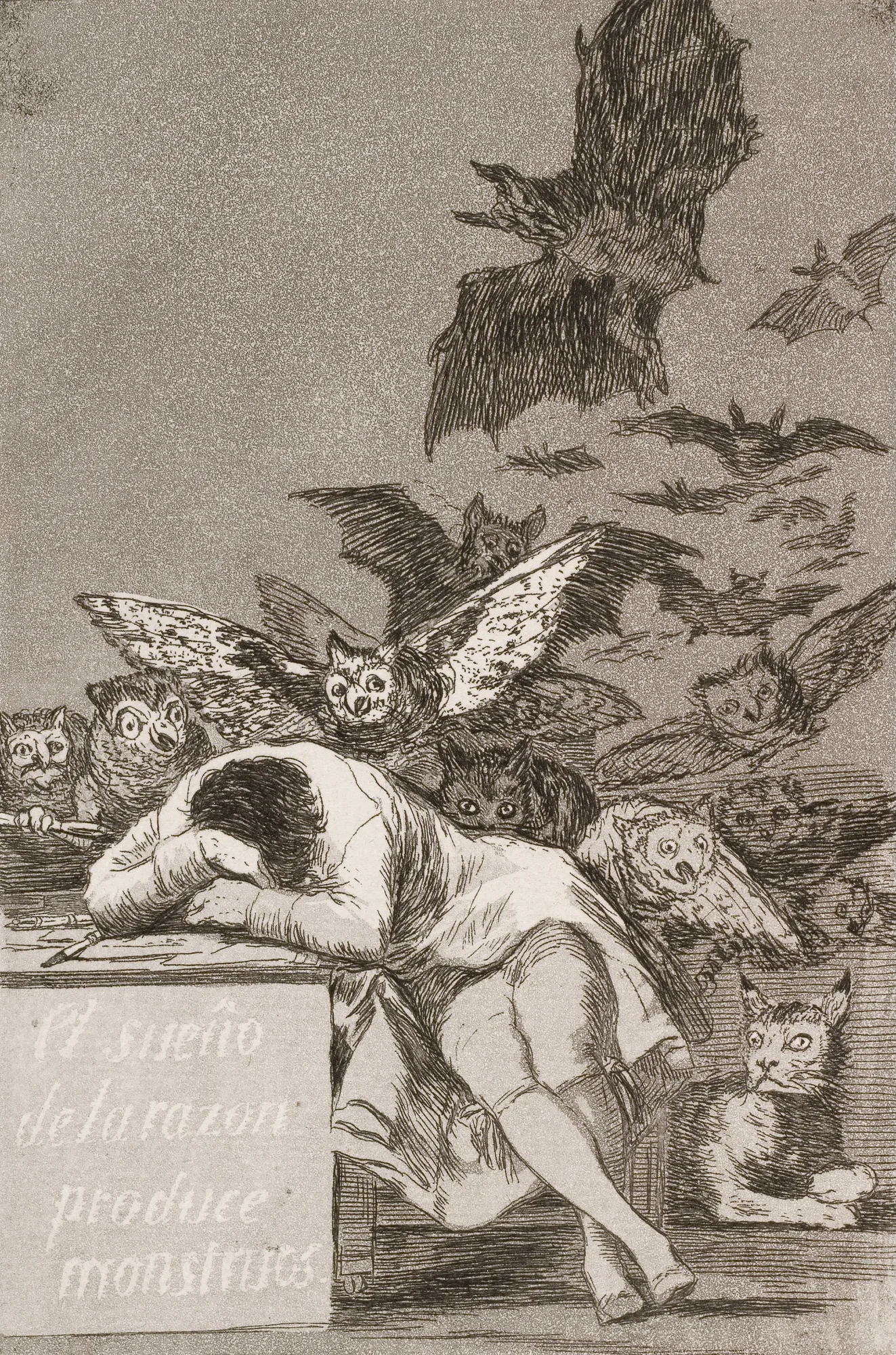
Story机につっぷして眠る男のまわりに、フクロウやコウモリが群がり、足もとでは大きなヤマネコがじっとこちらを見ています。ゴヤが1799年に出版した80枚の版画集『ロス・カプリチョス(気まぐれ)』の43番目の作品です。この画像は、アメリカのネルソン・アトキンズ美術館にある初版の一枚です。
A man sleeps with his head on a desk. Owls and bats crowd around him, and a big lynx at his feet stares at us. This is No. 43 of 'Los Caprichos', a set of 80 prints that Goya published in 1799. This image shows a first-edition copy in the Nelson-Atkins Museum of Art in the USA.
『ロス・カプリチョス』は、迷信やおろかな習慣、えらい人のずるさなどを、皮肉たっぷりに描いた版画集です。銅の板を薬品でとかして線を刻むエッチングと、細かな粒で灰色の濃淡を作るアクアチントという技法を組み合わせています。机の側面には「理性の眠りは怪物を生む」という言葉が刻まれています。
'Los Caprichos' makes fun of superstitions, foolish customs and powerful people who behave badly. Goya used etching, where acid cuts lines into a copper plate. He combined it with aquatint, which makes soft gray tones with tiny grains. On the side of the desk are the words 'The sleep of reason produces monsters'.
版画集は売り出されてまもなく販売が止められ、1803年、ゴヤは原版と売れ残りを国王にささげました。教会の取りしまり(異端審問)をおそれたためともいわれます。それでもこの一枚は、人の心の闇や想像力を描いた先がけとして、後の画家や作家たちに大きな影響を与えました。
Sales of the prints stopped soon after they went on sale. In 1803, Goya gave the copper plates and unsold copies to the king. Some say he was afraid of the Inquisition, the church's strict court. Still, this print became an early image of the dark side of the mind and imagination. It inspired many later artists and writers.
男の人が机で眠っています。まわりをフクロウとコウモリが飛んでいます。大きなネコがこちらを見ています。ゴヤが1799年に作った版画です。文字は「理性が眠ると怪物がやってくる」という意味です。
A man is sleeping at his desk. Owls and bats fly around him. A big cat looks at us. Goya made this print in 1799. The words say: when reason sleeps, monsters come.
英語のレベルは上の「やさしい/ふつう」で切りかえられます。
えっ!?な裏ネタ
Secretsスペイン語の sueño(スエニョ)は「眠り」と「夢」の両方の意味。だから題は「理性が眠ると怪物が生まれる」とも「理性の見る夢が怪物を生む」とも読めます。英語に sleep と dream の二通りの訳があるのはそのためです。
In Spanish, 'sueño' means both 'sleep' and 'dream'. So the title can mean 'When reason sleeps, monsters are born' or 'The dream of reason produces monsters'. That is why English has two translations, with 'sleep' or 'dream'.
左はしの一羽のフクロウが、眠る男に、チョークをはさんで使う画材ホルダーを差し出しています。「起きて描け」とうながしているようにも見え、眠る男はゴヤ自身だとする説もあります。
At the far left, one owl holds out a crayon holder, a tool for drawing, to the sleeping man. It seems to say, 'Wake up and draw!' Some people think the sleeping man is Goya himself.
ゴヤの解説文が残っていて、「理性に見捨てられた想像力は、ありえない怪物を生む。だが理性と結びつけば、芸術の母になる」という意味のことが書かれています。想像力そのものを否定したわけではないのです。
An explanation by Goya survives. It says that imagination without reason creates impossible monsters, but imagination united with reason is the mother of the arts. So he did not say imagination was bad.
作りはじめたころ、この絵は版画集の最初のページをかざる予定だったといわれます。実際には、ゴヤの横顔の自画像が1番になり、この絵は版画集のちょうどまん中あたりの43番目に置かれました。
At first, this image is said to have been planned as the opening picture of the set. In the end, Goya's self-portrait in profile became No. 1, and this print was placed near the middle of the set, as No. 43.
ここを見て!
Look Closer1眠る男The sleeping man
腕に顔をうずめて眠りこむ男。ゴヤ自身だという説もあります。
A man sleeps with his face buried in his arms. Some say it is Goya himself.
2机の文字Words on the desk
「El sueño de la razón produce monstruos(理性の眠りは怪物を生む)」と書かれています。
It says 'El sueño de la razón produce monstruos': The sleep of reason produces monsters.
3画材を差し出すフクロウOwl with a drawing tool
左はしのフクロウが、チョークをはさむ細い画材ホルダーを男に差し出しています。
An owl at the far left holds out a slender crayon holder to the man.
4ヤマネコLynx
とがった耳のヤマネコ。暗やみでも見える鋭い目で、じっとこちらをにらんでいます。
A lynx with pointed ears. With sharp eyes that see in the dark, it stares right at us.
英語で名画を語ろう
Talk about Art in EnglishThe man has fallen asleep at his desk.
男は机で眠りこんでしまいました。
💡 fall asleep は「眠りに落ちる」。be asleep(眠っている)との違いに注意。
英語で説明すると… Describe it
男の人が机で眠っています。頭を腕の上にのせています。その後ろでは、たくさんのフクロウやコウモリが暗やみを飛んでいます。右では大きなネコがすわって、こちらを見ています。机の側面には文字が書かれています。
A man is sleeping at a desk. His head is on his arms. Behind him, many owls and bats are flying in the dark. On the right, a big cat is sitting and looking at us. There are words on the side of the desk.
考えてみよう Think & Talk
- わたしたちがよく考えるのをやめたとき、どんな「怪物」が出てくると思いますか?What kind of 'monsters' come out when we stop thinking clearly?
- 想像力はよいもの?悪いもの?その両方ということもあるでしょうか?Is imagination good or bad? Can it be both?
この作品の英単語
WordsWhen reason sleeps, monsters appear.
理性が眠ると、怪物があらわれます。
Goya drew owls and bats as monsters.
ゴヤはフクロウやコウモリを怪物として描きました。
His dreams are full of wild animals.
彼の夢は野生の動物でいっぱいです。
Bats appear out of the dark.
コウモリが暗やみからあらわれます。
ミニクイズ
QuizQ. スペイン語の sueño(スエニョ)には、どんな2つの意味がある?What two meanings does the Spanish word 'sueño' have?
sueño は「眠り」と「夢」の両方の意味。だから題の訳も2通りあります。
'Sueño' means both 'sleep' and 'dream', so the title has two translations.
ウソ?ホント? この作品は油絵ではなく版画である。This work is a print, not an oil painting.
エッチングとアクアチントを組み合わせた版画です。
It is a print made with etching and aquatint.
ウソ?ホント? ゴヤはこの版画集を何万部も売って大もうけした。Goya sold tens of thousands of copies and became rich.
まもなく販売が止められ、売れ残りは原版とともに国王にささげられました。
Sales soon stopped, and the unsold copies were given to the king with the plates.
 画像の出典とライセンス / Image credit
- PDFrancisco José de Goya y Lucientes - The sleep of reason produces monsters (No. 43), from Los Caprichos - Google Art Project.jpg(Wikimedia Commons)
ライセンス:Public domain(パブリックドメイン)/作者・撮影者の表記:Francisco Goya
この作品は、作者の死後長い年月がたち著作権の保護期間が終わった「パブリックドメイン」の作品です。画像は平面の作品を忠実に写したもので、新しい著作権は生じません(Wikimedia Commons の PD-Art の考え方)。 所蔵:ネルソン・アトキンズ美術館(The Nelson-Atkins Museum of Art)。画像は表示のために縮小・WebP 形式に変換しています。
フランシスコ・デ・ゴヤのほかの作品