 ワークシート
 ぬりえ
 迷路
若いゴヤの明るい夏の一枚。じつは壁かけ織物の「下絵」でした!A bright summer scene by young Goya. It was really a design for a woven wall hanging!
この作品のお話
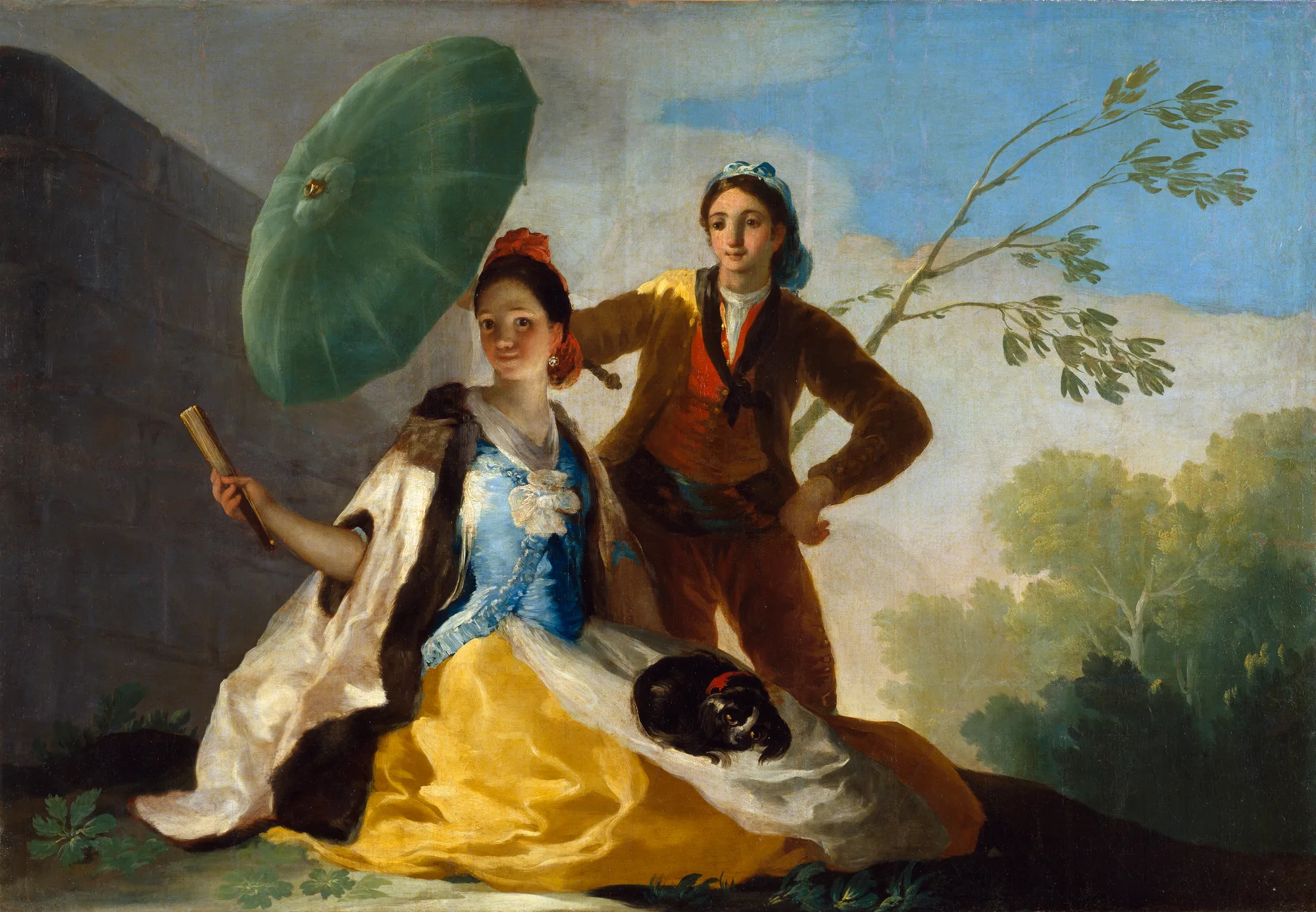
Story草の上に座る若い女性が、ほほえんでこちらを見ています。ひざには小さな黒い犬。うしろに立つ若者は、緑の日傘をさしかけて、強い日ざしをさえぎっています。描いたのは、のちにスペインの宮廷画家になるゴヤ。1777年、31歳のころの作品で、今はマドリードのプラド美術館にあります。
A young woman sits on the grass and smiles at us. A small black dog is on her lap. A young man stands behind her and holds a green parasol to block the strong sun. The painter was Goya, who later became a painter to the Spanish court. He made this in 1777, at about 31. It is now in the Prado Museum in Madrid.
この絵は、王立タペストリー工場で織る壁かけ(タペストリー)のための下絵(カルトン)です。注文主は、のちの国王カルロス4世となるアストゥリアス公夫妻。マドリード郊外のエル・パルド宮殿の食堂を飾るシリーズの一枚で、ゴヤは『酒を飲む男』とこの絵を対にして、1777年8月に納めました。織り職人が写しやすいよう、形と色がくっきり描かれています。
This painting is a cartoon, a full-size design for a tapestry woven at the Royal Tapestry Factory. It was ordered for the Prince and Princess of Asturias, the future King Charles IV and his wife. It belonged to a series for the dining room of the El Pardo Palace near Madrid. Goya delivered it with its partner, "The Drinker", in August 1777. Its clear shapes and colors made it easy for weavers to copy.
タペストリーは宮殿の壁の高い位置に飾られる予定だったため、ゴヤは見上げても美しく見えるよう、低い位置から見上げる角度で人物を描いたと考えられています。下絵そのものは長いあいだしまわれていましたが、1870年にプラド美術館へ移されました。今では、ゴヤの明るい「青春時代」を代表する一枚として愛されています。
The tapestry was planned to hang high on a wall in the palace. So Goya probably painted the figures from a low angle to look good from below. The cartoon itself was stored away for a long time, but it was moved to the Prado in 1870. Today it is loved as a symbol of Goya's bright, youthful years.
若い女性が草の上に座っています。ひざには小さな黒い犬。若い男性が緑の日傘を持っています。晴れた日です。この絵は、壁にかける大きな織物の下絵でした。
A young woman sits on the grass. A little black dog is on her lap. A young man holds a green parasol. It is a sunny day. This picture was a plan for a big cloth on a wall.
英語のレベルは上の「やさしい/ふつう」で切りかえられます。
えっ!?な裏ネタ
Secretsゴヤは若いころ、王立タペストリー工場のために60点以上の下絵を描いたとされます。下絵は、職人が糸で写すための「設計図」で、当時は作品というより道具のあつかいでした。それが今では、プラド美術館で多くの人が足を止める人気の作品になっています。
When he was young, Goya is said to have painted more than 60 cartoons for the Royal Tapestry Factory. A cartoon was a blueprint for weavers to copy in thread, and it was treated more like a tool than an artwork. Today these cartoons are popular works that make many visitors stop at the Prado.
女性の顔をよく見ると、ほおやあごがほんのり緑がかって見えます。緑の日傘の布を通った光や照り返しが、肌にうつっているのです。光が色をもって物にうつるようすを、ゴヤは印象派よりずっと前にさりげなく描いていました。
Look closely at the woman's face. Her cheeks and chin look slightly green. Light passing through and bouncing off the green parasol falls on her skin. Goya quietly painted colored light like this long before the Impressionists.
座る女性と、日傘をさしかける男性という組み合わせは、当時スペインの宮廷で好まれたフランス風の優雅な絵に似ているといわれます。人物をピラミッド形にまとめる構図も、伝統的な絵画から学んだものと考えられています。若いゴヤが流行の様式を吸収していたことがわかります。
A seated woman with a man holding a parasol over her is said to resemble the elegant French-style paintings popular at the Spanish court then. The pyramid-shaped group is also thought to come from traditional painting. It shows how young Goya learned from the fashionable styles of his time.
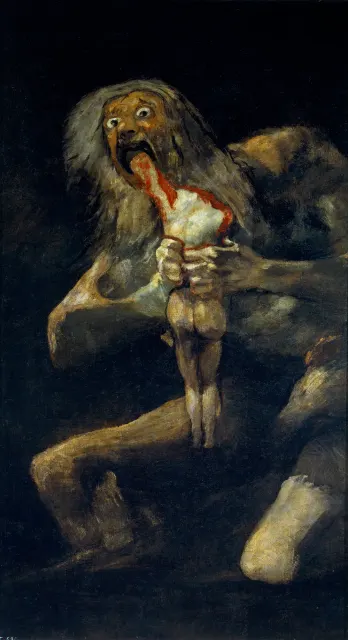
この絵から約15年後の1792年末、ゴヤは重い病気のあと、耳が聞こえなくなりました。晩年には自分の家の壁に『我が子を食らうサトゥルヌス』などの暗い「黒い絵」を描きます。同じ画家とは思えないほど、この日傘の絵とは正反対の世界です。
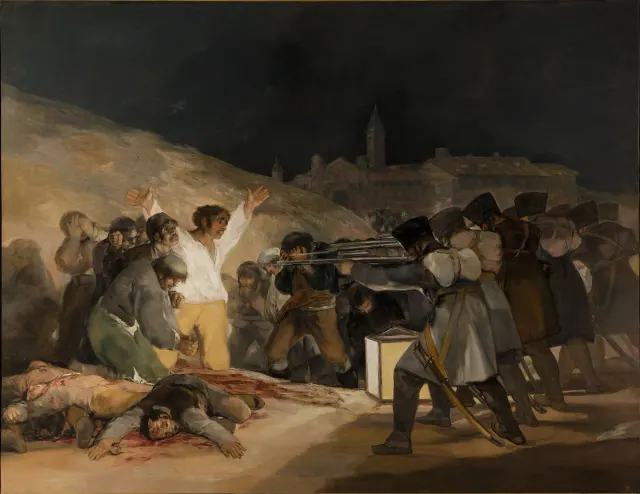
About 15 years after this picture, at the end of 1792, Goya became deaf after a serious illness. In his old age he painted dark "Black Paintings", such as "Saturn", on the walls of his house. It is hard to believe they are by the same painter as this sunny picture.
ここを見て!
Look Closer1緑の日傘Green parasol
若者がさしかける大きな緑の日傘。この絵の題名にもなっています。
The big green parasol held by the young man. It gives the painting its title.
2緑がかった顔A greenish face
日傘の下の顔は、ほんのり緑色をおびています。日傘を通った光の色です。
Her face under the parasol is slightly green. It is the color of light coming through the parasol.
3ひざの子犬Little dog
女性のひざの上で丸くなる小さな黒い犬。赤いリボンをつけているようです。
A small black dog curls up on the woman's lap. It seems to wear a red ribbon.
4たたんだ扇Folded fan
右手に持った、たたんだ扇。当時のおしゃれな女性に欠かせない小物でした。
A folded fan in her right hand. It was a must-have item for fashionable women at the time.
英語で名画を語ろう
Talk about Art in EnglishThe young man holds a green parasol over the woman.
若い男性は、女性の上に緑の日傘をかざしています。
💡 hold an umbrella over her で「彼女に傘をさしかける」。やさしい動作を表すのに便利です。
英語で説明すると… Describe it
これは晴れた日の野外の場面です。手前では、若い女性がひざに小さな犬をのせて草の上に座っています。そのうしろで、若い男性が緑の日傘を持っています。右側には木々と青い空があります。
This is an outdoor scene on a sunny day. In the foreground, a young woman is sitting on the grass with a small dog on her lap. Behind her, a young man is holding a green parasol. On the right, there are trees and a blue sky.
考えてみよう Think & Talk
- 女性はなぜこちらにほほえんでいるのだと思いますか?Why do you think the woman is smiling at us?
- この絵は食堂のために作られました。食堂にぴったりの絵だと思いますか?それはなぜ?This was made for a dining room. Is it a good picture for a dining room? Why?
この作品の英単語
WordsHe holds a parasol to block the sun.
彼は日ざしをさえぎるため日傘を持っています。
This painting was a design for a tapestry.
この絵はタペストリーのための下絵でした。
A little dog is sitting on her lap.
小さな犬が彼女のひざに座っています。
It is a cheerful summer scene.
明るい夏の場面です。
ミニクイズ
QuizQ. この絵はもともと何のための下絵だった?What was this painting originally a design for?
王立タペストリー工場で織る壁かけの、実物大の下絵(カルトン)でした。
It was a full-size design for a tapestry woven at the Royal Tapestry Factory.
ウソ?ホント? この絵は、宮殿の食堂を飾るタペストリーのために描かれた。This painting was made for a tapestry to decorate a palace dining room.
エル・パルド宮殿の食堂を飾るシリーズの一枚でした。
It was part of a series for the dining room of the El Pardo Palace.
ウソ?ホント? 日傘をさしているのは、座っている女性自身だ。The seated woman is holding the parasol herself.
うしろに立つ若い男性が、日傘をさしかけています。
The young man standing behind her holds it.
 画像の出典とライセンス / Image credit
- PDEl Quitasol (Goya).jpg(Wikimedia Commons)
ライセンス:Public domain(パブリックドメイン)/作者・撮影者の表記:Francisco Goya
この作品は、作者の死後長い年月がたち著作権の保護期間が終わった「パブリックドメイン」の作品です。画像は平面の作品を忠実に写したもので、新しい著作権は生じません(Wikimedia Commons の PD-Art の考え方)。 所蔵:プラド美術館(Museo del Prado)。画像は表示のために縮小・WebP 形式に変換しています。
フランシスコ・デ・ゴヤのほかの作品