 ワークシート
 ぬりえ
 迷路
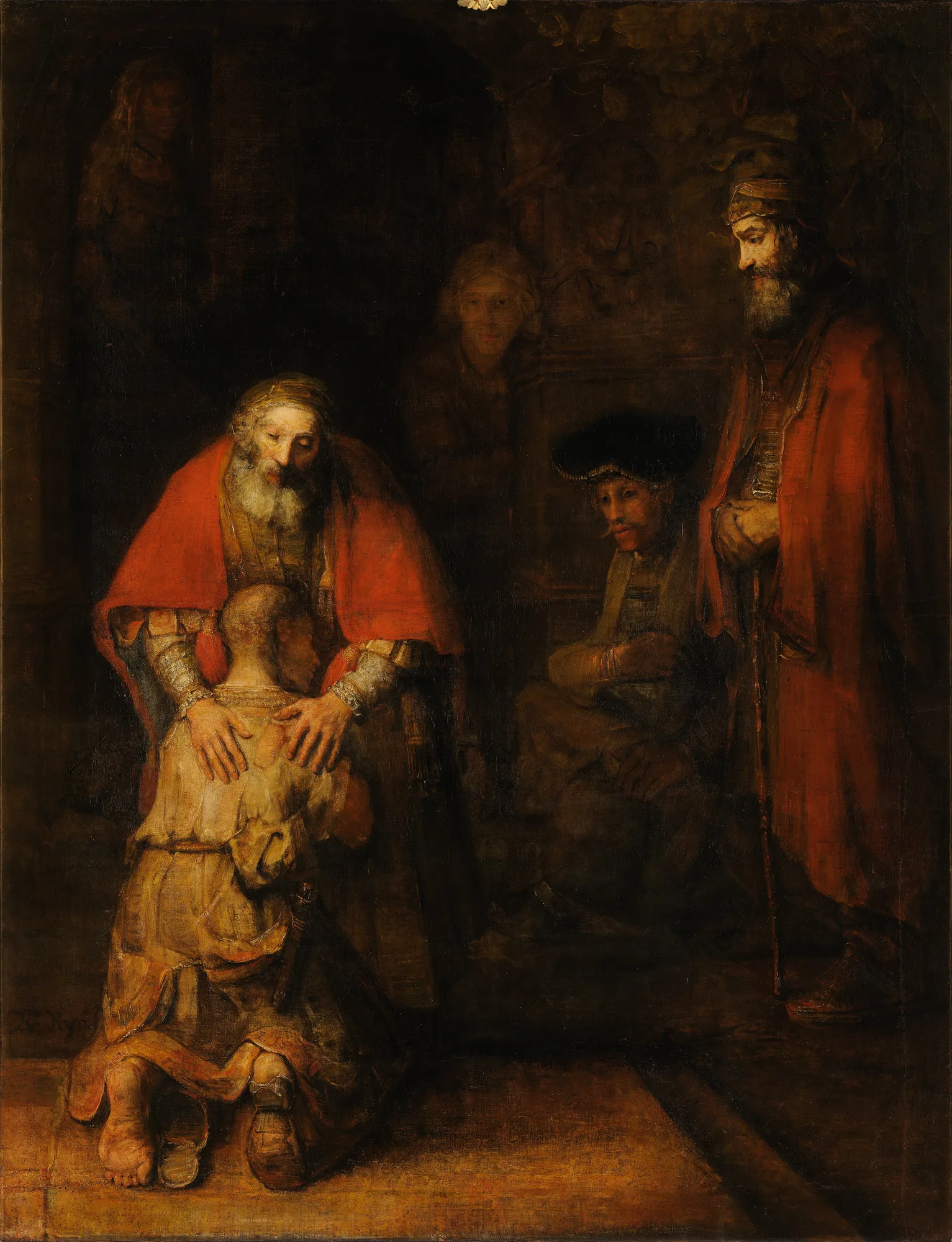
ぼろぼろで帰ってきた息子を、父が抱きしめる。父の両手に秘密が!A father hugs his ragged son. Look closely at his two hands!
この作品のお話
Story「放蕩息子の帰還」は、聖書の「放蕩息子のたとえ話」を描いた、レンブラント最晩年の大作です。弟息子は父から財産を分けてもらい、家を出て遊びくらしました。お金を使いはたし、ぼろぼろの姿で帰ってきた息子を、年老いた父親がやさしく抱きしめています。高さ2.6メートルもある大きな絵です。
The Return of the Prodigal Son is one of Rembrandt's last great paintings. It tells a parable, or teaching story, from the Bible. A younger son takes his share of his father's money, leaves home and wastes it all. Now he comes back poor and in rags. His old father gently holds him. The painting is 2.6 meters tall.
レンブラントはこのお話を、若いころから版画や素描、油絵で何度も描いてきました。30歳のころの版画は動きのある場面でしたが、晩年のこの絵はとても静かです。右には、両手を前で組んで立つ兄が、父と弟を少し離れたところから見つめています。家族を次々と失ったレンブラント自身の人生が重なる、と感じる人も多い作品です。
Rembrandt drew, etched and painted this story many times, starting when he was young. His etching from 1636 is full of movement, but this late painting is very quiet. On the right, the older brother stands with his hands folded. He watches his father and brother from a distance. Many people feel that Rembrandt's own life, after losing so many loved ones, is part of this picture.
この絵は1766年、ロシアの女帝エカチェリーナ2世のコレクションに加わり、今もサンクトペテルブルクのエルミタージュ美術館にあります。美術史家ケネス・クラークは「これまでに描かれた最も偉大な絵かもしれない」と書きました。今も多くの人が、この絵の前で長い時間立ちつくします。
In 1766, the painting joined the collection of Catherine the Great of Russia. It is still in the Hermitage Museum in Saint Petersburg. The art historian Kenneth Clark wrote that it might be 'the greatest picture ever painted'. Even today, many visitors stand in front of it for a long time.
若い息子が家を出て、お金をぜんぶ使ってしまいました。いま彼は、まずしく疲れはてて帰ってきました。年老いた父が彼を抱きしめます。父の両手を見てください。片方は力強く、もう片方はやわらかそうです!
A young son left home and spent all his money. Now he is back, poor and tired. His old father hugs him. Look at the father's hands. One looks strong, and one looks soft!
英語のレベルは上の「やさしい/ふつう」で切りかえられます。
えっ!?な裏ネタ
Secrets息子の背中に置かれた父の両手をよく見ると、片方は大きくて力強い男性的な手、もう片方はほっそりとやわらかい手に描かれています。父と母、両方の愛を表しているのでは、と考える人もいます。
Look closely at the father's hands on his son's back. One is large and strong, like a man's. The other is softer and thinner. Some people think the hands show both a father's and a mother's love.
ひざまずく息子の片足は、くつがぬげて足のうらが丸見え。もう片方のくつもぼろぼろです。頭は短く刈られ、服もやぶれています。ほんの小さな部分で、長くつらい旅をしてきたことを伝えているのです。
One of the kneeling son's shoes has fallen off, showing the bottom of his foot. The other shoe is worn out. His hair is cut short and his clothes are torn. These small details tell us about his long, hard journey.
オランダ出身の神父ヘンリ・ナウエンは1986年、エルミタージュでこの絵の前に何時間もすわりこみました。その体験から書いた本『放蕩息子の帰郷』(1992年)は、世界中で読まれるロングセラーになりました。
In 1986, the Dutch priest Henri Nouwen sat in front of this painting for hours at the Hermitage. He wrote a book about the experience, The Return of the Prodigal Son (1992). It has been read around the world.
目をこらすと、暗い背景にも人がいます。左上にうっすら見える女性は、母親ではないかと考えられています。中央奥にも人の顔があり、すわっている男性はお金持ちらしい服装をしています。
If you look carefully, there are people in the dark background. A woman, barely visible at the top left, may be the mother. There is another face in the middle, and a seated man is dressed like a rich person.
ここを見て!
Look Closer1父の両手The father's hands
左右で形のちがう2つの手。息子の背中をそっと包みこんでいます。
Two hands with different shapes gently hold the son's back.
2ぬげたくつThe lost shoe
片方のくつがぬげ、足のうらが見えています。旅の苦労が伝わります。
One shoe has come off, and we see the bottom of his foot. It shows how hard his journey was.
3兄The older brother
右に立つ兄。弟を迎える父を、少し離れたところから見ています。
The older brother stands on the right. He watches from a distance as his father welcomes his brother home.
英語で名画を語ろう
Talk about Art in EnglishThe young man is kneeling in front of his father.
若者は父の前にひざまずいています。
💡 kneel の k は読まない(ニール)。knee(ひざ)、knife も同じ仲間です。
英語で説明すると… Describe it
この絵は暗いですが、左側にあたたかい光があります。左では、赤いマントの老人が若者を抱きしめています。若者はひざまずき、服はやぶれています。右では、背の高い男性が二人を見ています。
This painting is dark, but there is a warm light on the left. On the left, an old man in a red cloak is hugging a young man. The young man is kneeling, and his clothes are torn. On the right, a tall man is watching them.
考えてみよう Think & Talk
- 右に立つ兄は、どんな気持ちだと思いますか?What do you think the older brother on the right is feeling?
- レンブラントはなぜ、このお話を一生のあいだに何度も描いたのだと思いますか?Why do you think Rembrandt painted this story again and again in his life?
この作品の英単語
WordsThe father forgives his son.
父は息子を許します。
Jesus told this parable to teach about love.
イエスは愛について教えるため、このたとえ話をしました。
The son comes home in ragged clothes.
息子はぼろぼろの服で家に帰ってきます。
The father gently puts his hands on his son's back.
父はやさしく息子の背中に手を置きます。
ミニクイズ
QuizQ. 右に立っている男性はだれ?Who is the man standing on the right?
家に残ってまじめに働いていた兄です。父が帰ってきた弟を迎える様子を、少し離れたところから見ています。
It is the older brother, who stayed home and worked hard. He watches from a distance as his father welcomes his younger brother back.
ウソ?ホント? ひざまずく息子の片足は、くつがぬげている。One of the kneeling son's shoes has come off.
足のうらが見えていて、長い旅の苦労を物語っています。
We can see the bottom of his foot. It tells us about his long journey.
ウソ?ホント? この絵は、レンブラントが20代のころに描いた最初の大作だ。Rembrandt painted this as his first big work in his twenties.
最晩年の作品です。亡くなる少し前に描かれたと考えられています。
It is one of his last works, painted shortly before he died.
 画像の出典とライセンス / Image credit
- PDRembrandt Harmensz van Rijn - Return of the Prodigal Son - Google Art Project.jpg(Wikimedia Commons)
ライセンス:Public domain(パブリックドメイン)/作者・撮影者の表記:Rembrandt/提供元:Google Arts & Culture — 5QFIEhic3owZ-A
この作品は、作者の死後長い年月がたち著作権の保護期間が終わった「パブリックドメイン」の作品です。画像は平面の作品を忠実に写したもので、新しい著作権は生じません(Wikimedia Commons の PD-Art の考え方)。 所蔵:エルミタージュ美術館(State Hermitage Museum)。画像は表示のために縮小・WebP 形式に変換しています。
レンブラント・ファン・レインのほかの作品