 ワークシート
 ぬりえ
 迷路
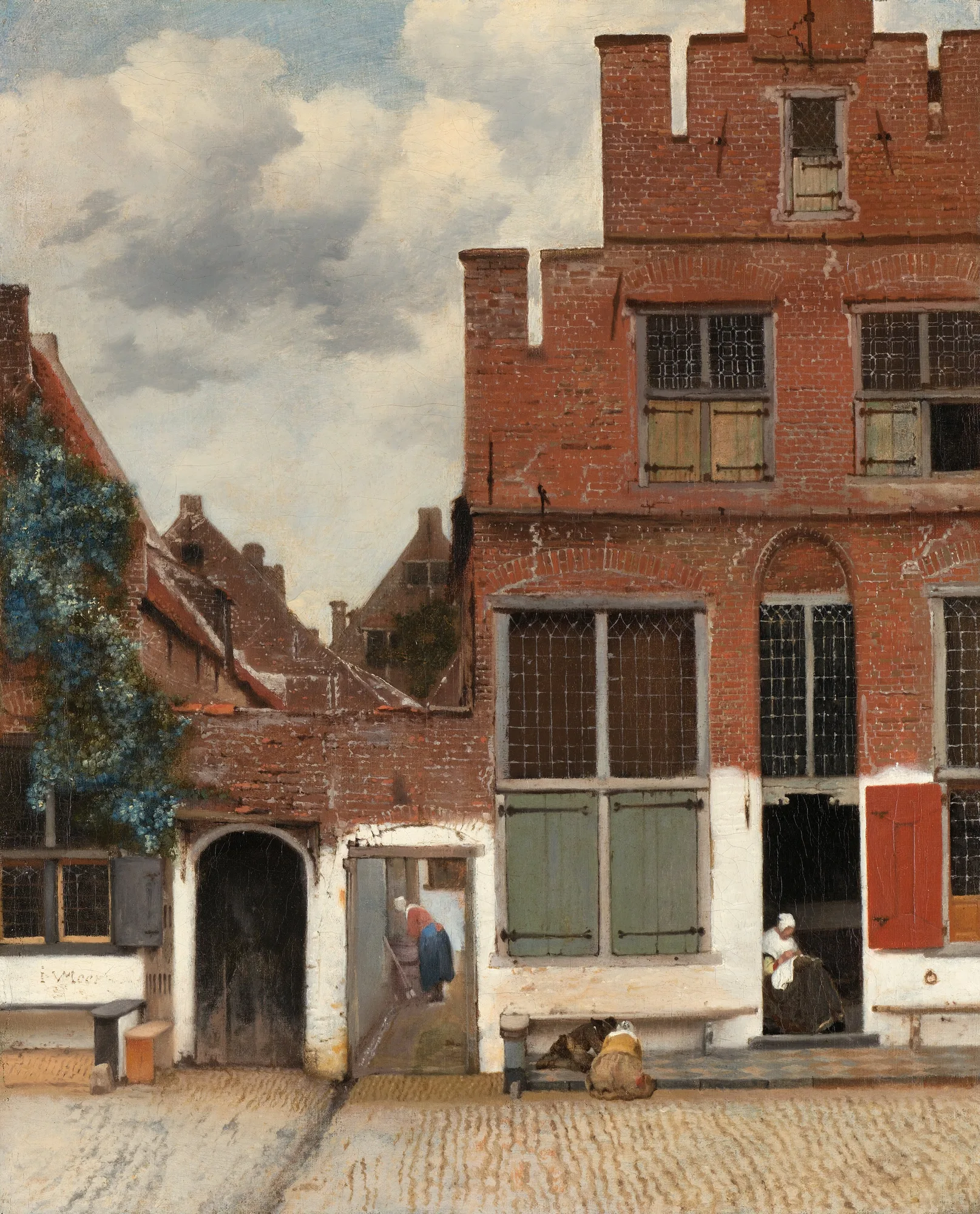
何でもない裏通り。フェルメールのおばが住んだ家という説も!An ordinary little street... possibly where Vermeer's aunt lived!
この作品のお話
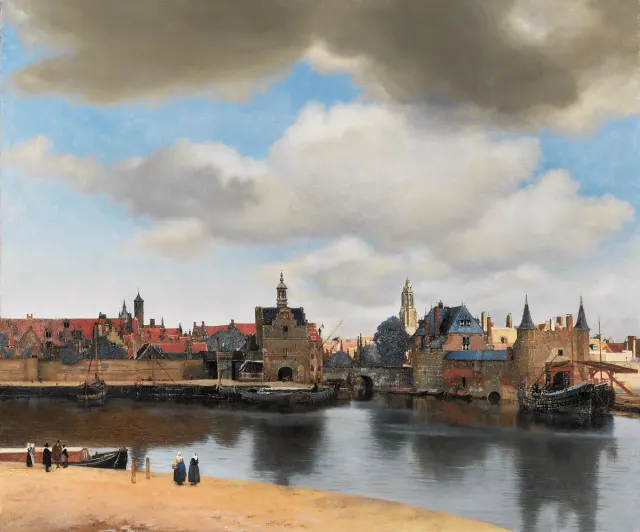
Storyオランダの町デルフトの、レンガの家と小さな通路を描いた絵です。戸口では女性が縫い物をし、道ばたでは子どもが二人遊び、奥の通路ではもう一人の女性が家事をしています。特別なことは何も起きない、ふつうの日の一場面です。フェルメールが描いた町の風景は、この絵と『デルフトの眺望』の2点しか残っていません。
This painting shows a brick house and narrow passages in the Dutch town of Delft. A woman sews in the doorway. Two children play on the street. In a passage, another woman is doing housework. Nothing special happens. It is just an ordinary day. Only two town views by Vermeer survive: this one and "View of Delft."
フェルメールは、レンガや白い壁、石だたみの部分に絵の具を厚めにのせ、手でさわれそうな質感を出しました。空には、宝石ラピスラズリから作る高価な青「ウルトラマリン」が使われています。よろい戸や葉っぱの緑は、青い絵の具と黄色い絵の具をまぜて作られました。小さな絵ですが、すみずみまで計算されています。
Vermeer used thicker paint for the bricks, white walls and paving stones, so they look almost touchable. In the sky, he used ultramarine, an expensive blue made from the stone lapis lazuli. The green of the shutters and leaves is a mix of blue and yellow paints. It is a small picture, but every part is carefully planned.
長いあいだ、この通りがどこなのかは謎でした。2015年、美術史家フランス・フレイゼンハウトが運河の使用料の古い記録を調べ、場所はフラミング通り40・42番地だという説を発表しました。この説では、右の家にはフェルメールのおばが住み、運河の向かいには母と姉も住んでいました。ただし、異論を唱える研究者もいます。絵は今、アムステルダム国立美術館にあります。
For a long time, nobody knew where this street was. In 2015, the art historian Frans Grijzenhout studied old records of canal fees. He proposed that the place was Vlamingstraat 40 and 42. According to this idea, Vermeer's aunt lived in the house on the right, and his mother and sister lived across the canal. Some scholars disagree, however. Today the painting is in the Rijksmuseum.
これはデルフトの静かな通りです。女の人が戸口に座って縫い物をしています。二人の子どもが道で遊んでいます。2015年、ある研究者が「この家にはフェルメールのおばさんが住んでいた」と発表しました。ちがう意見の専門家もいます。
This is a quiet street in Delft. A woman sits at the door and sews. Two children play on the street. In 2015, a scholar said that Vermeer's aunt lived in this house. Some experts do not agree.
英語のレベルは上の「やさしい/ふつう」で切りかえられます。
えっ!?な裏ネタ
Secrets2015年に発表された場所の説が正しければ、右の家にはフェルメールのおば、アリアーンチェ・クラース・ファン・デル・ミンネが住んでいました。彼女は牛の胃袋(モツ)を売る商売をしていました。左の通路はモツを洗った水を運河へ流す道で、「モツ門(ペンスポールト)」と呼ばれていたといいます。
If the location proposed in 2015 is correct, Vermeer's aunt, Ariaentgen Claes van der Minne, lived in the house on the right. She sold tripe, the stomach of cows. The passage on the left carried the water from washing tripe to the canal. People called it the "Tripe Gate."
左下の窓の下の白い壁に、小さく「I V MEER」と書かれています。フェルメールのサインです。フェルメールはサインのない絵も多いので、見つけるとちょっとうれしいポイントです。
On the white wall under the window at the lower left, you can find the small letters "I V MEER." It is Vermeer's signature. Many of his paintings have no signature, so it is fun to find this one.
1696年のオークションの記録には、フェルメールの町の風景が3点のっています。『デルフトの眺望』とこの『小路』、そして「デルフトの家」を描いた1点です。3枚目は今も行方不明。どこかの家の壁にかかっているかもしれません。
A sale record from 1696 lists three town views by Vermeer: "View of Delft," this one, and a picture of a house in Delft. The third one is still missing. Maybe it is hanging on someone's wall today!
絵の家はその後建てかえられ、今は残っていません。2015年の説では、1660年代の記録にある家と二つの通路の幅が大きな手がかりになりました。ただし、後の時代の地図と合わない点を指摘する研究者もいて、場所の特定には議論が残っています。
The houses in the painting were later replaced. The 2015 proposal relied mainly on the widths of the houses and two passages recorded in the 1660s. But other scholars point out problems with later maps, so the question is still debated.
ここを見て!
Look Closer1サインSignature
白い壁に小さく「I V MEER」。フェルメールのサインです。
The small letters "I V MEER" on the white wall are Vermeer's signature.
2通路の女性Woman in the passage
奥の通路で、樽のそばにかがんで家事をする女性。ここが「モツ門」と呼ばれた通路です。
A woman bends over a barrel in the passage. This is the passage called the "Tripe Gate."
3縫い物をする女性Woman sewing
戸口に座って静かに縫い物をする女性。フェルメールらしい、おだやかな日常の姿です。
A woman sits in the doorway and sews quietly. It is a calm, everyday scene, typical of Vermeer.
英語で名画を語ろう
Talk about Art in EnglishA woman is sitting in the doorway, sewing quietly.
女性が戸口に座って、静かに縫い物をしています。
💡 door は「とびら」、doorway は「出入り口の空間」。人がいる場所は in the doorway です。
英語で説明すると… Describe it
右側には、背の高い赤レンガの家があります。女性が戸口に座っています。左側にはせまい通路があり、もう一人の女性がそこで働いています。手前では、二人の子どもが道で遊んでいます。
On the right, there is a tall red brick house. A woman is sitting in the doorway. On the left, there is a narrow passage, and another woman is working there. In the foreground, two children are playing on the street.
考えてみよう Think & Talk
- フェルメールはなぜ、有名な建物ではなく、ふつうの通りを描いたのだと思いますか?Why do you think Vermeer painted an ordinary street, not a famous building?
- この通りでは、どんな音が聞こえてくると思いますか?What sounds do you imagine you can hear on this street?
この作品の英単語
WordsA woman is working in the narrow passage.
女性がせまい通路で働いています。
Vermeer painted an ordinary street in Delft.
フェルメールはデルフトのふつうの通りを描きました。
The woman sews in the doorway.
女性は戸口で縫い物をしています。
The house is made of red bricks.
その家は赤いレンガでできています。
ミニクイズ
QuizQ. 2015年に発表された説では、右の家に住んでいたのはだれ?According to the idea proposed in 2015, who lived in the house on the right?
その説では、牛の胃袋(モツ)を売っていたフェルメールのおばが住んでいました。
According to that idea, Vermeer's aunt, who sold tripe, lived there.
ウソ?ホント? フェルメールが描いた町の風景画は、今もたくさん残っている。Many town views by Vermeer survive today.
残っているのは、この絵と『デルフトの眺望』の2点だけです。
Only two survive: this one and "View of Delft."
ウソ?ホント? 2015年、この絵の場所についての新しい説が発表された。In 2015, a new idea about the place in this painting was announced.
運河の使用料の記録から、フラミング通り40・42番地だという説が出されました。ただし異論もあります。
Using old records of canal fees, a scholar proposed Vlamingstraat 40 and 42. Not everyone agrees.
 画像の出典とライセンス / Image credit
- PDJohannes Vermeer - Gezicht op huizen in Delft, bekend als 'Het straatje' - Google Art Project.jpg(Wikimedia Commons)
ライセンス:Public domain(パブリックドメイン)/作者・撮影者の表記:Johannes Vermeer/提供元:Google Arts & Culture — YAGJRuPz8yVuRQ
この作品は、作者の死後長い年月がたち著作権の保護期間が終わった「パブリックドメイン」の作品です。画像は平面の作品を忠実に写したもので、新しい著作権は生じません(Wikimedia Commons の PD-Art の考え方)。 所蔵:アムステルダム国立美術館(Rijksmuseum)。画像は表示のために縮小・WebP 形式に変換しています。
ヨハネス・フェルメールのほかの作品