 ワークシート
 ぬりえ
 迷路
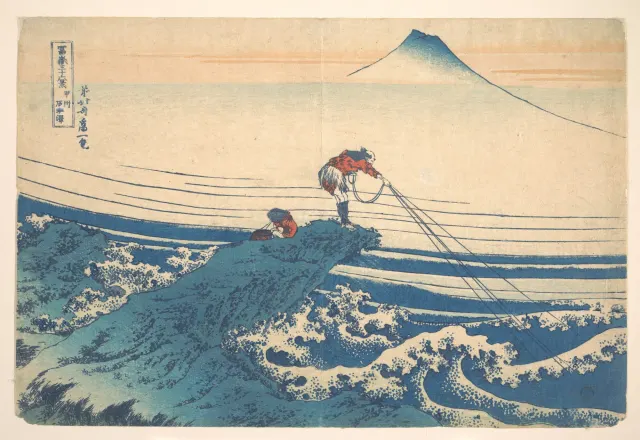
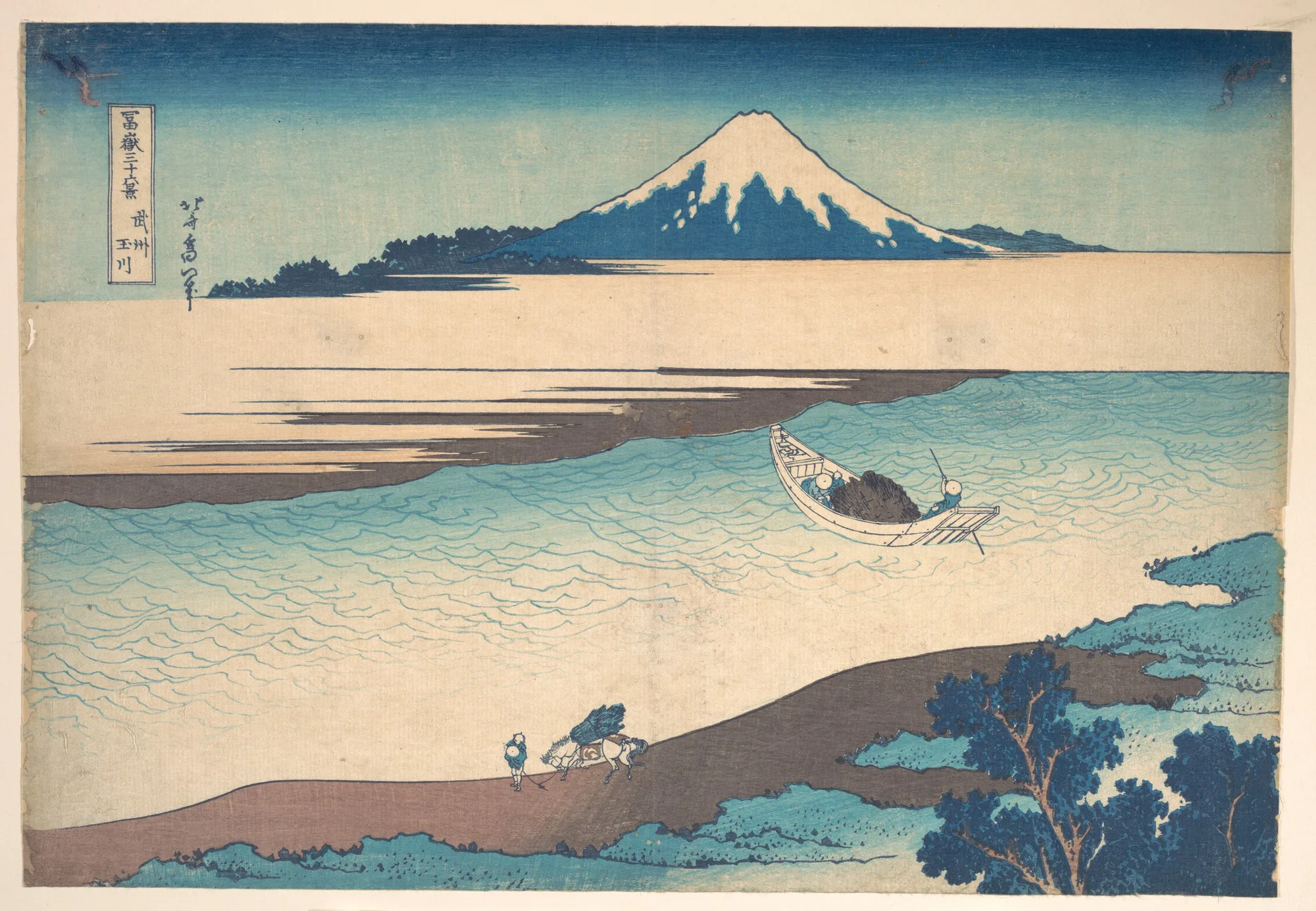
ゆったり流れる多摩川と富士。白い波にかくれた技に注目!Fuji over the gently flowing Tama River. Look for the hidden trick in the white ripples!
 美術館アンテナ:葛飾北斎の作品に会える展覧会
この作品のお話
Story武蔵国(今の東京都と神奈川県のあたり)を流れる玉川(多摩川)と、その向こうに見える富士山を描いた絵です。川の中流、調布あたりの渡し場からのながめと考えられています。北斎の「冨嶽三十六景」の1枚で、1830〜32年ごろの作。この画像はニューヨークのメトロポリタン美術館の摺りです。
This print shows the Tama River in Musashi Province, around today's Tokyo and Kanagawa, with Mount Fuji beyond it. It is thought to be the view from a ferry crossing near Chōfu, on the middle part of the river. It is from Hokusai's 'Thirty-six Views of Mount Fuji,' made around 1830–32. This impression is in the Metropolitan Museum of Art in New York.
画面の大部分は、細かな波がゆれる川です。手前の水面の波は、色をつけずに紙に圧力をかけてでこぼこをつける「空摺(からずり)」という技法で表されているとされます。光の当たり方で、白い波がうかび上がるしかけです。川には荷物を積んだ舟、岸には馬をひく人が描かれています。
Most of the picture is the river, covered with small ripples. The ripples in front are said to be made with 'karazuri,' a technique that presses the paper to make raised patterns without any color. When light hits the paper, the white ripples appear. A boat with a load floats on the river, and a man leads a horse on the bank.
多摩川は古くから歌によまれた名所でした。各地にある「玉川」という名の6つの名所は「六玉川(むたまがわ)」とよばれ、武蔵の調布の玉川もそのひとつです。北斎はほかにも六玉川を題材にした作品を残しています。静かな川の景色に、長い歴史が重なっている1枚です。
The Tama River has been a famous place in poetry since ancient times. Six famous rivers called 'Tamagawa' in different regions are known as the 'Six Tama Rivers,' and the one at Chōfu in Musashi is one of them. Hokusai made other works on the Six Tama Rivers, too. A long history lies behind this quiet river view.
これは広い川です。舟が大きな荷物を運んでいます。人が馬といっしょに歩いています。富士山は遠くにあります。小さな波はやわらかく白く見えます。
This is a wide river. A boat carries a big load. A man walks with a horse. Mount Fuji is far away. The small waves look soft and white.
英語のレベルは上の「やさしい/ふつう」で切りかえられます。
えっ!?な裏ネタ
Secrets奈良時代の歌集『万葉集』には、「多摩川にさらす手作りさらさらに…」という東国の歌があります。多摩川の水で布をさらして白くする様子をよんだものです。今も地名に残る「調布」は、税として納めた布にちなむといわれます。
The 8th-century poetry collection Man'yōshū has a poem about cloth being bleached in the Tama River. People washed handmade cloth in the river to make it white. The place name 'Chōfu' is said to come from the cloth people paid as taxes.
空の上のはしが濃い藍色で、下にいくほどうすくなっています。これは版木の絵の具の量を加減して濃淡をつける「ぼかし」という技で、上に一文字に入れるものは「一文字ぼかし」とよばれます。摺り師の腕の見せどころでした。
The top edge of the sky is deep indigo and gets lighter toward the bottom. This is 'bokashi,' a technique that controls the amount of color on the block to make a gradation. A band across the top is called 'ichimonji bokashi.' It was a chance for the printer to show his skill.
江戸時代、多摩川でとれたアユは味がよいと評判で、将軍家にも献上されたといわれます。アユは川の石についた藻類を食べて育つため、水のきれいな川を代表する魚として知られます。北斎の描いた静かな流れの中にも、アユが泳いでいたかもしれません。
In the Edo period, sweetfish from the Tama River were famous for their taste and are said to have been presented to the shogun's family. Sweetfish feed on algae growing on river stones, so they are often associated with clean rivers. Perhaps sweetfish were swimming in the quiet river Hokusai drew.
今の多摩川は、下流で東京都と神奈川県の境を流れています。北斎の時代には舟で人や荷物をわたした渡し場がいくつもありましたが、今はその多くが橋にかわり、電車や車が行きかっています。
Today the lower Tama River runs along the border between Tokyo and Kanagawa. In Hokusai's time, there were several ferry crossings for people and goods. Now most of them have been replaced by bridges, and trains and cars cross every day.
ここを見て!
Look Closer1富士山Mount Fuji
川の向こうの丘の上に、雪をかぶった富士山が大きくそびえています。
Snowy Mount Fuji rises large above the hills across the river.
2荷物を積んだ舟A boat with a load
山盛りの荷物を積んだ舟を、船頭がさおで進めています。
A boatman pushes a boat piled high with a load.
3馬をひく人A man with a horse
岸の上で、荷物をのせた馬をひいて歩く人がいます。
On the bank, a man walks with a horse carrying a load.
4一文字ぼかしDark band of sky
空の上だけが濃い藍色。下にいくほどうすくなっています。
Only the top of the sky is deep indigo. It fades lower down.
英語で名画を語ろう
Talk about Art in EnglishThe Tama River flows across the whole picture.
多摩川が、画面全体を横切って流れています。
💡 flow は「流れる」。across と合わせて「横切って流れる」となります。
英語で説明すると… Describe it
これは静かな川の場面です。奥には、富士山があります。まん中では、広い川に舟がうかんでいます。手前では、人と馬が川岸を歩いています。
This is a quiet river scene. In the background, there is Mount Fuji. In the middle, a boat is floating on the wide river. In the foreground, a man and a horse are walking on the riverbank.
考えてみよう Think & Talk
- 舟は何を運んでいると思いますか?What do you think the boat is carrying?
- この絵を見て、どんな気持ちになりますか?それはなぜ?How does this picture make you feel? Why?
この作品の英単語
WordsSmall ripples cover the river.
小さなさざ波が川をおおっています。
People crossed the river by ferry.
人びとは渡し舟で川をわたりました。
The boat carries a heavy load.
舟は重い荷物を運んでいます。
The river has a gentle flow.
川はおだやかに流れています。
ミニクイズ
QuizQ. 色を使わず、紙のでこぼこで模様を表す技法は?Which technique makes patterns with raised paper and no color?
紙に圧力をかけてでこぼこをつけ、光で模様を見せる技法です。
The paper is pressed to make raised patterns, which show up in the light.
ウソ?ホント? 「調布」という地名は、布にちなむといわれる。The place name 'Chōfu' is said to come from cloth.
税として納めた布にちなむといわれます。
It is said to come from cloth paid as taxes.
ウソ?ホント? この絵の川は、大阪を流れる川だ。The river in this print flows through Osaka.
武蔵国、今の東京と神奈川のあたりを流れる多摩川です。
It is the Tama River in Musashi, around today's Tokyo and Kanagawa.
 画像の出典とライセンス / Image credit
- CC0冨嶽三十六景 武州玉川-Fuji—The Tama River, Musashi Province, from the series Thirty-six Views of Mount Fuji (Fugaku sanjūrokkei) MET DP140975.jpg(Wikimedia Commons)
ライセンス:CC0(パブリックドメイン提供)/作者・撮影者の表記:Katsushika Hokusai
この作品は、作者の死後長い年月がたち著作権の保護期間が終わった「パブリックドメイン」の作品です。画像は平面の作品を忠実に写したもので、新しい著作権は生じません(Wikimedia Commons の PD-Art の考え方)。 所蔵:メトロポリタン美術館(The Metropolitan Museum of Art)。画像は表示のために縮小・WebP 形式に変換しています。
葛飾北斎のほかの作品