 ワークシート
 ぬりえ
 迷路
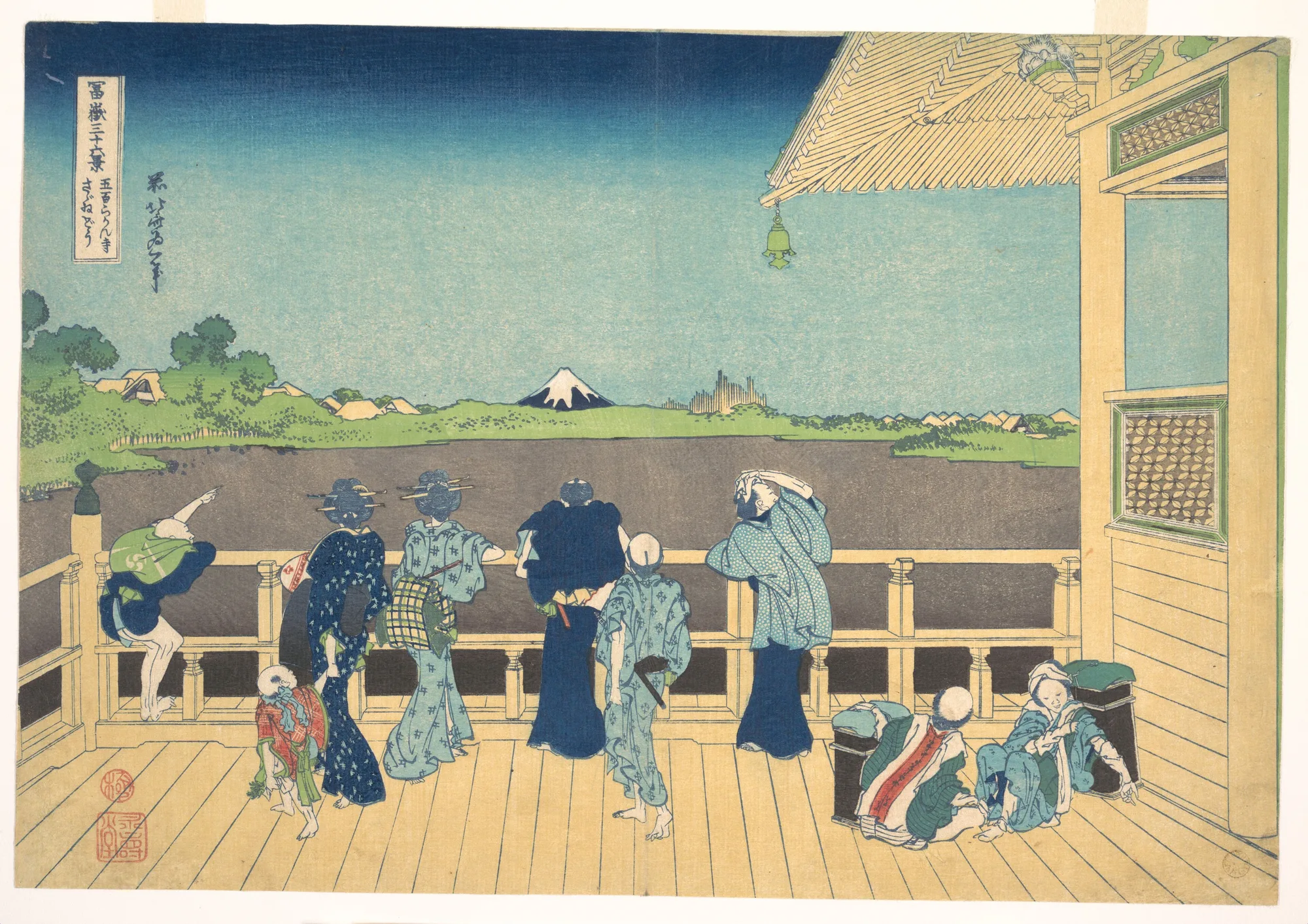
らせん通路のお堂の上から、みんなで富士山ウォッチング!Fuji-watching from the top of a spiral temple hall!
 美術館アンテナ:葛飾北斎の作品に会える展覧会
この作品のお話
Story江戸の本所(今の東京都江東区大島)にあった五百羅漢寺の「さざえ堂」の上から、人びとが富士山をながめている場面です。手すりにもたれたり、指さしたりと、みんな思い思いに景色を楽しんでいます。北斎の「冨嶽三十六景」の1枚で、この画像はニューヨークのメトロポリタン美術館の摺りです。
People look at Mount Fuji from the top of the 'Sazai Hall' at the Temple of the Five Hundred Arhats, which stood in Honjo, Edo—now Ōjima in Kōtō Ward, Tokyo. Some lean on the railing and some point, each enjoying the view in their own way. This print is from Hokusai's 'Thirty-six Views of Mount Fuji,' and this impression is in the Metropolitan Museum of Art in New York.
さざえ堂は3階建ての高い建物で、中の通路がサザエの貝のようにらせん状になっていたので、この名でよばれました。上りと下りで同じ道を通らずにお参りできる、めずらしいしかけです。北斎は、床板や手すりの線を奥へと向かわせ、見る人の目が自然に富士山へ向かうように描いています。西洋の遠近法を取り入れた構図です。
The Sazai Hall was a tall three-story building. Its inside path wound in a spiral like a turban shell, called 'sazae,' which gave it its name. Visitors could go up and come down without using the same path. Hokusai drew the floorboards and railing so that the lines lead into the distance, guiding our eyes to Fuji. It is a composition that uses Western-style perspective.
五百羅漢寺は明治時代におとろえ、1908年に今の目黒区へ移りました。北斎が描いたさざえ堂は、今は残っていません。よく似た、上りと下りが交わらないらせん通路をもつお堂として、福島県会津若松市の「会津さざえ堂」(1796年)が今も残り、国の重要文化財になっています。中に入れば、らせんの道を上って下りるしくみを体験できます。
The temple declined in the Meiji period and moved to today's Meguro Ward in 1908. The Sazai Hall that Hokusai drew no longer exists. The Aizu Sazaedō, built in 1796, has a similar spiral walkway that keeps ascending and descending visitors apart. It still stands in Aizuwakamatsu, Fukushima, and is an Important Cultural Property. Inside, visitors can experience its spiral route.
たくさんの人が高いお寺の建物に立っています。富士山を見ています。このお堂の中には、貝のようならせんの通路がありました。ほとんどの人が後ろ姿です。2人が休んでいます。
Many people stand on a tall temple. They look at Mount Fuji. The temple had a spiral path inside, like a shell. Most people show us their backs. Two people are resting.
英語のレベルは上の「やさしい/ふつう」で切りかえられます。
えっ!?な裏ネタ
Secrets手すりの前の人たちは、ほとんどがこちらに背中を向けて富士山を見ています。見る人も、絵の中の人と同じ方向を向いて、いっしょに富士をながめている気分になれる工夫です。右下で休む2人のうち、右の人は顔がこちらに見えています。
Most of the people at the railing have their backs to us as they look at Fuji. This lets us face the same way and feel as if we are enjoying the view with them. At the lower right, we can see the face of one of the two resting people.
羅漢(らかん)とは、修行をつんでさとりを開いた、お釈迦さまの弟子たちのこと。五百羅漢寺には、たくさんの羅漢像がならんでいました。目黒に移った今も、江戸時代に彫られた羅漢像が数多く伝わっています。
Arhats, or 'rakan,' are followers of the Buddha who reached enlightenment through training. The temple had rows of many arhat statues. Even after moving to Meguro, it still keeps many statues carved in the Edo period.
さざえ堂は、富士山がよく見える江戸の人気スポットでした。歌川広重も『名所江戸百景』で「五百羅漢さざゐ堂」を描いています。高い建物が少なかった江戸では、ここからのながめは特別だったのです。
The Sazai Hall was a popular place in Edo for viewing Fuji. Utagawa Hiroshige also drew it in 'One Hundred Famous Views of Edo.' In Edo, where there were few tall buildings, the view from here was special.
屋根のはしにぶら下がっているのは「風鐸(ふうたく)」という小さな鐘です。風が吹くとカランと鳴り、その音には魔よけの意味もあるといわれます。耳をすませば、絵の中から音が聞こえてきそうです。
The small bell hanging from the corner of the roof is called a 'fūtaku,' or wind bell. It rings when the wind blows, and its sound is said to keep evil away. If you listen closely, you might almost hear it from the picture.
ここを見て!
Look Closer1遠くの富士Distant Fuji
広い野原と家並みのむこうに、小さな富士山が見えます。
A small Mount Fuji appears beyond wide fields and houses.
2富士を指さす人A man pointing at Fuji
手すりに身をのり出して、富士山を指さしています。
He leans over the railing and points at Fuji.
3休む2人Two people resting
荷物のそばで座りこんで休む2人。右の人はこちらに顔を向けています。
Two people sit and rest by their bags. The person on the right turns toward us.
4風鐸The wind bell
屋根のはしにぶら下がる小さな鐘。風が吹くと鳴ります。
A small bell hangs from the roof corner. It rings in the wind.
英語で名画を語ろう
Talk about Art in EnglishPeople enjoy the view of Mount Fuji from the balcony.
人びとはバルコニーから富士山のながめを楽しんでいます。
💡 enjoy the view で「景色を楽しむ」。旅行の英会話でもよく使います。
英語で説明すると… Describe it
これは高いお堂の木のバルコニーです。たくさんの人が手すりのそばに立っています。遠くの富士山を見ています。右では、2人が座って休んでいます。
This is a wooden balcony on a tall temple hall. Many people are standing at the railing. They are looking at Mount Fuji in the distance. On the right, two people are sitting and resting.
考えてみよう Think & Talk
- 北斎はなぜ、ほとんどの人を後ろ姿で描いたのだと思いますか?Why do you think Hokusai showed most people from behind?
- あなたのお気に入りの、景色のよい場所はどこですか?Where is your favorite place to see a great view?
この作品の英単語
WordsThe hall had a spiral path inside.
そのお堂の中には、らせん形の通路がありました。
People stand at the railing and look at Fuji.
人びとは手すりのそばに立って富士山を見ています。
The view from the top was famous in Edo.
上からのながめは江戸で有名でした。
A man points at the mountain.
男の人が山を指さしています。
ミニクイズ
QuizQ. 「さざえ堂」の名前の由来は?Why was it called the 'Sazai Hall'?
らせん状の通路が、サザエの貝のようだったからです。
Its spiral path inside was like a turban shell.
ウソ?ホント? 北斎が描いたさざえ堂は、今も同じ場所に残っている。The Sazai Hall Hokusai drew still stands in the same place.
今は残っておらず、寺も1908年に目黒へ移りました。
It no longer exists, and the temple moved to Meguro in 1908.
ウソ?ホント? 福島県には、よく似たらせん通路をもつ「会津さざえ堂」が残っている。A hall with a similar spiral walkway, the Aizu Sazaedō, survives in Fukushima.
1796年に建てられ、国の重要文化財になっています。
It was built in 1796 and is an Important Cultural Property.
 画像の出典とライセンス / Image credit
- CC0冨嶽三十六景 五百らかん寺さざゐどう-Sazai Hall at the Temple of the Five Hundred Arhats (Gohyaku Rakanji Sazaidō), from the series Thirty-six Views of Mount Fuji (Fugaku sanjūrokkei) MET DP141020.jpg(Wikimedia Commons)
ライセンス:CC0(パブリックドメイン提供)/作者・撮影者の表記:Katsushika Hokusai
この作品は、作者の死後長い年月がたち著作権の保護期間が終わった「パブリックドメイン」の作品です。画像は平面の作品を忠実に写したもので、新しい著作権は生じません(Wikimedia Commons の PD-Art の考え方)。 所蔵:メトロポリタン美術館(The Metropolitan Museum of Art)。画像は表示のために縮小・WebP 形式に変換しています。
葛飾北斎のほかの作品