


 動物・植物
動物・植物花の香りは虫を呼ぶ合図。メスのハチのにおいをまねて、オスをだます花まである
 2026.10.02
 English Corner(A2〜B2・4択クイズ)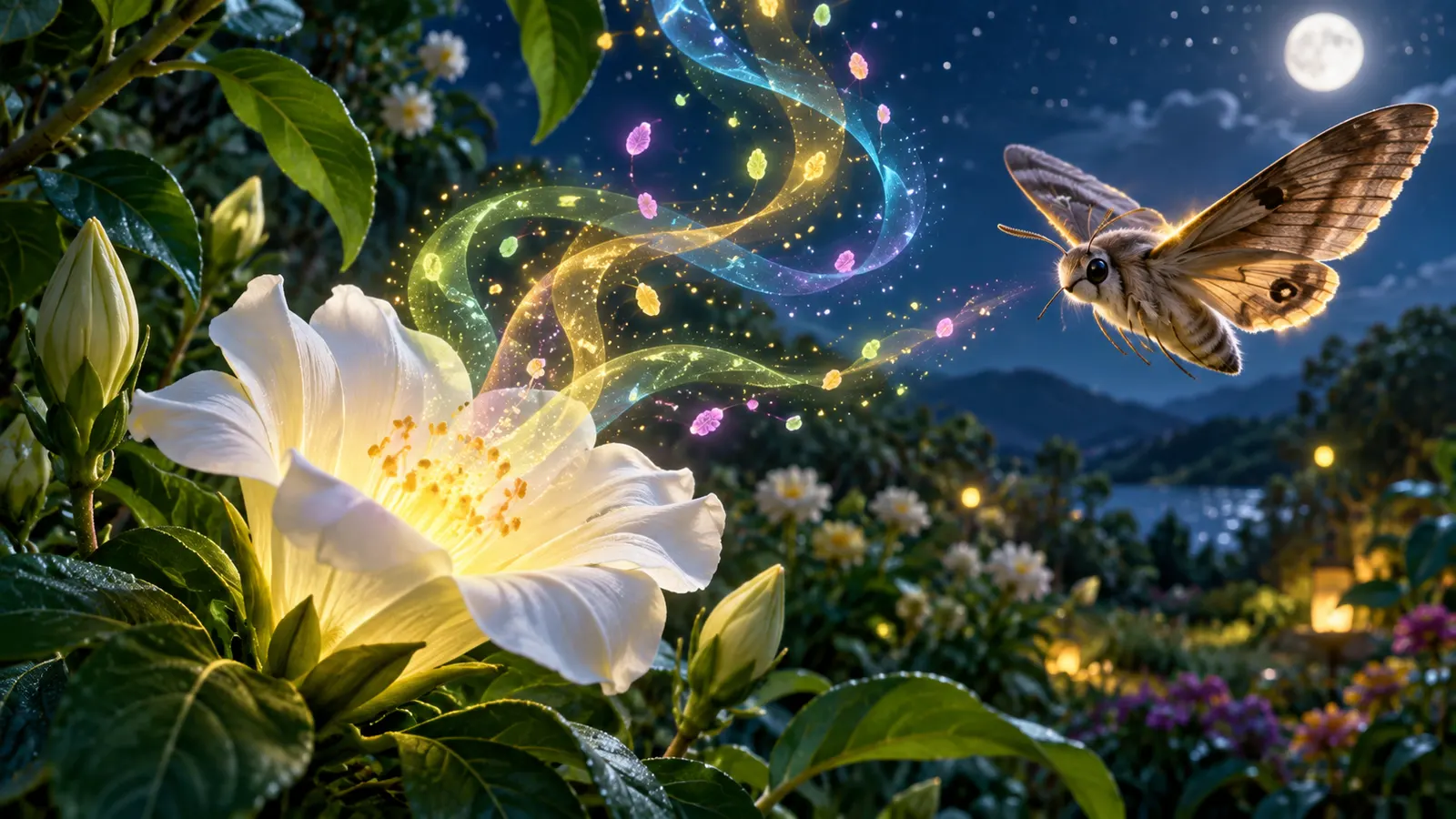
 読む前に予想してみよう!
花の香りはすべて、虫にとって「本物のごほうび」の合図である
蜜を出さずにメスのハチの性フェロモンをまねて、オスをだますランがいる。
 研究カード(どんな研究?)
- 対象
- 種子植物の花の香り(約1000種のデータ)など
- 規模
- 大規模な文献集計+個別実験
- 研究の種類
- 総説・化学分析・分子生物学
- 確かさ
- ★★★★☆
花の香りから見つかった分子は1700種類以上。その組み合わせは、決まった虫だけを呼ぶ合図にもなれば、メスのハチのにおいをまねてオスをだます“ニセの恋文”にもなる。
ひとことで言うと花のにおいは、虫を呼ぶ「手紙」。ときにはウソの手紙も!
バラの甘い香り、ユリのむせるような香り、キンモクセイの秋の香り。私たちが「いいにおい」と感じる花の香りは、もともと人間のためのものではありません。
花の香りは、花粉を運んでくれる虫や鳥へのメッセージ。そしてその中には、本物のごほうびを知らせる正直な手紙もあれば、真っ赤なウソの手紙も混じっているのです。
01香りの正体は「分子のカクテル」
1つの花の香りも、たいてい何種類もの分子が混ざったカクテルです。同じ分子でも、混ぜる割合が変われば別の香りになります。珍しい分子や、混ぜる割合のちがいが、特定の虫だけに届く合図になることもあります(Raguso, 2008)。
02夜に香る花、腐った肉のにおいの花
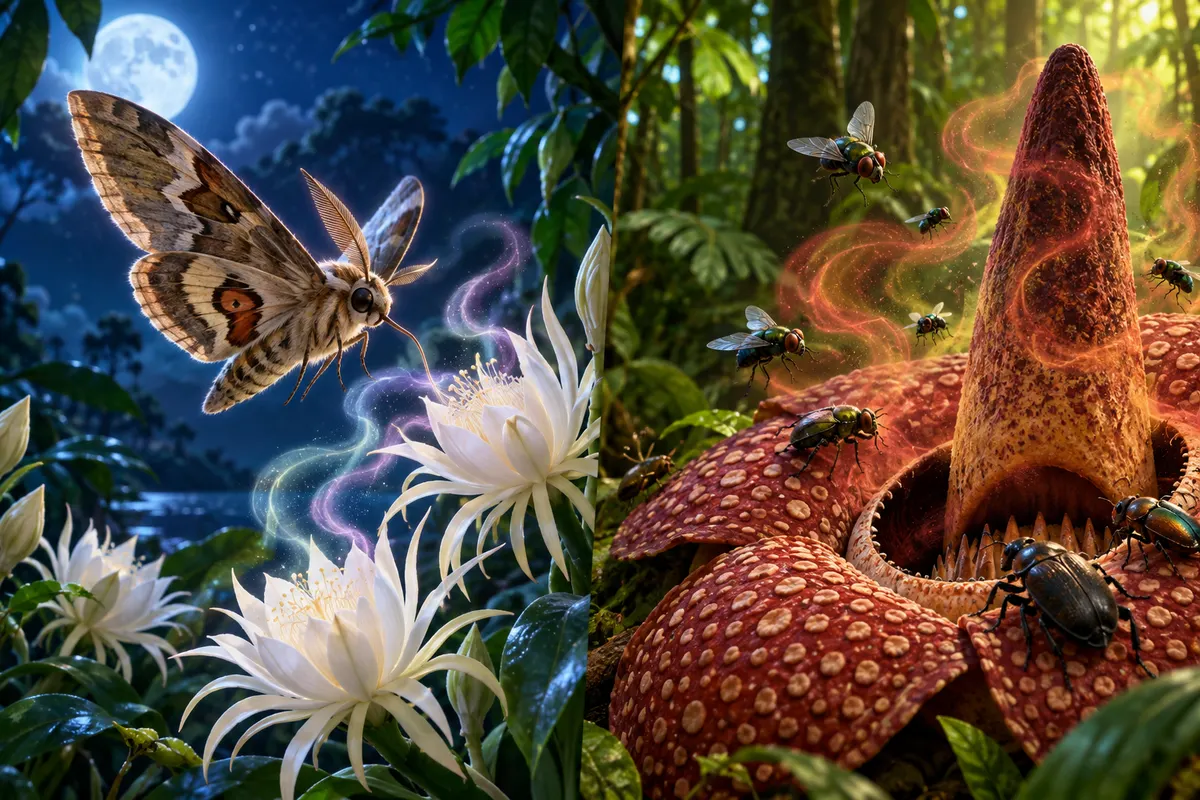
香りを出す時間帯にも意味があります。たとえば夜に強く香る花の多くは、夜に飛ぶ蛾に花粉を運んでもらっています。昼に香りを出しても、届けたい相手は寝ているからです。
一方で、世界最大級の花序(花の集まり)として知られるショクダイオオコンニャクは、腐った肉のようなにおいを放ちます。呼びたい相手は、腐肉に集まる甲虫やハエ。人間にはひどいにおいでも、彼らにとっては「えさや産卵場所がありそう」という合図になります。
03メスのハチのにおいでオスを呼ぶ、蜜のない花
ヨーロッパには、香りでハチをだますランの仲間(オフリス属)がいます。
1999年に『Nature』に発表された研究(Schiestlら)は、オフリス・スフェゴデスというランを調べました。この花の香りには、花粉を運ぶハナバチのメスが出す性フェロモンと同じ成分が、似た割合で含まれていたのです。オスのハチは花をメスと勘違いして飛びつき、そのとき体に花粉がつきます。
しかもこの花は、蜜をまったく出しません。オスのハチは何ももらえず、ただ花粉を運ばされる――まさに「ニセの恋文」による、ちゃっかり受粉作戦です。
04香りは「勝手にもれる」のではなかった
香りの分子は小さくて気体になりやすいので、これまでは「細胞から自然にしみ出している」と考えられていました。ところが2017年、ペチュニアの研究(Adebesinら、『Science』)で、香り分子を細胞の外へ積極的に運び出すポンプ(ABC輸送体)が見つかりました。このポンプを減らすと、香りの放出が減り、香り分子が細胞膜にたまって花の細胞にとって有害なレベルにまでなったのです。
花はエネルギーを使って、わざわざ香りを“発信”していたわけです。
05まとめ
花の香りは、虫たちとの化学のおしゃべりでした。正直なごほうびの合図もあれば、だましのテクニックもある。
次に花の香りをかぐときは、「この香り、本当は誰に向けたメッセージなんだろう?」と考えてみてください。あなたは、花と虫の秘密の手紙を、こっそりのぞき見しているのかもしれません。
この研究を英語で読もう原田英語の English CornerFlower scents were not made for humans. 音声
音声 4択クイズ9問A2・B1・B2タップして開く
原田英語の English Corner
この研究を英語で読もう
Flowers smell nice, but their smell is not for people. It is a message to insects and birds that carry pollen.
Scientists have found more than 1,700 kinds of scent chemicals in flowers. Flowers that smell strong at night often call moths. One huge flower smells like rotten meat to call flies. Some orchids even smell like female bees to trick male bees.
63 words ・ CEFR A2
和訳を見る
花はいいにおいがしますが、そのにおいは人のためのものではありません。花粉を運ぶ虫や鳥へのメッセージなのです。
科学者たちは、花から1700種類以上の香りの化学物質を見つけています。夜に強く香る花は、よく蛾を呼びます。ある巨大な花は、ハエを呼ぶために腐った肉のようなにおいを出します。メスのハチのようなにおいを出して、オスのハチをだますランまでいます。
4択リーディングクイズ
Q1. What is the passage mainly about?
It is a message to insects and birds that carry pollen. が中心で、においで虫を呼ぶ例を挙げているので C。
Q2. How many kinds of scent chemicals have been found in flowers?
more than 1,700 kinds of scent chemicals とあるので A。
Q3. In this passage, "trick" means ...
trick male bees は「オスのハチをだます」。trick は「だます」なので D。
Flower scents were not made for humans. They are messages to animals that carry pollen. A 2006 study collected data from about 1,000 plant species and found more than 1,700 scent chemicals. Each scent is usually a mixture of many chemicals, and changing the mix creates a different message.
Flowers that smell strongest at night are often pollinated by moths, while the giant corpse flower smells like rotten meat to attract beetles and flies. Some European orchids go further. Their scent contains the same chemicals as the sex pheromone of female bees, so male bees try to mate with the flower and carry its pollen away. The orchid gives them no nectar at all.
114 words ・ CEFR B1
和訳を見る
花の香りは人間のために作られたものではありません。花粉を運ぶ動物へのメッセージです。2006年の研究は約1000種の植物のデータを集め、1700種類以上の香りの化学物質を見つけました。一つひとつの香りはたいてい多くの化学物質の混合物で、混ぜ方を変えると別のメッセージになります。
夜にいちばん強く香る花は蛾に受粉してもらうことが多く、一方、巨大なショクダイオオコンニャクは腐った肉のようなにおいで甲虫やハエを引き寄せます。ヨーロッパのランの中には、さらに上を行くものがいます。その香りにはメスのハチの性フェロモンと同じ成分が含まれているので、オスのハチは花と交尾しようとして、花粉を運んでいきます。ランはハチに蜜をまったく与えません。
4択リーディングクイズ
Q1. What is the passage mainly about?
花の香りは花粉を運ぶ動物へのメッセージだと述べ、さまざまな例を挙げているので B。
Q2. What does the corpse flower smell like?
the giant corpse flower smells like rotten meat とあるので C。B はランの話。
Q3. Why could the orchid's scent be called a "fake love letter"?
メスのフェロモンをまねてオスを呼ぶのに、The orchid gives them no nectar at all. とあるので A。
The fragrances we enjoy in flowers evolved not for us but as chemical messages to pollinators. A 2006 survey of floral scent data from roughly 1,000 plant species listed more than 1,700 compounds, the most widespread being terpenes, benzene-ring compounds and substances derived from fatty acids. Because each scent is usually a blend of many molecules, varying the proportions allows plants to target particular visitors.
Timing matters too: many flowers that release scent at night are pollinated by moths, whereas the corpse flower emits a smell of rotting meat to lure beetles and flies. Some signals are dishonest. In 1999, researchers showed that an Ophrys orchid releases the same compounds, in similar proportions, as the sex pheromone of a female bee; males attempt to mate with the flower, pick up pollen and receive no nectar in return.
Scent release is also more active than once thought. In 2017, a study of petunias identified a transporter protein that pumps scent molecules out of cells; when it was reduced, emission fell and the compounds built up in membranes to levels harmful to the cells. Flowers, in other words, spend energy to broadcast their messages.
192 words ・ CEFR B2
和訳を見る
私たちが楽しむ花の香りは、私たちのためではなく、送粉者への化学的なメッセージとして進化しました。約1000種の植物の花の香りデータを集計した2006年の調査では、1700種類以上の化合物が挙げられ、なかでも広く見られたのはテルペン類、ベンゼン環をもつ化合物、脂肪酸に由来する物質でした。それぞれの香りはたいてい多くの分子の混合物なので、割合を変えることで、植物は特定の訪問者を狙うことができます。タイミングも重要です。
夜に香りを出す花の多くは蛾に受粉してもらい、一方ショクダイオオコンニャクは腐った肉のにおいを放って甲虫やハエをおびき寄せます。中には不正直な信号もあります。1999年、研究者たちは、オフリス属のランが、メスのハチの性フェロモンと同じ化合物を似た割合で放出することを示しました。オスは花と交尾しようとして花粉をつけ、見返りの蜜は何も受け取りません。
香りの放出も、かつて考えられていたより能動的です。2017年、ペチュニアの研究で、香り分子を細胞の外へくみ出す輸送タンパク質が見つかりました。これを減らすと放出量が下がり、化合物が細胞膜にたまって細胞に有害なレベルにまで達しました。つまり花は、エネルギーを使ってメッセージを発信しているのです。
4択リーディングクイズ
Q1. What is the passage mainly about?
香りの化学的多様性、時間帯、だましの香り、能動的な放出まで、送粉者を呼ぶための香りの仕組みを述べているので A。
Q2. What did the 2017 petunia study find?
a transporter protein that pumps scent molecules out of cells とあるので D。A はかつての考え方。
Q3. What can be inferred about the Ophrys orchid?
オスは花粉を運ぶが receive no nectar in return とあるので、ランは蜜というコストを払わずに受粉できると推測できる。正解は B。
重要単語
- scentB2名詞香りThe scent of the flower is strongest at night.
 cent(セント)、sent と同音。smell より上品・快い香りに使うことが多い。
 - pollinatorC1名詞送粉者(花粉を運ぶ生き物)Bees and moths are important pollinators. pollen(花粉)→ pollinate(受粉させる)→ pollinator。pollution(汚染)とは別語。
- volatileC1形容詞揮発性の、不安定なVolatile compounds easily turn into gas. ラテン語 volare(飛ぶ)から。a volatile market「不安定な市場」のように経済記事でも頻出。
- mimicC1動詞まねるSome orchids mimic the smell of female bees. 過去形は mimicked(k が入る)。名詞 mimicry は生物の「擬態」。
- deceiveB2動詞だますThe orchid deceives male bees without giving them food. 名詞は deception、形容詞 deceptive。receive と同じ -ceive のつづり。
- lureC1動詞おびき寄せるThe flower lures flies with a smell of rotting meat. 名詞で「(釣りの)ルアー、魅力」。attract より「だまして誘う」ニュアンス。
- nectarB2名詞(花の)蜜Bees collect nectar from flowers. ギリシャ神話の「神々の飲み物(ネクタル)」から。ジュースの「ネクター」も同じ語。
 入試に出る順の単語帳を印刷する →
 全5903語の「科学英単語カード」で復習する →
 動画でもっと知る
動画は各チャンネルの公式埋め込みで表示しています(YouTube)。
このネタ、誰かに教えたくなった?
花の香りから見つかった化学物質は1700種類以上。夜に香る花は蛾を、腐肉のにおいの花はハエを呼ぶ。メスのハチのフェロモンそっくりの香りでオスをだまして受粉させるランまでいる。
押すと「マジかリスト」に保存されます
 出典・参考文献(4件)タップで表示
- Knudsen et al. (2006) Diversity and Distribution of Floral Scent, The Botanical Reviewdoi.org
- Raguso (2008) Wake Up and Smell the Roses: The Ecology and Evolution of Floral Scent, Annual Review of Ecology, Evolution, and Systematicsdoi.org
- Schiestl et al. (1999) Orchid pollination by sexual swindle, Naturedoi.org
- Adebesin et al. (2017) Emission of volatile organic compounds from petunia flowers is facilitated by an ABC transporter, Sciencedoi.org

※本記事は上記の研究・公開資料をもとに、原田英語が独自の言葉で解説したものです。引用は著作権法第32条の範囲で行い、出典を明記しています。画像はすべてオリジナルのイメージです。研究結果には限界や個人差があります。誤りのご指摘は原田英語のお問い合わせフォームから。
 これも「マジか!?」
 動物・植物
動物・植物
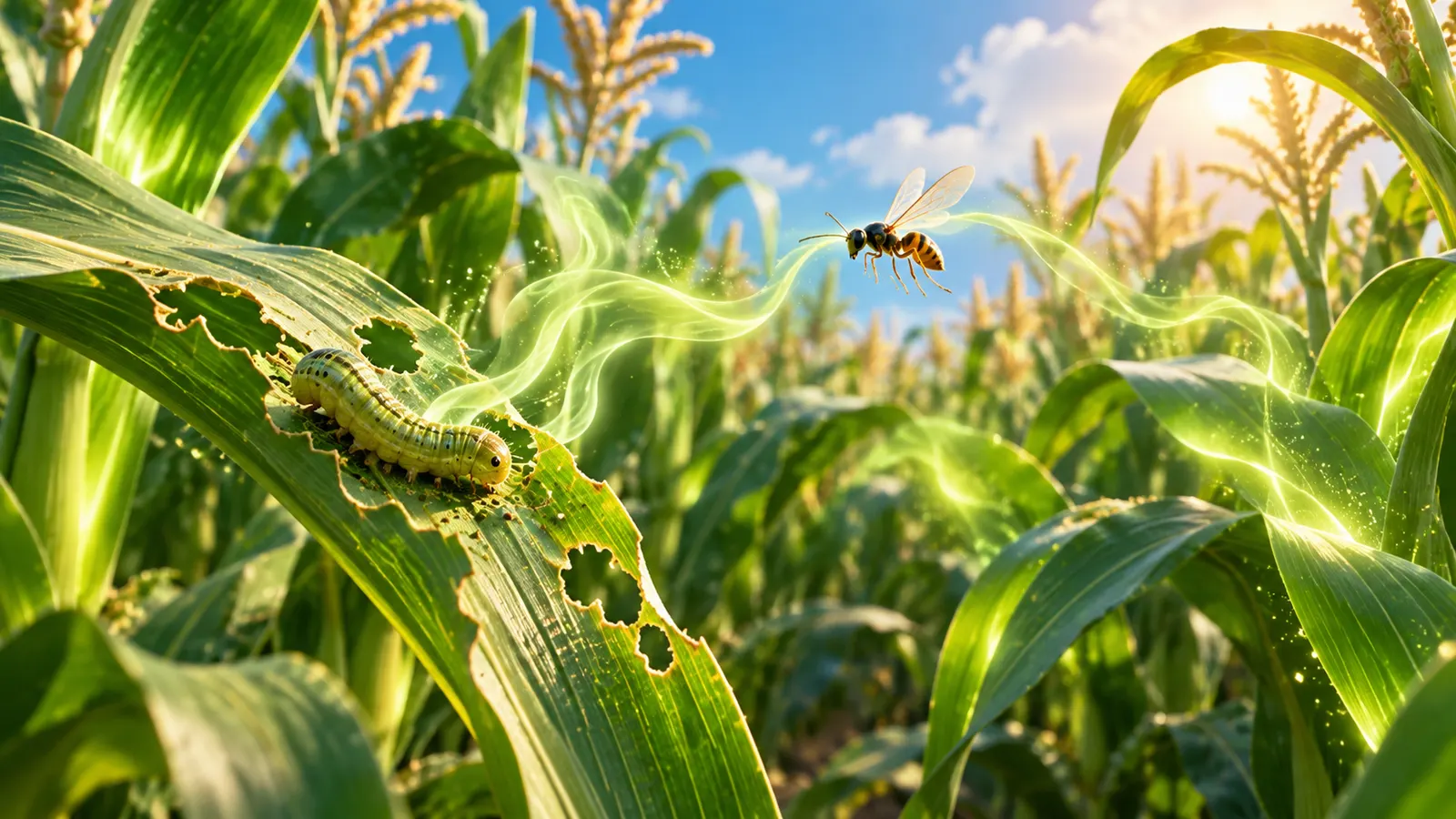
虫にかじられた植物は「助けて」の匂いを出す。やって来るのは、その虫に卵を産みつける寄生バチ

 動物・植物
動物・植物
人の脳は年をとると軽くなるのに、チンパンジーやゴリラの脳は目立って軽くならなかった

 動物・植物
動物・植物
鳥123種の声の大きさを測ったら、「世界一うるさい鳥」の候補が新たに2種見つかった

 動物・植物
動物・植物
南極の雪が緑色に。雪の中の藻を、ペンギンなど海鳥のフンの栄養が育てているらしい
 動物・植物
動物・植物
虫が「道具」でハチを釣っていた。ハチの樹脂を前脚に塗る“釣り師”サシガメの作戦


 動物・植物
動物・植物