


 動物・植物
動物・植物ポトスはなぜ枯れにくい? 正体は木をよじ登るジャングルのつる植物で、花はほぼ咲かせない
 2026.10.02
 English Corner(A2〜B2・4択クイズ)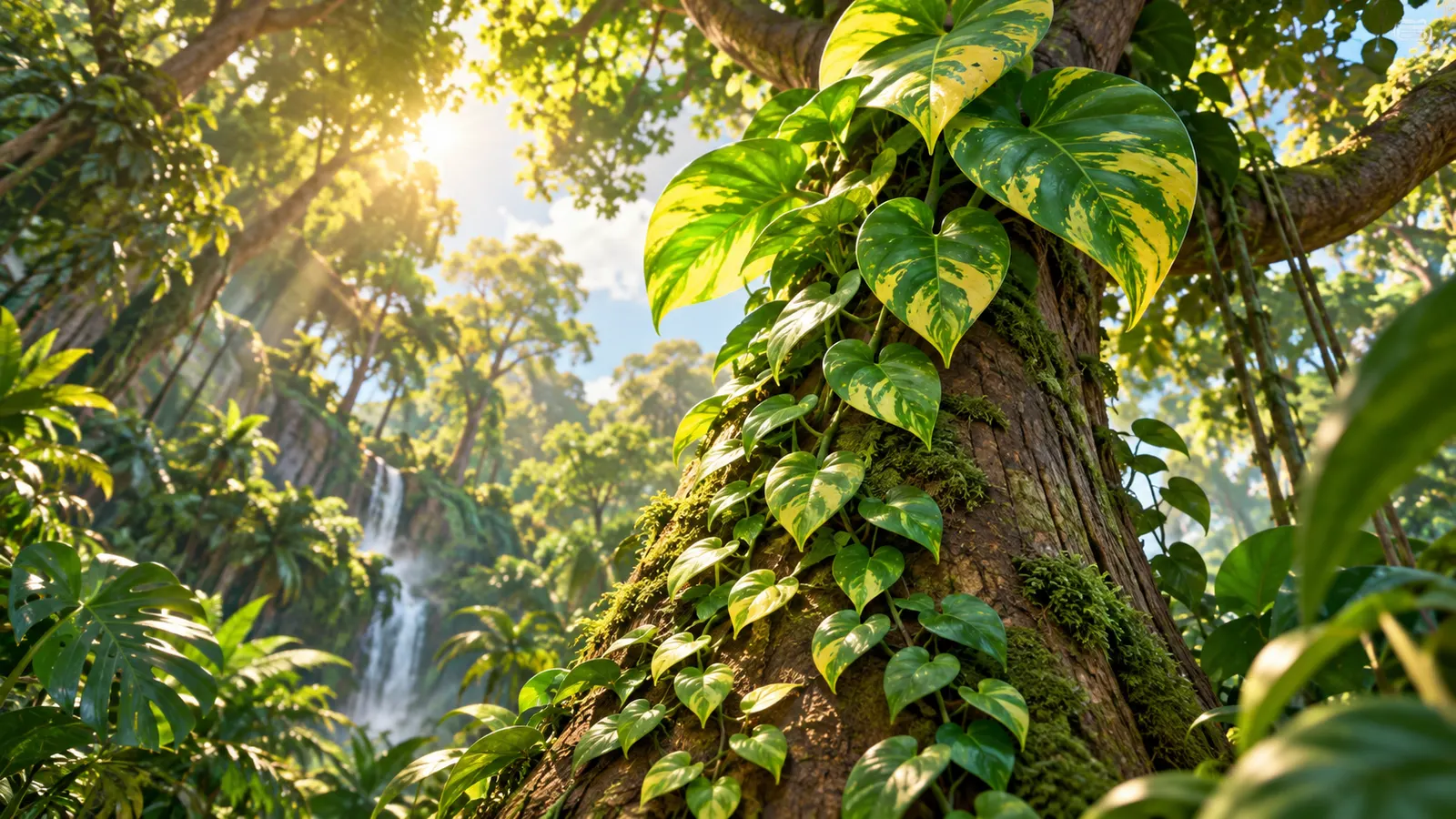
 読む前に予想してみよう!
ポトスは、ふつうに育てていても数年に一度は花を咲かせる
野生でも栽培でもほぼ咲かない。花を咲かせるのに必要なジベレリンを作る遺伝子が働いていないことが原因とみられる。
 研究カード(どんな研究?)
- 対象
- ポトス(Epipremnum aureum)ほか室内植物
- 規模
- 遺伝子解析と室内測定
- 研究の種類
- 遺伝子発現解析+ホルモン処理実験
- 確かさ
- ★★★☆☆
ポトスは暗さや乾燥に強く、茎を切ってもすぐ根を出すタフな植物。しかも野生でも栽培でも花を咲かせない。その理由は植物ホルモン(ジベレリン)の不足とみられる。
ひとことで言うとポトスは切っても根が出る“復活名人”。でも花は咲かせない!
日当たりの悪いオフィスの棚、トイレの窓辺、水を入れたコップ。ポトスはどこでもしぶとく育ちます。「植物を枯らしてばかりの人でも、ポトスだけは生きている」なんて話もよく聞きます。
このタフさの秘密は、ポトスのふるさとでの暮らし方にあると考えられます。そしてもう一つ、ポトスには意外な“欠点”があります。花をほとんど咲かせないのです。
01本当の姿は「木によじ登るつる植物」
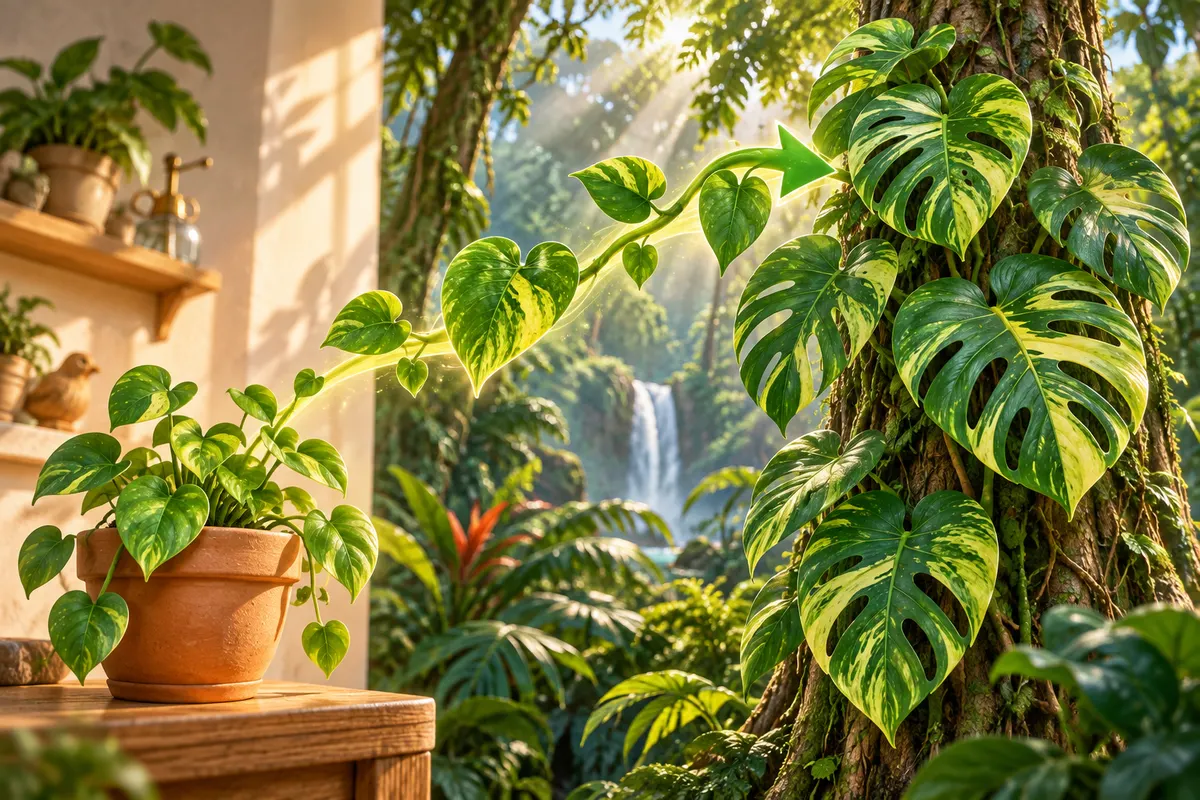
ポトスはサトイモ科のつる植物で、南太平洋の島(フランス領ポリネシアのモーレア島)が原産とされています。熱帯の森では、地面をはい、木に出会うと茎から気根を出してよじ登ります。
ポトスは、登るにつれて姿が変わります。鉢で見る手のひらサイズの葉は、実は子どもの姿。木を高く登った大人の株では、葉がずっと大きくなり、切れこみが入ることもあります。
そんな暮らしに合わせて、ポトスは次のような力を持っていると考えられます。
- 暗さに強い:薄暗い森の地面から出発するので、少ない光でも生きていける
- 茎がちぎれても平気:茎の節から根を出せるので、折れた切れはしがそのまま新しい株になる
- つるで広がる:1本の茎がどんどん伸びて、陣地を広げる
室内での「切って水にさせば根が出る」は、まさにこの能力のおかげです。
02花を咲かせないナゾを解いた研究
ポトスの花を見たことがある人は、ほとんどいないでしょう。それもそのはず。ポトスは野生でも栽培でも、ほぼ花を咲かせない植物なのです。
花を咲かせないかわりに、ポトスは茎のちぎれはしで増える生き方を得意にしてきたと考えられます。園芸店に並ぶポトスの多くは、挿し木で増やされた“クローン”です。
03空気をきれいにする力は小さい。でも湿度は少し上げる
ポトスは、NASAの古い実験で有名になった「空気をきれいにする植物」の代表でもあります。でも、普通の部屋で換気と同じくらい空気をきれいにするには、ものすごい数の鉢が必要だという再分析(Cummings & Waring、2019年)があります。
いっぽうで、2025年の研究(Bergerら)では、比べた室内植物5種の中で、葉から水を蒸発させる量(蒸散量)がもっとも多かったのがポトスでした。実際のオフィスに置いた実験でも、部屋の湿度をわずかに上げていました。
04まとめ
ポトスが枯れにくいのは、暗い森の地面から木を登り、ちぎれても根を出して生きのびるという、ジャングル育ちのたくましさに由来すると考えられます。
花は咲かせないけれど、切れはし1本から何度でもよみがえる。そう思うと、机の上のポトスが、ちょっと頼もしい相棒に見えてきませんか?
この研究を英語で読もう原田英語の English CornerPothos is famous as a houseplant that almost anyone can keep alive. 音声
音声 4択クイズ9問A2・B1・B2タップして開く
原田英語の English Corner
この研究を英語で読もう
Pothos is a popular plant for homes and offices. It is very hard to kill. It can live in dark rooms, and a cut piece of stem can grow new roots in a glass of water.
In the jungle, pothos climbs up tall trees. Its leaves get much bigger as it climbs. But pothos almost never makes flowers. Scientists found the reason. The plant does not make enough of one plant hormone.
72 words ・ CEFR A2
和訳を見る
ポトスは家やオフィスで人気の植物です。とても枯れにくい植物です。暗い部屋でも生きられ、切った茎の一部をコップの水に入れると新しい根が出てきます。
ジャングルでは、ポトスは高い木によじ登ります。登るにつれて、葉がずっと大きくなります。しかし、ポトスはほとんど花を咲かせません。科学者たちはその理由を見つけました。この植物は、ある植物ホルモンを十分に作らないのです。
4択リーディングクイズ
Q1. What is the passage mainly about?
ポトスが枯れにくいことと、ほとんど花を咲かせない理由が全体のテーマなので B。
Q2. What happens to the leaves when pothos climbs a tree?
Its leaves get much bigger as it climbs. とあるので A。
Q3. In the passage, "hard to kill" means the plant ...
hard to kill は「枯らすのが難しい」=簡単には死なない。暗い部屋でも生きられる、という説明とも合うので C。
Pothos is famous as a houseplant that almost anyone can keep alive. Its toughness comes from the way it lives in tropical forests. It starts on the dark forest floor, so it can survive with little light. When it finds a tree, it uses aerial roots to climb up, and its leaves become much larger.
Because new roots can grow from the joints of its stem, a broken piece can become a new plant. Strangely, pothos almost never flowers, either in the wild or in pots. In 2016, researchers found that a gene needed to make the active form of a hormone called gibberellin was not working. When they gave the plants this hormone, the plants flowered.
117 words ・ CEFR B1
和訳を見る
ポトスは、ほとんど誰でも枯らさずに育てられる観葉植物として有名です。そのたくましさは、熱帯の森での暮らし方から来ています。ポトスは暗い森の地面から生活を始めるので、少ない光でも生き延びられます。木を見つけると気根を使ってよじ登り、葉はずっと大きくなります。
茎の節から新しい根が出るので、ちぎれた切れはしが新しい株になることができます。その一方で、ポトスは野生でも鉢植えでも、ほとんど花を咲かせません。2016年、研究者たちは、ジベレリンというホルモンの活性型を作るのに必要な遺伝子が働いていないことを突き止めました。このホルモンを与えると、ポトスは花を咲かせました。
4択リーディングクイズ
Q1. Why can pothos survive with little light?
It starts on the dark forest floor, so it can survive with little light. と理由が書かれているので B。
Q2. What happened when researchers gave pothos gibberellin?
When they gave the plants this hormone, the plants flowered. とあるので C。
Q3. What can we infer about how pothos usually spreads?
花をほとんど咲かせない(=種を作りにくい)一方、a broken piece can become a new plant とあるので、茎の切れはしで増えると推論できる。A。
Pothos, a climbing member of the arum family, has a reputation as one of the hardest houseplants to kill. It is also sold as an air purifier, although a 2019 reanalysis estimated that an enormous number of pots would be needed to match ordinary ventilation. Its resilience reflects its natural life cycle.
In tropical forests it begins by creeping across the shaded ground, which explains its tolerance of low light, and when it reaches a tree it attaches itself with aerial roots and climbs. The small, heart-shaped leaves seen in pots are in fact a juvenile form; mature plants high on a tree develop far larger, sometimes split leaves. Because roots can emerge from the nodes of the stem, even a broken fragment can establish itself as a new plant.
A long-standing puzzle has been that pothos almost never flowers. In 2016, a team comparing gene activity in juvenile and mature plants found that a gene required to produce active gibberellin, along with a gene that forms flower buds, was not expressed in either. Applying the hormone externally induced flowering. Without flowers, the plant spreads mainly through pieces of stem.
190 words ・ CEFR B2
和訳を見る
サトイモ科のつる植物であるポトスは、最も枯れにくい観葉植物の一つとして知られています。空気清浄機がわりの植物としても売られていますが、2019年の再分析では、ふつうの換気に匹敵するには膨大な数の鉢が必要だと見積もられました。そのしぶとさは、自然界での生活環を反映しています。
熱帯の森では、ポトスは日陰の地面をはうことから始まり、これが暗さへの耐性を説明します。そして木にたどり着くと気根で体を固定し、よじ登ります。鉢で見る小さなハート形の葉は実は幼い姿であり、木の高いところにある成熟した株は、はるかに大きく、ときに切れこみの入った葉を広げます。茎の節から根が出るため、ちぎれた断片でさえ新しい株として根づくことができます。
長年のなぞは、ポトスがほとんど花を咲かせないことでした。2016年、幼い株と成熟した株の遺伝子の働きを比べたチームは、活性型ジベレリンを作るのに必要な遺伝子と、花の芽を作る遺伝子が、どちらの株でも発現していないことを発見しました。このホルモンを外から与えると、開花が誘導されました。花を咲かせないポトスは、主に茎の切れはしで増えていきます。
4択リーディングクイズ
Q1. According to the passage, what are the small leaves seen in pots?
The small, heart-shaped leaves seen in pots are in fact a juvenile form とあるので B。
Q2. What did the 2016 study find?
a gene required to produce active gibberellin, along with a gene that forms flower buds, was not expressed in either とあるので C。ホルモンを与えると開花したので D は逆。
Q3. What does the author suggest about pothos as an air purifier?
2019年の再分析で、換気に匹敵するには膨大な数の鉢が必要(an enormous number of pots would be needed)とあるので、ふつうの部屋での効果は小さいと示唆している。A。
重要単語
- cuttingB1名詞挿し穂(切った茎)You can grow a new pothos from a cutting.
 cut+-ing で「切り取ったもの」。take a cutting「挿し穂をとる」。新聞の切り抜きの意味もある。
 - climbA2動詞よじ登るIn the wild, pothos climbs up tall trees. 発音は /klaɪm/(クライム)。最後の b は読まない。climber は「つる植物・登山家」。
- aerial rootC1名詞(句)気根Aerial roots help the plant hold on to the tree. aerial は「空中の」。aerial photograph(航空写真)も同じ aerial。
- hormoneB2名詞ホルモンA plant hormone called gibberellin can trigger flowering. 発音は /ˈhɔːrmoʊn/(ホーモウン)。日本語の「ホルモン」と発音が違うのでリスニング注意。
- tolerateB2動詞耐える、許容するPothos can tolerate low light. 名詞 tolerance、形容詞 tolerant。drought-tolerant(乾燥に強い)のように複合語でも使う。
- resilienceC1名詞回復力、しぶとさThe resilience of pothos makes it popular with beginners. re-(元に)+salire(跳ねる)=跳ね返る力。心理学・防災の文脈でも入試頻出。
- juvenileC1形容詞幼い、未成熟のPothos in pots usually has juvenile leaves. 反対語は mature(成熟した)。juvenile crime(少年犯罪)のように人にも使う。
 入試に出る順の単語帳を印刷する →
 全5903語の「科学英単語カード」で復習する →
 動画でもっと知る
動画は各チャンネルの公式埋め込みで表示しています(YouTube)。
 公式・一次情報をチェック
- 論文全文:Hung et al. 2016(NIH PubMed Central)pmc.ncbi.nlm.nih.gov
このネタ、誰かに教えたくなった?
観葉植物の定番ポトス。暗い部屋でも育ち、茎を切って水にさせば根が出るタフさは、ジャングルで木によじ登る生き方に由来するとみられる。しかも野生でも花を咲かせず、原因はホルモン不足らしい。
押すと「マジかリスト」に保存されます
 出典・参考文献(3件)タップで表示
- Hung et al. (2016) Gibberellin deficiency is responsible for shy-flowering nature of Epipremnum aureum, Scientific Reportsdoi.org
- Berger et al. (2025) The impact of plants on indoor air quality and the wellbeing of building occupants, Acta Horticulturaedoi.org
- Cummings & Waring (2019) Potted plants do not improve indoor air quality, Journal of Exposure Science & Environmental Epidemiologydoi.org

※本記事は上記の研究・公開資料をもとに、原田英語が独自の言葉で解説したものです。引用は著作権法第32条の範囲で行い、出典を明記しています。画像はすべてオリジナルのイメージです。研究結果には限界や個人差があります。誤りのご指摘は原田英語のお問い合わせフォームから。
 これも「マジか!?」


 動物・植物
動物・植物
「観葉植物で空気がキレイに」は幻想? 換気と同じ効果には床1㎡に10〜1000鉢が必要という計算
 動物・植物
動物・植物
観葉植物で部屋の湿度は上がる? 植物なしなら29%、18鉢なら49%。でも1〜2鉢では足りない理由

 動物・植物
動物・植物
「サンスベリアは夜に酸素を出す」は本当? 夜にしているのはCO2の取り込みだった
 動物・植物
動物・植物
職場に観葉植物を置くと生産性15%アップ? 心理学の実験を深掘りしたら意外な落とし穴

 動物・植物
動物・植物
人の脳は年をとると軽くなるのに、チンパンジーやゴリラの脳は目立って軽くならなかった

 動物・植物
動物・植物