


 動物・植物ホント
【共通テストに出た】蚊に「細菌」をうつして放したら、放さなかった地区よりデング熱が77%少なかった。逆転の作戦
 2026.10.02
 English Corner(A2〜B2・4択クイズ)
 読む前に予想してみよう!
ボルバキアを使う方法は、蚊の遺伝子を組み換えて作った「遺伝子組換え蚊」を使っている
使うのは自然界の多くの昆虫にもともといる細菌。蚊の遺伝子を組み換えるわけではない。
 研究カード(どんな研究?)
- 対象
- インドネシア・ジョグジャカルタ市で発熱のため受診した3〜45歳の人(8,144人)
- 規模
- 24地区
- 研究の種類
- 地区ごとにくじ引きで分けたランダム化比較試験
- 確かさ
- ★★★★☆
蚊に「ボルバキア」という細菌を持たせて街に放つと、ウイルスを運びにくくなる。インドネシアの大規模試験では、蚊を放さなかった地区に比べてデング熱が約77%少なかった。
ひとことで言うと蚊に「よい細菌」を持たせたら、病気をうつしにくくなったんだって!
世界でいちばん人間の命を奪っている動物は何か――。サメでもライオンでもなく、答えは蚊だとよく言われます。病気のウイルスや寄生虫を運ぶからです。
蚊が運ぶ病気のひとつデング熱は、熱帯・亜熱帯を中心に大きな問題になっています。そこで研究者たちが考えたのは、蚊を殺すのではなく、蚊に「ある細菌」を持たせるという逆転の作戦でした。
2026年度の大学入学共通テスト(追試験)英語リーディングでも、蚊の対策とボルバキアを使う方法を扱った長文が出題されています。ただし、試験に出たのは、ボルバキアを持つオスを放して卵をかえらなくし、蚊の数を減らす方法です。この記事で紹介するインドネシアでの研究は、それとは別の方法です。蚊の集団にボルバキアを広げて、蚊がウイルスを運びにくくなるようにします。
01主役は「ボルバキア」という細菌
ボルバキア(Wolbachia)は、チョウやハエなど多くの昆虫の体内に自然にすんでいる細菌です。人に病気を起こすものではありません。
ところが、デング熱を運ぶネッタイシマカは、もともとボルバキアを持っていません。2009年、オーストラリアの大学を中心とする研究チームが、この蚊にボルバキアを持たせる実験の結果を報告しました(Cell, 2009)。ボルバキアを持った蚊の体内では、デングウイルスなどが増えにくくなっていたのです。
02一度放せば、勝手に広がるしくみ
ボルバキアには、もう一つ便利な性質があります。仲間を増やしていく「広がり方」です。
- ボルバキアを持つメスが産んだ卵は、ほぼすべてボルバキアを受け継ぐ
- ボルバキアを持つオスと、持たないメスの組み合わせでは、卵がかえりにくい
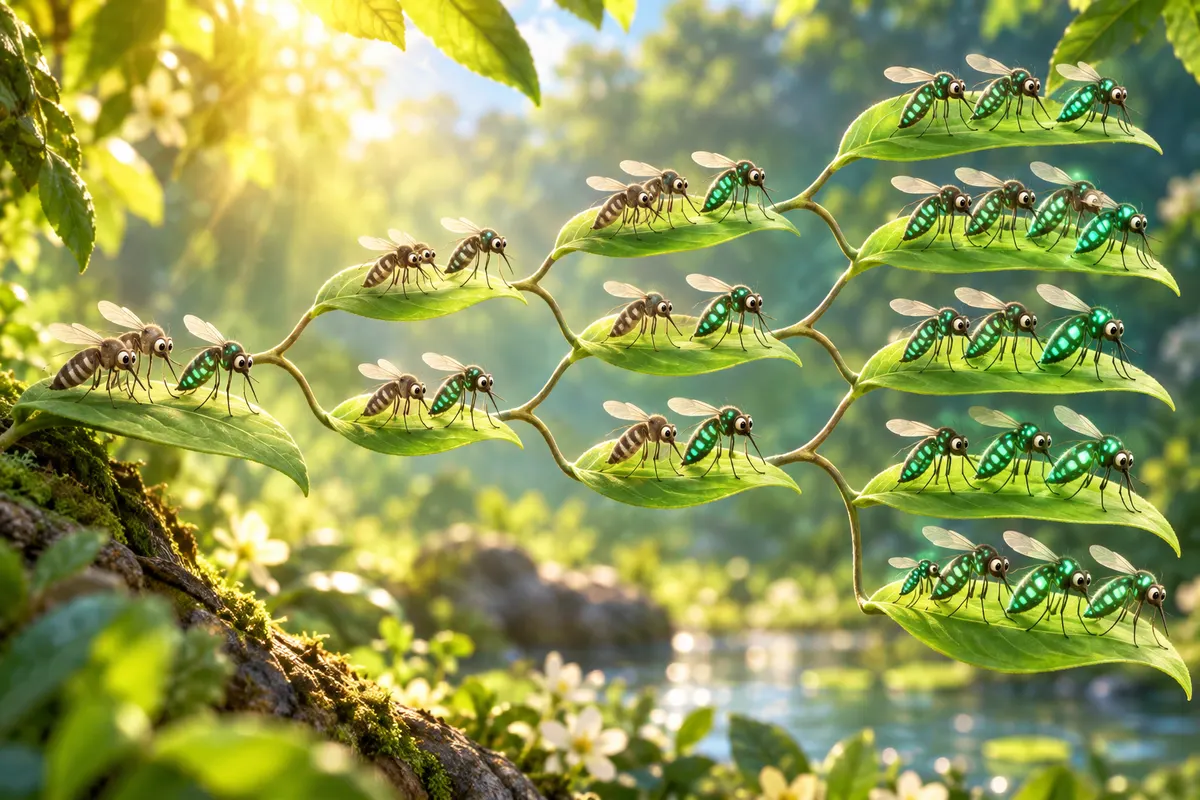
この性質のおかげで、ボルバキアを持つ蚊は世代を重ねるごとに自然に多数派になっていきます。2011年には、オーストラリア北東部の2つの町で確かめられました(Nature, 2011)。ボルバキアを持つ蚊を放すと、数か月で、町の蚊のほとんどがボルバキアを持つようになったのです。
03街を地区に分けて比べたら、デング熱が約77%少なかった
地区をくじ引き(ランダム)で分けているので、「たまたま衛生状態がよい地区だった」といった偏りが入りにくい。公衆衛生の研究としては、かなり信頼性の高い調べ方です。
04まとめ
敵(蚊)を全滅させるのではなく、蚊の性質を変えて、病気を運びにくくする。ボルバキア作戦は、生き物どうしの関係をうまく利用した、まさに逆転の発想でした。
自然界にすでにあるしくみの中に、人類を助けるヒントが眠っているのかもしれません。
この研究を英語で読もう原田英語の English CornerDengue is a disease spread by mosquitoes in tropical and subtropical areas. 音声
音声 4択クイズ9問A2・B1・B2タップして開く
原田英語の English Corner
この研究を英語で読もう
Mosquitoes carry dangerous diseases like dengue. Scientists had a new idea. Instead of killing mosquitoes, they gave them a bacterium called Wolbachia. Many insects already have it naturally. With Wolbachia, the virus cannot grow well inside the mosquito.
In a city in Indonesia, scientists released these mosquitoes in half of 24 areas. Those areas had about 77% fewer dengue cases than the others. It was a smart way to fight a disease.
72 words ・ CEFR A2
和訳を見る
蚊はデング熱のような危険な病気を運びます。科学者たちは新しいアイデアを思いつきました。蚊を殺す代わりに、ボルバキアという細菌を蚊に持たせたのです。多くの昆虫は、もともと自然にこの細菌を持っています。ボルバキアがいると、蚊の体の中でウイルスがうまく増えません。
インドネシアのある都市で、科学者たちは24の地区のうち半分にこの蚊を放しました。それらの地区では、ほかの地区よりデング熱の患者が約77%少なくなりました。それは病気と戦うための賢い方法でした。
4択リーディングクイズ
Q1. What is the passage mainly about?
蚊を殺す代わりにボルバキアという細菌を持たせてデング熱を減らす方法の話なので C。A は Instead of killing mosquitoes と逆。
Q2. By about how much were dengue cases lower in those areas?
about 77% fewer dengue cases とあるので A。24 は地区の数。
Q3. In this passage, "released" means ...
release は「放す、解放する」。蚊を街に放した、という意味なので B。
Dengue is a disease spread by mosquitoes in tropical and subtropical areas. Instead of trying to kill mosquitoes, researchers came up with the opposite idea. They gave the mosquitoes a bacterium called Wolbachia, which lives naturally in many insects such as butterflies and flies. In 2009, a research team reported that when the dengue mosquito carries Wolbachia, viruses such as dengue do not grow well inside it.
What is more, Wolbachia spreads by itself, because almost all the eggs of a female with the bacterium inherit it. In a large trial in Yogyakarta, Indonesia, the city was divided into 24 areas, and mosquitoes with Wolbachia were released in half of them. Those areas had about 77% fewer dengue cases than the others.
122 words ・ CEFR B1
和訳を見る
デング熱は、熱帯や亜熱帯の地域で蚊によって広がる病気です。研究者たちは蚊を殺そうとする代わりに、逆の発想を思いつきました。チョウやハエなど多くの昆虫に自然にすんでいるボルバキアという細菌を、蚊に持たせるのです。2009年、ある研究チームは、デング熱を運ぶ蚊がボルバキアを持つと、デングなどのウイルスが体内でうまく増えないことを報告しました。さらに、ボルバキアはひとりでに広がります。
細菌を持つメスの卵は、ほぼすべてそれを受け継ぐからです。インドネシアのジョグジャカルタで行われた大規模な試験では、市が24の地区に分けられ、そのうち半分にボルバキアを持つ蚊が放されました。それらの地区では、ほかの地区よりデング熱の患者が約77%少なくなりました。
4択リーディングクイズ
Q1. What is unusual about this method?
Instead of trying to kill mosquitoes ... giving them a bacterium とあり、蚊を殺さず性質を変える方法なので D。
Q2. Why does Wolbachia spread by itself?
because almost all the eggs of a female with the bacterium inherit it と理由が書かれているので A。
Q3. Why were the mosquitoes released in only half of the 24 areas?
半分の地区だけに放すことで、放した地区と放していない地区を比べられる。効果を確かめるための比較なので C。
Mosquitoes are often called the deadliest animals on Earth because of the pathogens they transmit, and dengue is a major threat across the tropics and subtropics. Rather than attempting to eliminate mosquitoes, scientists have pursued a counterintuitive strategy: introducing Wolbachia, a bacterium naturally found in many insects, into the main dengue-carrying mosquito, which does not normally have it.
A 2009 study showed that Wolbachia limits infection with dengue and other pathogens inside the mosquito. The bacterium also spreads on its own, because nearly all offspring of infected females inherit it, while eggs from uninfected females that mate with infected males rarely hatch. In 2011, Wolbachia was shown to have spread through wild mosquito populations in two Australian towns.
The strongest evidence came from a 2021 trial in Yogyakarta, Indonesia, where 24 areas were randomly assigned either to receive Wolbachia mosquitoes or not. Confirmed dengue cases were about 77% lower, and hospitalizations about 86% lower, in the treated areas. Because assignment was random, differences such as local hygiene are unlikely to explain the result. Even so, whether the effect will last, given possible influences such as rising temperatures and viral adaptation, requires long-term monitoring.
193 words ・ CEFR B2
和訳を見る
蚊は、媒介する病原体のために、地球上で最も人の命を奪う動物とよく呼ばれ、デング熱は熱帯・亜熱帯全域で大きな脅威となっています。科学者たちは蚊を根絶しようとするのではなく、直感に反する戦略を追求してきました。多くの昆虫に自然に見られる細菌ボルバキアを、ふつうはそれを持たない、デング熱を運ぶ主な蚊に導入するのです。
2009年の研究は、ボルバキアが蚊の体内でデングなどの病原体の感染を抑えることを示しました。さらにこの細菌は、ひとりでにも広がります。感染したメスの子はほぼすべてそれを受け継ぎ、一方で、感染していないメスが感染したオスと交尾して産んだ卵はほとんどかえらないからです。2011年には、オーストラリアの2つの町で、ボルバキアが野生の蚊の集団に広がったことが示されました。
最も強力な証拠は、インドネシアのジョグジャカルタで行われた2021年の試験から得られました。そこでは24の地区が、ボルバキアを持つ蚊を放すか放さないかに無作為に割り当てられました。蚊を放した地区では、確認されたデング熱の患者が約77%、入院が約86%少なくなりました。割り当てが無作為だったため、地域の衛生状態などの違いが結果を説明するとは考えにくいのです。それでも、気温の上昇やウイルスの適応といった影響の可能性を考えると、効果が続くかどうかは長期的な監視が必要です。
4択リーディングクイズ
Q1. Why is the strategy described as "counterintuitive"?
Rather than attempting to eliminate mosquitoes とあり、蚊を減らすという直感的な方法と逆に、細菌を持たせるので B。counterintuitive は「直感に反する」。
Q2. Why does random assignment make the results more reliable?
Because assignment was random, differences such as local hygiene are unlikely to explain the result. とあるので D。C は無作為化の考え方と正反対。
Q3. What is the author's attitude toward the method?
強い証拠を紹介しつつ、最終文で Even so ... requires long-term monitoring と留保をつけているので C。筆者の態度を問う設問の定番パターン。
重要単語
- dengueC1名詞デング熱(蚊が媒介するウイルス感染症)Dengue is spread by mosquitoes in warm regions.
 発音は /ˈdeŋɡi/(デンギ)。dengue fever とも言う。
 - transmitB2動詞(病気を)うつす、伝えるMosquitoes can transmit several viruses. trans(向こうへ)+mit(送る)。名詞 transmission。infect との使い分けも狙われる。
- bacteriumB2名詞細菌(複数形 bacteria)This bacterium lives inside many insects. bacteria は複数形。bacteria is ではなく bacteria are が正式。単複の語形変化は語法問題で出る。
- randomizedC1形容詞無作為化されたA randomized trial compares groups fairly. randomized controlled trial(RCT、ランダム化比較試験)は医療系長文で最も信頼性が高い研究デザインとして登場する。
- incidenceC1名詞発生率The incidence of dengue fell sharply. incident(出来事)と綴りが似ているので注意。the incidence of ~「~の発生率」の形で出る。
- deployC1動詞配置する、展開するThe team deployed mosquitoes across the city. もとは軍隊を「展開する」の意。技術や人員を現場に投入する意味で新聞・論文に頻出。
- vectorC1名詞(病原体の)媒介生物Mosquitoes are vectors of many diseases. 数学では「ベクトル」。医学では病気を運ぶ生物を指す。多義語として難関大で出る。
 入試に出る順の単語帳を印刷する →
 全5903語の「科学英単語カード」で復習する →
 動画でもっと知る
動画は各チャンネルの公式埋め込みで表示しています(YouTube)。
 公式・一次情報をチェック
- 令和8年度(2026年度)大学入学共通テスト 追試験 問題(英語リーディングで蚊の数や感染症を抑える研究がテーマの長文が出題)(大学入試センター)dnc.ac.jp
- Dengue and severe dengue(WHO)who.int
- World Mosquito Programworldmosquitoprogram.org
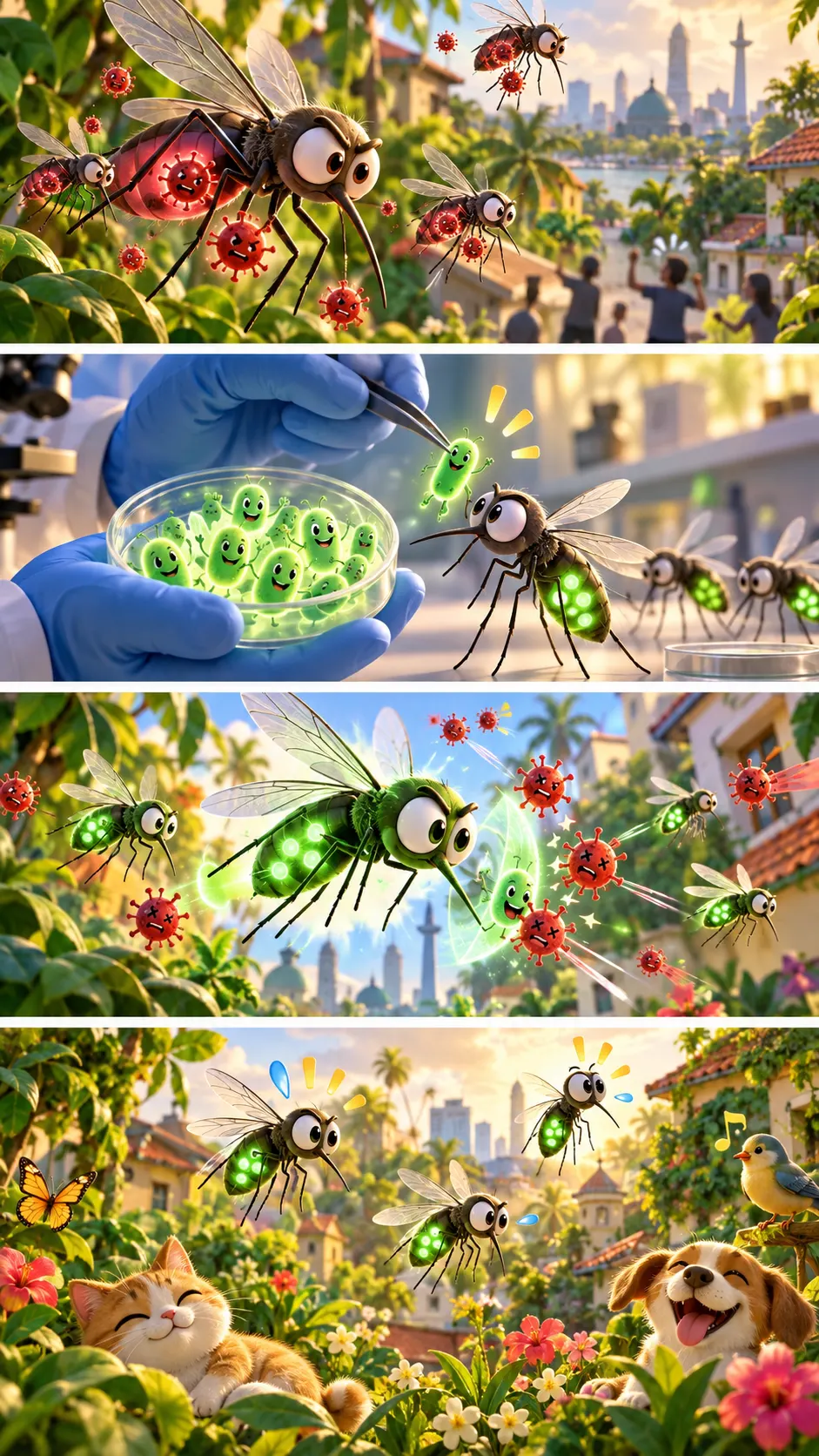
 4コマでわかる
このネタ、誰かに教えたくなった?
蚊を減らすんじゃなくて、蚊に「ある細菌」を持たせて街に放ったら、放さなかった地区に比べてデング熱の患者が約77%少なかったらしい。インドネシアでの大規模な比較試験の結果。昆虫の多くが持つ細菌ボルバキアを使った逆転の発想。共通テスト追試験にも、ボルバキアで蚊を減らす別の方法が出た。
押すと「マジかリスト」に保存されます
 出典・参考文献(3件)タップで表示
- Utarini et al. (2021) Efficacy of Wolbachia-infected mosquito deployments for the control of dengue, New England Journal of Medicinedoi.org
- Moreira et al. (2009) A Wolbachia symbiont in Aedes aegypti limits infection with dengue, chikungunya, and Plasmodium, Celldoi.org
- Hoffmann et al. (2011) Successful establishment of Wolbachia in Aedes populations to suppress dengue transmission, Naturedoi.org

※本記事は上記の研究・公開資料をもとに、原田英語が独自の言葉で解説したものです。引用は著作権法第32条の範囲で行い、出典を明記しています。画像はすべてオリジナルのイメージです。研究結果には限界や個人差があります。誤りのご指摘は原田英語のお問い合わせフォームから。
 これも「マジか!?」

 動物・植物
動物・植物
【立命館の入試に出た】口と口を合わせて交尾するタコがいた。30年以上うわさだけだったパナマのタコ

 動物・植物
動物・植物
【東大の入試に出た】地衣類は「2者の共生」とは限らなかった。140年以上見落とされていた第3の住人
 動物・植物
動物・植物
【早稲田の入試に出た】暑い地域ほど虫は明るい色。温暖化で、明るい色のトンボの割合が増えた
 動物・植物
動物・植物
【広島大の入試に出た】犬も「寝て覚える」。昼寝中の脳波が、起きた後の上達ぶりと関係していた


 動物・植物
動物・植物
「観葉植物で空気がキレイに」は幻想? 換気と同じ効果には床1㎡に10〜1000鉢が必要という計算

 動物・植物
動物・植物