


 動物・植物ホント
カラスが「釣り針」を作り、部品を組み立てる。ニューカレドニアの道具職人、カレドニアガラス
 2026.10.02
 English Corner(A2〜B2・4択クイズ)
 読む前に予想してみよう!
道具を部品から組み立てられる動物は、人間以外では見つかっていない
ニューカレドニアガラスは、短い部品を差し込んで長い道具を組み立てた。
 研究カード(どんな研究?)
- 対象
- 野生と飼育下のニューカレドニアガラスほか
- 規模
- 野外観察と実験(8羽など小規模)
- 研究の種類
- 行動観察・問題解決実験
- 確かさ
- ★★★☆☆
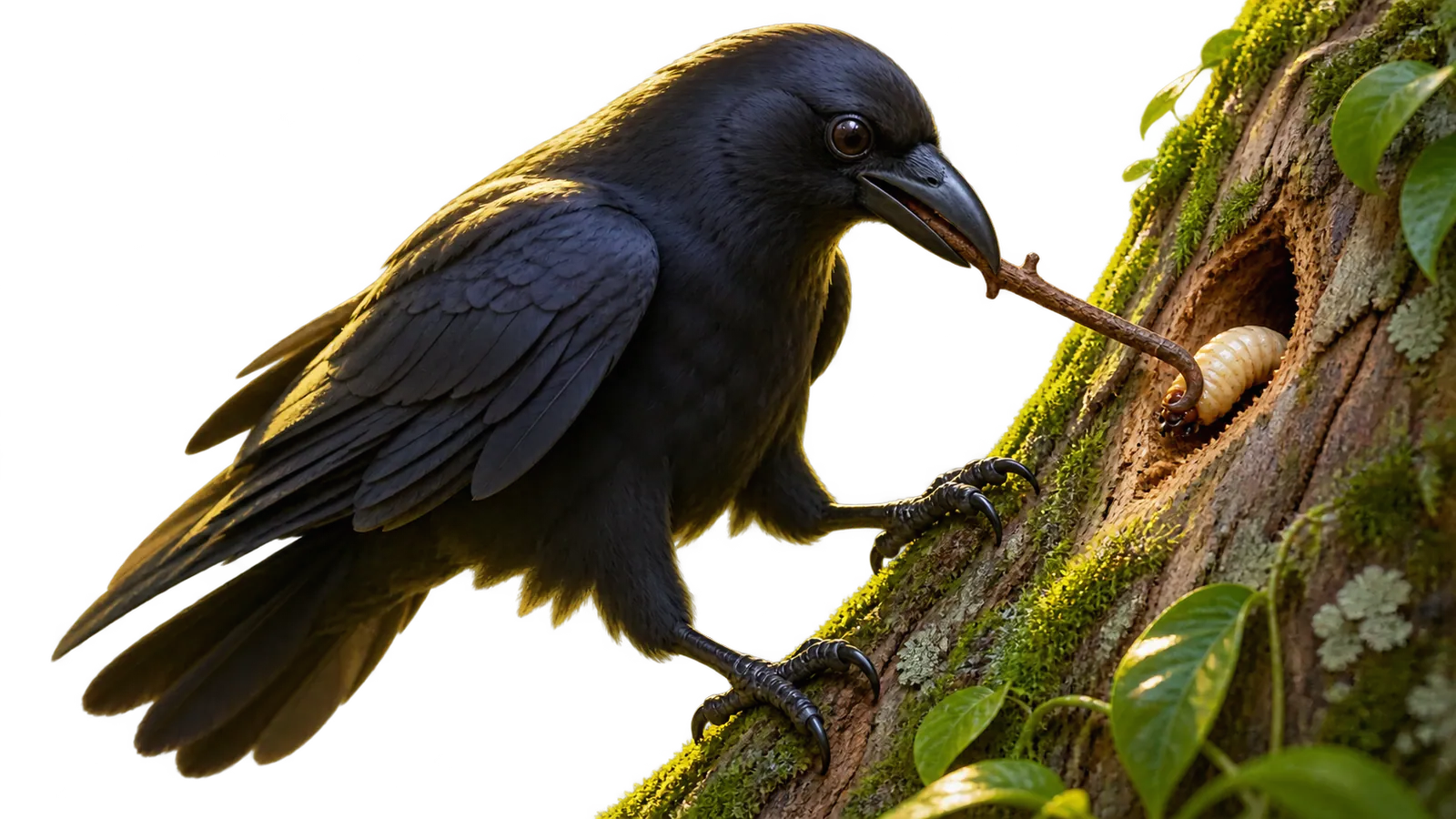
ニューカレドニアのカラスは小枝からカギ形の道具を作り、虫を釣り出す。実験では短い部品をつなぎ合わせて長い道具を組み立てた個体もいた。
ひとことで言うとこのカラスは、木の枝でつり針を作って虫をつり上げる!
ゴミ袋を破る、人の顔を覚える……日本のカラスもかなりの知恵者です。でも、南太平洋の島ニューカレドニアには、そのさらに上を行く“職人”がいます。
その名もカレドニアガラス(ニューカレドニアガラス)。このカラスは、小枝から釣り針を作り、木の穴にひそむ虫を“釣り上げる”のです。
01野生のカラスが「カギ形の道具」を作っていた
ポイントは、落ちている棒をそのまま使うのではなく、目的に合わせて形を加工していることです。
02地域ごとに「デザイン」が違う
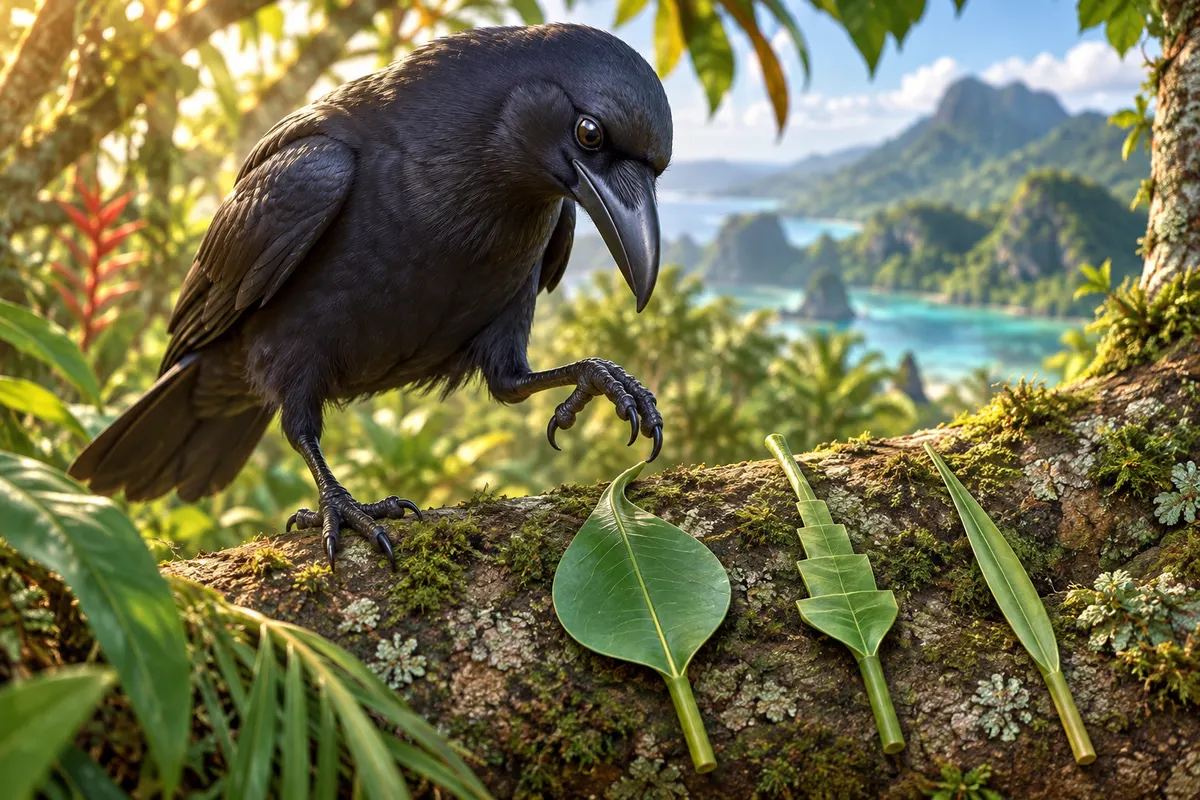
ハントさんとグレイ(Gray)さんは2003年、ニューカレドニアの21か所で、カラスが葉から作った道具5550本の形を調べました。すると、幅の広い形、細い形、段々に細くなる形の3種類があり、どの形が見られるかは地域によって違っていました(重なっている地域もありました)。
3つの形は、作り方がよく似ています。そこで研究者たちは、もとは1つの形から始まり、改良が少しずつ積み重なって分かれてきた“道具の文化”かもしれないと考えています。人間の道具の歴史を、小さなスケールで見ているようです。
03針金を曲げたカラス、部品を組み立てたカラス
2002年には、イギリス・オックスフォード大学の研究室で飼われていたベティというメスのカラスが話題になりました(Weirら、『Science』)。筒の底にある、エサの入った小さなバケツを取るために、まっすぐな針金を曲げてカギを作ったのです。
さらに2018年、ドイツ・イギリスなどの研究チーム(von Bayernら)は、もっと難しい課題を出しました。エサは箱の奥にあり、手元の部品はどれも短すぎて届かない。でも、部品どうしは差し込んでつなげられる――。
すると、8羽のうち4羽が、自分で部品をつないで長い道具を作り、エサを取り出しました。しかも1羽は、必要に応じて3本つなぎ、4本つなぎの道具まで組み立てたのです。部品を組み合わせた道具づくりは、人間以外では、飼育されている大型類人猿でわずかに観察されているだけでした。
04まとめ
カレドニアガラスは、道具を使い、作り、ときには組み立てることまでできる鳥でした。脳の大きさはクルミほどでも、そのものづくりの腕前は一流です。
「鳥頭」という言葉は、そろそろ“ほめ言葉”に変えたほうがいいのかもしれません。
この研究を英語で読もう原田英語の English CornerNew Caledonian crows, which live on an island in the South Pacific, do more than just use tools. 音声
音声 4択クイズ9問A2・B1・B2タップして開く
原田英語の English Corner
この研究を英語で読もう
Crows on New Caledonia, an island in the South Pacific, are great tool makers. They change the shape of small sticks to make hooks.
Then they use the hooks to pull insects out of holes in trees. In 2018, scientists gave some crows short pieces that could fit together. Each piece was too short to reach the food. Four out of eight crows joined the pieces and made a long tool. Then they got food from a box.
78 words ・ CEFR A2
和訳を見る
南太平洋の島ニューカレドニアのカラスは、すばらしい道具職人です。小さな枝の形を変えて、カギを作ります。
そしてそのカギを使って、木の穴から虫を引っぱり出します。2018年、科学者たちはカラスに、つなぎ合わせられる短い部品を与えました。どの部品もエサに届くには短すぎました。8羽のうち4羽が部品をつないで長い道具を作りました。そして箱からエサを取り出したのです。
4択リーディングクイズ
Q1. What is the passage mainly about?
第1文 are great tool makers から始まり、カギ作りや部品の組み立てを紹介しているので D。
Q2. How many crows made a long tool?
Four out of eight crows joined the pieces とあるので B。8は実験に参加した数。
Q3. In this passage, "pull" means ...
pull insects out of holes は「穴から虫を引っぱり出す」。pull は「引く」で、反対語は push(押す)。正解は A。
New Caledonian crows, which live on an island in the South Pacific, do more than just use tools. In 1996, a researcher named Hunt reported that wild crows shape twigs into hooks and cut long strips from spiny leaves. They use these tools to get insects out of holes in trees.
Later research found that the leaf tools have different designs in different areas, and each design is found mostly in its own area. This may be a kind of tool culture. In 2002, a crow named Betty bent a straight wire into a hook to lift a small bucket. In 2018, researchers gave crows pieces that were too short to reach food. Four of eight crows joined the pieces into a longer tool.
124 words ・ CEFR B1
和訳を見る
南太平洋の島にすむニューカレドニアガラスは、ただ道具を使うだけではありません。1996年、ハントという研究者は、野生のカラスが小枝をカギの形にしたり、トゲのある葉から細長い切れはしを切り取ったりしていると報告しました。カラスはこれらの道具を使って木の穴から虫を取り出します。
その後の研究で、葉の道具は地域ごとにデザインが違い、それぞれのデザインが主に決まった地域で見つかることがわかりました。これは一種の道具の文化かもしれません。2002年には、ベティという名のカラスがまっすぐな針金を曲げてカギを作り、小さなバケツを引き上げました。2018年、研究者たちはエサに届くには短すぎる部品をカラスに与えました。8羽のうち4羽が、部品をつないでもっと長い道具にしました。
4択リーディングクイズ
Q1. What is the passage mainly about?
第1文 do more than just use tools の後、道具作り・地域差・針金・部品の組み立てを紹介しているので C。
Q2. What did Betty do?
Betty bent a straight wire into a hook to lift a small bucket とあるので A。
Q3. Why do researchers think the crows may have a "tool culture"?
地域ごとにデザインが違い、それぞれのデザインが主に決まった地域で見つかる点を受けて This may be a kind of tool culture. と述べているので B。
In a 1996 paper in Nature, Hunt described wild New Caledonian crows making two kinds of tools. Some were twigs shaped into hooks. Others were strips cut from barbed leaves. The birds used both to pull insects out of holes. The birds were shaping materials for a job, which goes beyond using whatever happens to lie on the ground.
A 2003 survey found that leaf-tool designs differed from region to region, with each style common in some areas, which looked like a simple, cumulative tool culture. In 2002 a female crow named Betty bent a straight piece of wire into a hook. Wild crows shape plant materials as part of their normal behavior, though, so Betty may have been extending an old habit rather than inventing something new.
In 2018, von Bayern and colleagues gave eight crows short parts that were useless on their own. Four of the birds fitted them together into a longer compound tool, and one built versions with three and four pieces. The authors admit they do not know what mental processes, such as planning, lie behind this. Before their study, such construction had been seen only in a few great apes in captivity.
198 words ・ CEFR B2
和訳を見る
1996年に『Nature』に発表した論文で、ハントは、野生のニューカレドニアガラスが2種類の道具を作る様子を報告しました。1つはカギ形に加工した小枝です。もう1つは、トゲのある葉から切り取った細長い切れはしでした。鳥たちはどちらも、穴から虫を引き出すのに使っていました。鳥たちは目的に合わせて材料を加工していたのであり、落ちているものをそのまま使うのとは違います。
2003年の調査では、葉の道具のデザインが地域ごとに異なり、それぞれの型が特定の地域に多いことがわかりました。これは、改良が積み重なる素朴な道具文化のように見えました。2002年、ベティというメスのカラスが、まっすぐな針金を曲げてカギを作りました。ただし野生のカラスはふだんの行動として植物素材を加工するので、ベティは何か新しいものを発明したのではなく、昔からの習性を応用しただけかもしれません。
2018年、フォン・バイエルンらは、8羽のカラスに、単独では役に立たない短い部品を与えました。そのうち4羽が部品をつなぎ合わせて長い複合道具を作り、1羽は3本・4本つなぎのものまで作りました。著者たちは、計画性など、この行動の背後にある心のはたらきはわからないと認めています。この研究以前には、こうした組み立ては飼育下の一部の大型類人猿でしか観察されていませんでした。
4択リーディングクイズ
Q1. What is the passage mainly about?
野外の道具作り、地域差、実験室での組み立てを紹介し、ベティの解釈や心のはたらきといった未解決の点にも触れているので A。
Q2. What did the 2018 study show?
Four of the birds fitted them together into a longer compound tool とあるので D。A は2002年の話。
Q3. Why might Betty's achievement not be pure innovation?
Wild crows shape plant materials as part of their normal behavior, though, so Betty may have been extending an old habit とあるので C。
重要単語
- toolA2名詞道具The crow used a tool to get food.
 tool use(道具使用)と tool making(道具製作)の違いは動物の知能を論じる長文の定番。
 - hookB1名詞カギ、釣り針The crow shaped a hook at the end of the twig. 動詞で「引っかける」。be hooked on ~「~に夢中になる」は口語で頻出。
- combineB1動詞組み合わせるFour crows combined short sticks into a long tool. combine A with B / combine A into B。名詞は combination。
- extractB2動詞引き抜く、取り出すThey extract insect larvae from dead wood. ex-(外へ)+tract(引く)。attract(引きつける)、tractor と同語源。名詞は「抽出物、エキス」。
- innovationB2名詞新しい工夫、革新Tool innovation requires flexible thinking. in-(中に)+nov(新しい)。novel(小説・新しい)と同語源。
- compoundB2形容詞複合のThe crow built a compound tool from four parts. 名詞で「化合物」。compound interest(複利)、compound word(複合語)も覚えておきたい。
- cumulativeC1形容詞累積的な、積み重なるHuman technology is the result of cumulative culture. accumulate(蓄積する)と同語源。cumulative culture「累積的文化」は人類進化の長文でよく出る。
 入試に出る順の単語帳を印刷する →
 全5903語の「科学英単語カード」で復習する →
 動画でもっと知る
動画は各チャンネルの公式埋め込みで表示しています(YouTube)。
この話題を TED で聞く
同じテーマの TED・TED-Ed を、 TED HACK で。英語の見どころ・使える表現・学習ミッションつきの日本語ガイドです。(運営:原田英語)


 実物を見に行こう
この話につながる展示がある、全国のミュージアムです。
- 我孫子市 鳥の博物館千葉県我孫子市
3階の「世界の鳥」では、ダチョウの仲間からスズメの仲間まで、各グループを代表するはく製を約300点展示しています。2階では、地元の手賀沼の自然と鳥を紹介しています。
館の情報は 全国ミュージアムマップ(Culture+Commons)より。開館日や料金は各館の公式サイトでご確認ください。
 4コマでわかる
このネタ、誰かに教えたくなった?
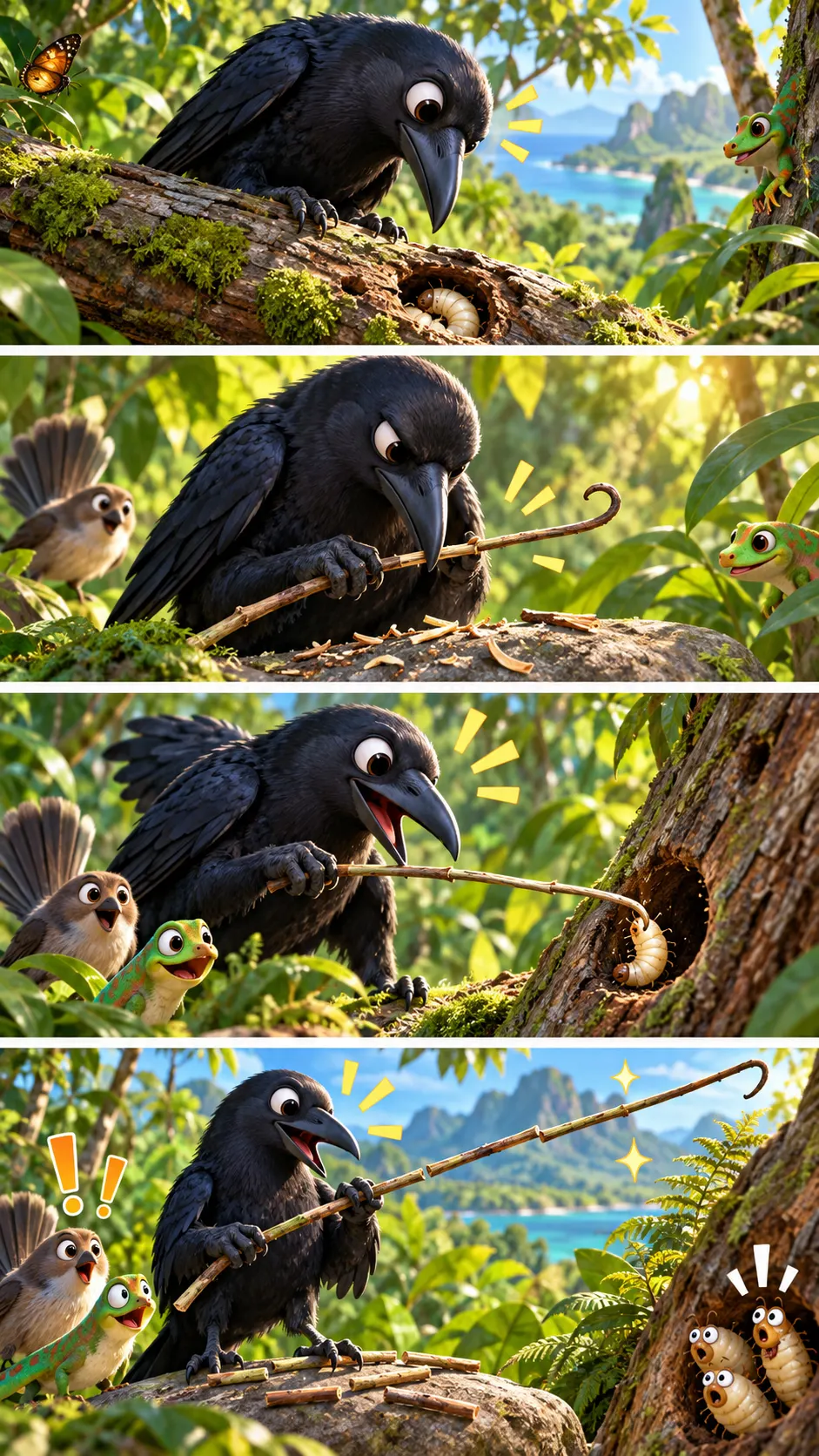
南太平洋のニューカレドニアにすむカラスは、小枝を加工して先がカギ状の「釣り針」を作り、木の穴から虫を引っかけて取り出す。実験では、短すぎる部品を差し込んでつなぎ、2本・3本・4本つなぎの長い道具まで作ったカラスがいた。
押すと「マジかリスト」に保存されます
 出典・参考文献(5件)タップで表示
- Hunt (1996) Manufacture and use of hook-tools by New Caledonian crows, Naturedoi.org
- Weir, Chappell & Kacelnik (2002) Shaping of Hooks in New Caledonian Crows, Sciencedoi.org
- Hunt & Gray (2003) Diversification and cumulative evolution in New Caledonian crow tool manufacture, Proceedings of the Royal Society Bdoi.org
- von Bayern et al. (2018) Compound tool construction by New Caledonian crows, Scientific Reportsdoi.org
- Rutz et al. (2016) Discovery of species-wide tool use in the Hawaiian crow, Naturedoi.org

※本記事は上記の研究・公開資料をもとに、原田英語が独自の言葉で解説したものです。引用は著作権法第32条の範囲で行い、出典を明記しています。画像はすべてオリジナルのイメージです。研究結果には限界や個人差があります。誤りのご指摘は原田英語のお問い合わせフォームから。
 これも「マジか!?」
 動物・植物
動物・植物
オウムは意味をわかって話している? 6までの数や「何もない」を言葉で答えたヨウムのアレックス
 動物・植物
動物・植物
鳥123種の声の大きさを測ったら、「世界一うるさい鳥」の候補が新たに2種見つかった
 動物・植物
動物・植物
虫が「道具」でハチを釣っていた。ハチの樹脂を前脚に塗る“釣り師”サシガメの作戦
 動物・植物
動物・植物
ミツバチは「ゼロ」がわかる? 何も描かれていないカードを「1より少ない」と選んだ
 動物・植物
動物・植物
ヒクイドリは世界一危険な鳥? 221件の襲撃記録を調べたら、犯人は「エサをあげる人間」だった
 動物・植物
動物・植物