

 人間関係・お金・日常ホント
冷たい水に30秒長く手をつける方を7割が選んだ。決め手は「最後が少し楽」だったこと
 2026.10.02
 English Corner(A2〜B2・4択クイズ)

 読む前に予想してみよう!
苦痛の時間が長くても、最後が少しマシな体験の方を「もう一度やるならこっち」と選ぶ人が多かった
冷水実験では約7割が、30秒長いけれど終わりが少しマシな方を選んだ。
 研究カード(どんな研究?)
- 対象
- 冷水実験の参加者・内視鏡検査の患者
- 規模
- 数十人〜約700人
- 研究の種類
- 実験・ランダム化比較試験・メタ分析
- 確かさ
- ★★★★☆
人は体験を「一番強烈だった瞬間」と「最後」で記憶しやすい。苦痛の時間が長くても、最後が少しマシなら、もう一度選ぶ人が多かった。
ひとことで言うと思い出は「いちばんスゴかったところ」と「最後」に引っぱられやすい!
「終わりよければ全てよし」。シェイクスピアの劇のタイトルにもなった言葉です。
でも、これが人間の記憶の性質をズバリ言い当てていたとしたら?
ノーベル賞学者カーネマンらが、14℃の冷たい水を使って、そのことを確かめてしまいました。しかも結果は、ちょっと信じられないものだったのです。
01冷たい水に手をつける2つの体験
実験を行ったのは、心理学者ダニエル・カーネマンらのチームです。
冷静に考えれば、②は①につらい時間を30秒足しただけ。選ぶなら①に決まっていますよね。
ところが、32人中22人、約7割の人が②を選んだのです。同じ論文で、やり方を少し変えてもう一度試したときも、37人中24人が②を選びました。
02記憶は「ピーク」と「エンド」で決まる
なぜこんなことが起きるのでしょう?
カーネマンらは、人が過去の体験を振り返るとき、全体の長さはほとんど気にせず、「一番強烈だった瞬間(ピーク)」と「最後の瞬間(エンド)」の平均くらいで評価していると考えました。これがピーク・エンドの法則です。
②は、最後の30秒が少しだけマシだったので、終わりの印象が良くなり、体験全体の記憶も「まあまあ」に変わったと考えられます。
ちなみに、体験の長さが記憶の評価にあまり反映されない現象は持続時間の無視と呼ばれています。
カーネマンは、私たちの中には「体験している自分」と「思い出す自分」の2人がいる、とたとえました。体験している自分にとっては、つらい30秒が増えるのは損。でも、次に何を選ぶかを決めるのは「思い出す自分」の方なのです。

03病院の検査でも確かめられた
この法則は、実際の医療の場でも調べられています。
カーネマンと医師のドナルド・レデルマイヤーは、大腸の内視鏡検査を受けた患者154人と、結石を体の外から砕く治療を受けた患者133人を調べました(1996年)。あとで振り返ったときの「つらさ」の評価は、痛みのピークと最後の3分間の痛みとよく結びついていました。一方、検査や治療が長かった人ほどつらく覚えている、ということはありませんでした。
さらに682人の患者をくじ引きのように2つに分けた2003年の試験(Redelmeier・Katz・Kahneman)では、半分の人だけ、検査の最後に内視鏡をすぐ抜かずに少し置いておく時間を足しました。この時間は痛みが軽く、最後の印象が楽になります。すると、検査全体を振り返ったときの「いやだった度合い」が小さくなりました。その後の約5年間で再検査を受けに来た割合も、わずかに高くなっていました。
04たくさんの研究で確かめられたが、例外もある
2022年には、ピーク・エンドの法則を調べたこれまでの研究から174個の結果を集め、まとめて分析し直したメタ分析が発表されました。ピークと最後の印象が、あとで振り返ったときの評価と強く結びつくことが確かめられ、体験の長さの影響はほぼゼロでした。
ただし、何にでも当てはまるわけではありません。
- 1日全体の気分:アメリカ・フランス・デンマークの約2400人を調べた研究では、「最後」よりも、1日を通した平均の気分の方が、その日の評価とよく合っていた
- 旅行:大学生49人の旅行を調べた研究では、ピークと最後だけで評価が決まるとは言えなかった
- 食事:食事の思い出を調べた研究では、長さが無視される傾向は見られたが、ピークや最後の料理の影響はほとんど見られなかった
短くはっきりした体験ほど当てはまりやすく、いろいろな出来事が続く長い体験では弱まるようです。
05まとめ
私たちの記憶は、ビデオカメラのように全部を記録しているわけではありません。特に短い体験では、一番の山場と、最後の場面を切り取った「ハイライト集」のようになりやすいのです。
だからこそ、終わり方を少し工夫するだけで、思い出は良くなるかもしれません。長い1日や旅行では当てはまりにくいこともありますが、「終わりよければ全てよし」は、科学的にも使える知恵でした。
この研究を英語で読もう原田英語の English Corner"All's well that ends well" may describe how our memory works. 音声
音声 4択クイズ9問A2・B1・B2タップして開く
原田英語の English Corner
この研究を英語で読もう
Would you choose more pain? In a 1993 experiment, people put one hand in very cold water. In one trial, they kept it there for 60 seconds.
In another, they kept it there for 90 seconds, but the water got a little warmer at the end. About 70 percent chose to repeat the longer trial! We remember the worst moment and the end. The length matters very little.
68 words ・ CEFR A2
和訳を見る
あなたは、より多くの痛みを選びますか。1993年の実験で、人々はとても冷たい水に片手を入れました。ある試行では、60秒間そのまま入れておきました。
別の試行では90秒間入れておきましたが、最後に水が少しだけ温かくなりました。約70%の人が、長い方の試行をもう一度やると選んだのです。私たちは、一番つらい瞬間と終わりを覚えているのです。長さはあまり関係ありません。
4択リーディングクイズ
Q1. What is the passage mainly about?
つらい体験を長さではなく最悪の瞬間と終わりで記憶する、という話なので C。
Q2. About how many people chose the longer trial?
About 70 percent chose to repeat the longer trial とあるので D。
Q3. In this passage, "trial" means ...
trial はここでは実験の「試行・1回分の試し」の意味なので A。
"All's well that ends well" may describe how our memory works. In a 1993 experiment led by Daniel Kahneman, participants had two painful experiences. In one, they held a hand in 14°C water for 60 seconds. In the other, they did the same, but then kept their hand in the water for 30 more seconds while the temperature rose slightly.
The second trial included more pain, yet about 70 percent chose to repeat it. Kahneman explained that we judge past experiences mainly by their most intense moment, or peak, and by how they end. This is called the peak-end rule. We also tend to ignore how long an experience lasted, which is known as duration neglect.
116 words ・ CEFR B1
和訳を見る
「終わりよければ全てよし」は、私たちの記憶の働きを言い表しているのかもしれません。ダニエル・カーネマンが率いた1993年の実験で、参加者は2つのつらい体験をしました。一方では、14℃の水に片手を60秒間つけました。もう一方では同じことをしたあと、水温が少しだけ上がる間、さらに30秒手を水につけておきました。
2つ目の試行の方が苦痛は多かったのに、約70%の人がそれをもう一度やると選びました。カーネマンは、私たちは過去の体験を主に、最も強烈な瞬間(ピーク)と、どう終わったかで判断すると説明しました。これはピーク・エンドの法則と呼ばれます。私たちはまた、体験がどれくらい続いたかを無視しがちで、これは持続時間の無視として知られています。
4択リーディングクイズ
Q1. What was different about the second trial?
kept their hand in the water for 30 more seconds while the temperature rose slightly とあるので B。
Q2. What is the peak-end rule?
we judge past experiences mainly by their most intense moment, or peak, and by how they end とあるので C。
Q3. What can we infer from the experiment?
苦痛が長くても終わりが少しマシな方が選ばれたことから、良い終わり方を加えると記憶が良くなると推論できる。A が正解。
Daniel Kahneman and colleagues ran a cold-water test in 1993. Participants held one hand in water at 14 degrees Celsius for 60 seconds. In another trial, they endured the same 60 seconds and then 30 more, as the water warmed slightly to about 15 degrees. The second trial contained strictly more discomfort, but about 70 percent of participants chose to repeat it.
Kahneman proposed that in hindsight we judge an experience mostly by its peak, the most intense moment, and by its end, while its total length is largely ignored. He called this last pattern duration neglect. In his terms, the "experiencing self" and the "remembering self" disagree, and it is the remembering self that makes future decisions. The idea has been tested in medicine.
In studies of colonoscopy patients, remembered discomfort tracked peak and final pain, not the length of the procedure. A 2003 randomized trial with about 700 patients found that adding a milder period at the end left patients with better memories of the procedure. A 2022 meta-analysis confirmed that peaks and ends strongly shape ratings. Studies of whole days and holidays found weaker effects, so the rule is best seen as a strong tendency.
198 words ・ CEFR B2
和訳を見る
1993年、ダニエル・カーネマンらは冷たい水を使った実験を行いました。参加者は14℃の水に60秒間片手を浸しました。別の試行では、同じ60秒に耐えたあと、さらに30秒続け、その間に水はわずかに温まって約15℃になりました。2回目の試行の方が不快さは明らかに多かったのに、参加者の約70%は2回目の方をもう一度受けることを選びました。
カーネマンは、私たちは経験をあとから振り返って、主にそのピーク、つまり最も強烈な瞬間と、終わりで判断し、全体の長さはほとんど無視していると提唱しました。この最後のパターンを、彼は持続時間の無視と呼びました。彼の言葉で言えば、「経験する自己」と「記憶する自己」の意見は食い違い、将来の決定を下すのは記憶する自己の方なのです。この考えは医療の場でも検証されてきました。
大腸内視鏡検査を受けた患者の研究では、記憶された不快さは、検査の長さではなく、ピーク時と最後の痛みに連動していました。約700人の患者を対象にした2003年のランダム化試験では、最後に穏やかな時間を加えると、患者の検査の記憶が良くなりました。2022年のメタ分析は、ピークと終わりが後の評価を強く左右することを確かめました。それでも、1日全体や休暇を調べた研究では効果が弱かったため、この法則は、いつも成り立つ決まりというより、強い傾向として見るのがよいでしょう。
4択リーディングクイズ
Q1. According to Kahneman, which self makes future decisions?
it is the remembering self that makes future decisions とあるので B。
Q2. What did the 2003 randomized trial show?
adding a milder period at the end left patients with better memories of the procedure とあるので C。
Q3. How does the passage qualify the peak-end rule?
studies of whole days and holidays found weaker effects, so the rule is best seen as a strong tendency とあるので A。
重要単語
- peakB1名詞頂点、山場The peak of the pain was short. peak hours「ピーク時」。動詞では「頂点に達する」。peek(のぞく)と綴りを区別。
- durationB2名詞持続時間We often ignore the duration of an event. dur-(続く)は during, durable と同じ語根。for the duration of ~「~の間ずっと」。
- retrospectiveC1形容詞振り返ってのRetrospective ratings depend on the ending. retro-(後ろへ)+spect(見る)。in retrospect「振り返ってみると」。
- evaluateB2動詞評価するPatients evaluated the test afterwards. 名詞 evaluation。e-(外へ)+value(価値)=「価値を引き出す」。
- colonoscopyC1名詞大腸内視鏡検査The colonoscopy study tested the peak-end rule. colon(大腸)+-scopy(見ること)。microscope, telescope の scope と同じ語根。
- endureB2動詞耐えるThey endured the cold water for 60 seconds. dur-(続く)を含む語。bear / put up with と言い換え可能。名詞 endurance「忍耐力」。
- neglectB2名詞・動詞無視(する)、怠るDuration neglect means we ignore how long something lasted. neg-(否定)+lect(選ぶ)=「選ばない」。ignore より「なおざりにする」ニュアンス。
 入試に出る順の単語帳を印刷する →
 全5903語の「科学英単語カード」で復習する →
 動画でもっと知る
動画は各チャンネルの公式埋め込みで表示しています(YouTube)。
この話題を TED で聞く
同じテーマの TED・TED-Ed を、 TED HACK で。英語の見どころ・使える表現・学習ミッションつきの日本語ガイドです。(運営:原田英語)


 公式・一次情報をチェック
- Daniel Kahneman – Facts(ノーベル財団公式)nobelprize.org
 4コマでわかる
このネタ、誰かに教えたくなった?
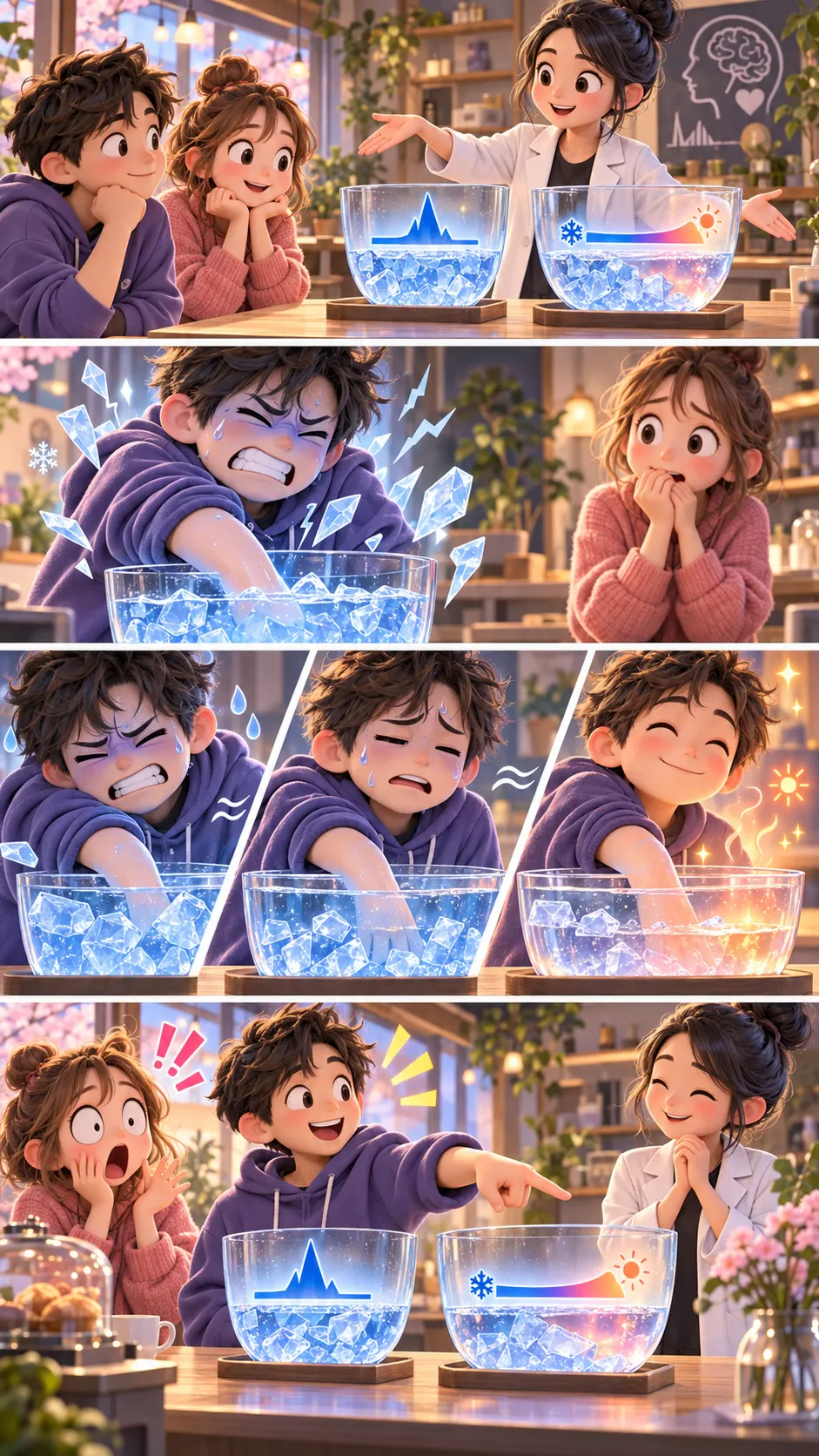
冷たい水に手を60秒つける体験と、60秒+水温をちょっとだけ上げて30秒追加する体験。苦痛は後者の方が長いのに、もう一度やるならと聞くと約7割が後者を選んだらしい。記憶は「最後」の印象に引っぱられやすい。
押すと「マジかリスト」に保存されます
 出典・参考文献(7件)タップで表示
- Kahneman, Fredrickson, Schreiber & Redelmeier (1993) When more pain is preferred to less: Adding a better end, Psychological Sciencedoi.org
- Redelmeier & Kahneman (1996) Patients' memories of painful medical treatments: Real-time and retrospective evaluations of two minimally invasive procedures, Paindoi.org
- Redelmeier, Katz & Kahneman (2003) Memories of colonoscopy: A randomized trial, Paindoi.org
- Alaybek et al. (2022) All's well that ends (and peaks) well? A meta-analysis of the peak-end rule and duration neglect, Organizational Behavior and Human Decision Processesdoi.org
- Miron-Shatz (2009) Evaluating multiepisode events: Boundary conditions for the peak-end rule, Emotiondoi.org
- Kemp, Burt & Furneaux (2008) A test of the peak-end rule with extended autobiographical events, Memory & Cognitiondoi.org
- Rode, Rozin & Durlach (2007) Experienced and remembered pleasure for meals: Duration neglect but minimal peak, end (recency) or primacy effects, Appetitedoi.org

※本記事は上記の研究・公開資料をもとに、原田英語が独自の言葉で解説したものです。引用は著作権法第32条の範囲で行い、出典を明記しています。画像はすべてオリジナルのイメージです。研究結果には限界や個人差があります。誤りのご指摘は原田英語のお問い合わせフォームから。
 これも「マジか!?」
 日常の科学
日常の科学
落とし物の財布は「お金入り」のほうが、40か国中38か国で持ち主に連絡が来る割合が高かった


 日常の科学
日常の科学
「年収が一定を超えると幸せは頭打ち」説、ライバル同士の共同研究で書き換えられた

 日常の科学
日常の科学
ルーレットの数字で答えが変わった。最初に見た数字に脳が引きずられる「アンカリング」

 日常の科学
日常の科学
臓器提供の同意率、ドイツ12%でオーストリア99%。差を生んだのは「初期設定」だった


 日常の科学
日常の科学
「宝くじ当選者は不幸になる」は本当か? 数千人を調べた研究が出した意外な答え
 日常の科学
日常の科学