

 人間関係・お金・日常ホント
誕生日のパラドックス:たった23人で「同じ誕生日」の確率が50%を超える理由
 2026.10.02
 English Corner(A2〜B2・4択クイズ)
 読む前に予想してみよう!
40人のクラスに、誕生日が同じ2人がいる確率は10%くらいだ
計算すると約89%。2人の組み合わせが780通りもあるため、どこかで一致する確率はとても高くなる。
 研究カード(どんな研究?)
- 対象
- 確率の計算と実データ
- 規模
- 理論+実データの検証
- 研究の種類
- 数学的分析
- 確かさ
- ★★★★★
23人いれば同じ誕生日の2人がいる確率は約50.7%、40人なら約89%。理由は2人の組み合わせが253通りもあるから。現実の誕生日のかたよりは、確率をほんの少し上げる。
ひとことで言うとクラスに同じ誕生日の人がいるのは、実は「よくあること」!
誕生日のパラドックスとは、「たった23人集まるだけで、同じ誕生日の2人がいる確率が50%を超える」という、直感に反する確率の話です。正確には約50.7%。40人なら約89%、50人なら約97%、70人なら99.9%にもなります。
「1年は365日もあるのに、そんなはずない!」と思いますよね。その違和感の正体は、「自分と同じ誕生日の人」と「誰か2人が同じ誕生日」を、頭の中で取り違えていることにあります。
01決め手は「2人の組み合わせ」の数
23人いると、2人の組み合わせは何通りあるでしょう? 23×22÷2=253通りです。誕生日が一致するチャンスが、253回もあるのです。
一方、「自分と同じ誕生日の人がいるか」だと、チャンスは自分以外の22回だけ。私たちはついこちらで考えてしまうので、「23人なんかじゃ一致しないよ」と感じてしまうのです。
02計算してみよう
「全員の誕生日がバラバラ」になる確率を計算して、1から引くのがコツです(うるう年は考えず、どの日も同じ確率とします)。
- 1人目:どの日でもOK → 365/365
- 2人目:1人目と違う日 → 364/365
- 3人目:2人と違う日 → 363/365
- ……23人目まで続ける
全部かけ算すると、全員バラバラの確率は約49.3%。だから、誰か2人が一致する確率は約50.7%になります。
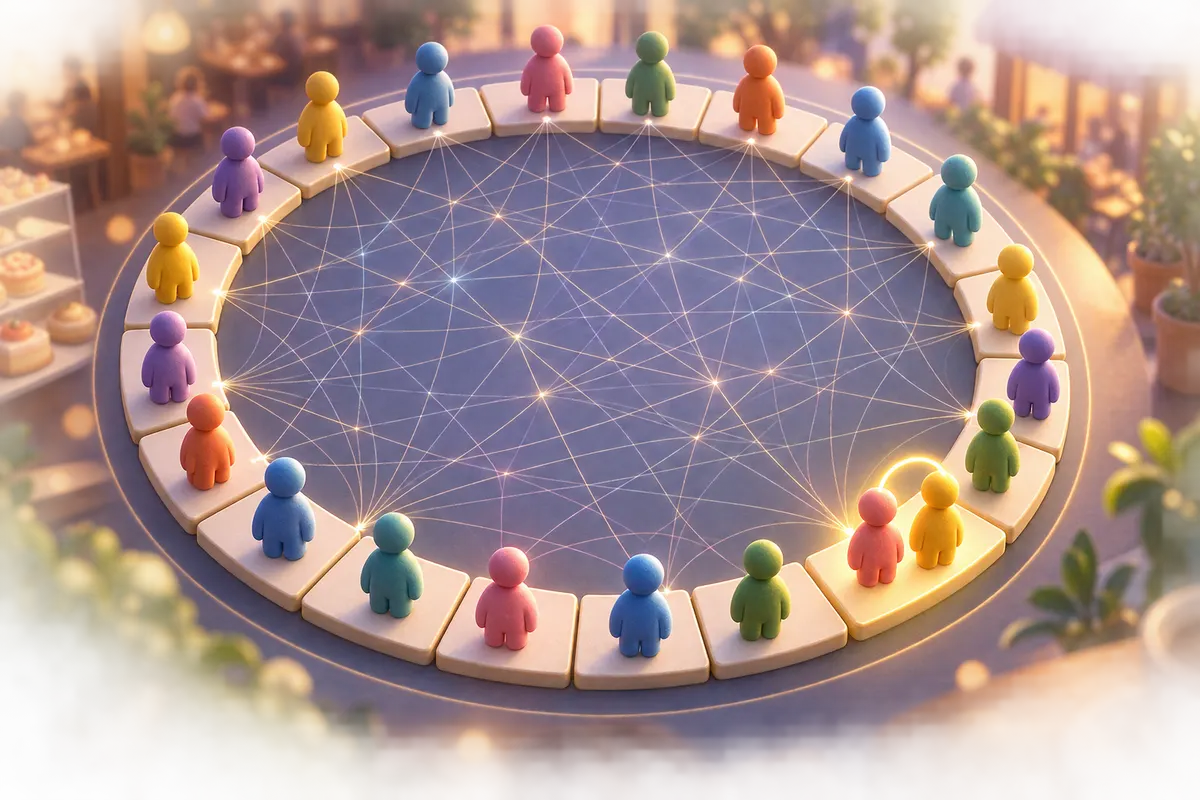
人数を増やしていくと、確率はぐんぐん上がります。
- 10人:約12%
- 20人:約41%
- 30人:約71%
- 50人:約97%
- 57人:約99%
50人を超えると、同じ誕生日の2人がいない方が珍しいくらいなのです。
03現実の誕生日はかたよっている。それでも大丈夫?
実際には、生まれる人が多い季節や少ない日があり、誕生日は365日に均等ではありません。じゃあ計算はウソになるのでしょうか?
1977年と1980年に発表された数学の論文は、この疑問に答えています。誕生日がかたよっていると、一致する確率はむしろ上がるのです。誕生日が人気の日に集まりやすくなるからです。つまり「23人で50%以上」は、現実でも安全に成り立つのです。
ただし、上がるのはほんの少しです。アメリカの実際の出生データを使った1992年の論文によると、季節による差は1日の平均より5%少ない〜7%多い程度。「どの日も同じ」とした計算との違いは小さいそうです。
実際に確かめた例もあります。イギリスのマシューズらは、サッカーの試合でピッチに立つ23人(両チームの選手22人+主審)の誕生日を調べました。1997年4月のある週末に行われたイングランドのプロリーグ10試合のうち、6試合で同じ誕生日の2人がいたそうです。計算どおり、だいたい半分の試合で一致が起きていたわけです。
04まとめ
23人で同じ誕生日の確率が50%を超えるのは、2人の組み合わせが253通りもあるからでした。
「めったにない偶然」と感じることも、組み合わせの数を数えてみると、実はよくあること。確率の直感を鍛える、最高の教材です。
この研究を英語で読もう原田英語の English CornerThe birthday paradox says that in a group of only 23 people, there is about a 50.7% chance that at least… 音声
音声 4択クイズ9問A2・B1・B2タップして開く
原田英語の English Corner
この研究を英語で読もう
How many people do you need for two of them to have the same birthday? Many people think you need a lot. But with just 23 people, the chance is a little more than 50%. In a class of 40, it is about 89%!
Why? We usually think about our own birthday. But in a group of 23, there are 253 different pairs of people. Each pair is a chance to match.
72 words ・ CEFR A2
和訳を見る
2人の誕生日が同じになるには、何人いればよいでしょうか。多くの人は、たくさん必要だと思います。でも、たった23人で、その確率は50%を少し超えます。40人のクラスなら、約89%です!
なぜでしょうか。私たちはふつう、自分の誕生日のことを考えます。でも、23人のグループには、2人の組み合わせが253通りもあります。それぞれの組み合わせが、一致するチャンスなのです。
4択リーディングクイズ
Q1. What is the passage mainly about?
少人数でも同じ誕生日の2人がいる確率が高い理由を説明しているので B。
Q2. In a class of 40, what is the chance that two people share a birthday?
In a class of 40, it is about 89%! とあるので C。50% を少し超えるのは23人のとき。
Q3. In this passage, "pairs" means ...
pair は「2つ(2人)一組」なので A。a pair of shoes「靴1足」も同じ。
The birthday paradox says that in a group of only 23 people, there is about a 50.7% chance that at least two of them share a birthday. With 50 people, the chance rises to about 97%. This feels wrong because we tend to think about whether someone shares our own birthday.
In fact, to have a 50% chance that someone matches your birthday, you would need 253 people. The key is the number of pairs. A group of 23 people can form 253 different pairs, and each pair is a chance for a match. In real life, birthdays are not spread evenly across the year, but mathematicians have shown that this actually makes a match slightly more likely.
118 words ・ CEFR B1
和訳を見る
誕生日のパラドックスとは、わずか23人のグループでも、少なくとも2人の誕生日が同じである確率が約50.7%ある、というものです。50人なら、その確率は約97%に上がります。これがおかしく感じられるのは、私たちが、誰かが自分と同じ誕生日かどうかを考えがちだからです。
実は、誰かがあなたと同じ誕生日である確率を50%にするには、253人が必要です。カギは2人の組み合わせの数です。23人からは253通りの2人組ができ、それぞれの組が一致するチャンスになるのです。現実には、誕生日は1年じゅうに均等に散らばっているわけではありませんが、数学者たちは、そのことがむしろ一致をわずかに起こりやすくすることを示しています。
4択リーディングクイズ
Q1. What is the passage mainly about?
少人数でも誕生日が一致する確率が意外に高い理由を説明しているので D。
Q2. How many people would you need for a 50% chance that someone shares your own birthday?
to have a 50% chance that someone matches your birthday, you would need 253 people とあるので B。23 は「誰か2人」が一致する場合。
Q3. What happens to the chance of a match because birthdays are not spread evenly?
this actually makes a match slightly more likely とあるので C。
In a room of just 23 people, the odds that at least two of them share a birthday are about 50.7 percent. With 40 people the figure rises to roughly 89 percent, and with 70 it reaches 99.9 percent. The result is called the birthday paradox because it feels so wrong. It involves no logical contradiction at all. The math simply clashes with intuition.
To get these figures, calculate the chance that everyone's birthdays differ, assuming 365 equally likely days, and subtract it from one. For 23 people, the chance of no match is about 49.3 percent. A 2013 paper by the Israeli psychologist Falk compared two questions: whether any two people match, and whether someone matches them personally. The second needs 253 people for a 50 percent chance, while 23 people already form 253 possible pairs.
Real birthdays cluster in certain seasons, but papers from 1977 and 1980 showed that an uneven spread only raises the chance of a match, if only slightly. British researchers even confirmed shared birthdays among the 23 people on a football pitch. The same reasoning lies behind the "birthday attack," used to test the security of cryptographic systems.
194 words ・ CEFR B2
和訳を見る
わずか23人の部屋で、少なくとも2人の誕生日が同じである確率は約50.7%です。40人ならおよそ89%に上がり、70人では99.9%に達します。この結果が誕生日のパラドックスと呼ばれるのは、どうにも間違っているように感じられるからです。とはいえ、論理的な矛盾はまったくありません。数学が直感とぶつかっているだけです。
これらの数字を出すには、365日がどれも同じくらい起こりやすいと仮定して、全員の誕生日がばらばらである確率を計算し、それを1から引きます。23人の場合、一致しない確率は約49.3%です。イスラエルの心理学者ファルクの2013年の論文は、2つの問いをくらべました。誰か2人が一致するかという問いと、誰かが自分と一致するかという問いです。後者で確率を50%にするには253人が必要ですが、23人ならすでに253通りの組が作れます。
実際の誕生日は特定の季節にかたよりますが、1977年と1980年の論文は、分布がかたよると一致する確率は(わずかながら)上がるだけだと示しました。イギリスの研究者たちは、サッカーのピッチに立つ23人の中で実際に誕生日が重なっていることまで確かめました。同じ考え方は、暗号システムの安全性を試すのに使われる「誕生日攻撃」の土台にもなっています。
4択リーディングクイズ
Q1. What is the main point of the passage?
数学的には正しいが直感とずれることが中心なので A。
Q2. What did the papers from 1977 and 1980 show?
an uneven spread only raises the chance of a match とあるので D。
Q3. Why does the writer say the paradox "involves no logical contradiction"?
It involves no logical contradiction at all. The math simply clashes with intuition. とあり、結果は正しいが直感に反するだけだという意味。正解は B。
重要単語
- probabilityB2名詞確率The probability is about fifty percent. the probability that ~「~である確率」。chance(可能性)よりかたい語で、数学・統計の文脈で使う。
- coincidenceB2名詞偶然の一致Sharing a birthday is not a rare coincidence. by coincidence「偶然に」。動詞 coincide with ~「~と同時に起こる・一致する」。
- pairA2名詞2つ(2人)一組There are 253 pairs in a group of 23. in pairs「2人一組で」。a pair of glasses「めがね1つ」のように、2つの部分からなる物にも使う。
- intuitionC1名詞直感Our intuition about chance is often wrong. 形容詞 intuitive。counterintuitive「直感に反する」はまさにこのパラドックスを表す語。
- assumeB2動詞仮定する・当然と思うWe assume that all birthdays are equally likely. 名詞 assumption「仮定」。assuming that ~「~と仮定すると」は数学・論説文の頻出表現。
- contradictionC1名詞矛盾The paradox is not a real contradiction. contra-(反対)+dict(言う)。動詞 contradict「矛盾する・反論する」。
 入試に出る順の単語帳を印刷する →
 全5903語の「科学英単語カード」で復習する →
 この話題を TED で聞く
同じテーマの TED・TED-Ed を、 TED HACK で。英語の見どころ・使える表現・学習ミッションつきの日本語ガイドです。(運営:原田英語)


 4コマでわかる
このネタ、誰かに教えたくなった?
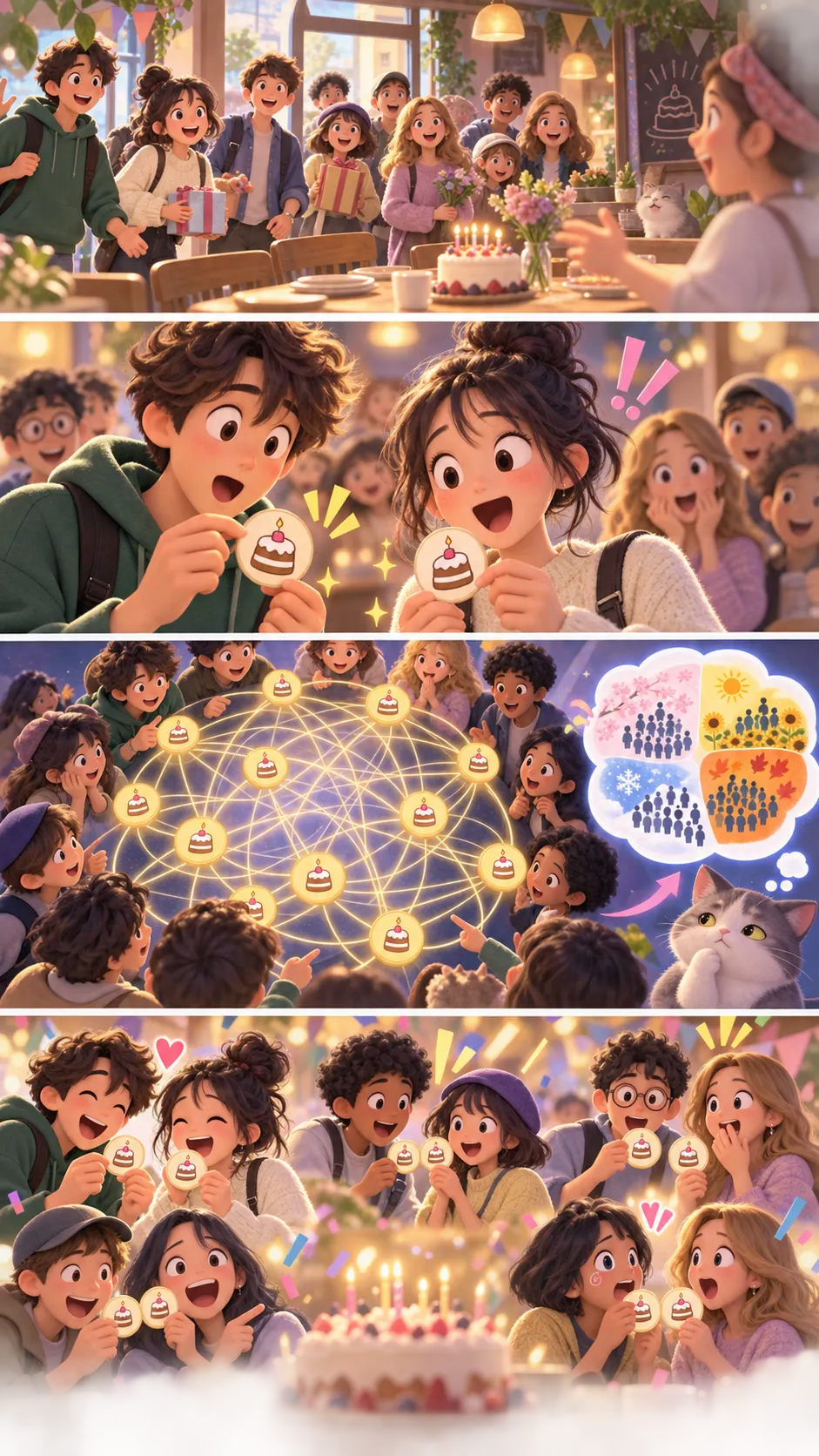
23人集まれば、同じ誕生日の2人がいる確率は50%超え。40人のクラスなら約89%。でも「自分と同じ誕生日の人」がいる確率を50%にするには253人も必要らしい。この差に、確率についての直感のクセが隠れている。
押すと「マジかリスト」に保存されます
 出典・参考文献(6件)タップで表示
- Munford (1977) A Note on the Uniformity Assumption in the Birthday Problem, The American Statisticiandoi.org
- Berresford (1980) The Uniformity Assumption in the Birthday Problem, Mathematics Magazinedoi.org
- Matthews & Stones (1998) Coincidences: the truth is out there, Teaching Statisticsdoi.org
- Falk (2013) A Closer Look at the Notorious Birthday Coincidences, Teaching Statisticsdoi.org
- Nunnikhoven (1992) A Birthday Problem Solution for Nonuniform Birth Frequencies, The American Statisticiandoi.org
- Diaconis & Mosteller (1989) Methods for Studying Coincidences, Journal of the American Statistical Associationdoi.org

※本記事は上記の研究・公開資料をもとに、原田英語が独自の言葉で解説したものです。引用は著作権法第32条の範囲で行い、出典を明記しています。画像はすべてオリジナルのイメージです。研究結果には限界や個人差があります。誤りのご指摘は原田英語のお問い合わせフォームから。
 これも「マジか!?」

 日常の科学
日常の科学
落とし物の財布は「お金入り」のほうが、40か国中38か国で持ち主に連絡が来る割合が高かった


 日常の科学
日常の科学
1960年の論文「この世の終わりは2026年11月13日(金)」、人口の式はなぜ外れた?

 日常の科学
日常の科学
顔の第一印象は0.1秒でほぼ決まる。長く見ても、増えるのは主に「自信」


 日常の科学
日常の科学
「年収が一定を超えると幸せは頭打ち」説、ライバル同士の共同研究で書き換えられた

 日常の科学
日常の科学
ルーレットの数字で答えが変わった。最初に見た数字に脳が引きずられる「アンカリング」

 日常の科学
日常の科学