

 語学・英語学習ビミョー
幼い子は、同じ内容でも画面越しだと対面より覚えにくい。ビデオ通話だけでは言葉を覚えられなかった実験も
 2026.10.03
 English Corner(A2〜B2・4択クイズ)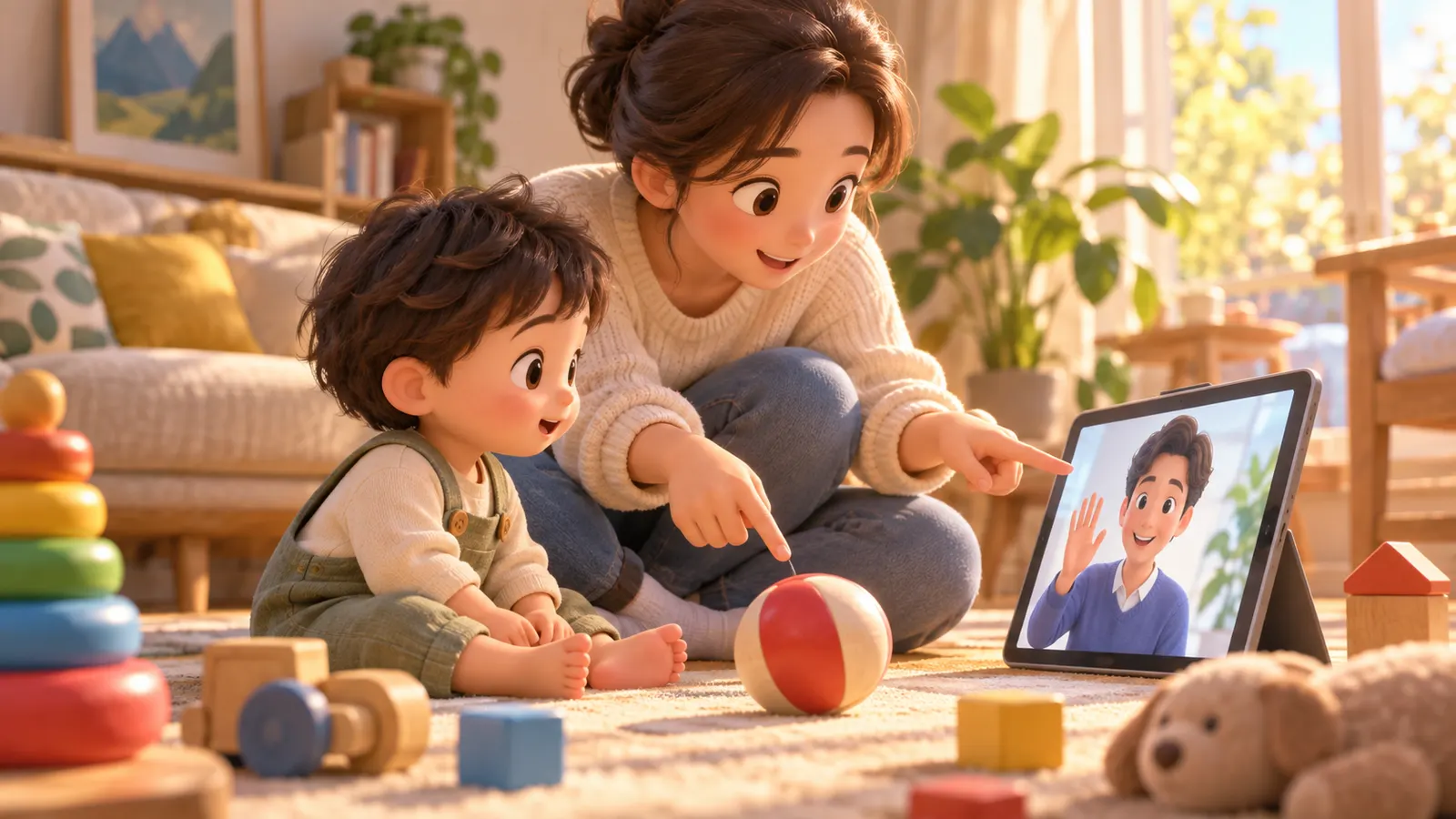
 読む前に予想してみよう!
ビデオ通話なら相手が反応してくれるので、2歳児も対面と同じように新しい言葉を覚えられる
覚えられた実験もあるが、ビデオ通話だけでは覚えられなかった実験もある。一緒に見る大人の関わりが助けになるという報告がある。
 研究カード(どんな研究?)
- 対象
- 0〜6歳の子ども
- 規模
- 59本の研究報告(比べた結果122個)
- 研究の種類
- メタ分析
- 確かさ
- ★★★★☆
幼い子は、同じ内容でも画面越しだと対面より学びにくい「ビデオ欠損」がある。年齢とともに縮まり、大人の関わり方しだいで差は小さくできる。
ひとことで言うと小さい子は、動画より目の前の人から言葉を覚えやすい!
「英語の動画を毎日見せておけば、自然に英語を覚えるはず」。忙しい親ほど、そう期待したくなります。
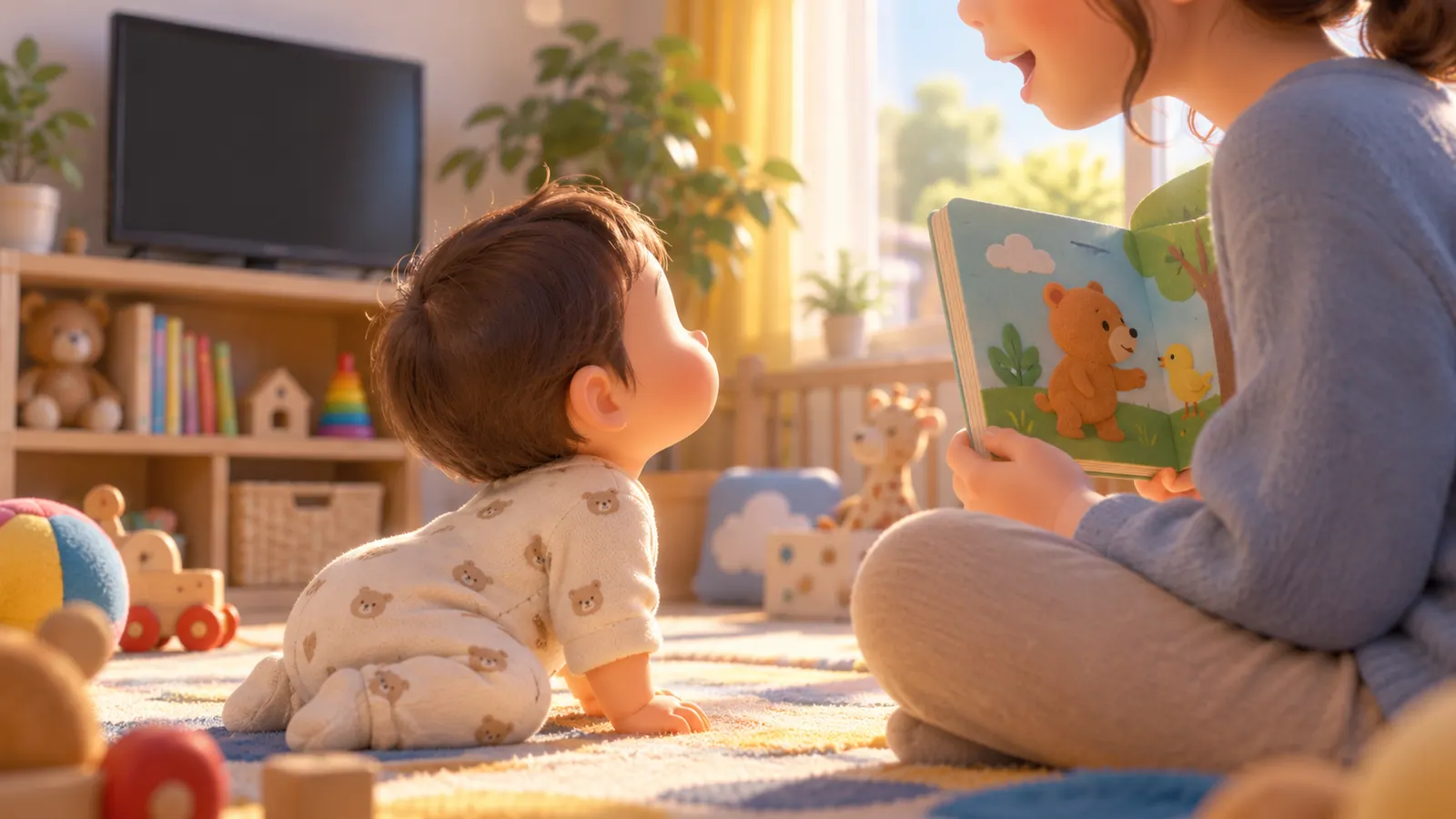
でも発達心理学には、「ビデオ欠損(video deficit)」という有名な現象があります。幼い子どもは、全く同じ内容でも、画面越しだと対面よりも学びにくいのです。
では、相手が反応してくれるビデオ通話ならどうか。実は、実験によって結果が分かれました。
0159本の研究をまとめると、画面からのほうが学びにくかった
言葉、まねっこ、隠されたおもちゃ探しなど、いろいろな課題でこの差が見られます(いちばん差が大きかったのは、おもちゃ探しの課題)。2歳ごろまでの子にとって、「画面の中の出来事」と「目の前の世界」を結びつけるのは、大人が思うより難しいと考えられています。
02ビデオ通話なら学べた…けれど
画面の何がいけないのか。注目されたのが、相手が自分に合わせて反応してくれるか(応答性)です。
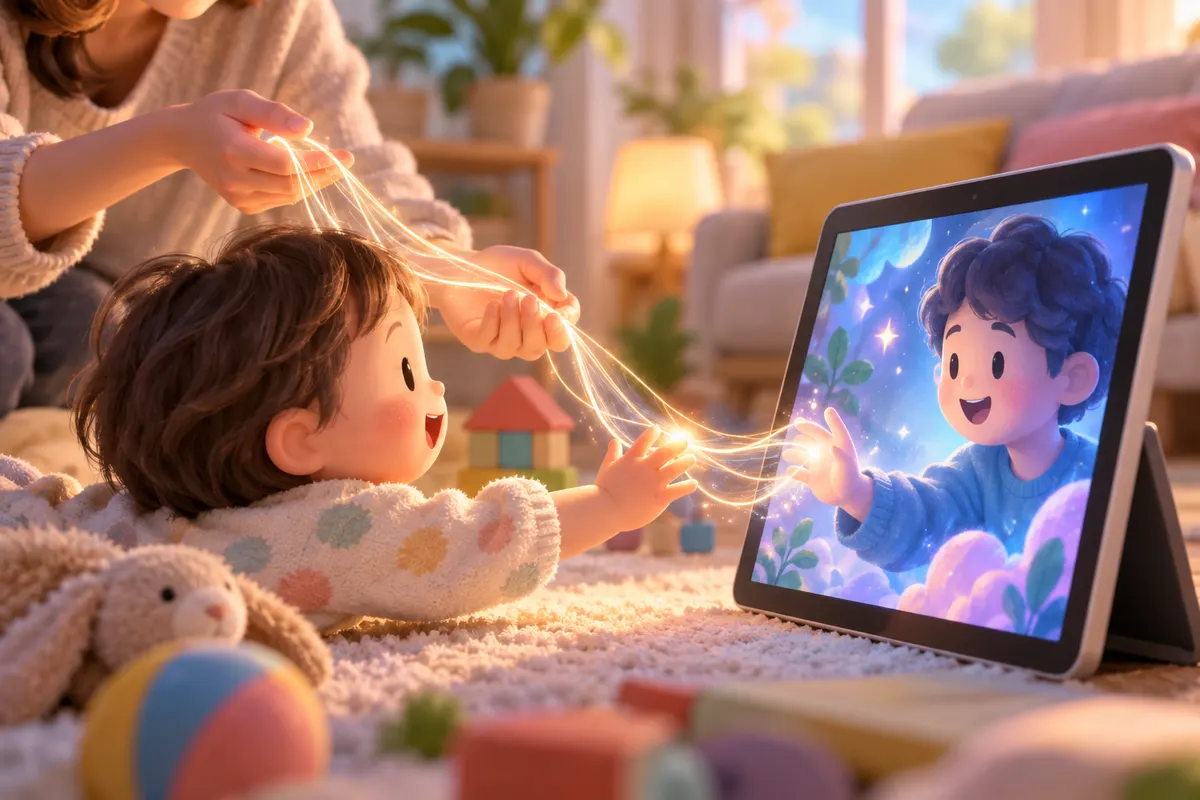
アメリカのローズベリーらの実験(2014年)では、2歳〜2歳半の子ども36人に新しい動詞を教えました。すると、対面とビデオ通話では言葉を覚えられたのに、別の子とのビデオ通話を録画した映像を見せた場合は覚えられませんでした。「やっぱり反応があれば画面でもOK!」と言いたくなる結果です。
03別の実験では、ビデオ通話「だけ」では覚えられなかった
ところが2018年、トロセスらが2歳と2歳半の176人で行った実験では、話がそう単純ではありませんでした。
目の前の人が反応しながら教えると、子どもは言葉を覚えました。しかし、ビデオ通話で同じように反応しながら教えても、どちらの年齢の子も覚えられなかったのです。研究者は、少なくともこの実験では、応答性だけでは不十分だったと結論づけています。
では何が助けになるのか。ストラウスらの実験(2018年、2歳半の88人)では、画面の人物が反応してくれると子どもはよく参加するようになったものの、言葉の習得を伸ばしたのは、横にいる親が画面に応える姿を見せたことでした。
さらに、63件の研究(計11,413人)をまとめたメタ分析(2023年)では、実験で特定の言葉を教えた場合には画面からも学べる一方、ふだんの視聴時間と語彙の多さには、全体としてほぼ関係が見られませんでした(教育番組に限ると小さな正の関係)。
04まとめ
幼児は動画から「全く学べない」わけではありません。でも、同じ内容なら対面のほうが学びやすいのが基本で、ビデオ通話もそれだけでは万能ではありませんでした。
動画の力を引き出すカギは、画面の中ではなく画面の外。隣で「これ、なんだろうね?」と話しかける大人こそが、一番の英語教材なのかもしれません。
この研究を英語で読もう原田英語の English CornerMany parents hope their children will pick up English from videos. 音声
音声 4択クイズ9問A2・B1・B2タップして開く
原田英語の English Corner
この研究を英語で読もう
Can small children learn words from videos? Research shows that young children usually learn less from a screen than from a real person. This is called the video deficit. The gap becomes smaller as children grow older. Video calls can sometimes help, because the person on the screen can answer the child.
But in one study, toddlers did not learn new words from video calls. A parent who watches and talks with the child can help.
76 words ・ CEFR A2
和訳を見る
小さな子どもは動画から言葉を学べるでしょうか。研究によると、幼い子どもはふつう、実際の人からよりも画面からのほうが学ぶことが少ないそうです。これはビデオ欠損と呼ばれます。その差は子どもが大きくなるにつれて小さくなります。ビデオ通話は、画面の中の人が子どもに答えられるので、助けになることもあります。
しかし、ある研究では、幼児はビデオ通話から新しい言葉を覚えませんでした。いっしょに見て子どもと話す親は、助けになりえます。
4択リーディングクイズ
Q1. What is the "video deficit"?
young children usually learn less from a screen than from a real person. This is called the video deficit とあるので B。
Q2. What happens to the gap as children grow older?
The gap becomes smaller as children grow older とあるので B。
Q3. In this passage, "toddlers" are
toddler はよちよち歩きの1〜3歳ごろの幼児なので A。
Many parents hope their children will pick up English from videos. However, developmental psychologists have long described a "video deficit." Young children tend to learn less from a screen than from a live person, even when the content is the same. A 2021 review of 59 research reports found that the gap was about half a standard deviation on average and became smaller with age.
Video chat was expected to solve the problem, because the adult on screen can respond to the child. In one study, toddlers learned new verbs both in person and over video chat. In another study of 176 toddlers, however, video chat alone was not enough. In a third study, children learned better when a parent beside them responded to the screen.
126 words ・ CEFR B1
和訳を見る
多くの親は、子どもが動画から英語を自然に身につけることを期待します。しかし発達心理学者は昔から「ビデオ欠損」を指摘してきました。幼い子どもは、内容が同じでも、生身の人より画面から学ぶことが少ない傾向があるのです。59本の研究報告をまとめた2021年のレビューでは、その差は平均で標準偏差の約半分で、年齢とともに小さくなりました。
画面の大人が子どもに反応できるので、ビデオ通話がこの問題を解決すると期待されました。ある研究では、幼児は対面でもビデオ通話でも新しい動詞を覚えました。しかし176人の幼児を対象にした別の研究では、ビデオ通話だけでは不十分でした。さらに別の研究では、子どもは、そばに座った親が画面に応えるとよりよく学びました。
4択リーディングクイズ
Q1. What did the 2021 review find?
about half a standard deviation on average and became smaller with age とあるので A。
Q2. Why was video chat expected to help?
because the adult on screen can respond to the child とあるので B。
Q3. What does the last part of the passage suggest?
そばにいる親が画面に応えるとよく学べたことから、そばの大人の役割が重要だと示唆しているので B。
Educational videos for babies and toddlers are widely marketed, but developmental research urges caution. Children under about three often show a "video deficit": they learn less from on-screen demonstrations than from identical live ones. A 2021 meta-analysis of 59 reports covering children up to six years old estimated the average deficit at roughly half a standard deviation, shrinking with age.
The authors also warned that weak study quality and publication bias may have inflated this estimate. One popular explanation is that screens lack social contingency, meaning timely responses to the child. Supporting this idea, toddlers in a 2014 experiment learned new verbs through video chat as well as in person, but not from a recording of another child's video chat.
But a 2018 study of 176 toddlers found no learning from responsive video chat, so contingency alone was not enough in that case. What did help in another experiment was a co-viewing parent who modeled how to respond to the screen. Most of these studies involved children learning their first language, so direct evidence for Japanese children learning English from videos is thin. A 2023 meta-analysis, meanwhile, found almost no link between everyday screen time and vocabulary size.
198 words ・ CEFR B2
和訳を見る
赤ちゃんや幼児向けの教育動画は広く売り出されていますが、発達研究は慎重さを促しています。おおむね3歳未満の子どもはしばしば「ビデオ欠損」を示します。同じ内容の実演でも、画面上のものからは生のものより学ぶことが少ないのです。6歳までの子どもを対象にした59本の報告をまとめた2021年のメタ分析は、平均の欠損を標準偏差のおよそ半分と推定し、それは年齢とともに縮まりました。
著者たちは、研究の質の低さや出版バイアスによってこの推定値が膨らんでいる可能性も警告しました。よく知られた説明の一つは、画面には社会的随伴性、つまり子どもへのタイミングのよい反応が欠けているというものです。この考えを支持するように、2014年の実験の幼児は、対面と同様にビデオ通話でも新しい動詞を覚えましたが、別の子のビデオ通話の録画からは覚えませんでした。
しかし176人の幼児を対象にした2018年の研究では、反応のあるビデオ通話からの学習は見られませんでした。つまり、この実験では随伴性だけでは十分ではなかったのです。別の実験で助けになったのは、画面への応え方を手本として見せる、いっしょに見る親でした。これらの研究の大半は母語を学ぶ子どもを対象としており、日本の子どもが動画から英語を学ぶことについての直接の証拠は乏しいのが現状です。一方、2023年のメタ分析は、日常のスクリーン時間と語彙の多さの間にほとんど関係を見出しませんでした。
4択リーディングクイズ
Q1. What warning did the authors of the 2021 meta-analysis give?
weak study quality and publication bias may have inflated this estimate とあるので A。
Q2. What did the 2018 study of 176 toddlers suggest?
so contingency alone was not enough in that case とあるので B。
Q3. Why does the author mention that most studies involved children learning their first language?
母語学習の研究が中心なので、日本の子どもの英語学習への直接の証拠は限られる、という限界を示すためなので B。
重要単語
- video deficitC1名詞(句)ビデオ欠損(画面からだと対面より学びにくい現象)The video deficit is strongest in children under three.
 deficit は「不足・赤字」。trade deficit(貿易赤字)、attention deficit(注意欠如)など。
 - toddlerB2名詞よちよち歩きの幼児(1〜3歳ごろ)Toddlers learn many new words every week. toddle(よちよち歩く)+ -er。infant(乳児)→ toddler → preschooler の順。
- contingentC1形容詞相手の反応に応じた・〜次第のA contingent reply comes right after the child speaks. be contingent on ~「~次第である」は論説文で頻出。名詞 contingency。
- co-viewingC1名詞(大人と子どもが)いっしょに見ることCo-viewing can turn screen time into talk time. co-(共に)+ viewing。co-worker、co-author などと同じ co-。
- publication biasC1名詞(句)出版バイアス(目立つ結果ほど論文になりやすい偏り)Publication bias can make an effect look bigger. メタ分析の限界として必ず出てくる用語。bias は「偏り・先入観」。
- transferB2動詞・名詞(学んだことを別の場面に)移す・応用するChildren must transfer words from the screen to real objects. trans-(向こうへ)+ fer(運ぶ)。transfer to another school「転校する」。
 入試に出る順の単語帳を印刷する →
 全5903語の「科学英単語カード」で復習する →
 動画でもっと知る
動画は各チャンネルの公式埋め込みで表示しています(YouTube)。
 公式・一次情報をチェック
- I-LABS(ワシントン大学 学習・脳科学研究所)ilabs.uw.edu
このネタ、誰かに教えたくなった?
幼い子は同じ内容でも、動画からだと対面より学びにくい。59本の研究をまとめると、差は中くらいの大きさで、年齢が上がるほど小さくなっていた。ビデオ通話なら大丈夫かと思いきや、それだけでは言葉を覚えられなかった実験も。カギは「画面の外の大人」かもしれない。
押すと「マジかリスト」に保存されます
 出典・参考文献(5件)タップで表示
- Strouse & Samson (2021) Learning From Video: A Meta-Analysis of the Video Deficit in Children Ages 0 to 6 Years, Child Developmentdoi.org
- Roseberry, Hirsh-Pasek & Golinkoff (2014) Skype Me! Socially Contingent Interactions Help Toddlers Learn Language, Child Developmentdoi.org
- Troseth, Strouse, Verdine et al. (2018) Let's Chat: On-Screen Social Responsiveness Is Not Sufficient to Support Toddlers' Word Learning From Video, Frontiers in Psychologydoi.org
- Strouse, Troseth, O'Doherty et al. (2018) Co-viewing supports toddlers' word learning from contingent and noncontingent video, Journal of Experimental Child Psychologydoi.org
- Jing, Ye, Kirkorian et al. (2023) Screen media exposure and young children's vocabulary learning and development: A meta-analysis, Child Developmentdoi.org

※本記事は上記の研究・公開資料をもとに、原田英語が独自の言葉で解説したものです。引用は著作権法第32条の範囲で行い、出典を明記しています。画像はすべてオリジナルのイメージです。研究結果には限界や個人差があります。誤りのご指摘は原田英語のお問い合わせフォームから。

別館
マジか!?ことばで読む、ことばの雑学
英語と日本語の「えっ、マジか!?」を辞書と論文でウラ取りする別館
 これも「マジか!?」

 語学
語学
「子どもは大人より早く外国語を覚える」はウソだった? 最初は大人が速い、でも…
 語学
語学
英語の授業で日本語を使うのは悪いこと?「英語だけ」より単語が身についた実験と、その落とし穴
 語学
語学
英語の絵本は、子どもに質問しながら読むと言葉が伸びる? 研究をまとめると、効果は思ったより小さかった
 語学
語学
「パパは日本語、ママは英語」でバイリンガルに? 研究が示した決め手は、ルールより言葉に触れる量

 語学
語学
「英語ネイティブは早口すぎる」は本当? 実は日本語のほうが1秒あたりの音節数は多かった
 語学
語学