

 体と健康・食ウソ
「誰かがそこにいる」気配の正体。ロボットで"見えない人"を作り出した実験
 2026.10.02
 English Corner(A2〜B2・4択クイズ)
 読む前に予想してみよう!
誰もいないのに人の気配を感じるのは、必ず病気のサインである
登山や極限状況、疲労時など健康な人でも報告され、実験で人工的に作り出すこともできる。
 研究カード(どんな研究?)
- 対象
- 神経疾患の患者と健康な参加者
- 規模
- 患者12人の病変解析+健康な参加者での実験
- 研究の種類
- 病変解析+ロボットを用いた実験
- 確かさ
- ★★★☆☆
誰もいないのに人の気配を感じる体験は、脳の3つの領域の損傷と関係していた。ロボットで触覚のタイミングをずらすと、健康な人にも同じ感覚を作り出せた。
ひとことで言うと「誰かいる」気配は、体の感覚のズレから脳が作り出すことがある。
もくじ
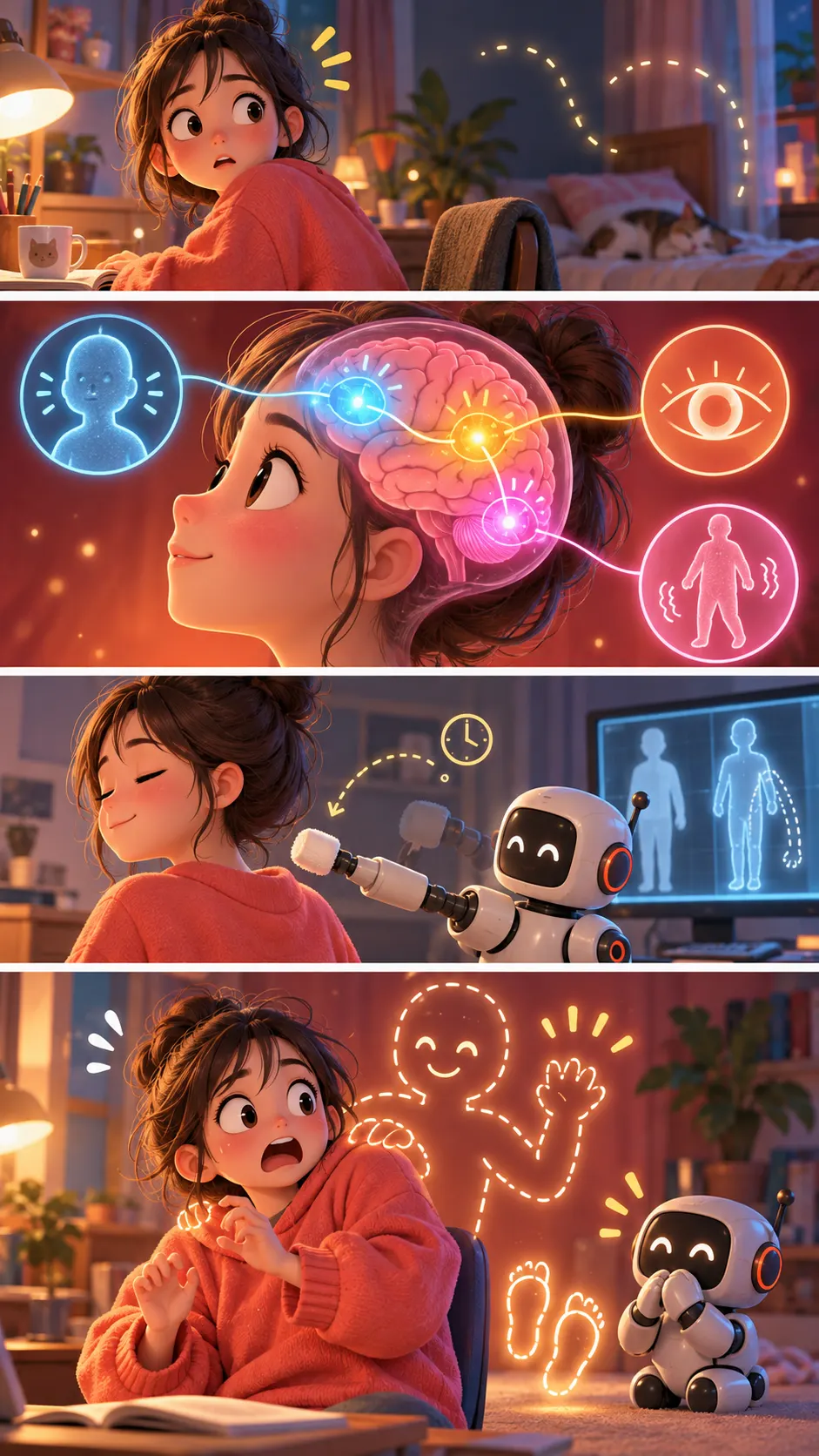
夜、ひとりの部屋で作業していると、「後ろに誰かいる」気がする。
登山家が極限状態で「もうひとりの同行者」を感じる話も有名です。こうした体験は気配感(feeling of a presence)と呼ばれ、世界中の文化で語られてきました。
オカルトとして片づけるのは簡単ですが、脳科学はこれを実験室で作り出すところまで来ています。
01きっかけは、脳を刺激された患者が感じた「そばに誰かいる」
2006年、スイスの研究チームが、てんかんの手術前の検査を受けていた患者の脳を電気で刺激しました。すると患者には、「すぐそばに誰かがいる」という感覚がくり返し生じたのです。
刺激した場所は、左の側頭頭頂接合部。体の感覚と視覚、自分の位置の情報が集まる場所です。しかも、その「見えない人」は、患者が姿勢を変えると同じように動いたといいます。
つまり、「誰か」は自分の体の姿勢をなぞる存在だったのです。
02気配を感じる患者に共通した、脳の3つの場所
03ロボットで「幽霊」を作る
次に研究チームは、健康な人にも同じ感覚を起こせるか試しました。
目隠しをした参加者は、前にあるロボットの棒を指で動かします。すると、背中側にある別のロボットが、その動きをなぞって背中を触ります。自分の動きと背中の感覚がぴったり同時なら、「自分で自分の背中を触っている」と感じます。
ところが、背中を触るタイミングを約0.5秒遅らせると――

04脳は「自分」と「他人」をどう見分けている?
私たちの脳は、自分が体を動かすたびに「こう動いたから、こう感じるはず」と予測しています。予測と実際がそろえば「これは自分」、ずれれば「これは外から来たもの」と判断します。
自分でくすぐっても笑いにくいのも、この予測のおかげです。
05すべての気配がこれで説明できるわけではない
ただし、この実験が示したのは「似た感覚を作れる」ということです。人が報告するあらゆる気配体験が、同じ仕組みだとは証明されていません。
参加者の数も多くはなく、「不気味さ」の感じ方には個人差があると考えられます。文化や信念によって、体験の解釈(「幽霊だ」「亡き人だ」)が変わる可能性もあります。
06まとめ
- 「誰かがいる」気配感は、脳の3つの領域(側頭頭頂・島・前頭頭頂)の働きと関係する
- 電気刺激や、動きと触覚のタイミングのずれで人工的に起こせる
- 正体は、自分の体から来た信号を「他人」と取り違える現象
- すべての体験が同じ仕組みとは限らない
背後の気配は、どうやら外から来るのではなく、自分の脳が生み出していたようです。怖いというより、ちょっと感動的な話ではないでしょうか。
この研究を英語で読もう原田英語の English CornerMany people have felt that someone is close by when no one is there, especially when they are tired or… 音声
音声 4択クイズ9問A2・B1・B2タップして開く
原田英語の English Corner
この研究を英語で読もう
Sometimes people feel that someone is behind them, but nobody is there. Scientists in Switzerland wanted to understand this feeling. In an experiment, people moved a robot with their finger.
Another robot touched their back at the same time. Then the scientists made the touch a little late, about half a second. Some people felt that an invisible person was touching them. The brain made the feeling.
67 words ・ CEFR A2
和訳を見る
ときどき人は、誰もいないのに誰かが後ろにいると感じることがあります。スイスの科学者たちは、この感覚を理解したいと考えました。ある実験で、人々は指でロボットを動かしました。
別のロボットが同時に彼らの背中に触れました。それから科学者たちは、その触れるタイミングを約0.5秒、少し遅らせました。何人かの人が、見えない誰かが自分に触れていると感じました。脳がその感覚を作り出したのです。
4択リーディングクイズ
Q1. What is the passage mainly about?
誰かがいる気配の正体を、ロボット実験で調べた話なので D。
Q2. How late was the touch on the back?
made the touch a little late, about half a second とあるので A。
Q3. In this passage, "invisible" means ...
in-(否定)+visible(見える)で「目に見えない」なので C。
Many people have felt that someone is close by when no one is there, especially when they are tired or alone in extreme places such as high mountains. In 2014, Blanke and his team in Switzerland studied 12 patients with brain damage who had experienced this feeling. Their damage was in three areas that combine information about touch, body position and movement.
The team then tested healthy volunteers. Each person moved a robot arm in front of them while another robot touched their back. When the touch happened at the same time, people felt they were touching themselves. But when it was delayed by about half a second, several felt that an invisible person was behind them.
117 words ・ CEFR B1
和訳を見る
多くの人が、誰もいないのに誰かが近くにいると感じたことがあります。特に疲れているときや、高い山のような極限の場所でひとりでいるときです。2014年、スイスのブランケと彼のチームは、この感覚を経験した脳損傷のある患者12人を調べました。
彼らの損傷は、触覚・体の位置・運動についての情報をまとめる3つの領域にありました。次にチームは健康なボランティアで試しました。各参加者は目の前のロボットアームを動かし、その間に別のロボットが背中に触れました。触れるタイミングが同時だと、人々は自分で自分に触れていると感じました。しかし約0.5秒遅らせると、何人もの人が見えない誰かが後ろにいると感じたのです。
4択リーディングクイズ
Q1. What did the brain areas linked to the feeling have in common?
three areas that combine information about touch, body position and movement とあるので B。
Q2. What happened when the touch on the back was at the same time as the movement?
When the touch happened at the same time, people felt they were touching themselves. とあるので D。
Q3. What can we infer from the experiment?
0.5秒のずれだけで見えない人の気配が生じたので、タイミングのずれが脳に他人の存在を感じさせると推測できる。正解は A。
Mountaineers, exhausted or isolated people, and some patients with neurological conditions have all described the same eerie feeling: someone is nearby, though no one is there. Brain research has started to explain it. In 2006, Swiss researchers were assessing a patient before epilepsy surgery. When they electrically stimulated a region where the temporal and parietal lobes meet, the patient repeatedly felt a person close by, one who copied the patient's own posture.
In 2014, Blanke and colleagues analyzed brain lesions in 12 patients who had experienced such presences. The damage involved three regions that combine signals about touch, body position and movement. Twelve patients is a small group, and there is no proof that every reported presence, including clinical hallucinations, arises from the same mechanism. The team then tested healthy volunteers with a pair of robots.
As a volunteer moved a device in front of them, a second robot touched their back. When the touch came at the same moment, people felt as if they were touching themselves. With a delay of about half a second, several sensed an invisible person behind them. The researchers concluded that the brain had mistaken signals from its own body for someone else's.
199 words ・ CEFR B2
和訳を見る
登山家、疲れ果てた人や孤立した人、そして神経の病気を持つ一部の患者は、みな同じ不気味な感覚を語ってきました。誰もいないのに、誰かが近くにいるという感覚です。脳の研究が、その説明を始めています。2006年、スイスの研究者たちは、てんかん手術の前の検査を患者に行っていました。
側頭葉と頭頂葉が接する領域を電気で刺激すると、患者はすぐそばに人がいるとくり返し感じ、その人物は患者自身の姿勢をまねしていました。2014年、ブランケらは、こうした気配を経験した患者12人の脳の病変を分析しました。損傷は、触覚・体の位置・運動についての信号をまとめる3つの領域に関わっていました。12人というのは小さな集団で、臨床的な幻覚を含め、報告されるすべての気配が同じ仕組みから生じるという証拠はありません。チームは次に、2台のロボットを使って健康な参加者を調べました。
参加者が目の前の装置を動かすと、2台目のロボットが背中に触れます。触れるのが同時だと、人々は自分で自分に触れているように感じました。約0.5秒遅らせると、何人もの人が見えない誰かが後ろにいると感じたのです。研究者たちは、脳が自分の体から来た信号を他人のものと取り違えたのだと結論づけました。
4択リーディングクイズ
Q1. Which statement best summarizes the passage?
研究が、気配は脳が自分の体の信号を他人のものと取り違えることで生じると示した、という内容なので C。
Q2. What was special about the "person" felt by the patient in 2006?
one who copied the patient's own posture とあるので A。
Q3. What limitation does the author point out?
there is no proof that every reported presence, including clinical hallucinations, arises from the same mechanism とあるので D。患者が12人と少ないことも挙げられている。
重要単語
- presenceB2名詞存在・いる感じHe felt the presence of another person.
 present(いる)の名詞形。in the presence of ~「~のいる前で」。
 - illusionB2名詞錯覚The feeling is a kind of bodily illusion. optical illusion「目の錯覚」。allusion(ほのめかし)と混同注意。
- lesionC1名詞病変・損傷部位The lesions were in three brain regions. 医学論文で頻出。brain lesion「脳の病変」。
- proprioceptionC1名詞自己受容感覚(体の位置の感覚)Proprioception tells you where your arm is. proprio-(自分自身の)+ception(受け取ること)。目を閉じても手の位置がわかる感覚。
- hallucinationC1名詞幻覚Some hallucinations involve other people. 動詞 hallucinate。visual / auditory hallucination「幻視/幻聴」。
- delayB1名詞・動詞遅れ/遅らせるA short delay changed what people felt. without delay「すぐに」は頻出熟語。
- misattributeC1動詞(原因・出どころを)取り違えるThe brain may misattribute its own signals to someone else. mis-(誤って)+attribute A to B(AをBのせいにする)。
 入試に出る順の単語帳を印刷する →
 全5903語の「科学英単語カード」で復習する →
 動画でもっと知る
動画は各チャンネルの公式埋め込みで表示しています(YouTube)。
 4コマでわかる
このネタ、誰かに教えたくなった?
「後ろに誰かいる」という気配。研究者が脳の損傷部位を調べたうえで、ロボットで背中を触るタイミングをわざとずらす実験をしたら、健康な人にも「見えない誰かがいる」感覚が生まれ、途中でやめてほしいと言う人まで出たらしい。
押すと「マジかリスト」に保存されます
 出典・参考文献(3件)タップで表示

※本記事は上記の研究・公開資料をもとに、原田英語が独自の言葉で解説したものです。引用は著作権法第32条の範囲で行い、出典を明記しています。画像はすべてオリジナルのイメージです。研究結果には限界や個人差があります。誤りのご指摘は原田英語のお問い合わせフォームから。
 これも「マジか!?」

 体・健康
体・健康
寝入りばなに体が「ビクッ」となるのはなぜ? 6〜7割が経験する、普通の現象だった

 脳・心理
脳・心理
デジャヴは「予知」じゃなかった。脳の"記憶チェック機能"が見せる不思議な錯覚

 体・健康
体・健康
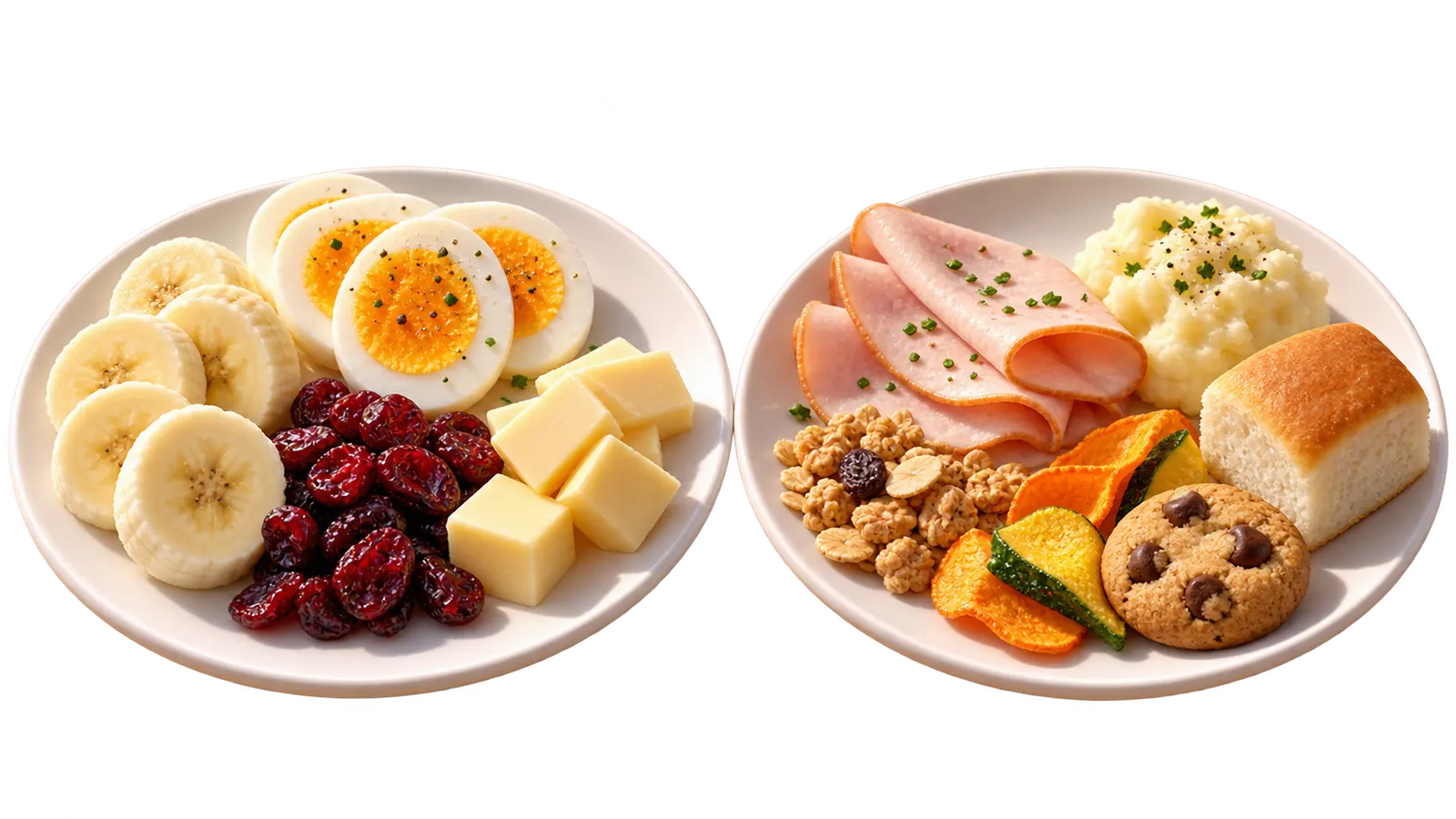
カロリーも栄養もそろえた2つの朝食。ゆで卵やバナナより、超加工食品のほうがインスリンが多く出た

 体・健康
体・健康
同じパンでも、1人より恋人と一緒に食べたほうが血糖値の上がり方が小さかった。若い108人の実験

 体・健康
体・健康
101歳の人の血の細胞を実験室で作りかえたら、細胞の年齢が10歳くらいまで若返った


 体・健康
体・健康