


 体と健康・食ホント
ほとんどの人が動かせない耳の筋肉が、音を聞こうとすると今も働いていた
 2026.10.02
 English Corner(A2〜B2・4択クイズ)
 読む前に予想してみよう!
人の耳を動かす筋肉は、完全に機能を失っている
耳を動かせない人でも、注意を向けた方向に応じて筋肉の電気的な活動が記録される。
 研究カード(どんな研究?)
- 対象
- 健康な成人
- 規模
- 2020年の2つの実験で28人と21人、2025年の実験で20人
- 研究の種類
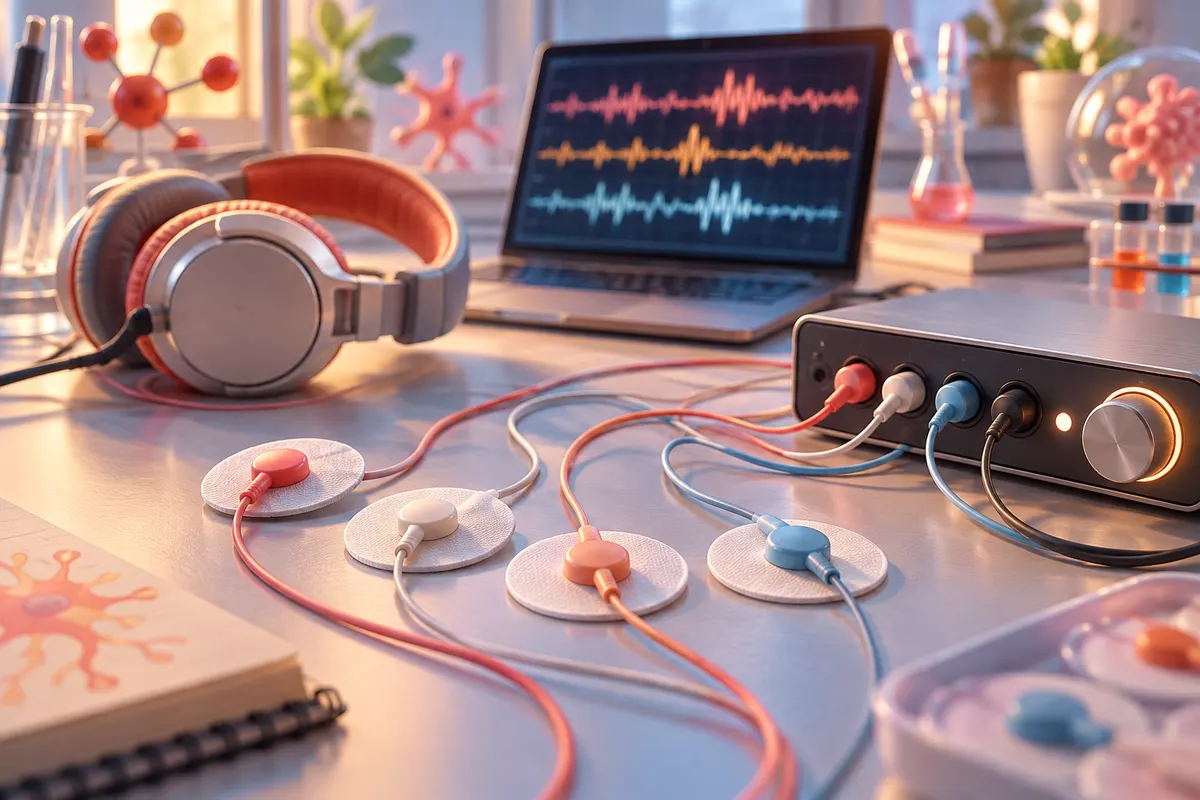
- 耳の周りの皮膚に電極を貼り、筋肉の電気信号を測る実験
- 確かさ
- ★★★☆☆
人の耳を動かす筋肉は退化したとされてきた。ところが、注意を向けた音の方向に合わせて筋肉の電気的な活動が現れ、いちばん聞き取りにくい条件では耳の上の筋肉の活動が大きくなった。
ひとことで言うと犬のように耳は動かせなくても、聞こうとすると耳の筋肉は働いている。
犬や猫は、音がするとサッと耳を向けます。耳そのものを動かして、音を集める向きを変えているのです。
人間にはできません。耳の周りには耳介筋(じかいきん)という筋肉がありますが、ほとんどの人は意識的に動かせず、「退化した器官」の代表例として教科書に載ってきました。
ところが2020年、ドイツの研究チームが、その筋肉が今も働いていることを示しました。
01聞こうとした方向に、耳の筋肉が反応した
研究チームは、耳を音の方へ向ける仕組みが、脳の中に「神経の化石」として約2500万年残ってきたという考えに合う結果だとしています。耳をほとんど動かせなくなったのは、類人猿の祖先がほかのサルの仲間と分かれた約2500万年前ごろかもしれない、と論文は述べています。
02「がんばって聞く」と強くなる
その後の研究で、もう一歩踏み込んだ結果が出ます。
つまり、
- 後ろの筋肉 → 音の方向に反応
- 上の筋肉 → 聞き取りのがんばり(努力)に反応
という役割の違いがありそうなのです。
03何の役に立つの?
この発見は、基礎研究としての面白さだけでなく、応用も期待されています。
研究者が挙げているのは、補聴器への応用です。もし耳の筋肉の活動から「この人はどちらの音に注意を向けているか」「どれくらい聞き取りに苦労しているか」がわかれば、その方向の音を強め、他を抑える補聴器が作れるかもしれません。
耳の筋肉の活動は手軽に測れるので、脳波(EEG)で注意の向きを読み取る方法を補えるかもしれない、と研究チームは述べています。
04ただし、動きは目には見えないレベル
勘違いしないでほしいのは、この活動が見える動きではないことです。
記録の中心は、皮膚の上から測れるごくわずかな電気信号です。2020年の研究では、高画質の動画をコンピューターで拡大して、耳がほんの少し動く様子もとらえました。でも、拡大しないと分からないほど小さな動きです(意識的に耳を動かせる人もいますが、それとは別の話です)。
また、どれも参加者10〜28人ほどの小規模な研究で、効果の大きさには個人差があります。筋電図は顔の表情の筋肉や、体の動きのノイズを拾いやすいという技術的な難しさもあります。
05まとめ
- 人の耳を動かす筋肉は「退化した」とされてきたが、電気的な活動は残っている
- 注意を向けた音の方向に応じて、筋肉の活動が変わる
- 聞き取りがいちばん難しい条件では、上の筋肉の活動がさらに大きくなる
- 補聴器への応用が期待されるが、動きは目に見えないレベル
耳を動かせないあなたの耳も、聞きたい音のほうへ、ほんのわずかに「向こうとしている」。2500万年前の名残が、今日も働いているのです。
この研究を英語で読もう原田英語の English CornerMany animals turn their ears toward interesting sounds, but humans lost this ability millions of years ago. 音声
音声 4択クイズ9問A2・B1・B2タップして開く
原田英語の English Corner
この研究を英語で読もう
Dogs and cats can turn their ears toward a sound, but most people cannot. We still have small muscles around our ears, but many people thought they were useless.
In 2020, scientists in Germany put small sensors near people's ears. When people listened carefully to a sound, the muscles on that side became active. The ears hardly moved, but the muscles were still working.
64 words ・ CEFR A2
和訳を見る
犬や猫は音のする方へ耳を向けることができますが、ほとんどの人はできません。私たちの耳の周りにも小さな筋肉がありますが、多くの人はそれが役に立たないと思っていました。
2020年、ドイツの科学者たちは、人々の耳の近くに小さなセンサーを貼りました。人が音を注意深く聞くと、その側の筋肉が活動しました。耳はほとんど動きませんでしたが、筋肉はまだはたらいていたのです。
4択リーディングクイズ
Q1. What is the passage mainly about?
役に立たないと思われていた人の耳の筋肉が、今もはたらいていることがテーマなので C。
Q2. What happened when people listened carefully to a sound?
the muscles on that side became active とあるので B。
Q3. In this passage, "carefully" means ...
carefully は「注意深く」。音に注意を向けて聞くという意味なので B。
Many animals turn their ears toward interesting sounds, but humans lost this ability millions of years ago. The muscles around our ears have therefore been called vestigial, meaning they have lost their original purpose. In 2020, however, Strauss and his team in Germany recorded tiny electrical signals from these muscles.
When participants paid attention to sounds from a certain direction, the muscles on that side became more active. In 2025, the same group found that one muscle above the ear became especially active when listening was very difficult, such as when several voices were talking at once. The ears hardly move, but researchers hope this activity could someday help control smarter hearing aids.
113 words ・ CEFR B1
和訳を見る
多くの動物は興味を引く音の方へ耳を向けますが、人間は何百万年も前にこの能力を失いました。そのため、耳の周りの筋肉は退化した、つまり元の目的を失ったと言われてきました。しかし2020年、ドイツのシュトラウスと彼のチームは、これらの筋肉からごく小さな電気信号を記録しました。
参加者が特定の方向からの音に注意を向けると、その側の筋肉がより活発になりました。2025年、同じグループは、何人もの声が同時に話しているときのように聞き取りがとても難しいとき、耳の上にある筋肉の一つが特に活発になることを発見しました。耳はほとんど動きませんが、研究者たちは、この活動がいつか、より賢い補聴器を制御するのに役立つことを期待しています。
4択リーディングクイズ
Q1. What does "vestigial" mean in this passage?
vestigial, meaning they have lost their original purpose と説明されているので B。
Q2. When did the muscle above the ear become especially active?
especially active when listening was very difficult とあるので C。
Q3. How might this research be used in the future?
this activity could someday help control smarter hearing aids とあるので D。
Cats and dogs swivel their ears toward interesting sounds, but humans are thought to have lost this pinna-orienting ability around 25 million years ago, leaving the small muscles around our ears as textbook examples of vestigial structures. In 2020, Strauss and colleagues at Saarland University placed surface electrodes on these muscles and ran two experiments.
In one, unexpected sounds such as a baby crying came from different directions while participants read; in the other, participants listened to one story while ignoring another. In both cases, muscles on the side of the attended sound became more active, and the patterns differed between reflexive and deliberate attention. The researchers described this as a "neural fossil". In 2025, Schroeer and colleagues varied listening difficulty for 20 participants who followed a podcast among competing voices.
Activity in the superior auricular muscle rose significantly only in the hardest condition, suggesting it reflects listening effort, while the posterior muscle responded mainly to sounds from behind. The studies are small, any ear movement is too small to see without magnified video, and surface recordings can pick up signals from nearby facial muscles. Even so, such signals might one day guide hearing aids that amplify the attended direction.
200 words ・ CEFR B2
和訳を見る
猫や犬は興味を引く音の方へ耳をくるりと向けますが、人間は約2500万年前にこの耳介を向ける能力を失ったと考えられており、耳の周りの小さな筋肉は退化した構造の教科書的な例とされてきました。2020年、ザールランド大学のシュトラウスらは、これらの筋肉に表面電極を貼り、2つの実験を行いました。
1つ目では、参加者が文章を読んでいる間に、赤ちゃんの泣き声のような予期しない音がさまざまな方向から聞こえました。2つ目では、参加者はある物語を聞きながら、別の物語を無視しました。どちらの場合も、注意を向けた音の側の筋肉がより活発になり、そのパターンは反射的な注意と意図的な注意とで異なっていました。研究者たちはこれを「神経の化石」と表現しました。2025年、シュローアーらは、競合する声の中でポッドキャストを聞く20人の参加者について、聞き取りの難しさを変えました。
上耳介筋の活動は最も難しい条件でのみ有意に上昇し、それが聞き取りの努力を反映していることが示唆されました。一方、後耳介筋は主に背後からの音に反応しました。研究は小規模で、耳の動きは拡大した動画でなければ見えないほど小さく、表面記録は近くの顔の筋肉からの信号も拾ってしまうことがあります。それでも、こうした信号は、いつか注意を向けた方向の音を増幅する補聴器を導くかもしれません。
4択リーディングクイズ
Q1. Which statement best summarizes the passage?
退化したとされる耳の筋肉が、注意や聞き取りの努力に反応することを示しているので B。
Q2. What did the 2025 study suggest about the superior auricular muscle?
rose significantly only in the hardest condition, suggesting it reflects listening effort とあるので C。
Q3. Which limitation does the author mention?
surface recordings can pick up signals from nearby facial muscles とあるので A。
重要単語
- vestigialC1形容詞退化した・名残のThese are vestigial muscles.
 vestige(痕跡)から。vestigial organ「痕跡器官」。
 - pinnaC1名詞耳介(耳の外側の部分)Animals turn the pinna toward sounds. ラテン語で「羽」。日常語では単に ear(外に見える耳)。
- electromyogramC1名詞筋電図The electromyogram showed tiny signals. electro(電気)+myo(筋肉)+gram(記録)。略して EMG。
- attentionA2名詞注意Attention changed the muscle activity. pay attention to ~「~に注意を払う」は最重要熟語。
- effortB1名詞努力Listening in noise takes effort. make an effort to do「~しようと努力する」。effortless は「楽々とした」。
- reflexB2名詞反射Part of the response is a reflex. 形容詞 reflexive(反射的な)。reflect(反射する・よく考える)と同語源。
 入試に出る順の単語帳を印刷する →
 全5903語の「科学英単語カード」で復習する →
 この話題を TED で聞く
同じテーマの TED・TED-Ed を、 TED HACK で。英語の見どころ・使える表現・学習ミッションつきの日本語ガイドです。(運営:原田英語)

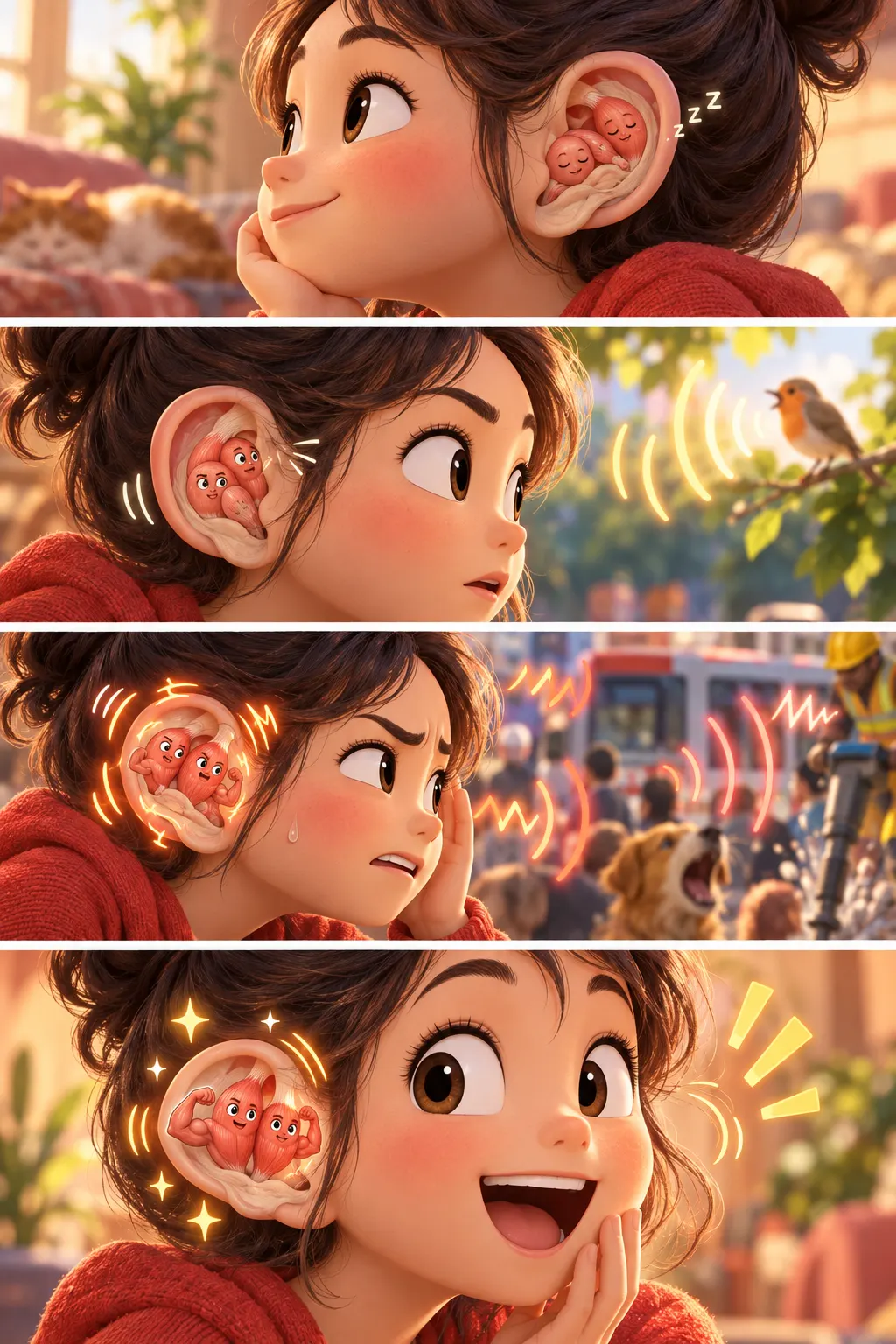
 4コマでわかる
このネタ、誰かに教えたくなった?
犬や猫は音の方へ耳を向けるが人はできない。でも耳の筋肉に電極を貼ると、注意を向けた音の方向に活動が出て、いちばん聞き取りにくい条件では耳の上の筋肉の活動が強くなったらしい。
押すと「マジかリスト」に保存されます
 出典・参考文献(3件)タップで表示
- Strauss et al. (2020) Vestigial auriculomotor activity indicates the direction of auditory attention in humans, eLifedoi.org
- Schroeer et al. (2025) Electromyographic correlates of effortful listening in the vestigial auriculomotor system, Frontiers in Neurosciencedoi.org
- Schroeer et al. (2024) The vestigial pinna-orienting system in humans briefly suppresses superior auricular muscle activity during reflexive orienting toward auditory stimuli, Journal of Neurophysiologydoi.org

※本記事は上記の研究・公開資料をもとに、原田英語が独自の言葉で解説したものです。引用は著作権法第32条の範囲で行い、出典を明記しています。画像はすべてオリジナルのイメージです。研究結果には限界や個人差があります。誤りのご指摘は原田英語のお問い合わせフォームから。
 これも「マジか!?」


 体・健康
体・健康
指紋は「すべり止め」じゃなかった? 物にふれる面積が減り、摩擦はむしろ下がる方向。役目は手ざわりを感じることかも

 体・健康
体・健康
大人になって牛乳が苦手になるのは「人類の標準」だった。むしろ平気な人が“突然変異”


 体・健康
体・健康
お風呂で指がシワシワになるのは「水を吸ったから」だけじゃなかった。神経が命令していた

 体・健康
体・健康
なぜ血液型(ABO)があるのか? サルにも同じA型・B型があり、2000万年以上受け継がれてきた
 体・健康
体・健康
親知らずが生えない人がいるのはなぜ? 世界の2割以上の人は、少なくとも1本が「最初から無い」
 体・健康
体・健康