shuden
the last train, and the way it shapes the night
終電(しゅうでん)
In one line
The shortest answer that works
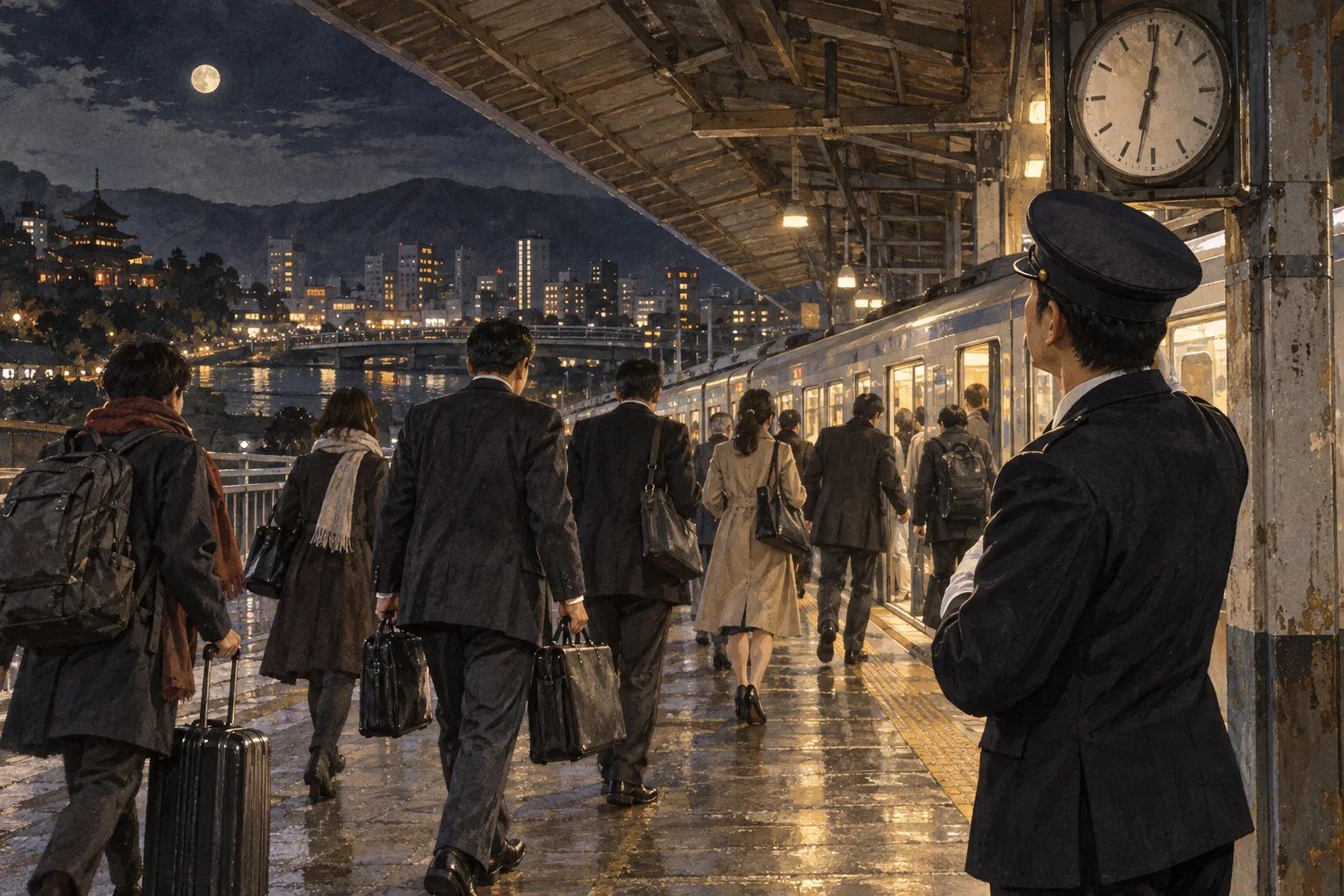
The last train runs around midnight, and missing it changes the rest of your night completely.
終電はだいたい深夜0時ごろで、これを逃すと、その夜の過ごし方がまるごと変わります。
In 30 seconds
The standard explanation
Japanese trains stop running around midnight and start again about five in the morning. There is generally no overnight service. Because taxis are expensive, missing the last train means finding somewhere to spend the night: a capsule hotel, a manga café, a karaoke room, or an all-night restaurant. The last train therefore sets the end time for almost every evening out.
日本の電車は深夜0時ごろに終わり、朝5時ごろに動き出します。夜通しの運行はふつうありません。タクシーは高いので、終電を逃すと夜を明かす場所を探すことになります。カプセルホテル、漫画喫茶、カラオケの部屋、24時間の飲食店。そのため終電は、ほとんどの夜の予定の終了時刻を決めています。
As a short speech
A full paragraph you can read aloud
In most large cities elsewhere, you can get home at any hour. In Japan you cannot. Trains stop around midnight and do not run again until about five in the morning, and there is no night bus network to speak of in most places. This single fact shapes Japanese nightlife more than anything else.
Every drinking party has an invisible deadline, and at around eleven you will see the whole room start checking their phones and calculating. There is a word for the sprint to the platform, and the last train itself is a distinctive experience: packed, loud, and full of people asleep.
If you miss it, the options are a taxi at a price that hurts, or staying out until five. That is why capsule hotels, manga cafés open all night, and karaoke rooms with a morning rate all exist in the numbers they do. They are not novelties. They are infrastructure for people who missed the train.
他の多くの大都市では、何時でも家に帰れます。日本では帰れません。電車は0時ごろに終わり、朝5時ごろまで動かず、多くの地域には夜行のバス網もありません。この一点が、日本の夜の過ごし方を何より強く形づくっています。
どの飲み会にも見えない締切があり、11時ごろになると、店じゅうが一斉にスマホを見て計算を始めます。ホームへ走ることを指す言葉もありますし、終電そのものが独特の体験です。混んでいて、騒がしく、寝ている人だらけ。
逃したら、選択肢は痛い値段のタクシーか、5時まで外にいるかです。カプセルホテル、24時間の漫画喫茶、朝までのカラオケが、これほどの数あるのはそのためです。物珍しい施設ではありません。終電を逃した人のための社会インフラなのです。
Questions people actually ask
And how to answer them.
Why is there no night service?
The hours between the last and first train are used for track and signal maintenance, which is a major reason Japanese rail is so reliable. Running all night would mean giving that up.
終電から始発までの時間が、線路と信号の保守に使われているからです。日本の鉄道の正確さを支える大きな理由で、終夜運転はそれを手放すことになります。
What do people actually do if they miss it?
Capsule hotel, manga café, all-night karaoke, a twenty-four-hour restaurant, or a taxi if they can justify it. Sleeping in a manga café booth until five is completely routine.
カプセルホテル、漫画喫茶、朝までカラオケ、24時間の飲食店、あるいは割り切ってタクシーです。漫画喫茶のブースで5時まで寝るのは、まったく日常的なことです。
Are there exceptions?
Some lines run all night on New Year's Eve, and Tokyo once trialed an all-night weekend bus. But the midnight-to-five gap is the norm across the country.
大晦日に終夜運転をする路線はありますし、東京では週末の終夜バスが試されたこともあります。ただ深夜0時から5時まで止まるのが、全国的な標準です。
Phrases you can use
- What time's your last train?終電、何時ですか。
- I'm going to have to run for it.走らないと間に合いません。
- There are no trains between midnight and five.0時から5時まで電車はありません。
- If you miss it, a manga café is the cheapest option.逃したら、漫画喫茶がいちばん安いです。
- The gap is used for track maintenance.その時間は線路の保守に使われています。
Words you need
- last train終電
- first train始発
- miss (a train)乗り逃す
- maintenance保守、点検
- all-night24時間営業の、朝までの
Watch
From YouTubeBackground (Japanese)
終電から始発までの約4時間は、線路・架線・信号の保守作業にあてられている。この時間帯に作業を集中させることが、日本の鉄道の定時性と安全性を支えている。東京メトロやJR東日本は、保守の働き方改革を理由に2021年から終電時刻を繰り上げた。大晦日には多くの路線が終夜運転を行うが、近年は取りやめる会社も増えている。漫画喫茶・ネットカフェは1990年代後半から個室化が進み、ナイトパックと呼ばれる深夜料金でシャワーや飲み放題が付く形が定着した。一方で、住居として使う「ネットカフェ難民」の問題も社会的に議論されている。