nomikai
the work drinking party
飲み会(のみかい)
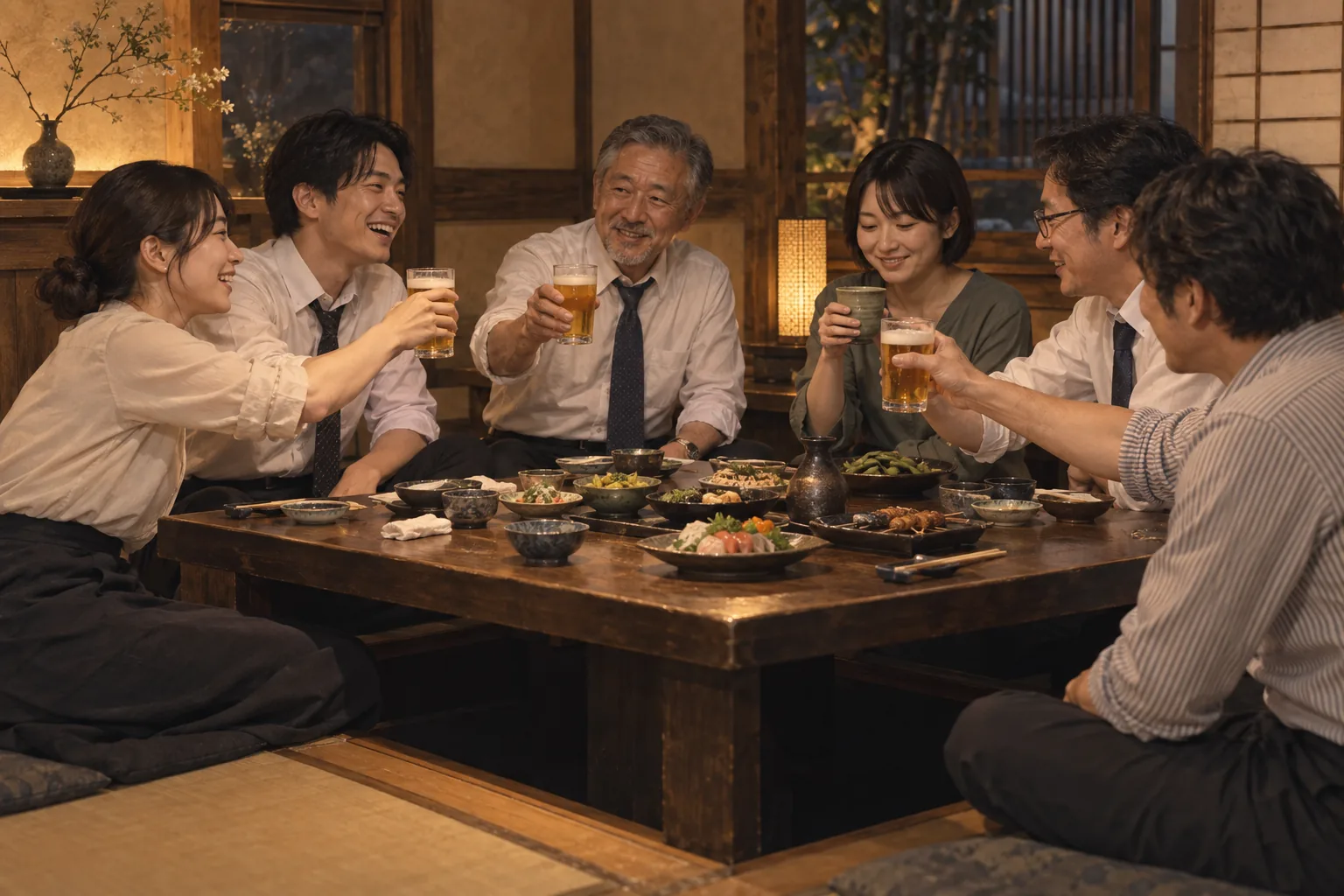
In one line
The shortest answer that works
A nomikai is a drinking party with colleagues, where the usual workplace hierarchy loosens a little.
飲み会とは職場の同僚などとお酒を飲む集まりで、ふだんの職場の上下関係が少しゆるむ場です。
In 30 seconds
The standard explanation
Japanese companies hold drinking parties for welcomes, farewells, year-end and after big projects. Many groups start with the same drink and a toast, food is shared, and people talk more freely than in the office. It has been a way of saying things that cannot be said at a desk. Attendance used to feel near-compulsory, and younger employees are increasingly declining.
日本の会社では、歓迎会・送別会・忘年会・打ち上げなどの飲み会が開かれます。同じ飲み物で乾杯することが多く、料理を分け合い、オフィスより率直に話します。机では言えないことを言う場として機能してきました。参加はかつてほぼ必須と感じられていましたが、断る若手が増えています。
As a short speech
A full paragraph you can read aloud
A nomikai is a drinking party with people from work, and it has a structure. Traditionally, everyone orders the same first drink, often beer, so the toast can happen together, and nobody drinks before the toast. Food is ordered for the table and shared.
Junior staff traditionally pour for the seniors and keep an eye on empty glasses. The reason these evenings mattered is that the office is a place where you cannot say certain things, and the restaurant is not. There is a word, bureiko, often announced by the most senior person, meaning rank is set aside for tonight.
In practice you should not entirely believe it. What is changing is attendance. Younger employees turn these down, refusing to drink is now accepted without argument, and pressuring someone to drink has a name and is treated as harassment.
飲み会は職場の人とお酒を飲む集まりで、型があります。昔からの形では、乾杯を全員でそろえるため最初はビールなど同じ飲み物を頼み、乾杯の前に飲む人はいません。料理は取り分け前提で頼みます。
若手が目上に注ぎ、空いたグラスに気を配るのが伝統的な形です。この場が重要だったのは、オフィスでは言えないことがあり、店ではそれが言えたからです。最も上の人が宣言する「無礼講」という言葉もあり、今夜は上下を抜きにしよう、という意味です。
ただ実際には、鵜呑みにしないほうがよいです。変わってきたのは参加です。若い世代は断りますし、飲まないという選択も当然に受け入れられるようになりました。飲酒を強要することには名前がつき、ハラスメントとして扱われます。
Questions people actually ask
And how to answer them.
Do I have to drink alcohol?
No. Ordering oolong tea for the toast is completely normal now. Pressuring someone to drink is called alcohol harassment, and many companies treat it as a disciplinary matter.
必要ありません。乾杯をウーロン茶にするのは今では普通です。飲酒の強要はアルハラと呼ばれ、懲戒の対象として扱う企業も多いです。
Who pays?
Usually the bill is split, with seniors often paying a larger share. For formal parties the company may cover it. Bring cash; splitting is still often done by hand.
割り勘が一般的で、上の立場の人が多めに出すことがよくあります。正式な会は会社が負担することもあります。現金を持っていきましょう。今も手作業で割ることが多いです。
What is bureiko?
A declaration that rank is suspended for the evening. It is a real phrase and a real custom, but treating it as literal permission to speak to your boss however you like is a mistake people regret.
その晩は上下をなしにしよう、という宣言です。実際にある言葉であり習慣ですが、上司に何を言ってもよい許可だと文字どおり受け取ると、あとで後悔します。
Phrases you can use
- Let's all order first, then toast together.先に全員注文して、そろえて乾杯しましょう。
- Oolong tea for me, thanks.私はウーロン茶でお願いします。
- Shall we split the bill?割り勘にしましょうか。
- It's easier to say things here than at the office.オフィスより、ここのほうが言いやすいですね。
- Nobody has to drink these days.今は飲まなくても大丈夫です。
Words you need
- drinking party飲み会
- toast (noun)乾杯
- split the bill割り勘にする
- pour a drink for someoneお酌をする
- year-end party忘年会
Watch
From YouTubeBackground (Japanese)
年末の「忘年会」は、その年の苦労を忘れるための会。語としては室町時代の連歌の席にさかのぼるという説がある。年始の「新年会」と対になる。乾杯を全員でそろえる習慣は、日本の宴席の基本作法として定着している。「無礼講」は本来、身分に関係なく杯を交わす儀礼を指した語。近年は飲酒の強要を「アルコールハラスメント」として問題視する動きが強まり、大学のサークルや企業で防止の指針が作られている。若年層で飲酒の習慣がある人の割合は、長期的に減っているとされる。コロナ禍を経て、オンライン飲み会や、一次会だけで帰る形も定着した。