hassha merodi
station departure jingles
発車メロディー(はっしゃメロディー)
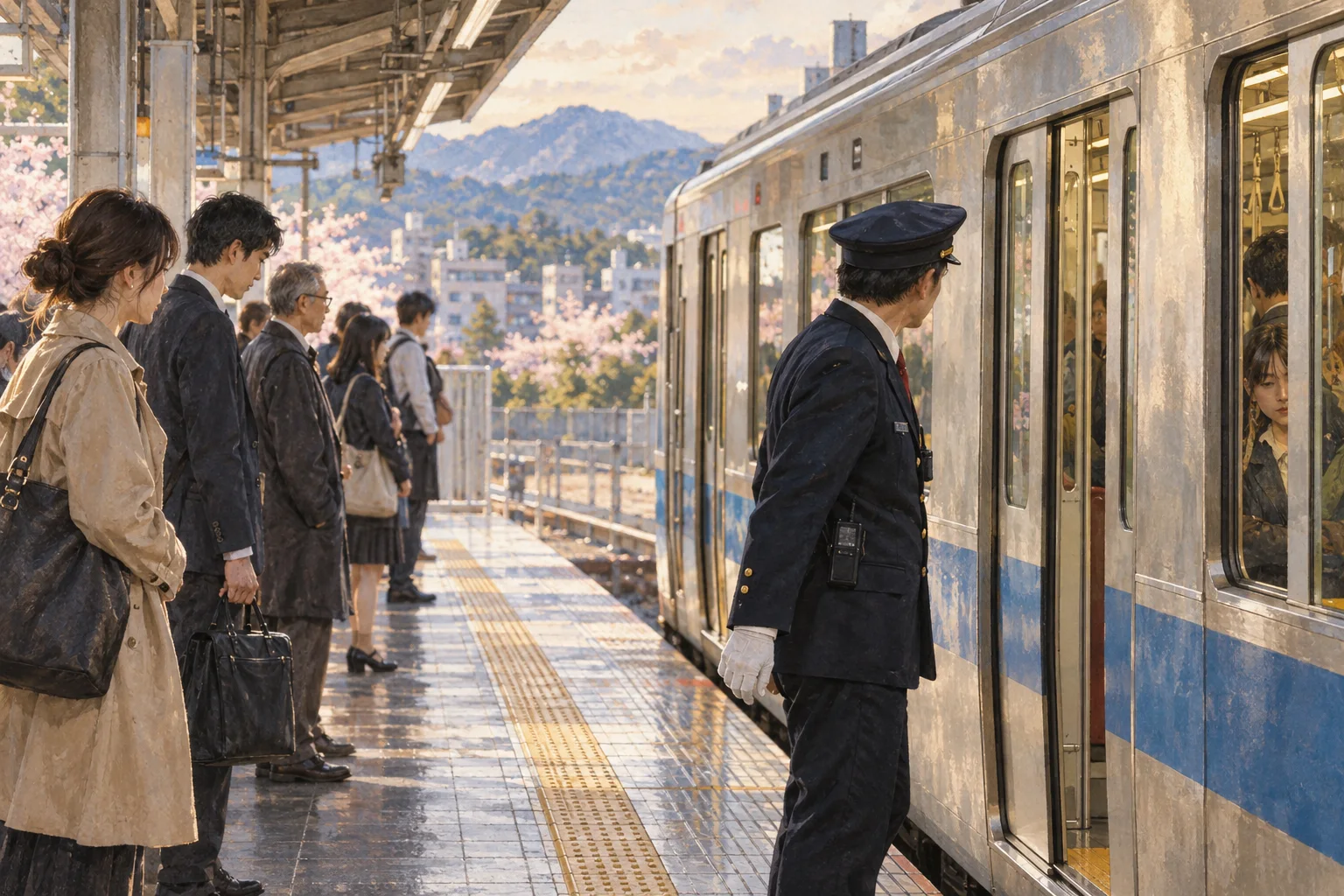
In one line
The shortest answer that works
Japanese stations play a short tune before departure instead of a harsh buzzer.
日本の駅では、耳障りなブザーの代わりに短い曲を流して発車を知らせます。
In 30 seconds
The standard explanation
Many Japanese stations play a brief melody, usually about seven seconds, just before a train's doors close. It replaced the old electric bell, which was loud and made people run. Some lines use a different tune for each platform, and stations connected to a famous song often play that song instead.
日本の多くの駅では、扉が閉まる直前に七秒ほどの短い曲が流れます。以前のベルは音が大きく、人を走らせたため、これに替わりました。ホームごとに違う曲を使う路線もあり、有名な曲にゆかりのある駅では、その曲が流れることもあります。
As a short speech
A full paragraph you can read aloud
One of the first things visitors notice on a Japanese platform is the music. A short melody, typically around seven seconds long, plays before the doors close, and then an announcement follows. The reason is practical.
Stations used to use an electric bell, which was loud, unpleasant and encouraged passengers to sprint for the train, and a soft tune that fades out was thought to calm the platform while still signaling the same thing. Lines in Tokyo often assign different melodies to different platforms so that regular passengers know which train is leaving without looking.
Some stations use a local connection: a station near where a famous song was set may use that song, and the practice has become a small tourist attraction in itself. There are recordings, collector communities, and stations that fans visit for the melody rather than the train.
日本のホームで訪日客が最初に気づくものの一つが音楽です。ふつう七秒前後の短い曲が扉の閉まる前に流れ、続いて放送が入ります。理由は実際的なものです。かつて駅では電鈴が使われていましたが、音が大きく耳障りで、乗客を電車へ走らせてしまいました。
そこで、静かに消えていく短い曲のほうが、同じことを知らせながらホームを落ち着かせると考えられたのです。東京の路線では、ホームごとに違う曲を割り当て、常連の乗客が見なくてもどの電車が出るか分かるようにしています。
土地との結びつきを使う駅もあります。有名な曲にゆかりのある駅がその曲を使うことがあり、この習慣そのものが小さな観光の対象になりました。録音を集める愛好者の集まりがあり、電車よりメロディーを目当てに訪ねられる駅もあります。
Questions people actually ask
And how to answer them.
Does the melody mean the train is leaving right now?
It means the doors will close shortly. Running for a train after the melody starts is discouraged, and station staff will say so, because the doors close on a fixed cue and people get caught.
まもなく扉が閉まるという意味です。メロディーが鳴り始めてから走るのは勧められておらず、駅員も注意します。扉は決まった合図で閉まるので、挟まれる人が出るからです。
Why does each platform have a different tune?
So that regular passengers can tell from sound alone which line is departing, which matters at large interchange stations where several platforms are within earshot.
常連の乗客が音だけでどの路線が発車するか分かるようにするためです。いくつものホームの音が同時に聞こえる大きな乗換駅では、これが役に立ちます。
Can I find out what a particular melody is?
Often yes. Enthusiasts have catalogued them, and stations that use a well-known song usually put up a sign explaining the local connection.
たいてい分かります。愛好者が一覧を作っており、よく知られた曲を使う駅は、その土地とのゆかりを説明する掲示を出していることが多いからです。
Phrases you can use
- That music means the doors are closing.あの音楽は扉が閉まる合図です。
- Please don't run for the train.駆け込み乗車はおやめください。
- Every platform has its own tune.ホームごとに曲が違います。
- This one is a local song.これはこの土地ゆかりの曲です。
- Wait for the next one; they come every few minutes.次を待ちましょう。数分おきに来ます。
Words you need
- departure melody発車メロディー
- platformホーム
- the doors are closing扉が閉まります
- rushing onto a departing train駆け込み乗車
- announcement放送
Watch
From YouTubeBackground (Japanese)
発車の合図は長く電鈴でしたが、音が強く駆け込み乗車を招くという指摘から、1980年代末ごろから短い曲を流す駅が現れ、都市部に広がりました。曲は七秒前後で、終わりが自然に消えるように作られています。ホームごとに曲を変える駅、地元にゆかりのある曲を採用する駅があり、その由来を掲示している駅も少なくありません。録音を集める愛好者がいるほか、曲を入れ替える際に利用者から意見が寄せられることもあります。