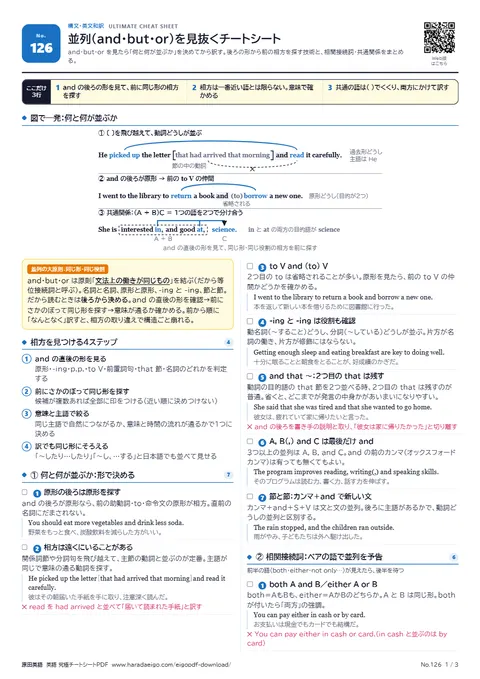
まずはこの3つ
- and の後ろの形を見て、前に同じ形の相方を探す
- 相方は一番近い語とは限らない。意味で確かめる
- 共通の語は( )でくくり、両方にかけて訳す
図で一発:何と何が並ぶか
並列の大原則:同じ形・同じ役割
and・but・or は原則「文法上の働きが同じもの」を結ぶ(だから等位接続詞と呼ぶ)。名詞と名詞、原形と原形、-ing と -ing、節と節。だから読むときは後ろから決める。and の直後の形を確認→前にさかのぼって同じ形を探す→意味が通るか確かめる。前から順に「なんとなく」訳すと、相方の取り違えで構造ごと崩れる。
相方を見つける4ステップ4
- 1and の直後の形を見る原形・-ing・p.p.・to V・前置詞句・that 節・名詞のどれかを判定する
- 2前にさかのぼって同じ形を探す候補が複数あれば全部に印をつける(近い順に決めつけない)
- 3意味と主語で絞る同じ主語で自然につながるか、意味と時間の流れが通るかで1つに決める
- 4訳でも同じ形にそろえる「〜したり…したり」「〜し、…する」と日本語でも並べて見せる
1何と何が並ぶか:形で決める7
- 1原形の後ろは原形を探すand の後ろが原形なら、前の助動詞・to・命令文の原形が相方。直前の名詞にだまされない。You should eat more vegetables and drink less soda.野菜をもっと食べ、炭酸飲料を減らした方がいい。
- 2相方は遠くにいることがある関係詞節や分詞句を飛び越えて、主節の動詞と並ぶのが定番。主語が同じで意味の通る動詞を探す。He picked up the letter[that had arrived that morning]and read it carefully.彼はその朝届いた手紙を手に取り、注意深く読んだ。✕read を had arrived と並べて「届いて読まれた手紙」と訳す
- 3to V and (to) V2つ目の to は省略されることが多い。原形を見たら、前の to V の仲間かどうかを確かめる。I went to the library to return a book and borrow a new one.本を返して新しい本を借りるために図書館に行った。
- 4-ing と -ing は役割も確認動名詞(〜すること)どうし、分詞(〜している)どうしが並ぶ。片方が名詞の働き、片方が修飾にはならない。Getting enough sleep and eating breakfast are key to doing well.十分に眠ることと朝食をとることが、好成績のかぎだ。
- 5and that 〜:2つ目の that は残す動詞の目的語の that 節を2つ並べる時、2つ目の that は残すのが普通。省くと、どこまでが発言の中身かがあいまいになりやすい。She said that she was tired and that she wanted to go home.彼女は、疲れていて家に帰りたいと言った。✕and の後ろを書き手の説明と取り、「彼女は家に帰りたかった」と切り離す
- 6A, B(,) and C は最後だけ and3つ以上の並列は A, B, and C。and の前のカンマ(オックスフォードカンマ)は有っても無くてもよい。The program improves reading, writing(,) and speaking skills.そのプログラムは読む力、書く力、話す力を伸ばす。
- 7節と節:カンマ+and で新しい文カンマ+and+S+V は文と文の並列。後ろに主語があるかで、動詞どうしの並列と区別する。The rain stopped, and the children ran outside.雨がやみ、子どもたちは外へ駆け出した。
2相関接続詞:ペアの語で並列を予告6
前半の語(both・either・not only…)が見えたら、後半を待つ
- 1both A and B/either A or Bboth=AもBも、either=AかBのどちらか。A と B は同じ形。both が付いたら「両方」の強調。You can pay either in cash or by card.お支払いは現金でもカードでも結構だ。✕You can pay either in cash or card.(in cash と並ぶのは by card)
- 2neither A nor B「AもBも〜ない」。全体否定なので not を重ねない。動詞は B に合わせるのが原則(口語では複数も)。Neither my sister nor I was at home.姉も私も家にいなかった。
- 3not only A but (also) B「AだけでなくBも」。主張は B。=B as well as A(こちらは A・B の順が逆になる点に注意)。The app is popular not only with students but also with teachers.そのアプリは生徒だけでなく先生にも人気だ。
- 4not A but B/B, not A「AではなくB」。but の後ろが答え。B, not A の語順でも同じ意味。The problem is not money but time.問題はお金ではなく時間だ。The problem is time, not money.問題は時間であって、お金ではない。
- 5A rather than B「BよりむしろA」。主張は A(前)。動詞が並ぶ時は前と同じ形に(to V の後は to を省いた原形が普通)。I prefer to walk rather than take the bus.バスに乗るより歩く方がいい。
- 6whether A or B「AであろうとBであろうと」(譲歩)または「AかBか」(名詞節)。A・B は同じ形。Whether you win or lose, you will learn something.勝っても負けても、何かを学べるはずだ。
相関接続詞と動詞の一致
| 形 | 意味 | 動詞を合わせるのは |
|---|---|---|
| both A and B | AもBも | 複数扱い |
| either A or B | AかBか | B(近い方) |
| neither A nor B | AもBも〜ない | B(口語では複数も) |
| not only A but also B | AだけでなくBも | B |
| B as well as A | AだけでなくBも | B(前の方) |
| not A but B | AではなくB | B |
3共通関係:1つの語を2つで分け合う5
(A+B)C / A(B+C)の形。かっこでくくると見える
- 1前置詞の目的語を共有interested in, and good at, math のように、2つの前置詞が後ろの1つの名詞を分け合う。カンマで挟まれた部分を外すと見える。She is interested in, and good at, science.彼女は理科に興味があり、得意でもある。
- 2動詞の目的語・主語を共有S(V1 and V2)O の形。目的語が前の動詞にもかかる。主語が1つで動詞が2つも同じ発想。Many people buy but never read books on success.成功の本を買うのに、まったく読まない人が多い。
- 3修飾語はどこまでかかる?young men and women は「若い男性と(若い)女性」の2通りに読める。文脈と常識で範囲を決め、和訳ではあいまいさを残さない。The library is open to students and teachers from other schools.その図書館は他校の生徒と教員にも開放されている。(from 〜 は両方にかかると読むのが自然)
- 4not A or B は両方否定否定文の or は「AもBも〜ない」。not A and B は「AとBの両方はしない」(片方はするかも)。He doesn't smoke or drink.彼はたばこも酒もやらない。✕「たばこか酒のどちらかをやらない」と訳す
- 5前の動詞の省略(空所化)2つ目の節で、1つ目と同じ動詞が省かれる。カンマが省略の目印。前の動詞を補って訳す。Tom ordered pizza, and Mary(,) pasta.トムはピザを、メアリーはパスタを注文した。
4and・but・or の意外な意味4
- 1命令文, and 〜/命令文, or 〜and=「そうすれば」、or=「さもないと」。名詞句, and 〜(One more step, and you'll fall.)も同じ発想。Hurry up, or you'll miss the train.急がないと電車に乗り遅れるよ。
- 2言い換えの or(すなわち)カンマ+or+名詞は「つまり」「別名〜」。専門用語の説明に多い。「または」と訳すと誤り。The study of the stars, or astronomy, began thousands of years ago.星の研究、すなわち天文学は、何千年も前に始まった。✕「星の研究または天文学」と2つの別物に訳す
- 3and の前後で因果・対比and は「そして」だけでなく「それで(結果)」「それなのに(対比)」にもなる。and yet=それなのに。He studied hard, and yet he failed the exam.彼は一生懸命勉強したのに、試験に落ちた。
- 4nice and 〜/try and 〜nice and warm=「ほどよく暖かい」(and が強調の副詞のように働く)。try and V=try to V(口語)。It's nice and quiet here.ここはほどよく静かだ。
正誤・整序で狙われる並列5
- ✕She enjoys reading, swimming, and to cook.○She enjoys reading, swimming, and cooking.並ぶものは同じ形(-ing)にそろえる
- ✕He not only plays the piano but also the violin.○He plays not only the piano but also the violin.not only の直後と but also の直後を同じ品詞に
- ✕Either you or he are wrong.○Either you or he is wrong.either A or B は B に一致
- ✕The teacher as well as the students were surprised.○The teacher as well as the students was surprised.X as well as Y は前の X に一致
- ✕I like to swim more than running.○I like swimming more than running.than の前後も並列。形をそろえる
長文での使い方
下線部和訳の文に and が2つ以上あったら、まずどの and がどの階層の並列かを決める。大きい並列(文と文)から先に切り、次に小さい並列(語と語)を見る。例:[A and B] and C なのか A and[B and C]なのか。かっこを書き込んでから訳すと、採点で見られる「構造の理解」がそのまま答案に出る。
確認テスト
- 1She opened the box that her friend had sent and out a letter.正解は took。相方は主節の opened(過去形)
- 2My goal is to pass the exam and abroad.正解は study。to pass と並ぶ(to の省略)
- 3Neither the manager nor the staff members aware of the problem.正解は were。neither A nor B は B(複数)に一致
- 4Wear a coat, you'll catch a cold.正解は or。命令文, or=さもないと
- 5I'd rather spend money on experiences on things.正解は than。would rather A than B
- 6I haven't heard from him at all. He didn't call write to me.正解は or。not A or B=AもBもしない
並列の見抜き方を一覧にまとめ、A4 3枚で印刷できる無料PDFにしました。Web版は赤シート・覚えたチェック・カード・4択テストつき。