 ワークシート
 ぬりえ
 迷路
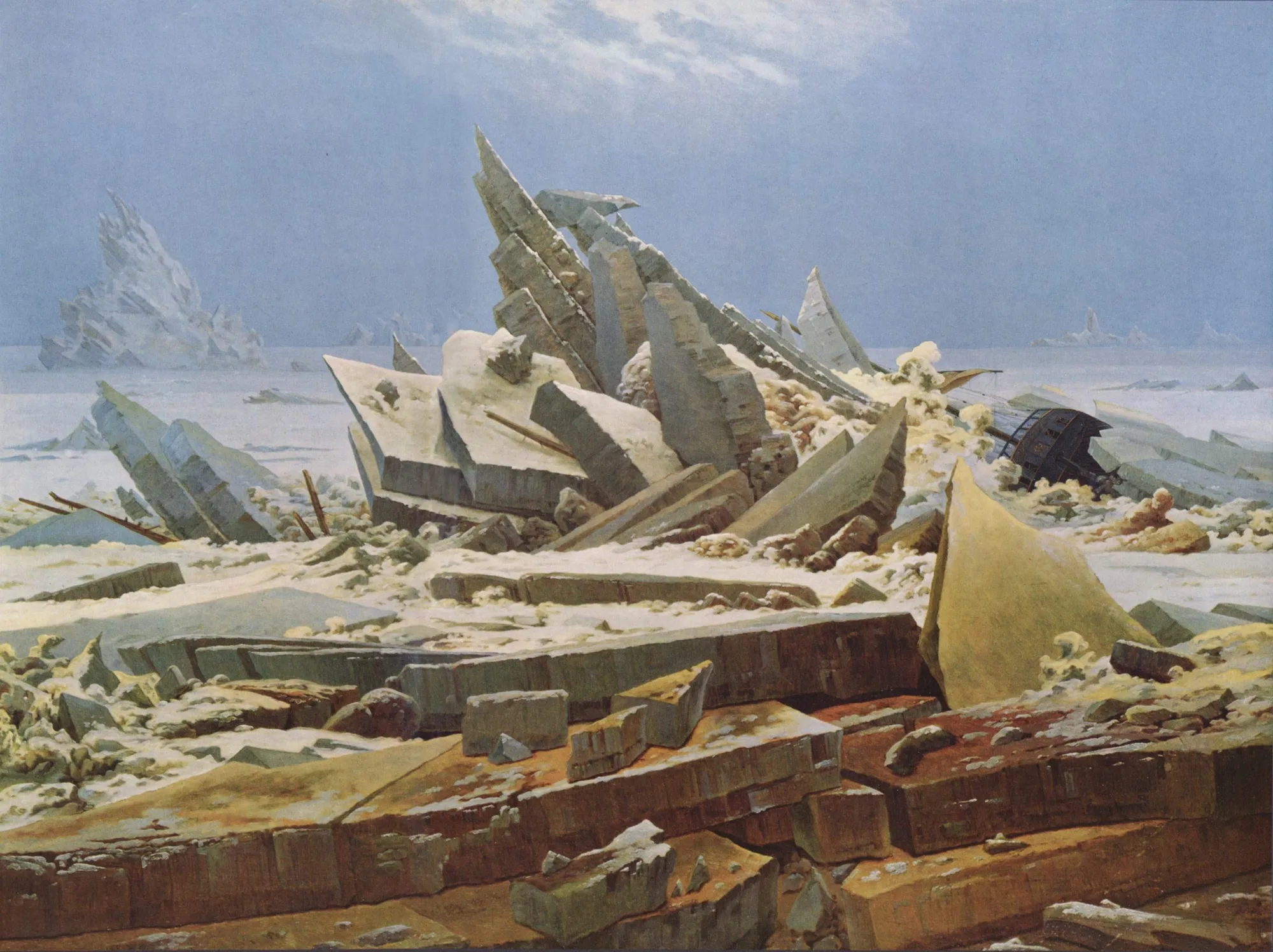
氷の板がガラスのように突き上がる!右奥の難破船を見つけられる?Sheets of ice stab at the sky! Can you find the wrecked ship on the right?
この作品のお話
Story北の果ての海で、割れた氷の板が何枚も重なり合い、まるで巨大な墓石のように空へ突き上がっています。右奥には、氷に押しつぶされた帆船の残骸が見えます。描いたのは、ドイツ・ロマン主義(自然の大きさや心の動きを大切にした芸術運動)を代表する画家フリードリヒです。1823〜24年ごろ、ドレスデンで描かれました。
In a far northern sea, broken slabs of ice are piled up and point at the sky like giant gravestones. On the right, the wreck of a sailing ship lies crushed by the ice. The artist is Caspar David Friedrich, the great painter of German Romanticism. He painted it in Dresden around 1823–24.
フリードリヒは北極に行ったことがありません。そのかわり、1820〜21年の冬、ドレスデンを流れるエルベ川が凍ると、川岸に出かけて氷のかけらを油絵で何枚も写生しました。その観察をもとに、見たこともない北極の海を組み立てたのです。当時のヨーロッパでは、イギリスの探検隊が北極の航路を探していて、そのニュースが大評判になっていました。
Friedrich never went to the Arctic. Instead, in the winter of 1820–21, the Elbe River in Dresden froze, and he went out to paint the ice in oil sketches. He used these studies to build an Arctic sea he had never seen. At that time, British explorers were searching for a sea route through the Arctic, and their stories were big news in Europe.
大胆な構図ときびしい主題は当時ほとんど理解されず、この絵はフリードリヒが生きているあいだには買い手がつきませんでした。画家は1840年に、ほとんど忘れられたまま亡くなります。20世紀に入って再び注目され、絵はハンブルクの美術館に入りました。今では、自然の前での人間の小ささを描いた、ロマン主義の代表作として知られています。
Its bold composition and harsh subject were poorly understood at the time, and the painting remained unsold while Friedrich was alive. He died in 1840, almost forgotten. In the twentieth century, people discovered his work again, and the painting went to the museum in Hamburg. Today it is famous as a masterpiece of Romanticism that shows how small humans are in front of nature.
これは氷の海です。大きな氷のかけらが塔のように立っています。右のほうを見てください。こわれた小さな船が氷にはさまっています!画家は北極に行ったことがありません。自分の町の凍った川で氷をスケッチしたのです。
This is a sea of ice. Big pieces of ice stand up like a tower. Look at the right side. A small broken ship is stuck in the ice! The painter never went to the Arctic. He drew the ice on a frozen river in his town.
英語のレベルは上の「やさしい/ふつう」で切りかえられます。
えっ!?な裏ネタ
Secretsこの絵は長いあいだ「難破した希望号」と呼ばれてきました。ところが、その題名はもともと、フリードリヒが少し前に描いた別の北極の絵(今は行方不明)のものだったと考えられています。2枚が取りちがえられて、名前だけがこちらに引っ越してきたのです。
For a long time, this painting was called 'The Wreck of Hope'. But that title probably belonged to a different Arctic painting by Friedrich, which is now lost. The two pictures were mixed up, and the name moved to this one.
画面いっぱいの北極の氷は、じつはエルベ川の氷がモデルです。フリードリヒは凍った川へ通い、氷のかけらの形や割れ目、光の当たり方を何枚もスケッチしました。小さな川の氷を、想像の力で巨大な氷山に変えたのです。
The huge Arctic ice is really based on ice from the Elbe River. Friedrich went to the frozen river many times and sketched the shapes, cracks and light of the ice. With his imagination, he turned small river ice into giant icebergs.
1819〜20年、イギリスのパリー隊長の探検隊が、北極の海を船で進み、氷にとじこめられながら冬を越しました。この探検の話はドイツでも読まれていて、フリードリヒの難破船はそれがヒントになったと考えられています。
In 1819–20, a British expedition led by Captain William Parry sailed into the Arctic and spent the winter trapped in ice. People in Germany read about it too. Many experts think it gave Friedrich the idea for the wrecked ship.
第二次世界大戦中、イギリスの画家ポール・ナッシュは、撃ち落とされた飛行機の残骸が野原に積み重なる光景を「死の海(Totes Meer)」という絵にしました。波のように重なる金属の山は、この「氷の海」を思わせると言われています。
During the Second World War, the British painter Paul Nash painted a field full of crashed planes. He called it 'Totes Meer' (Dead Sea). People often say its waves of broken metal remind them of 'The Sea of Ice'.
ここを見て!
Look Closer1氷に押しつぶされた船The wrecked ship
氷に押しつぶされ、横だおしになった船のおしり。折れたマストも見えます。小さく描くことで、氷の大きさがいっそう伝わります。
The back of a ship lies on its side, crushed by the ice. You can see a broken mast too. Because the ship is so small, the ice looks even bigger.
2空へ突き上がる氷Ice pointing at the sky
とがった氷の板が、ピラミッドのように積み上がっています。教会の塔や墓石のようにも見えるとよく言われます。
Sharp slabs of ice are piled up like a pyramid. People often say they look like a church tower or gravestones.
3遠くの氷山A distant iceberg
左の奥には、白くかすんだ氷山。どこまでも続く氷の世界を感じさせます。
Far away on the left, a pale iceberg rises. It tells us the world of ice goes on and on.
4手前の氷の板Ice slabs in front
茶色っぽく光る手前の氷は、まるで石の階段。見る人をこの景色の中へ導き入れます。
The brownish ice in front looks like stone steps. It leads our eyes into the scene.
英語で名画を語ろう
Talk about Art in EnglishIn the middle, sharp pieces of ice are piled up like a mountain.
真ん中では、とがった氷のかけらが山のように積み重なっています。
💡 物がどんどん重なった様子は be piled up。pile は「山・積み重ね」という名詞にもなります。
英語で説明すると… Describe it
これは凍った海を描いた絵です。真ん中には、とがった氷の板があります。それらは塔のように空を指しています。右には難破した小さな船があります。氷にはさまれています。
This painting shows a frozen sea. In the middle, there are sharp slabs of ice. They point at the sky like a tower. On the right, there is a small wrecked ship. It is trapped in the ice.
考えてみよう Think & Talk
- この絵にはなぜ人が描かれていないのだと思いますか?Why do you think there are no people in this painting?
- この絵は「希望」の絵でしょうか、それとも「希望を失う」絵でしょうか?なぜそう思いますか?Is this painting about hope or about losing hope? Why?
この作品の英単語
WordsHuge slabs of ice point at the sky.
大きな氷の板が空を指しています。
The wreck of a ship is hidden in the ice.
難破した船が氷の中に隠れています。
The ship was trapped by the ice.
船は氷に閉じこめられました。
Friedrich studied the frozen river.
フリードリヒは凍った川を観察しました。
ミニクイズ
QuizQ. フリードリヒは氷をどうやって研究した?How did Friedrich study the ice?
ドレスデンのエルベ川が凍った冬に、氷を何枚も写生しました。北極には行っていません。
He sketched the ice when the Elbe River in Dresden froze. He never went to the Arctic.
ウソ?ホント? フリードリヒの生前、この絵は買い手がつかなかった。Nobody bought this painting while Friedrich was alive.
大胆できびしい絵は当時ほとんど理解されず、画家の死後に評価されました。
Few people understood such a bold, harsh picture then. It became famous after his death.
ウソ?ホント? 絵の中の船には、探検隊員たちが乗っているのが見える。You can see explorers standing on the ship.
人の姿は一人も描かれていません。だからこそ、さびしさが強く伝わります。
There are no people at all. That is why it feels so lonely.
 画像の出典とライセンス / Image credit
- PDCaspar David Friedrich - Das Eismeer - Hamburger Kunsthalle - 02.jpg(Wikimedia Commons)
ライセンス:Public domain(パブリックドメイン)/作者・撮影者の表記:Caspar David Friedrich/提供元:The Yorck Project (2002) 10.000 Meisterwerke der Malerei (DVD-ROM), distributed by DIRECTMEDIA Publishing GmbH. ISBN: 3936122202.
この作品は、作者の死後長い年月がたち著作権の保護期間が終わった「パブリックドメイン」の作品です。画像は平面の作品を忠実に写したもので、新しい著作権は生じません(Wikimedia Commons の PD-Art の考え方)。 所蔵:ハンブルク市立美術館(ハンブルガー・クンストハレ)(Hamburger Kunsthalle)。画像は表示のために縮小・WebP 形式に変換しています。
カスパー・ダーヴィト・フリードリヒのほかの作品