 ワークシート
 ぬりえ
 迷路
空、海、砂浜、そして小さな人ひとり。200年前の「抽象画」!?Sky, sea, sand and one tiny man: an 'abstract' painting from 200 years ago!?
この作品のお話
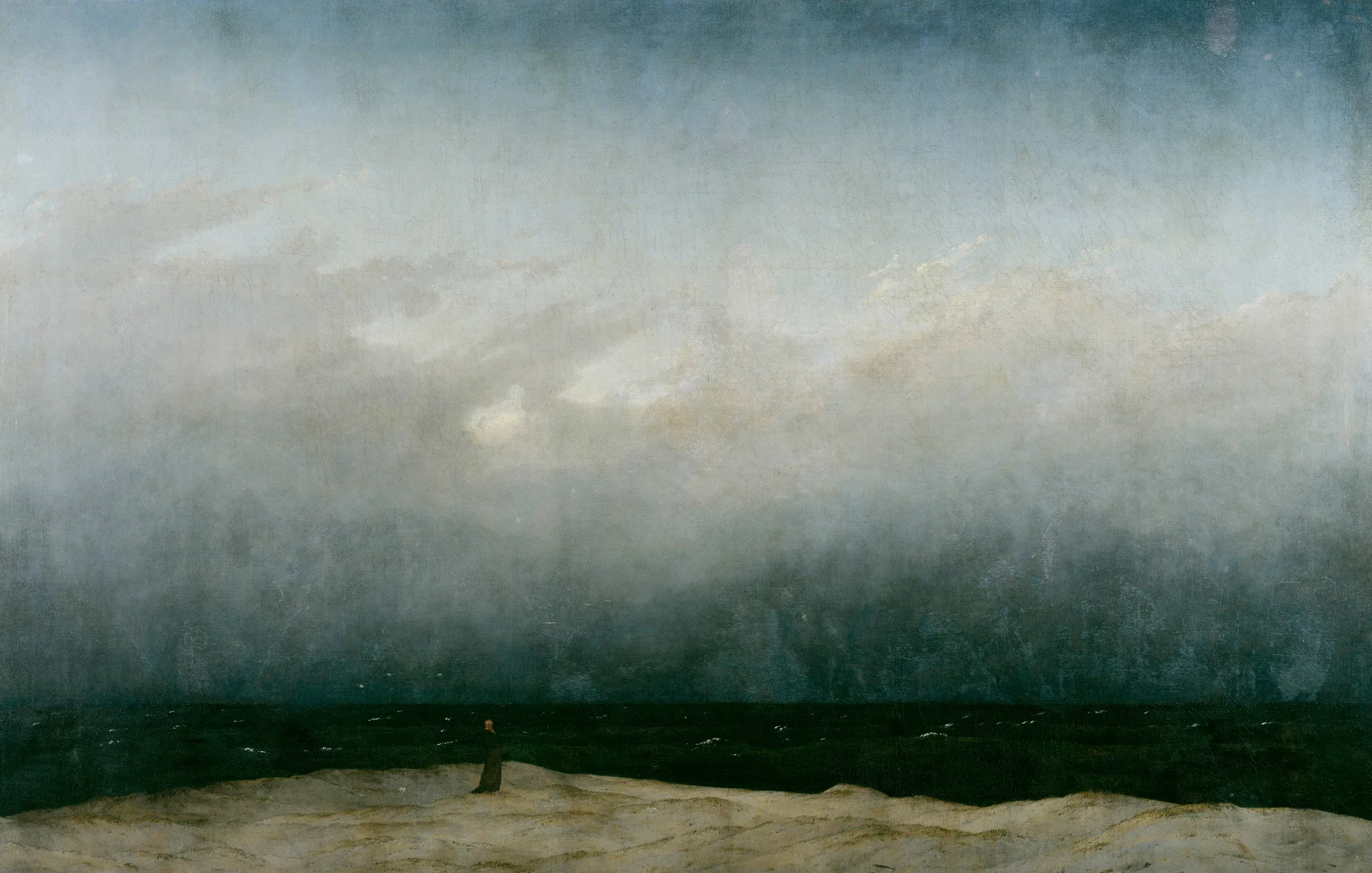
Story画面の4分の3以上が、どんよりした空。その下に暗い海、手前に白っぽい砂浜。そして砂浜に、黒い服の修道士がたったひとり、小さく立っています。ほかには、かすかなカモメが数羽見えるだけです。フリードリヒが1808年から1810年にかけて描いた作品です。見る人の目は、どこにも止まる場所がありません。
More than three quarters of the picture is a grey, heavy sky. Below it is a dark sea, and in front is a pale strip of sand. On the beach stands one tiny monk in dark clothes. Apart from a few faint gulls, there is almost nothing else. Friedrich painted it between 1808 and 1810. Your eyes have nowhere to rest.
当時の風景画には、手前に木や岩を置いて、見る人の目を奥へ導くのがふつうでした。この絵にはそれがまったくありません。フリードリヒは何度も描き直し、空に青をくわえたり、星や月を描いてはまた消したりしました。広い自然の前で、人間がいかに小さいかを感じさせる絵です。
In those days, landscape paintings usually had trees or rocks in front to lead the eye into the scene. This picture has none of that. Friedrich changed it many times. He added blue to the sky and painted stars and a moon, then removed them again. The picture makes us feel how small a person is in front of nature.
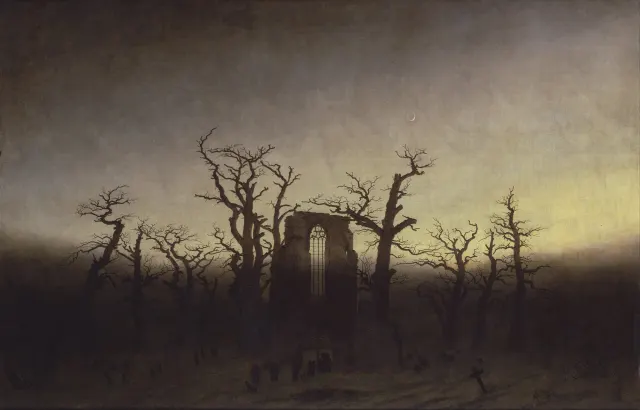
1810年、ベルリンのアカデミー展で、対になる『樫の森の中の修道院』と一緒に発表されました。人々はその新しさにとまどいましたが、15歳の王太子のすすめで、プロイセン王フリードリヒ・ヴィルヘルム3世が2点とも買い上げました。今は2点がベルリン旧国立美術館にならんで展示されています。のちのロスコなどの抽象画とも比べられる作品です。
In 1810, it was shown at the Berlin Academy together with its partner, The Abbey in the Oakwood. People were confused by how new it was, but King Frederick William III of Prussia bought both paintings, at the request of his 15-year-old son, the Crown Prince. Today they hang side by side in the Alte Nationalgalerie. It is often compared with later abstract art, such as Rothko's.
この絵には、大きな空と暗い海と浜辺があります。浜辺に、とても小さな男の人が立っています。彼は修道士です。最初は、海に2そうの船がありました。でも画家が消してしまったのです!
This picture has a big sky, a dark sea and a beach. A very small man stands on the beach. He is a monk. At first, there were two ships on the sea. But the painter took them away!
英語のレベルは上の「やさしい/ふつう」で切りかえられます。
えっ!?な裏ネタ
Secrets近年の科学調査で、フリードリヒは最初、水平線に2そうの小さな帆船を描いていたことがわかりました。でも完成前に消し、海をからっぽにしたのです。そのほうが、修道士のひとりぼっちの感じが強く伝わると考えたのかもしれません。
Recent scientific studies found that Friedrich first painted two small sailing ships on the horizon. Before finishing, he painted them out and left the sea empty. Perhaps he felt this made the monk seem more alone.
作家クライストは新聞でこの絵を紹介し、手前に何もない画面を見るのは「まぶたを切り取られたかのようだ」と書きました。絵を前にしたときの、圧倒されるような不安な感じを表したたとえで、ただのほめ言葉ではありません。
The writer Heinrich von Kleist wrote that looking at this picture, with no foreground but the frame, was 'as if one's eyelids had been cut away'. This disturbing image describes an overwhelming, uneasy feeling. It is not simple praise.
美術史家ボイムは、この修道士はフリードリヒ自身の姿だろうと考えました。ほかの研究者にもこの意見に賛成する人がいます。画家は、広い海と空の前に自分自身を立たせたのかもしれません。
The art historian Albert Boime thought the monk was probably a self-portrait of Friedrich. Other scholars have agreed. Perhaps the painter placed himself before the vast sea and sky.
文豪ゲーテは、この絵について「逆立ちしても見られる」と言ったと伝えられます。上下の区別がつかないほど、形がそぎ落とされているということです。ほめ言葉とも、からかいとも取れる一言です。
The great writer Goethe is said to have joked that the picture 'could be looked at standing on one's head'. It is so simple that up and down hardly matter. It could be praise or a joke.
ここを見て!
Look Closer1修道士The monk
砂浜に立つ、とても小さな黒い人影。広い世界の中のひとりの人間です。
A very small dark figure on the beach: one human being in a huge world.
2暗い海The dark sea
黒に近い青の海に、白い波がしらが点々と。昔はここに船がありました。
The sea is almost black, with little white waves. Ships were once painted here.
3広い空The huge sky
画面のほとんどを占める空。下は暗く、上へいくほど明るい青になっていきます。
The sky fills most of the picture. It is dark at the bottom and becomes lighter blue toward the top.
英語で名画を語ろう
Talk about Art in EnglishThe sky takes up most of the picture.
空が絵のほとんどを占めています。
💡 take up +場所で「〜を占める」。画面の何割を何が占めるか説明するのに便利。
英語で説明すると… Describe it
空がこの絵のほとんどを占めています。空は灰色でくもっています。空の下には暗い海があります。手前には白っぽい浜辺があります。小さな修道士がひとりで浜辺に立っています。
The sky takes up most of this picture. It is grey and cloudy. Below the sky, there is a dark sea. In the foreground, there is a pale beach. A tiny monk is standing alone on the beach.
考えてみよう Think & Talk
- この絵を見ると、どんな気持ちになりますか?落ち着く?さびしい?それとも別の気持ち?How do you feel when you look at this picture? Calm, lonely, or something else?
- フリードリヒはなぜ船を消したのだと思いますか?Why do you think Friedrich removed the ships?
この作品の英単語
WordsA monk stands alone on the beach.
修道士がひとりで浜辺に立っています。
There is nothing on the horizon.
水平線の上には何もありません。
The picture feels very empty.
この絵はとてもからっぽに感じられます。
Friedrich removed the ships from the sea.
フリードリヒは海から船を取りのぞきました。
ミニクイズ
QuizQ. 科学調査でわかった、最初は描かれていたものは?What did scientific studies find was first painted here?
水平線に2そうの小さな帆船がありましたが、画家が消しました。
There were two small sailing ships on the horizon, but the painter removed them.
ウソ?ホント? プロイセン王が、この絵を買い上げた。The King of Prussia bought this painting.
1810年の展覧会のあと、15歳の王太子のすすめで、フリードリヒ・ヴィルヘルム3世が対の絵と一緒に買いました。
After the 1810 exhibition, King Frederick William III bought it with its partner painting, at the request of the young Crown Prince.
ウソ?ホント? 画面の手前には、大きな木が描かれている。There is a big tree in the foreground.
手前には砂浜しかありません。木や岩がないことが、この絵の新しさでした。
There is only sand in front. Having no trees or rocks was what made it new.
 画像の出典とライセンス / Image credit
- PDCaspar David Friedrich - Der Mönch am Meer - Google Art Project.jpg(Wikimedia Commons)
ライセンス:Public domain(パブリックドメイン)/作者・撮影者の表記:Caspar David Friedrich/提供元:Google Arts & Culture — KwEv_TMiJhn5kA
この作品は、作者の死後長い年月がたち著作権の保護期間が終わった「パブリックドメイン」の作品です。画像は平面の作品を忠実に写したもので、新しい著作権は生じません(Wikimedia Commons の PD-Art の考え方)。 所蔵:ベルリン旧国立美術館(Alte Nationalgalerie)。画像は表示のために縮小・WebP 形式に変換しています。
カスパー・ダーヴィト・フリードリヒのほかの作品