 ワークシート
 ぬりえ
 迷路
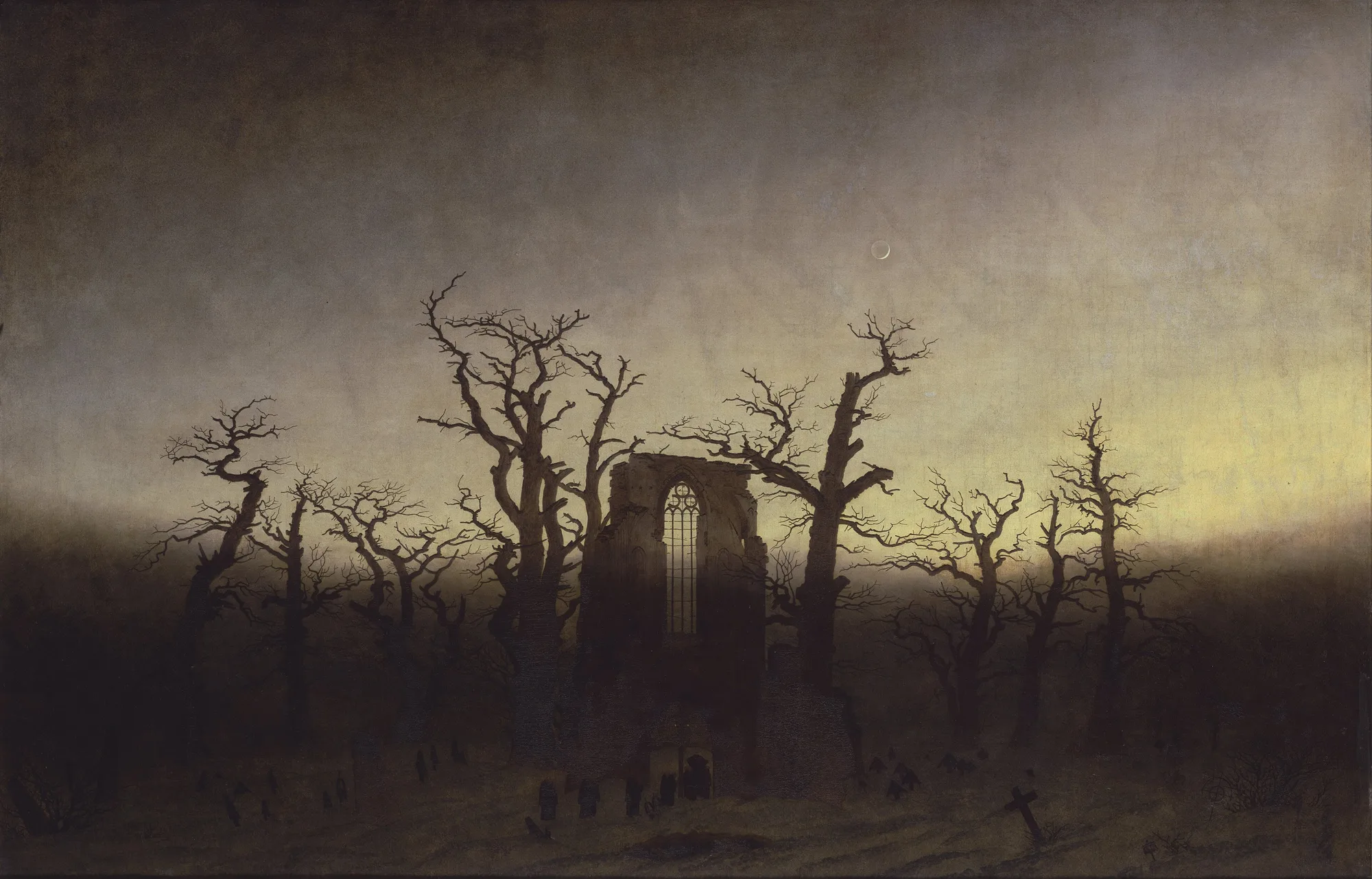
葉のない樫の木と崩れた教会。雪の夕暮れを進む、静かな行列。Leafless oaks and a ruined church. A quiet procession moves through the snowy dusk.
この作品のお話
Story雪の積もった墓地に、葉を落とした樫の古木が立ちならび、そのまん中に崩れかけた教会の壁がそびえています。その下の門のほうへ、修道士たちの小さな行列が進んでいきます。空は夕暮れの光でうっすら明るく、細い三日月が浮かんでいます。ドイツ・ロマン主義の画家フリードリヒが、1809年から1810年にかけて描いた作品です。
In a snowy graveyard, old oak trees without leaves stand in rows. In the middle rises the wall of a ruined church. Below it, a small procession of monks moves toward the gate. The sky is faintly bright with the evening light, and a thin crescent moon floats in it. The German Romantic painter Friedrich painted this in 1809 and 1810.
崩れた教会のモデルは、フリードリヒのふるさとグライフスヴァルトの近くにあるエルデナ修道院の廃墟です。この修道院は三十年戦争のころに荒れはて、レンガは要塞づくりに使われたといわれます。フリードリヒは屋外で描いたスケッチをもとに、アトリエで場面を組み立てました。画面の下3分の1は暗くしずみ、光が当たるのは廃墟の上と木の枝先だけです。
The ruined church is based on Eldena Abbey, near Friedrich's hometown of Greifswald. The abbey fell into ruin around the time of the Thirty Years' War, and its bricks were reportedly taken to build fortifications. Friedrich made sketches outdoors and then put the scene together in his studio. The lower third of the picture sinks into darkness. Only the top of the ruin and the tips of the branches catch the light.
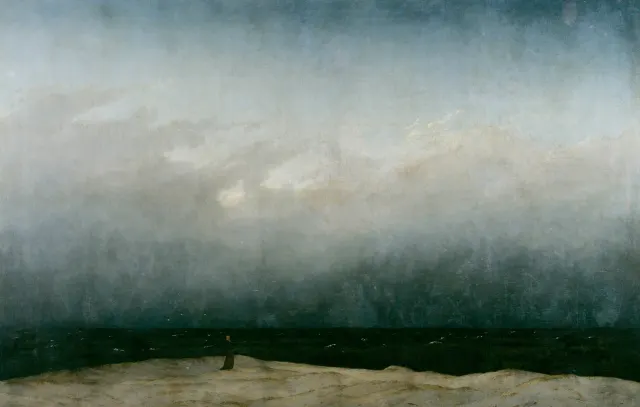
1810年、ベルリンのアカデミー展で『海辺の修道士』と一緒に発表され、2点ともプロイセン国王フリードリヒ・ヴィルヘルム3世が買い上げました。今も2点そろってベルリン旧国立美術館にあります。フリードリヒは死後長く忘れられましたが、20世紀に再評価され、生誕250年の2024年にはドイツ各地で大きな展覧会がひらかれました。
In 1810, it was shown with "The Monk by the Sea" at the Academy exhibition in Berlin. King Frederick William III of Prussia bought both paintings. They are still together in the Alte Nationalgalerie in Berlin. Friedrich was forgotten for a long time after his death, but he was rediscovered in the 20th century. In 2024, his 250th birthday year, big exhibitions were held across Germany.
寒い冬の夕方です。古い木には葉がありません。まん中には崩れた教会。小さな人たちが雪の中を歩いています。細い月を見つけられるかな?
It is a cold winter evening. Old trees have no leaves. A broken church stands in the middle. Small people walk in the snow. Can you find the thin moon?
英語のレベルは上の「やさしい/ふつう」で切りかえられます。
えっ!?な裏ネタ
Secrets1810年の展覧会では、フリードリヒの希望で、この絵は『海辺の修道士』の下に、上下にならべてかけられました。広い海辺にたたずむ修道士と、夕暮れの墓地を進む修道士たちの行列。2枚を組にして、人の一生や死について語る作品と考える研究者もいます。
At the 1810 exhibition, Friedrich asked for this painting to hang below "The Monk by the Sea". One shows a monk alone on a wide shore, the other a procession of monks in a graveyard at dusk. Some scholars think the pair together speaks about human life and death.
国王が2枚を買い上げたのは、当時15歳ほどだった皇太子(のちの国王フリードリヒ・ヴィルヘルム4世)が望んだからだと考えられています。若い皇太子は、それまでにない新しい風景画にすっかり心をひかれたのかもしれません。
The king probably bought the two paintings because the crown prince, then about 15 and later King Frederick William IV, wanted them. The young prince may have been charmed by this new kind of landscape painting.
手前の雪の中をよく見ると、かたむいた十字架や墓石が、うもれるように立っています。行列の前には、掘ったばかりの墓もあります。修道士たちは仲間を見送るところなのかもしれません。暗い画面のあちこちに、物語のかけらがひそんでいるのです。
Look closely at the snow in front. Tilted crosses and gravestones stand half buried. In front of the procession, there is a newly dug grave. The monks may be saying goodbye to one of their brothers. Pieces of a story are hidden all over this dark picture.
この絵が描かれたころ、ドイツの多くの地域はナポレオンのフランス軍に支配されていました。グライフスヴァルトの教会もフランス兵の宿舎にされたといわれます。そのためこの葬列を、「ドイツの希望をほうむる場面」と読む研究者もいます。
When this picture was painted, much of Germany was under the control of Napoleon's French army. Churches in Greifswald were reportedly used as housing for French soldiers. So some scholars read this funeral as "the burial of Germany's hopes".
ここを見て!
Look Closer1ゴシックの窓Gothic window
崩れた壁に残る、先のとがった細長い窓。光をうけて、空の明るさが透けて見えます。
A tall, pointed window remains in the broken wall. The bright sky shows through it.
2修道士の行列Procession of monks
門に向かって進む、黒い服の修道士たちの小さな行列。人間はとても小さく描かれています。
A small line of monks in black walks toward the gate. The people are painted very small.
3三日月Crescent moon
空にうっすら浮かぶ細い三日月。見落としてしまいそうなほど小さく、はかなげです。
A thin crescent moon floats faintly in the sky. It is so small that it is easy to miss.
4かたむいた十字架Leaning cross
雪の中に立つ、かたむいた木の十字架。ここが墓地であることを教えてくれます。
A wooden cross leans in the snow. It tells us this place is a graveyard.
英語で名画を語ろう
Talk about Art in EnglishA procession of monks walks slowly toward the gate.
修道士たちの行列が、ゆっくりと門へ向かっています。
💡 a procession of ~で「〜の行列」。お祭りやパレードの行列にも使えます。
英語で説明すると… Describe it
これは冬の夕暮れの場面です。中央には、高い窓のある崩れた教会の壁があります。そのまわりに葉のない樫の木が立っています。下のほうでは、修道士たちの小さな行列が雪の中を歩いています。
This is a winter scene at dusk. In the center, there is a ruined church wall with a tall window. Bare oak trees stand around it. At the bottom, a small procession of monks is walking through the snow.
考えてみよう Think & Talk
- この絵を見て、どんな気持ちになりますか?それはなぜ?How does this picture make you feel? Why?
- フリードリヒはなぜ人間をこんなに小さく描いたのだと思いますか?Why do you think Friedrich made the people so small?
この作品の英単語
WordsThe ruin of an old church stands in the snow.
古い教会の廃墟が雪の中に立っています。
The bare oak trees look like dark hands.
葉のない樫の木は、黒い手のように見えます。
A procession of monks walks to the gate.
修道士の行列が門へ向かいます。
The sky is pale at dusk.
夕暮れの空はうす明るい。
ミニクイズ
QuizQ. 1810年の展覧会で、この絵と一緒に発表された作品は?Which painting was shown with this one at the 1810 exhibition?
2点とも国王が買い上げ、今もベルリン旧国立美術館にならんでいます。
The king bought both, and they still hang together in the Alte Nationalgalerie.
ウソ?ホント? 崩れた教会のモデルは、エルデナ修道院の廃墟だ。The ruined church is based on Eldena Abbey.
画家のふるさとグライフスヴァルトの近くにある廃墟です。
It is a ruin near the painter's hometown of Greifswald.
ウソ?ホント? この絵は、真夏の昼の森を描いている。This painting shows a forest at noon in midsummer.
雪の積もった冬の夕暮れです。木には葉が一枚もありません。
It is a winter evening with snow. The trees have no leaves at all.
 画像の出典とライセンス / Image credit
- PDCaspar David Friedrich - Abtei im Eichwald - Google Art Project.jpg(Wikimedia Commons)
ライセンス:Public domain(パブリックドメイン)/作者・撮影者の表記:Caspar David Friedrich
この作品は、作者の死後長い年月がたち著作権の保護期間が終わった「パブリックドメイン」の作品です。画像は平面の作品を忠実に写したもので、新しい著作権は生じません(Wikimedia Commons の PD-Art の考え方)。 所蔵:ベルリン旧国立美術館(Alte Nationalgalerie)。画像は表示のために縮小・WebP 形式に変換しています。
カスパー・ダーヴィト・フリードリヒのほかの作品