 ワークシート
 ぬりえ
 迷路
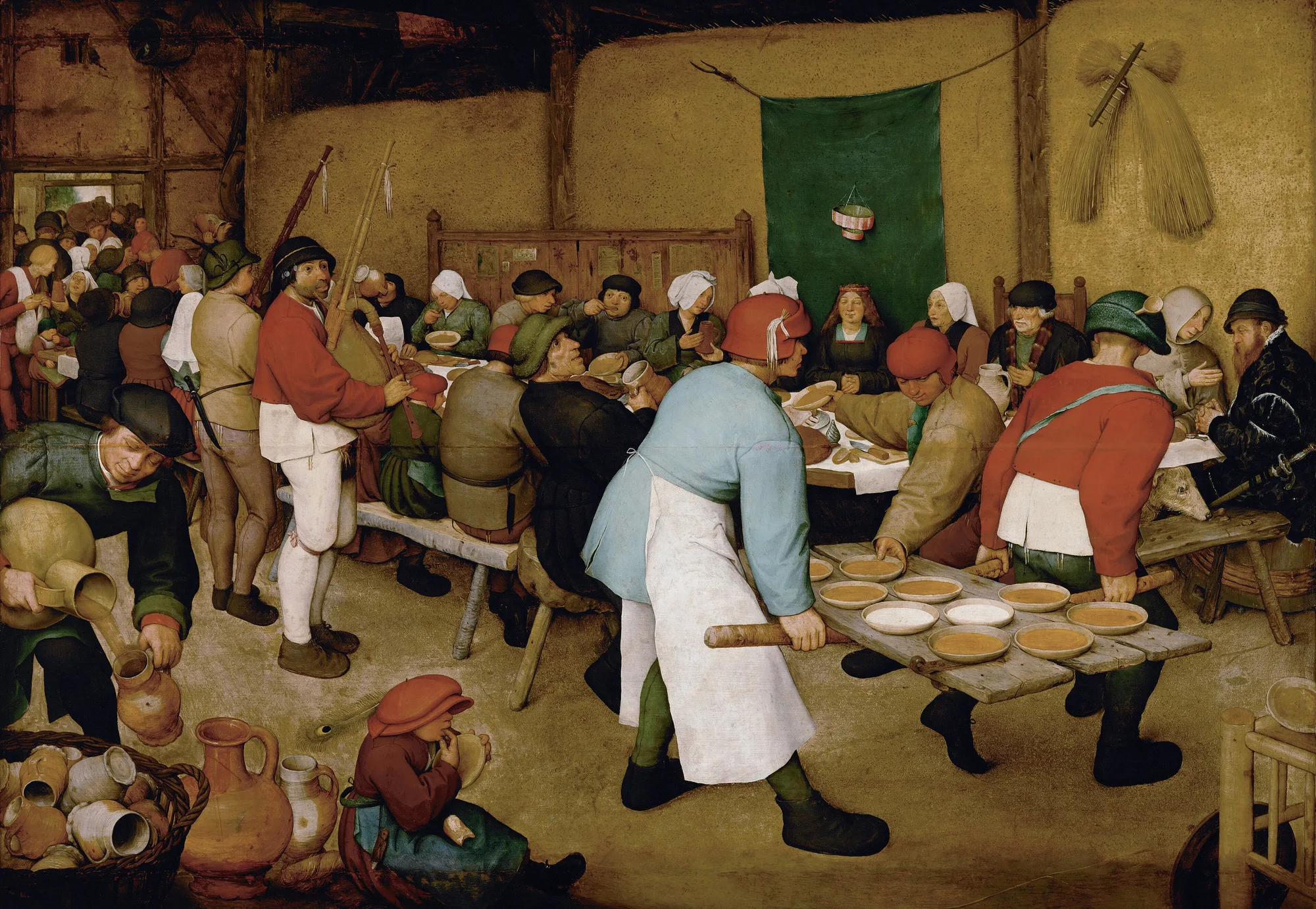
花嫁はどこ?花婿はいないの?にぎやかな村の結婚パーティー。Where is the bride? And where is the groom? A busy village wedding party.
この作品のお話
Story納屋を会場にした村の結婚パーティーです。長いテーブルにはたくさんの客がすわり、手前では2人の男が、外したドアをお盆にしてスープやおかゆの皿を運んでいます。左ではビールをつぎ、バグパイプ吹きは料理をじっと見つめ、床では子どもが皿をなめています。にぎやかな音まで聞こえてきそうです。
This is a village wedding party in a barn. Many guests sit at a long table. In front, two men carry bowls of soup or porridge on a door used as a tray. On the left, a man pours beer. A bagpipe player stares at the food, and a child licks a plate on the floor. You can almost hear the noise.
花嫁は、緑の布の前にすわり、上に紙の冠がかけられた女性です。目を半分とじて手を組み、じっとしています。当時の習わしでは、花嫁はこの日なにも仕事をしないものでした。ところが花婿は絵の中に見当たりません。所蔵する美術館は、当時のフランドルの習わしで、花婿はこの祝宴に出ていなかったと説明しています。
The bride sits in front of a green cloth, under a paper crown. Her eyes are half closed and her hands are folded. In those days, a bride did no work on her wedding day. But the groom is nowhere to be seen. The museum explains that, by Flemish custom, the groom did not attend this feast.
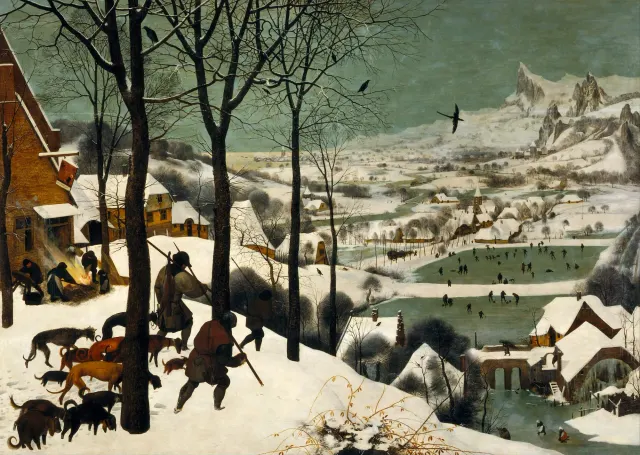
ブリューゲルは農民の暮らしを、ばかにするのでもなく、きれいごとにするのでもなく、生き生きと描きました。「農民ブリューゲル」とも呼ばれます。この絵は1590年代にはハプスブルク家の大公が手に入れ、今はウィーンで「雪中の狩人」などと並んで見ることができます。
Bruegel painted the lives of peasants in a lively way. He did not make fun of them, and he did not make them look perfect either. He is sometimes called 'Peasant Bruegel'. In the 1590s, a Habsburg archduke bought this painting. Today you can see it in Vienna, near 'Hunters in the Snow'.
これは村の結婚パーティーです。たくさんの人が食べたり飲んだりしています。2人の男がドアに料理をのせて運んでいます!花嫁は緑の布の前にすわっています。でも花婿はどこでしょう?じつはこのパーティーにはいないのです!
This is a wedding party in a village. Many people eat and drink. Two men carry food on a door! The bride sits in front of a green cloth. But where is the groom? He is not at the party!
英語のレベルは上の「やさしい/ふつう」で切りかえられます。
えっ!?な裏ネタ
Secrets1604年に画家伝を書いたカレル・ファン・マンデルによると、ブリューゲルは友人と農民の服を着て、親せきのふりをして村の結婚式やお祭りにまぎれこみ、人びとの様子を観察したそうです。本当かどうかはわかりませんが、有名な逸話です。
Karel van Mander, who wrote about artists' lives in 1604, said Bruegel and a friend dressed as peasants. They went to village weddings and fairs, pretending to be relatives, to watch people. We do not know if it is true, but it is a famous story.
花嫁はすぐにわかるのに、花婿は見当たりません。テーブルの奥の男、料理を運ぶ青い服の男、ビールをつぐ男など、昔からいろいろな「花婿さがし」がありました。しかし所蔵する美術館は、当時のフランドルの習わしで、花婿は祝宴に出なかったと説明しています。
The bride is easy to find, but the groom is not. People have guessed that he is a man at the back of the table, the man in blue serving food, or the man pouring beer. But the museum explains that, by Flemish custom, the groom did not attend the feast.
料理を運んでいる板をよく見ると、ちょうつがいを外したドアです。大人数の宴会では、あるものを何でも使ったのでしょう。皿の中身はおかゆやプリンのような料理だと考えられています。
Look closely at the board the men are carrying. It is a door taken off its hinges. At a big party, people used whatever they had. The bowls probably hold porridge or a kind of pudding.
右はしでフランシスコ会の修道士と話している、黒い服のりっぱな男。かつてはブリューゲル本人の自画像だという説もありましたが、所蔵する美術館は、犬を連れてきたこの土地の領主だと説明しています。
On the far right, a well-dressed man in black talks with a Franciscan friar. People once said he was Bruegel himself. But the museum describes him as the lord of the manor, who has brought his dog.
ここを見て!
Look Closer1花嫁The bride
緑の布の前で、紙の冠の下にすわる花嫁。目を半分とじ、手を組んでいます。
The bride sits in front of a green cloth, under a paper crown. Her eyes are half closed, and her hands are folded.
2ドアのお盆The door tray
外したドアに皿をのせて運ぶ2人の男。皿の中身はおかゆやプリンのような料理です。
Two men carry bowls on a door. The bowls probably hold porridge or pudding.
3バグパイプ吹きThe bagpipe player
演奏の手を止め、運ばれていく料理をうらやましそうに見つめています。
He stops playing and looks at the food with hungry eyes.
4皿をなめる子どもThe child licking a plate
大きすぎる帽子に羽根をつけた子どもが、床にすわって皿をなめています。
A child with a feather in a hat that is too big sits on the floor and licks a plate.
英語で名画を語ろう
Talk about Art in EnglishTwo men are carrying bowls of food on a door.
2人の男が、ドアにのせた料理の皿を運んでいます。
💡 今している動作は現在進行形で。is eating / is pouring でも練習を。
英語で説明すると… Describe it
これは納屋での結婚パーティーです。たくさんの人が長いテーブルで食べています。手前では、2人の男がドアにのせた皿を運んでいます。左では男がビールを注いでいて、床では子どもが皿をなめています。
This is a wedding party in a barn. Many people are eating at a long table. In the foreground, two men are carrying bowls on a door. On the left, a man is pouring beer, and a child is licking a plate on the floor.
考えてみよう Think & Talk
- 花婿はだれだと思いますか?それはなぜ?Who do you think the groom is? Why?
- このパーティーは、今の結婚式とどこがちがいますか?How is this party different from weddings today?
この作品の英単語
WordsThe whole village came to the wedding.
村じゅうの人が結婚式にやってきました。
The bride sits in front of a green cloth.
花嫁は緑の布の前にすわっています。
A man is pouring beer into a jug.
男の人が水差しにビールを注いでいます。
The party is loud and lively.
パーティーはさわがしくて、にぎやかです。
ミニクイズ
QuizQ. 料理を運ぶのに、お盆のかわりに使われているものは?What are the men using as a tray?
ちょうつがいを外したドアを、お盆がわりにしています。
They are using a door taken off its hinges.
ウソ?ホント? 花嫁は、緑の布の前にすわっている女性だ。The bride is the woman sitting in front of the green cloth.
上に紙の冠がかけられ、手を組んでじっとすわっています。
A paper crown hangs above her, and she sits still with folded hands.
ウソ?ホント? 花婿は、花嫁のとなりで王冠をかぶっている男だ。The groom is the man with a crown next to the bride.
花嫁のとなりに王冠をかぶった男はいません。美術館の説明では、当時のフランドルの習わしで、花婿はこの祝宴に出ていませんでした。
There is no man with a crown next to the bride. According to the museum, Flemish custom kept the groom away from the feast.
 画像の出典とライセンス / Image credit
- PDPieter Bruegel the Elder - Peasant Wedding - Google Art Project 2.jpg(Wikimedia Commons)
ライセンス:Public domain(パブリックドメイン)/作者・撮影者の表記:Pieter Brueghel the Elder/提供元:Google Art Project: Home – pic Maximum resolution.
この作品は、作者の死後長い年月がたち著作権の保護期間が終わった「パブリックドメイン」の作品です。画像は平面の作品を忠実に写したもので、新しい著作権は生じません(Wikimedia Commons の PD-Art の考え方)。 所蔵:ウィーン美術史美術館(Kunsthistorisches Museum)。画像は表示のために縮小・WebP 形式に変換しています。
ピーテル・ブリューゲル(父)のほかの作品