 ワークシート
 ぬりえ
 迷路
「恐るべき教皇」の、ひげにかくされた誓い。左下の数字「118」が本物の手がかり!The 'terrible pope' and the vow behind his beard. The number 118 helped prove it real!
 美術館アンテナ:ラファエロ・サンツィオの作品に会える展覧会
この作品のお話
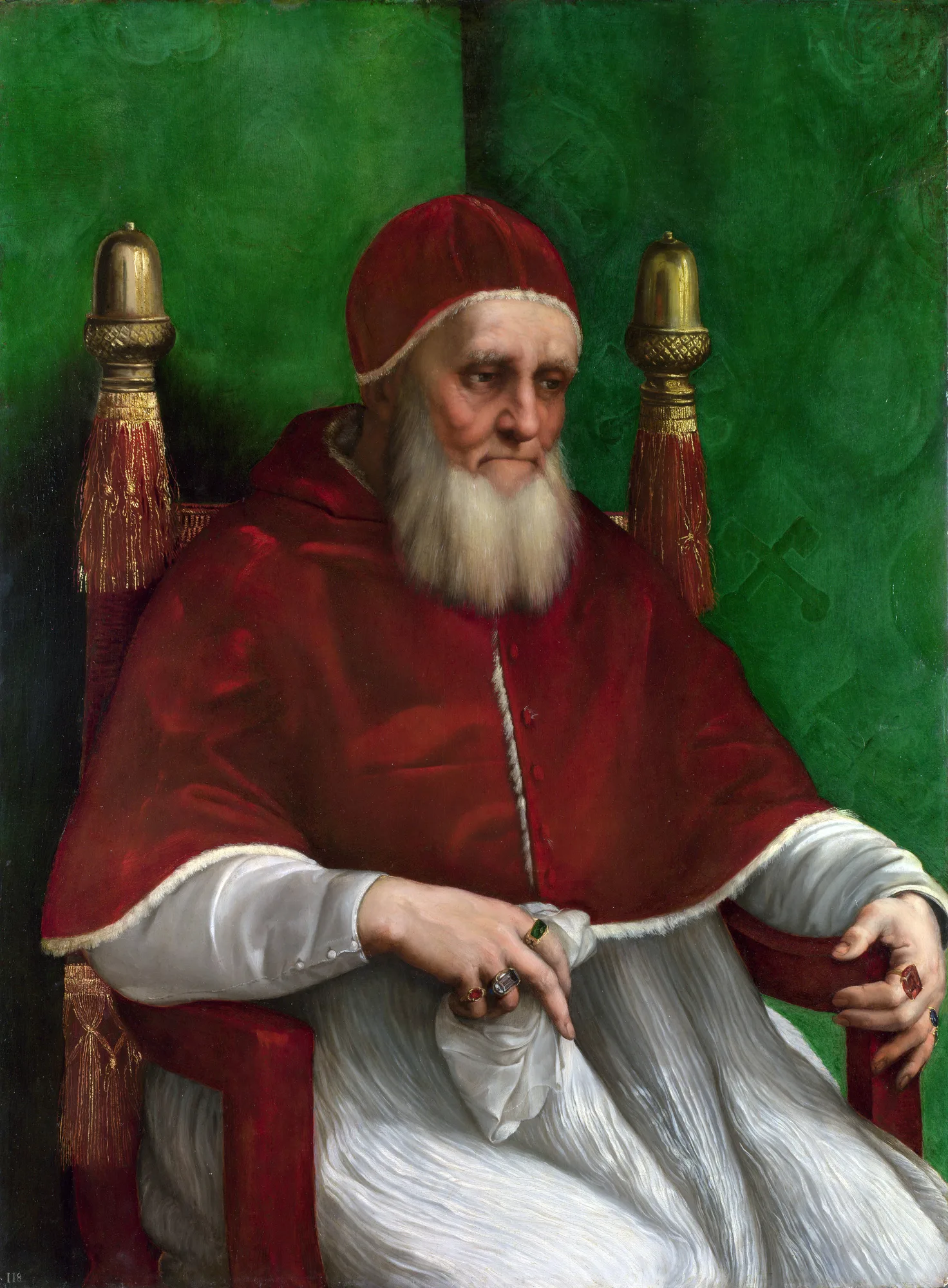
Story赤いケープと帽子をつけた白いひげの老人が、ひじかけいすに深くすわり、うつむきかげんに考えこんでいます。ローマ教皇ユリウス2世です。1511年ごろ、ローマで活やくしていた若き画家ラファエロが描きました。指には宝石の指輪が光り、いすの柱の上には金色のどんぐりがのっています。
An old man with a white beard, wearing a red cape and cap, sits deep in an armchair, lost in thought. He is Pope Julius II. The young painter Raphael, who was working in Rome, painted him around 1511. Jeweled rings shine on his fingers, and golden acorns sit on top of the chair posts.
ユリウス2世は、自ら軍を率いて戦ったことから「恐るべき教皇」とよばれた人物です。ミケランジェロにシスティーナ礼拝堂の天井画を、ラファエロにヴァチカン宮殿の部屋の壁画を描かせ、新しいサン・ピエトロ大聖堂の建設も始めました。それまでの教皇の肖像は正面や横向きが多かったのですが、ラファエロはななめから、心の中まで感じさせる姿で描きました。
Julius II led his own armies into battle and was called 'the terrible pope'. He had Michelangelo paint the Sistine Chapel ceiling and Raphael paint rooms in the Vatican, and he began the new St Peter's Basilica. Earlier papal portraits often showed the pope from the front or the side. Raphael painted him at an angle, showing his inner feelings.
教皇が亡くなったあと、この肖像はローマのサンタ・マリア・デル・ポポロ聖堂にかざられ、本人そっくりで見る人がふるえるほどだったとヴァザーリは伝えています。ロンドンのナショナル・ギャラリーの絵は長く写しと思われていましたが、1970年に調べ直されて、ラファエロ本人の作と認められました。この絵の形は、のちのティツィアーノやベラスケスの教皇の肖像の手本にもなりました。
After the pope died, this portrait was shown in the church of Santa Maria del Popolo in Rome. Vasari says it looked so real that it made people tremble. The version in the National Gallery in London was long thought to be a copy, but in 1970 it was recognized as Raphael's original. Its design later inspired papal portraits by Titian and Velázquez.
このおじいさんはローマ教皇です。長い白いひげがあります。大きないすにすわって考えごとをしています。いすには金のどんぐりがついています。ラファエロが約500年前に描きました。
This old man is a pope. He has a long white beard. He sits in a big chair and thinks. There are gold acorns on the chair. Raphael painted him about 500 years ago.
英語のレベルは上の「やさしい/ふつう」で切りかえられます。
えっ!?な裏ネタ
Secrets教皇がひげをのばすのはめずらしいことでした。ユリウス2世は1510年、ボローニャの町をフランスにうばわれたあと、フランス軍をイタリアから追い出すまでひげをそらないと誓ったのです。1512年3月にはそり落としました。
It was unusual for a pope to grow a beard. In 1510, after losing the city of Bologna to the French, Julius II vowed not to shave until the French were driven out of Italy. He shaved it off in March 1512.
教皇の家の名前「デッラ・ローヴェレ」の「ローヴェレ」は、イタリア語で「カシの木」。だから、いすの柱にはカシの実のどんぐりがついています。家紋もカシの木でした。絵の中に、名字のヒントをこっそり入れたのです。
The pope's family name was della Rovere, and 'rovere' means 'oak' in Italian. That is why oak acorns sit on the posts of his chair. The family coat of arms was an oak tree too.
この絵の背景は後の時代にぬりかえられていました。1970年にその絵の具を取ると、左下に小さな数字「118」が現れました。これが1693年のボルゲーゼ家の目録番号と一致したことが、ラファエロの本物と認められる大きな手がかりになりました。
The background had been repainted later. When the paint was removed in 1970, a small number '118' appeared at the bottom left. It matched the Borghese family's inventory of 1693, which helped prove it was Raphael's original.
調査で、ラファエロははじめ背景に教皇の冠や交差した鍵のしるしを描き、あとで緑一色でぬりつぶしたことがわかりました。右側の緑の布に、うっすらと×の形が見えるのはそのなごりです。
Research showed that Raphael first painted papal symbols, such as the tiara and crossed keys, in the background, then covered them with plain green. The faint X shape on the green cloth at the right is a trace of them.
ここを見て!
Look Closer1考えこむ顔と白いひげThoughtful face and white beard
視線を落として考えこむ教皇。ひげは、戦いに勝つまでそらないという誓いのしるしでした。
The pope looks down, deep in thought. His beard was a sign of his vow.
2金のどんぐりGolden acorn
いすの柱の先のどんぐり。「カシの木」を意味する家の名前にちなんでいます。
An acorn on the chair post. It refers to his family name, which means 'oak'.
3宝石の指輪Jeweled rings
赤・白・緑の石の指輪。この3色はキリスト教の3つの大切な徳を表すとされます。
Rings with red, white and green stones. These colors are linked to three Christian virtues.
4うっすら見える×の形Faint X shape
緑の布にうかぶ×の形。下にかくれた教皇の鍵のしるしが、すけて見えています。
A faint X on the green cloth. It is the hidden papal keys showing through.
英語で名画を語ろう
Talk about Art in EnglishThe pope grew a beard as a sign of his vow.
教皇は誓いのしるしとして、ひげをのばしました。
💡 grow は「育つ」だけでなく「(髪・ひげを)のばす」にも使います。grow one's hair long も同じ形。
英語で説明すると… Describe it
これはいすにすわったおじいさんの肖像画です。長い白いひげがあり、赤い帽子とケープを身につけています。下のほうを見ています。いすには金色のどんぐりがあり、背景は緑色です。
This is a portrait of an old man sitting in a chair. He has a long white beard, and he is wearing a red cap and cape. He is looking down. There are golden acorns on the chair, and the background is green.
考えてみよう Think & Talk
- 教皇は何を考えていると思いますか?What do you think the pope is thinking about?
- ラファエロはなぜ、教皇のしるしを緑一色でぬりつぶしたのだと思いますか?Why do you think Raphael covered the papal symbols with plain green?
この作品の英単語
WordsJulius II was a powerful pope.
ユリウス2世は力のある教皇でした。
He vowed not to shave.
彼はひげをそらないと誓いました。
There are golden acorns on the chair.
いすに金色のどんぐりがあります。
This is the original painting by Raphael.
これはラファエロによる本物の絵です。
ミニクイズ
QuizQ. ユリウス2世がひげをのばしたのはなぜ?Why did Julius II grow a beard?
フランス軍をイタリアから追い出すまでそらない、と誓ったのです。
He vowed not to shave until the French army left Italy.
ウソ?ホント? いすの上のどんぐりは、教皇の家の名前に関係がある。The acorns on the chair are linked to the pope's family name.
家の名前「ローヴェレ」はイタリア語で「カシの木」という意味です。
His family name, Rovere, means 'oak' in Italian.
ウソ?ホント? ロンドンのこの絵は、ずっと昔からラファエロの本物だと知られていた。People always knew that the London painting was Raphael's original.
長く写しと思われていて、1970年の調査で本物と認められました。
It was long thought to be a copy, and was recognized as the original in 1970.
 画像の出典とライセンス / Image credit
- PDPope Julius II.jpg(Wikimedia Commons)
ライセンス:Public domain(パブリックドメイン)/作者・撮影者の表記:Raphael
この作品は、作者の死後長い年月がたち著作権の保護期間が終わった「パブリックドメイン」の作品です。画像は平面の作品を忠実に写したもので、新しい著作権は生じません(Wikimedia Commons の PD-Art の考え方)。 所蔵:ナショナル・ギャラリー(The National Gallery)。画像は表示のために縮小・WebP 形式に変換しています。
ラファエロ・サンツィオのほかの作品